


 SHARE:
[Editor’s note: This is an adaptation of a three-part series by Local Journalism Initiative reporter Patrick Penner, originally published in the Tri-Cities Dispatch. Sign up to the Dispatch's newsletter here.]
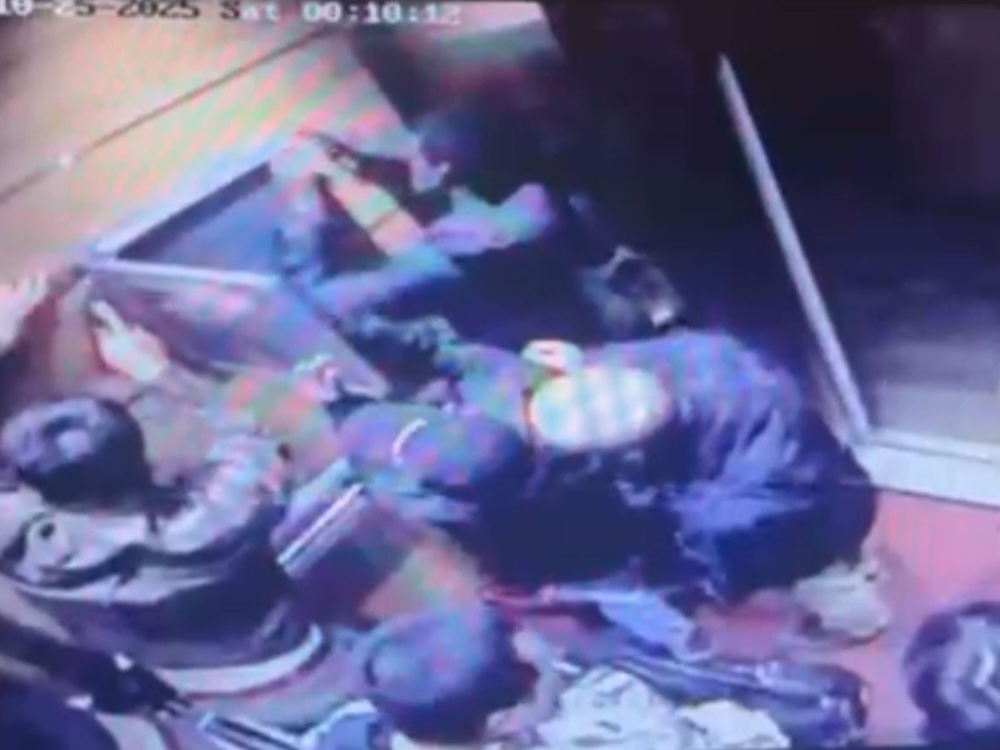
Just after midnight on Oct. 25, 2025, seven men clad in dark clothing and armed with pry bars entered the elevator of a Coquitlam highrise.
In two minutes, they ripped out new notice boards installed by a recently elected strata council, tossing the debris into garbage bags.
Within an hour, all seven elevators across the Grand Central complex had been stripped bare, leaving behind tens of thousands of dollars in damage.
Security footage of the incident was later shared with roughly 60 owners at a Dec. 6 town hall-style meeting hosted by the new council.
While six of the men are unknown, the council told attendees the man holding the elevator door open was Hans Liu, a director of Prosprise Realty — the property management company hired by the recently ousted council.
Uneasy murmurs rippled through the room as the video played.
“This is our home,” said Suminder Mann, vice-president of the new council, shouting over the noise. “This is not how a property management company acts.
“To me, it’s very clear there’s one party creating this confusion and destruction and mismanagement.”
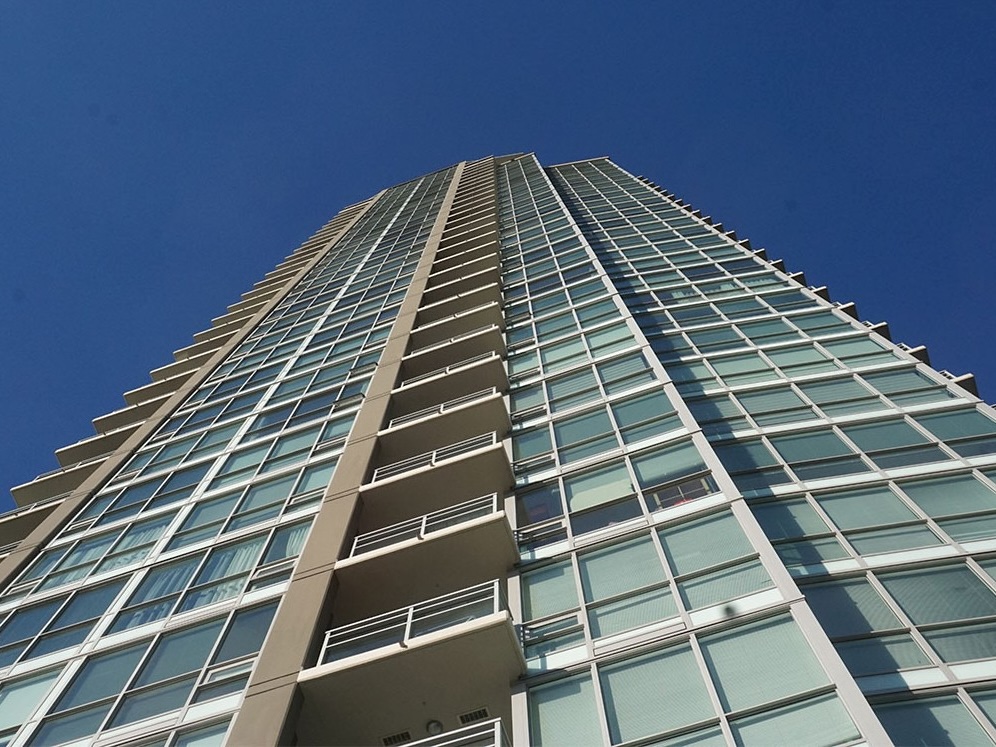
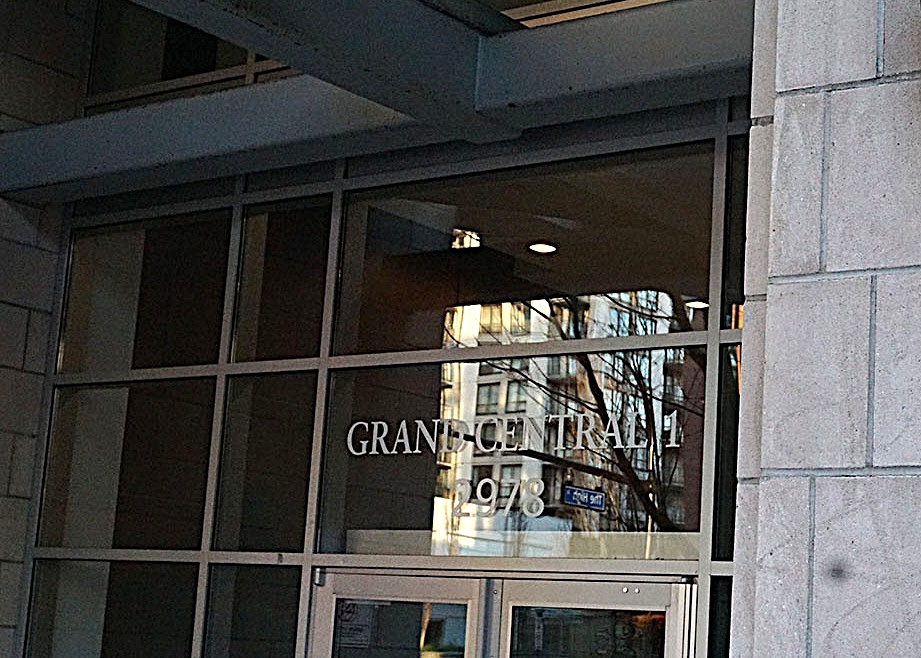
For owners living in Grand Central — a massive mixed-use complex composed of three towers between 28 and 37 storeys immediately adjacent to the Coquitlam Centre mall — the incident was just the latest episode in a bitter governance dispute that has fractured the 642-unit community.
Frustration with the former council had been building for years, amid what many owners describe as a pattern of costly litigation, dysfunctional administration and retaliation against those who speak out.
In September, after more than a year of organizing spearheaded by the strata’s commercial owners, a new council for both the strata and residential sections was elected at a special general meeting, or SGM.
But the former council declared the election “illegitimate” and refused to concede power.
Now, control of one of Coquitlam’s largest strata corporations is being fought in the courts, with allegations of mismanagement, fraud and defamation being levelled.
The result is that two different councils and two competing property management companies claim authority. Conflicting narratives are circulating through the complex. And owners have been left confused, angry and desperate for a resolution.
From organizing to open conflict
Under B.C.’s Strata Property Act, owners elect councils to manage a building’s day-to-day affairs. In a mixed-use building there are three sections — commercial, residential and the strata — that each sit under the umbrella of the strata corporation. The residential and commercial sections have their own councils and are responsible for costs borne by their own section; the strata council is responsible for shared costs for the buildings.
Councils are expected to act collectively and transparently, follow existing bylaws, keep accurate records and provide owners with access to key documents such as financial statements and contracts, while major decisions remain subject to owner oversight through SGMs and annual general meetings, or AGMs.
Owners at Grand Central say the reality has been very different. Unlike most other strata corporations, the strata and residential councils largely consisted of the same members.
For 15 months, Peyman Majidi, a longtime commercial owner and president of the new council, has been on a crusade to depose what he calls a “crazy dictatorship.”
“The owners in this strata are basically being held hostage by one person,” Majidi said. “I had to either choose between just selling or relocating my business, or fight back and open the owners’ eyes to what’s going on here.”
Supporters of the new council allege former president Hai Zhou dominated both the strata and residential councils for years through an unusually large proxy vote that allowed him to exercise outsized control over Grand Central’s governance.
They claim his leadership over the past five years has led to severe financial strain, maintenance deficiencies, depreciating real estate values and a steady stream of litigation.
Neither Zhou nor property management company Prosprise initially responded to repeated emails from the Tri-Cities Dispatch requesting comment. After this story was first published as a series, Zhou and Prosprise sent an email that clarified some points, but largely avoided answering the Dispatch’s questions. They did not respond to a followup request to address outstanding questions.
More than a dozen legal cases against the strata have made their way through B.C.’s Supreme Court, Civil Resolution Tribunal and Human Rights Tribunal since Zhou gained control of the residential and strata sections in 2021. Internal strata emails obtained by the Dispatch indicate there are at least 10 active lawsuits open against the strata.
Shireen Nadim, the longtime president of the commercial section, said Grand Central’s businesses have been forced to sue the strata continuously over what numerous court rulings have described as “significantly unfair” treatment.
“When you’re living in a community with your neighbours, these things shouldn’t be happening,” Nadim said.
Tensions at Grand Central began to mount after the commercial owners started organizing a push to remove the residential and strata councils in late 2024.
Under the Strata Property Act, an SGM to remove a sitting council can be forced if at least 20 per cent of owners sign a petition. Organizers say that threshold was reached by late spring, but the meeting was not called by the required deadline.
Instead, the council attempted to discredit the petition as “deceptive and deceitful,” claiming, without evidence, that proxy forms had been forged, according to allegations made in multiple court filings.
In June, Majidi and Nadim filed a petition in the B.C. Supreme Court seeking an order to compel the council to hold the vote.
While that application was still before the court, the reformers informed the judge that they planned to proceed with an election of their own. The judge raised no objections and adjourned the case, saying that an enforcement petition would be needed if the result was not recognized.
That SGM went ahead on Sept. 27, resulting in the removal of the former council from their seats and the election of a new council. Two days later, an AGM was held and confirmed the results.
Both meetings, which were overseen by an independent third party, were boycotted by Zhou and his fellow councillors.
Almost overnight, Grand Central became engulfed in an information war. Owners began receiving contradictory notices and emails. Different property management companies asserted authority. Residents said they no longer knew who was in charge — or even where to send their monthly strata fees.
A ‘state of chaos’
In the preceding months, the escalating battle at Grand Central had led to a shuffle of property managers.
AWM Alliance Real Estate Property Group, the company managing both the strata and residential sections since 2022, ended its service agreement on July 31. Prosprise and MNT Realty were hired as replacements for the residential and strata sections, respectively.
Two months later, MNT quit.
On Sept. 28, a day after the SGM in which a new council was elected, the company gave notice to owners it was ending its contract. It cited the polarization and uncertain authority going forward. Its last act was to affirm the legitimacy of the newly elected council and to allow them access to the strata’s records.
“Any communications issued to owners outside of this council are to be considered unauthorized, illegal, and invalid,” MNT’s final notice said.
Prosprise, on the other hand, continued to follow the directions of the former council and refused to recognize the election results while claiming to act as the new strata section manager.
On Sept. 29, two hours before the AGM, Prosprise emailed owners trying to cancel the meeting. It asserted MNT had “unlawfully” transferred meeting host controls to the new council.
The meeting went ahead, but immediately after, Prosprise posted notices around the complex attempting to schedule another AGM. The notices declared both September elections were “invalid.”
On Oct. 15, the new council installed new lockable notice boards in Grand Central’s elevators to try to control the flow of information. They were dismantled in a stealthy midnight operation 10 days later.
RCMP were called but chose not to open a criminal investigation.
“The initial investigation showed that the signs had been removed by contractors and there was some disagreement between various parties with respect to the scope of work,” an RCMP spokesperson told the Dispatch.
Prosprise and the former council have claimed the original elevator notice boards were removed and destroyed illegally, and their actions were “legal and reasonable.”
The buildings’ new councillors say their ability to administer the buildings was repeatedly interfered with by the ousted council, who have refused to turn over keys, access fobs, and laptops and passwords.
Mann said he tried to contact Grand Central’s security contractors to allow the new council full access to the complex but was told the former council had pre-emptively warned numerous companies that the new council was not legitimate.
“You can imagine the extra work that that is creating for us,” he said. “Prosprise has been distributing information by accessing every single floor on every single building in the middle of the night.”
The dispute soon returned to court.
On Oct. 27 — two days after the elevator incident — a B.C. Supreme Court judge issued a temporary injunction barring every member of the former council from acting in any capacity as representatives of the strata corporation.
The order also prohibited Prosprise from acting as the strata corporation’s manager, though it was still permitted to act as the residential section’s agent, as it was still under contract.
In her ruling, Justice Amy Francis described Grand Central as being in a “state of chaos.”
“At this point, it is completely unclear to the owners, to the competing councils, and to the court, who is properly in charge of this organization,” Francis said. “This is clearly a state that cannot continue.”
Prosprise was officially fired as the residential manager on Dec. 4.
The termination letter, sent by the new council’s lawyers, listed numerous “fundamental breaches” of the agency agreement, including Prosprise’s refusal to take instructions from the new council despite the injunction.
The company, however, is still refusing to recognize its dismissal.
Another SGM ordered
The new council submitted a petition to enforce the results of the September SGM, with an initial hearing set for Nov. 26.
Their arguments, however, were never heard. Instead, the case was adjourned. Zhou, using his proxies, filed a parallel petition on Nov. 17 calling for a second SGM to remove the new council, effectively sidelining the case.
Justice Simon Coval, noting the large evidentiary record and court scheduling difficulties, said it would be simpler if another election could settle the legitimacy question. He reasoned the new enforcement petition could be rendered moot if another SGM could be held in a “valid” manner. (An appeal of the decision has been filed.)
That election, held on Dec. 19, would become the latest flashpoint in the conflict.
New election, new result
Many owners at Grand Central said they knew what the result of a second strata election would be before a single vote was cast.
When a B.C. Supreme Court judge ordered a re-vote, owners were stunned. If the meeting was organized by the former council, many owners had little faith it would bear any resemblance to the fair-procedure rules set out in the law.
That did not stop frustration from boiling over on Dec. 19 as the special general meeting — which was held on Zoom — stretched into a fifth hour. By the end of the meeting, the live chat was being bombarded by owners alleging the vote had been “rigged” and results were invalid.
“This is Canada, and strata governance should follow basic democratic principles,” one owner wrote. “Silencing owners and controlling outcomes is not acceptable.”
Video recordings of the election — saved by owners as evidence for future court proceedings — were shared with the Dispatch.
Prosprise Realty hosted the meeting, despite having been fired and being under a court injunction barring it from acting on behalf of the strata. The chair, who claimed to be a neutral third party, spoke through the Prosprise screen and refused to turn his camera on. The email provided to verify proxy votes was the same account used by the former president.
No discussion was permitted. Anyone raising procedural concerns was removed from the meeting or muted. Furious owners began to hold up signs in protest after their microphones had been cut.
The chair refused to count all 190 proxy votes in support of the new council. When the chaotic affair had finally concluded, most members of the former council were reinstated.
One owner, Shelly Wade, said she was skeptical beforehand but what she saw left her in “disbelief.”
“I can’t imagine another situation where votes are simply not counted because they’re not in your favour,” Wade said. “If the meeting had been run fairly, we would have won.”
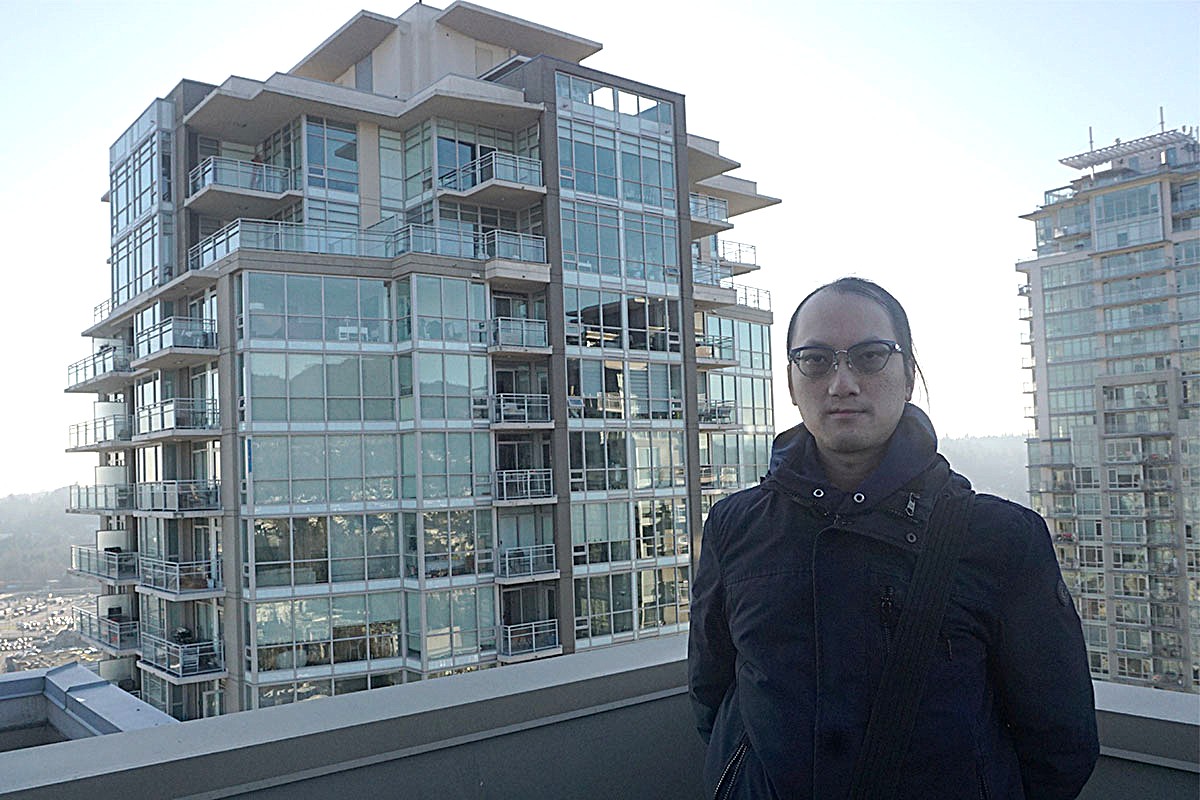
For supporters of the September-elected council, the conduct of the meeting exemplified a governance culture they say has defined Grand Central for years: tightly controlled meetings, minimal transparency and a systematic silencing of dissenting voices. Simon Ng said he recognized it immediately.
When Ng first began attending strata council meetings at the massive Coquitlam complex, he said it quickly became clear something was wrong.
Meetings were always held over Zoom. Councillors refused to turn their cameras on. Owners were required to hold government-issued ID up to their webcams and state their unit numbers or be kicked off the call. Anyone who asked pointed questions was muted or removed.
Debate and discussion never occurred. Councillors could often be heard speaking Mandarin with one another and would only ever utter one-word responses in English to agree with Hai Zhou, the strata president.
“Zhou was effectively running the show,” Ng said. “The other councillors — we don’t know their faces — we don’t even know who the hell they are.”
Ng, a first-time homeowner who bought into Grand Central in 2023, was one of the councillors elected in September following the ousting of the old council. He and other owners allege Grand Central’s governance had, for years, been effectively centralized in the hands of Zhou.
They say what occurred on Dec. 19 was not an anomaly but a continuing pattern of autocratic behaviour, enabled by a weak regulatory system that allows bad actors to become entrenched in governance.
Proxies, power and secrecy
At the centre of much of the dispute is the use and concentration of proxy votes.
Grand Central has many language barriers, and around 40 per cent of the units are rented out by investor-owners. Zhou’s opponents say these structural factors are a key reason why he has been able to amass nearly 150 proxies — a dominating voting bloc in the 642-unit strata.
Zhou held four positions simultaneously, serving as president and treasurer of both the strata and residential sections.
Supporters of the council elected in September say that combination allowed him to control agendas, rubber-stamp decisions, alter or sanitize meeting minutes, block disclosure of records and effectively determine who could sit beside him on the councils.
They allege only pre-selected Mandarin-speaking candidates were ever elected to executive positions.
“There have been three empty seats for years,” said Majidi, president of the council elected in September. “And one person is basically in charge of approving and cutting all the cheques.”
Multiple owners described a management culture that discouraged scrutiny and participation.
The owners said that after Zhou gained power in 2021, annual general meetings immediately stopped being held at nearby Douglas College and were moved to different cities and at inconvenient times.
In court and tribunal hearings, owners have repeatedly alleged that requests for contracts, invoices and financial records, and an owners list were frequently ignored or denied, despite clear provisions in the Strata Property Act.
Mann, vice-president of the council elected in September, said his “jaw dropped” when he first observed a meeting. He recalled seeing an owner removed simply for asking about the state of the contingency reserve fund.
“It was absurd,” Mann said. “As owners, we’re entitled to that information.”
For many years, the only window into the council’s activity was through Nadim, the longtime commercial president.
Despite her position on the strata council being mandated under the bylaws, she said she was largely excluded from governance.
Nadim said the council frequently made decisions without her, approved motions outside of meeting quorum via email, issued contracts without getting quotes and forced her to pay for financial records freely available to other councillors.
“The council did not recognize me at all,” she said. “They don’t let anybody participate.”
Despite the roadblocks, Nadim methodically kept track of invoices and repeatedly flagged irregularities, including expensive contracts awarded to unqualified contractors. Her objections were always ignored, she said.
In 2023, she filed a complaint with the province after finding that building security was being handled by a pool-supply company. In 2025, she filed an identical complaint after finding a moving company was hired to provide security. Provincial investigations led to warnings being issued to the companies for operating without the proper licences.
Retaliation and intimidation
Supporters of the council elected in September say owners who speak out are subject to intimidation or retaliation.
Some reported being issued fines or chargebacks they claim are baseless. Others say service requests and repairs were delayed or denied.
One resident, Ana-Marija Svarc, filed a complaint with Fraser Health after her children suffered skin irritation following a swim in her building’s hot tub. Shortly afterward, she was charged nearly $700 for allegedly refusing contractor access to her unit — a claim contradicted by the contractor’s own records.
She said the strata repeatedly ignored her request for a hearing and the charge has stayed on her file.
“I’m at the end of my rope with this strata, and we can’t leave soon enough,” Svarc said. “I don’t feel safe in our building.”
Nadim said she was repeatedly targeted after helping owners file disputes with the B.C. Civil Resolution Tribunal.
The glass door of her commercial unit was broken multiple times at midnight, and the strata refused to cover repairs, forcing her to obtain a Civil Resolution Tribunal order. After emailing the strata’s lawyer with a complaint, she was asked to pay the resulting legal fees.
In one recent example, the tribunal found the strata acted in a “burdensome, harsh, and unfairly prejudicial” manner toward commercial owner Ferdows Soltani. The tribunal found the strata delayed the opening of a restaurant for months. Soltani said the delay cost him more than $500,000. After the council learned he had filed a tribunal dispute, it refused to hold a necessary vote or grant him access to common property.
Organizers of the push to oust the council in the spring of 2025 also claim they were targeted.
On May 8, Majidi filed a defamation lawsuit against four council members, the strata corporation and then-property manager AWM Alliance Real Estate Property Group, alleging he was subject to a “campaign of vilification.”
That suit, which is still before the B.C. Supreme Court, claims the strata sent a series of emails, text messages, meeting minutes and printed letters to hundreds of owners, falsely claiming that Majidi had “forged” proxies at the previous AGM and engaged in fraudulent or criminal conduct.
One notice posted in Grand Central’s elevators in Mandarin and English and obtained by the Dispatch alleged Majidi had obtained private information illegally and promised that council would pursue legal action and seek help from police.
The suit says cease-and-desist demands seeking retractions, apologies and disclosure of records related to the allegations went ignored, and the smears continued.
Broke
As Grand Central’s governance dispute dragged through the courts last fall, an urgent issue began to dawn on the newly elected strata council — they were nearly broke.
After gaining access to official records following the September election, councillors discovered a financial position so precarious that any event requiring significant emergency repairs could leave the strata exposed.
“If something happens to the building, there’s no money,” said Majidi, president of the new council. “That is really risky and scary.”
According to their records, the former council ran a massive deficit, failed to attend to crucial maintenance problems, drained the contingency fund, owed hundreds of thousands to contractors and spent hundreds of thousands more on legal fees.
The new council alleges that previous spending cannot be accounted for. They have asked for a forensic accountant to decipher their books.
But without a legal resolution, the council says they are stuck in limbo. Bills need to be paid, expensive capital projects need to be approved, and the former council is still in control of the residential section’s accounts.
Residents of Grand Central have long had questions about the state of the strata’s coffers under Zhou’s leadership.
When the new council took power last fall, it finally had access to the strata section’s finances.
“It was very shocking,” said Ng.
The strata corporation — which collects roughly $3 million annually in fees — had $4,315 in its operating account as of Oct. 31, 2025. Current-year spending exceeded budgeted levels, and the strata owes nearly $225,000 in unpaid invoices.
Internal emails obtained by the Dispatch show that the former property manager, AWM Alliance Real Estate Property Group, was directed by the old council to conceal the deficit total from meeting minutes in an April 2025 email. AWM warned against doing so, describing the situation as “troubling.”
“We highly recommend holding the annual general meeting as soon as possible as the catch-up fees will be VERY substantial if held late,” the email stated.
Despite the warning, the AGM was not called for another four months.
According to allegations in court filings, the former council has called AGMs late for four consecutive years, allowing the council to approve budgets retroactively after much of the spending for the fiscal year had already occurred.
On top of faulty budgets, approximately $810,000 had been drawn from the contingency reserve fund as loans, leaving a balance of just $375,000.
Concerns over the depletion of the strata’s reserve fund are compounded by the physical condition of the three-tower complex.
The reserve fund is a legally required rainy-day fund used to pay for major or unexpected repairs. But it lacks the capital required for many needed maintenance projects, according to the new council.
Engineering reports commissioned from 2023 concluded that although Grand Central’s towers — built between 2009 and 2014 — remain structurally sound, many exterior components are reaching the end of their service life.
Inspectors documented cracking and water ingress in the parkade, and more serious deterioration at balconies, windows, sealants and exterior wall transitions, where waterproofing systems are failing. Inside some units, engineers noted condensation, mould and moisture staining, particularly near windows and exterior corners.
The reports warned that patch repairs would no longer be sufficient and recommended a co-ordinated program with preliminary cost estimates ranging from $5.1 million to $6.6 million.
Delaying comprehensive repairs, the reports cautioned, would likely result in higher long-term costs and additional interior damage.
Owners, however, say strata fees have been stagnant for years.
Ron Seida, a new owner in the complex, said one of the attractions of buying in Grand Central was the building’s low strata fees. He said he now realizes the monthly costs were so low because no maintenance was being done.
When he first moved into a unit on the 32nd floor last July, he initially thought the many holes covering the hallway ceiling were a positive sign that upkeep work was frequent.
Neighbours soon informed him the holes were the two-year-old remnants of an unfinished pipe-repair job.
After living in Grand Central for six months, Seida said he is “appalled.” The carpets are filthy, air vents are stained with streaks of black dust, and rust and peeling paint cover the metal exteriors of the building.
“Things are literally falling apart,” he said. “Honestly, if I had known how bad it was, I wouldn’t have bought the place. I would have run away.”
He partly blames himself.
“I saw a good deal on a condo, and it was our dream home.”
Numerous owners described Grand Central’s elevators as being in a constant state of disrepair, frequently being out of service and often failing in pairs, leaving residents — especially seniors — with no ability to get home.
One resident, Padam Misri, said he was trapped in the elevator for two hours after it broke down, and had to rescued by firefighters.
“I have an 80-year-old wife who is terrified to even step in the elevator without me,” he said. “It has made our living here just impossible.”
Flooding is another frequent issue.
Grand Central’s copper pipes are riddled with pinhole leaks, which has led to pipes bursting and flooding multiple floors on numerous occasions, according to Ng.
“We have a lot of that, and we have to figure out long-term if the strata is going to have to replace them all,” he said.
In one legal ruling, the strata was found to be negligent regarding the maintenance of its pipes.
Owner William Mok filed a claim with the Civil Resolution Tribunal after his unit flooded two weeks after he purchased it, leading to months of lost rental income.
In late 2023, the tribunal found there had been years of inadequate maintenance on the building’s main drainpipe. The strata’s plumbing contractor terminated its maintenance agreement after invoices went unpaid, and there was a documented history of prior backups and warnings that more frequent cleanings were needed.
Omid Khosravi, secretary for the council elected in September and a real estate agent with nearly two decades of experience, said Grand Central’s reputation has already affected property values.
Local real estate agents are required to look through strata minutes and inform clients about potential liabilities. Khosravi said that units in the complex are selling for significantly less than other comparable units in the area, despite property assessments being higher.
“All the realtors know about Grand Central,” he said. “They know how mismanaged this property is.”
With so much deferred maintenance, owners say much of the drain on the strata’s resources appears to be from legal bills.
More than 20 legal actions have been filed against the strata since 2021 — including at least 10 active suits. The September-elected council estimates close to $1 million has been wasted on unnecessary litigation.
After gaining control of the strata section, the new council was sent a $120,000 invoice from the strata’s former lawyer, who requested payment for unpaid debt incurred by the former council in the lead-up to the election.
The legal fees have continued to mount.
Since owners filed a petition in the spring of 2025 calling for an SGM to remove the former council, the strata spent nearly $200,000 on lawyers. Since then, the new council has spent approximately $120,000 trying to enforce the validity of the recent election.
Internal emails obtained by the Dispatch show Zhou’s council, which still controls the residential section, has retained two legal firms. One was paid using money drawn from the contingency reserve fund.
Seida said he feels like regular owners are being “held hostage” by Zhou and the courts.
“Zhou is burning up enormous amounts of time and enormous amounts of money,” Seida said. “It makes me so goddamn mad, because he’s spending my money.”
Mann, the vice-president of the September-elected council and a first time homeowner, said the experience has been “traumatic.” He said it has fundamentally changed how he views condo ownership, and he would never buy one again.
“How hard is it to buy anything here?” he said. “We worked our asses off, saved, and made huge compromises just to afford a place. Then you finally buy, and you’re being taken advantage of.”
‘Controlling the process’
The new council’s lawyers have appealed the B.C. Supreme Court judgment allowing Zhou’s Dec. 19 SGM to go forward. Numerous owners said they could not understand the logic behind the Nov. 26 order.
Ng, who attended the hearing in person, said it was a “disappointing” result.
He said Zhou’s use of proxies to call another election allowed the former council to sidestep their prior conduct and legal arguments, which he claims would not have held up under scrutiny.
Ng said the former council’s forgery claim — the basis for refusing to call the prior SGM — was based on minor clerical errors that have been repeatedly “debunked” by parties on both sides of the dispute.
“This is exactly how Zhou has maintained control... Not by winning arguments, but by controlling the process.”
The council elected in September expects their appeal of the November order to land before a judge soon.
That can’t come soon enough. After gaining access to the strata’s records, concerns are rapidly mounting over the physical and financial health of Grand Central. But until the legitimacy question is resolved, owners say any plans to address these concerns are paralyzed.
“We want [the case] to be tried so the court and the world can see their behaviour.”
*Story updated on March 5 at 11:45 a.m. to correct the date of the town hall meeting and reflect the fact that the strata councils had mostly, but not entirely, the same members. ![[Tyee]](/design-article.thetyee.ca/ui/img/yellowblob.png)
Read more: Rights + Justice, Housing










Tyee Commenting Guidelines
Please note that email notifications for replies are not currently working due to a software issue which may be resolved in a future update.
Comments that violate guidelines risk being deleted, and violations may result in a temporary or permanent user ban. Maintain the spirit of good conversation to stay in the discussion and be patient with moderators. Comments are reviewed regularly but not in real time.
Do:
Do not: