


 SHARE:
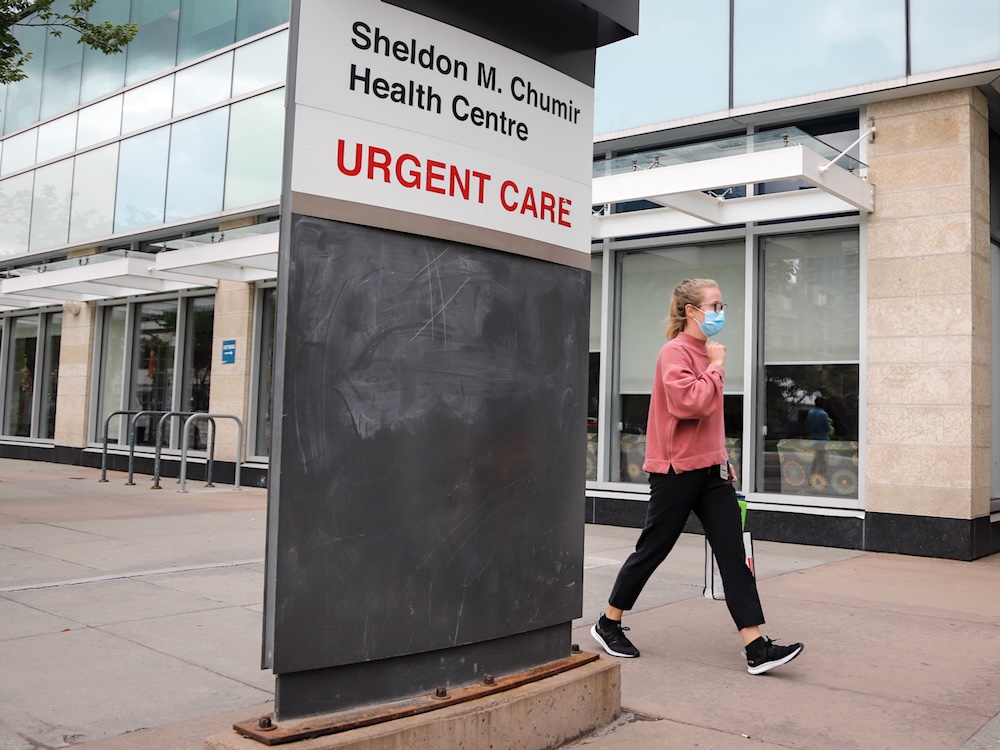
Drug users and advocates are warning that a plan to close two more supervised drug consumption sites will lead to more overdoses and an increased risk of death as Alberta continues to move away from harm reduction services.
The supervised consumption site at Calgary’s Sheldon M. Chumir Health Centre and the overdose prevention site in Lethbridge are expected to shut their doors this year, although there is no exact timeline for when either site will cease operations. Both are the sole supervised consumption sites in their communities.
According to provincial data, both the Lethbridge and Calgary supervised consumption sites are among the most used sites in the province. Between January and October 2025, the Lethbridge overdose prevention site saw 39,696 reported visits. Calgary’s supervised consumption site reported 36,312 visits.
Lethbridge city council voted to ask the province to close its site and redirect the funding to a variety of other services in support of treating substance use. Mayor Blaine Hyggen has said the site has served its purpose.
The office of the minister of mental health and addiction has said the closure of Calgary’s site means a transition to treatment and recovery services.
In 2025, two supervised consumption sites were closed, one in Red Deer and another at Edmonton’s Royal Alexandra Hospital.
Red Deer’s city council voted to ask the province to close its supervised consumption site in 2024 because they believed the clients of the site were responsible for crime and disorder in the surrounding area.
Minister of Mental Health and Addiction Rick Wilson told CBC News that the Royal Alexandra site in Edmonton wasn’t used enough to justify continuing to operate it.
When the Calgary and Lethbridge sites close, there will be just three supervised consumption sites continuing to operate in the province: two in Edmonton and one in Grande Prairie.
Angie Staines, a founder of 4B Harm Reduction Society and a nurse, has worked at the George Spady Society in downtown Edmonton, which runs a supervised consumption site. She mostly worked in the detox program, but the supervised consumption site was a way for her to connect with her son Brandon Shaw.
At the time, Shaw was unhoused and struggled with substance use, and Staines said the site offered a point of connection for them. She could call and find out when they had last seen her son at the supervised consumption site if she hadn't heard from him.
“It was a special place for the longest time,” Staines said.
Shaw said he utilized supervised consumption sites a lot when he was on the streets, and through the sites he could access recovery coaches and referrals to help get assistance with banking and getting to appointments.
“It was an all-in-one kind of spot where you could get all the services that you needed,” he said.
Staines also worked at the Royal Alexandra Hospital as a nurse while the supervised consumption site was operating in the hospital.
People who used substances “would go and utilize the supervised consumption site and my assessment was able to be a lot more thorough, a lot more grounded in reality,” she explained.
Shaw had been a patient at Royal Alexandra Hospital before and after it had the supervised consumption site.
He said that before the site was in place, “we would just shoot up in the bathrooms or in the hallways.
“The hospital has a lot of places you can hide and get lost. People can die really easily because you can go unfound really quickly.”
Staines and Shaw are concerned that with the closure of the in-hospital supervised consumption site, there will be a rise in drug use in and around the hospital, and overdoses in bathrooms and hallways.
“They don’t tell anyone they’re going in [the bathroom] because they’re ashamed and they’re hiding, and then we find them,” Staines said.
Ginetta Salvalaggio is a professor at the University of Alberta’s faculty of medicine and dentistry. She’s done extensive research on harm reduction and is an associate scientific director of the Inner City Health and Wellness Program.
She explained that a common misconception about supervised consumption sites is that they are meant to treat substance use.
“Do they treat addiction? No, that’s not their mandate. However, for people who are experiencing barriers to accessing other health services, they can be a portal entry that helps the social services, including referrals to addiction treatment,” Salvalaggio said.
For many people, supervised consumption sites can be a primary point of care, or the first time they feel they can trust a health service, she said.
“We can repair or build bridges with some services, so it is really about relationship and trust building,” Salvalaggio explained. “Sometimes you’ll accept offers of additional health and social services from a group that you trust first.”
With the closure of the Royal Alexandra Hospital supervised consumption site, Salvalaggio said there are mobile overdose response teams meant to fill the gap that the closure leaves. However, she has concerns about this increasing the time it takes to reach someone in need. Delays can lead to further health complications.
“It’s a welcome service to have a mobile team like that, but it shouldn’t be seen as a replacement,” she said.
Alberta’s move away from harm reduction
Alberta Premier Danielle Smith has called supervised consumption sites “woke ideological policies.”
Her government has set out to replace “enabling continued drug use” with treatment and recovery.
Recovery Alberta was announced in 2023 as part of the United Conservative Party’s remodelling of Alberta Health Services. Recovery Alberta is taking over mental health and substance use services from AHS. It also marked a shift towards a recovery-based approach to substance use.
The Alberta Recovery Model has four pillars: prevention, intervention, treatment and recovery.
Part of this shift has been pushing more virtual services for those using substances. That includes a Virtual Opioid Dependency Program and a Digital Overdose Response System. In 2023, Global News reported the Digital Overdose Response System — an app that can alert emergency responders — had triggered an emergency response 18 times between 2021 and 2023. A freedom of information request from Euan Thomson, an advocate for harm reduction, showed that the app had triggered emergency responses 50 times from 2021 to 2025.
The provincial government has also opened four recovery communities, with a plan to open seven more across Alberta. The stated approach of the communities is a “holistic addiction recovery, addressing the whole person and overall lifestyle changes needed to regain physical and mental health and wellness.”
More controversially, Alberta has introduced its Compassionate Intervention Act, which allows people struggling with substance use to be involuntarily committed to treatment for up to six months. Premier Smith has said this is not intended for most Albertans with substance use disorder, but for extreme cases.
Advocates, including Staines, have spoken out against involuntarily committing people to treatment.
Data collected by the province shows that drug deaths fell from a record high of 2,140 in 2023 to 1,496 in 2024. For 2025, the total so far is 1,141 deaths, but statistics for the last three months of that year have not yet been released.
Across Canada, overdose deaths have been declining in recent years following a spike in 2020. Between 2024 and 2025, there was a 22 per cent drop in opioid-related overdose deaths and a 38 per cent drop in stimulant-related deaths, according to Health Canada.
The minister of mental health and addiction and Recovery Alberta did not respond to a request for comment for this story.
Supervised consumption sites are part of public health, advocates say
Supervised consumption sites are also part of an effort to address the public health challenge of drug toxicity.
“People don’t die when they have supervised consumption and trained bystanders at the ready,” Salvalaggio said. “We have an immediate antidote — the naloxone antidote — that people are trained to use and apply, should it be required.”
Naloxone is a fast-acting medication that temporarily reverses the effects of an opioid overdose.
According to Health Canada data, there have been no fatal overdoses at supervised consumption sites anywhere in Canada. The sites, where volunteers and staff are present and can administer naloxone and call 911 in case of an overdose, have supervised 65,977 non-fatal overdoses since 2017. The sites have also been responsible for 624,728 referrals to other services, according to Health Canada data that includes British Columbia, Saskatchewan, Ontario and Quebec; data from Alberta was not reported.
Lauren Cameron, a co-founder of Reclaim Collective, said supervised consumption sites saved her life. She was an opioid user and accessed an overdose prevention site in Vancouver about 15 years ago.
“I was using the supervised consumption site because I didn’t want to die, essentially, but I wasn’t in a place to quit,” she explained. “I’m alive today because of these harm reduction services, because they knew that I didn’t deserve to die for what I put in my body to deal with what was going on with my trauma.”
While there has been public concern about the sites attracting crime and social disorder, Cameron said supervised consumption services help relieve pressure on emergency responders.
“I’m pretty sure the general public doesn’t want people dying alone in their backyards and in the alleyways,” Cameron said. “We don’t want firefighters and paramedics heading to another overdose call because it’s an epidemic right now. It takes up a lot of their time.”
She’s also worked in community outreach and harm reduction for about five years now. One of the efforts she supported was an unsanctioned supervised consumption site in Calgary. It was a place where people using substances could feel safe, according to Cameron.
“We started off with pop-up tents, and there were nurses and doctors,” Cameron explained. “We would allow people in and we had all the supplies and naloxone and would support them.”
There was a lot of peer support with other people who had used or were using substances. The site eventually moved to a community centre, but the effort was shut down in 2024.
“It really was that community care and for them to have other options than using on the street and risk overdose,” she said.
Shaw is concerned about where people who use substances will go without supervised consumption sites.
“The [government] shut these places down for safety concerns, but then where are these people going to go?” Shaw said. “Where do they expect people to go and use their drugs now? So they’ve created a whole list of issues that are going to arise again because they’ve stripped these services away.”
While Salvalaggio is not opposed to recovery programs that are evidence based and voluntary, she said they do not replace supervised consumption sites for people who are still using substances.
“We have a duty to ensure that we also think about preventing death, just from the toxic drug supply itself,” she said.
Staines agreed that harm reduction advocates aren’t opposed to recovery but believe that people need access to harm reduction too.
Frustration with the Alberta government’s approach
Kym Porter dealt with a lot of stigma after her son Neil Balmer died of a drug poisoning in July 2016. She’s a retired teacher in Medicine Hat who now focuses on harm reduction. She remembers her son as someone with a strong sense of humour and a love of Batman.
“He was thoughtful and generous with people he didn’t know and people he did know,” Porter said. “Some of his friends, when he died, were quite surprised by some of the things that we said about his mental health challenges.”
She said he kept a lot of those challenges hidden because of the stigma associated with it. Balmer died from fentanyl toxicity alone in his apartment. Porter said this wasn’t the first time he had been poisoned with toxic drugs.
The government has made harm reduction look like a monster that is enabling people who struggle with substance use, according to Porter. She described the supports she now sees coming into place as one size fits all.
Porter said SafeLink did qualify for grants for daytime shelters and harm reduction efforts, including a supervised consumption site. However, the province blocked that funding and the supervised consumption site never came to fruition.
The province has said that controversial harm reduction pamphlets that were present at a high school event are part of the reason behind the decision to block federal funding. Porter suspects the decision is driven by ideology that is opposed to harm reduction.
“My son had died before [the UCP blocked the funding for the supervised consumption site]. Would he have been alive now if he’d had access to that? I don’t know,” she said. “But there’s other people in Medicine Hat that wouldn’t have died if they had that, so that’s so frustrating.
“These are human beings, these are community members, these are people... and we are losing them when we know that there’s evidence-based support there.”
“Part of what is going to happen is it’s going to take people outside of buildings,” Porter said. “People are going to use outside; they’re not going to stop using. They’re going to be at more risk, but the general public is going to be exposed to things that they aren’t comfortable seeing.”
Staines said there’s a big disconnect between the people with lived experience, harm reduction advocates and researchers and what the government is doing.
“The safe consumption sites are just a small piece of it,” Staines said. “What it comes down to is [the government] believes substance use is a moral failure and harm reduction is enabling them... because harm reduction has no expectation of complete abstinence. It really is about autonomy and about building relationships.”
Cameron doesn’t have a lot of hope that the government will listen to researchers and people with lived experience.
“You can’t really convince the government with morality and evidence. I think it’s more communities who need to speak up, first responders, health-care workers, business owners around these [supervised consumption site] closures,” she said.
She said closures of the sites won’t stop drug use, but it will affect emergency services. CBC reported that firefighters in Red Deer are responding to more opioid-related calls following the closure of the supervised consumption site in that town. The government denied any connection to the closure. ![[Tyee]](/design-article.thetyee.ca/ui/img/yellowblob.png)










Tyee Commenting Guidelines
Please note that email notifications for replies are not currently working due to a software issue which may be resolved in a future update.
Comments that violate guidelines risk being deleted, and violations may result in a temporary or permanent user ban. Maintain the spirit of good conversation to stay in the discussion and be patient with moderators. Comments are reviewed regularly but not in real time.
Do:
Do not: