


 SHARE:
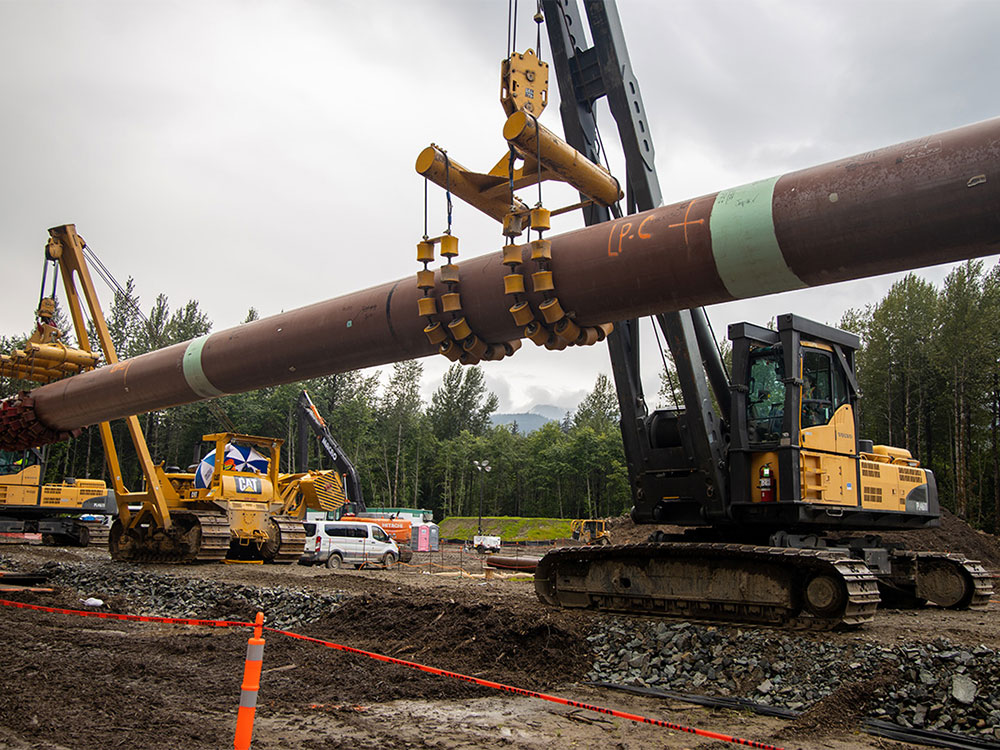
B.C. Finance Minister Brenda Bailey said she shares the worry that other taxpayers could pay for a large cut in property taxes for pipeline companies.
“I, too, feel concerned,” Bailey said in response to a question in the legislature from B.C. Conservative Peter Milobar, MLA for Kamloops Centre.
“I feel concerned any time that there is a downloading of taxes onto small businesses and onto people.”
On Tuesday The Tyee reported that after years of lobbying, Enbridge, FortisBC, Trans Mountain and other major companies had convinced BC Assessment to change how it assesses the value of pipelines.
The change led to a large drop in assessed values, which, if approved by Bailey, would significantly reduce the amount of municipal property tax that pipeline companies would be required to pay next year.
“BC Assessment has been doing this evaluation-of-models work over a 10-year period,” Bailey said in the legislature. “It has not yet come to my desk. I expect it to come to my desk in November.”
After the minister’s decision, the changes will go to BC Assessment’s board of directors in December for approval.
Bailey was unavailable for an interview Thursday afternoon.
Milobar, who before entering provincial politics was the mayor of Kamloops, said it’s shocking the government hasn’t decided what to do.
It must act to ensure municipalities and regional districts don’t lose tax revenue from the pipelines in their areas, he said.
“The fact that municipalities and regional districts are not legally allowed to run a deficit means that they will be left scrambling, trying to figure out either to make massive cuts to services or put the 30 per cent reduction in property taxes pipelines would receive to other ratepayers,” he said.
“Small business and heavy industry would be the first ones to take it on the chin when things like this happen.”
The Conservatives circulated an email they’d received from the District of Kent’s director of financial services, Mike Veenbaas, saying that replacing the lost revenue would require a four per cent increase in other property taxes.
Other cities and districts facing big revenue reductions include Kamloops, Hope, Houston, Burns Lake, Chetwynd, Rossland, Thompson-Nicola and Fraser-Fort George, his email said.
On Thursday afternoon Milobar introduced a private member’s bill that would raise the cap on the mill rate that local governments can charge on pipelines and other properties in their class. Mill rates are applied based on the property valuations from BC Assessment.
“The government has two options,” he told reporters. “They can either reject BC Assessment’s recommendation to drop the assessed value by 30 per cent, because that creates literally a 30 per cent reduction in what pipelines would be paying in property taxes across the province to either regional districts or municipalities, or they can agree to increase the mill rate cap.”
A lot of the social licence for building pipelines like Trans Mountain is based on the contribution they make to local communities through property taxes, added Milobar.
“This is taking everybody by surprise,” he said. “Municipalities can’t withstand this whipsawing of a 30 per cent cut to one in one year, especially trying to explain how a pipeline that literally just doubled in size is now suddenly worth 30 per cent less. It doesn’t make a whole lot of sense to a whole lot of people on the ground.”
Milobar said that without the government’s intervention, the change to assessed values will affect any community that’s home to a pipeline and the total lost revenue will add up to tens of millions of dollars. ![[Tyee]](/design-article.thetyee.ca/ui/img/yellowblob.png)
Read more: Energy, BC Politics












Tyee Commenting Guidelines
Please note that email notifications for replies are not currently working due to a software issue which may be resolved in a future update.
Comments that violate guidelines risk being deleted, and violations may result in a temporary or permanent user ban. Maintain the spirit of good conversation to stay in the discussion and be patient with moderators. Comments are reviewed regularly but not in real time.
Do:
Do not: