


 SHARE:
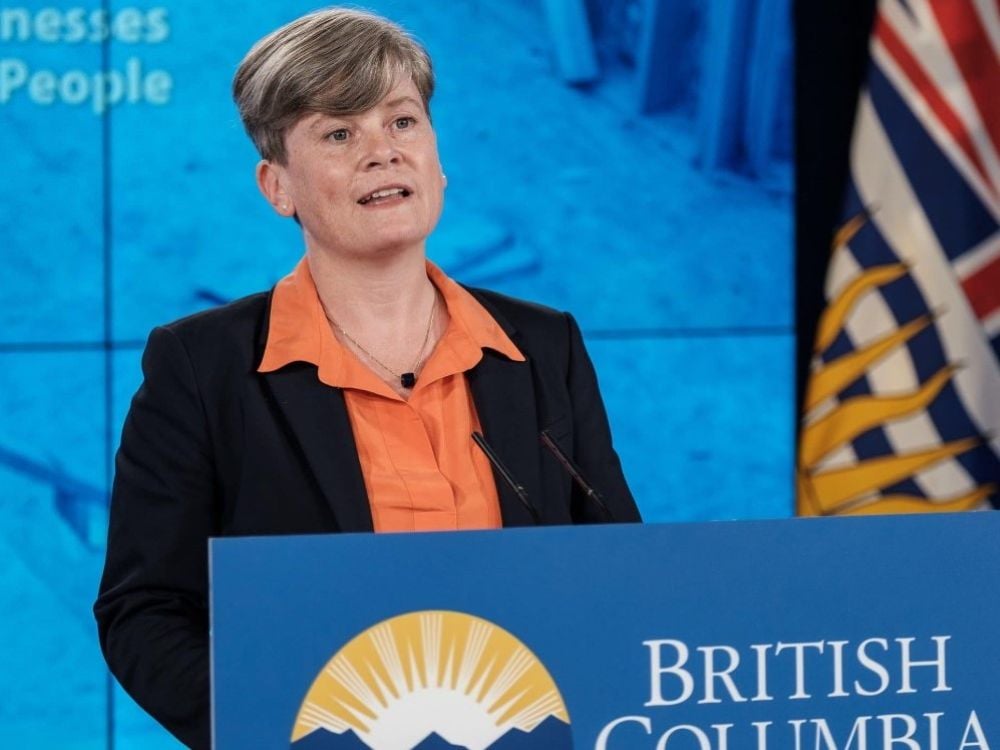
B.C. Health Minister Josie Osborne says the government will go ahead with the decision to end pandemic pay supplements for long-term care providers despite warnings it will mean fewer beds and longer waiting lists.
Private and not-for-profit providers have criticized the decision and called for the funding to continue past the Oct. 31 cut-off date. The funding is needed to cover overtime and agency staffing when they are short of workers.
"This program was an important program when we brought it in during the pandemic," said Osborne. "It was really important to have care homes be well-staffed to meet the ratios and the care hours that seniors needed. That program was essential at the time, but it’s been five years."
According to the health ministry, since 2020 the government has provided $429 million to long-term care and assisted living providers to help cover costs related to the COVID-19 pandemic.
There are around 30,000 long-term care beds in B.C. and the system has long been mixed, with about two out of three beds contracted out to either for-profit or not-for-profit providers. The remainder are owned and run by the province’s health authorities.
A group of not-for-profit providers issued a press release last week "warning that Premier David Eby’s recent funding cuts will devastate nonprofit operations and jeopardize thousands of care beds for seniors."
The government has broken a promise to maintain the support until a new long term care funding model under discussion since 2019 is in place, they said.
At the end of the year the government is also ending the funding for wage levelling that allowed private operators to match the wages paid in publicly owned facilities, a measure also introduced early in the pandemic. The not-for-profits expect that funding will end for them soon too.
The release from the non-profit providers quoted Janice Boyle, the CEO of The Three Links Care Society, who said the government has long been underfunding contracts for long-term care and charities have had to find ways to cover the gap.
"The trust has been broken," she said. "We are still subsidizing our LTC contract with little margin for error."
In late September the BC Care Providers Association, which represents many non-government care providers, raised similar concerns. "We are in the midst of a nationwide shortage of health care workers," a statement quoted CEO Mary Polak saying. "Like everyone else in this sector, we rely on overtime and agency staffing to fill the gap."
Without the funding it would be difficult for operators in many communities to meet the health authorities’ standards for staffing levels, Polak said.
BC Conservative MLAs raised the matter in the legislature last week.
Sharon Hartwell, Bulkley Valley-Stikine MLA, cited the example of Bulkley Lodge in Smithers. “Staff are exhausted, families are stepping up to fill in the gaps, and residents are the ones paying the price,” she said. “In rural B.C., where there’s no backup, cutting overtime isn’t a solution... How does this government expect seniors to receive safe, dignified care when they are taking away the very lifeline keeping these facilities running?”
Osborne responded that the temporary top-up was intended to help facilities with the exceptional circumstances during the pandemic and that the time has come to wind it down.
"There are some months that facilities will have to be able to make the transitions they need to," she said. "But I want to again underscore the fact that this is just one program that has been used to support providers during a really challenging time."
To strengthen long-term care the government is building new facilities and growing the workforce by training more health care assistants, Osborne added.
Brennan Day, the MLA for Courtenay-Comox called Osborne’s response "nonsense" and said some 900 beds are at risk due to the funding cuts. The conditions that necessitated the program persist, he said. "We have chronic staffing shortages that are affecting rural British Columbians."
In an interview Osborne said the government is working to grow and strengthen long-term care.
"What government is doing is really focusing on the places where action is most needed and most essential and that’s really around the health care work force," she said, giving the examples of efforts to bring workers back into the health authorities and to train more health care assistants.
The government is in regular communication with the BCCPA and will monitor what impacts there may be from the overtime and agency staffing funding ending, said Osborne.
"What’s really important is recruiting and training more people into the system," she said, adding that it’s better to have more people available than it is to depend on overtime. "We know the burden that can place on health care workers when overtime becomes a significant way of making ends meet."
The plan is to keep adding beds and building the workforce, she said. "Moving forward with a growing population we know there is more work to do and we’re going to continue doing that."
Earlier in October BC Seniors Advocate Dan Levitt accused the government of failing to develop an action plan for long-term care.
In July his office reported that there is already a shortfall of 2,000 beds and that the province is on a trajectory for the shortage to grow to 16,000 beds in a decade.
"The lack of long-term care in B.C. is a crisis in the making, and government must act now," he said. ![[Tyee]](/design-article.thetyee.ca/ui/img/yellowblob.png)
Read more: Health











Tyee Commenting Guidelines
Please note that email notifications for replies are not currently working due to a software issue which may be resolved in a future update.
Comments that violate guidelines risk being deleted, and violations may result in a temporary or permanent user ban. Maintain the spirit of good conversation to stay in the discussion and be patient with moderators. Comments are reviewed regularly but not in real time.
Do:
Do not: