


 SHARE:
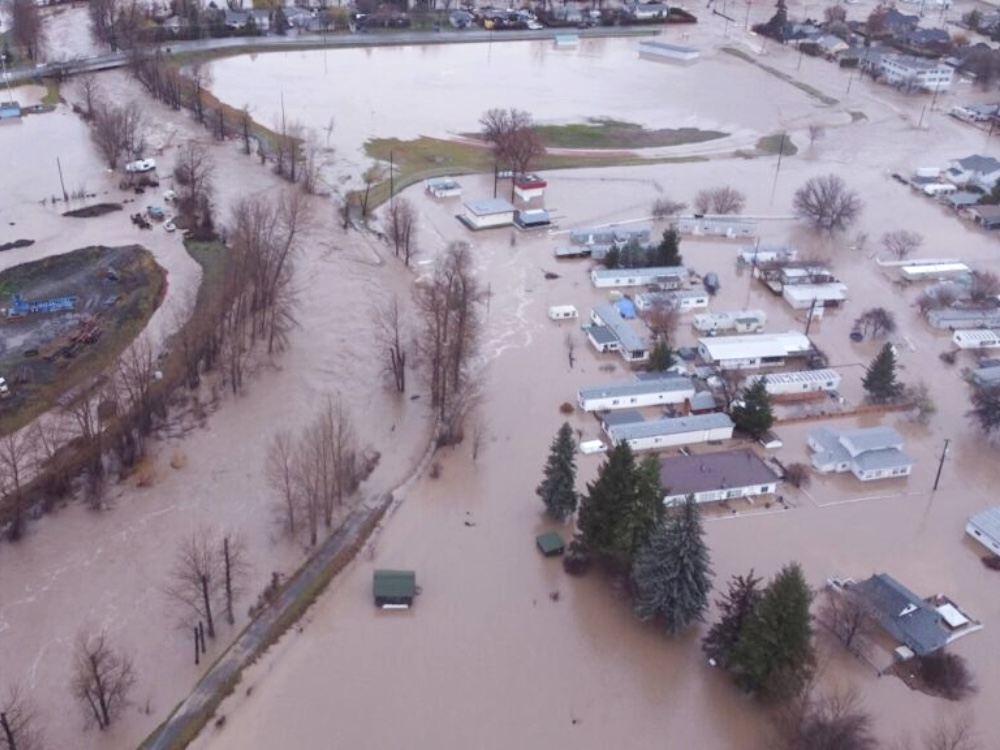
Merritt residents displaced by flooding in 2021 have filed a class-action lawsuit against the municipality, alleging the city should have done more to fix dikes it knew were unstable.
The lawsuit alleges that the flooding that destroyed dozens of homes in Merritt was foreseeable and that the city had plenty of warning that its flood defences needed to be strengthened.
It also suggests that the municipality didn’t do enough to warn residents that flooding was possible as the November 2021 atmospheric river bore down on British Columbia.
The lawsuit was filed Tuesday in B.C. Supreme Court by plaintiffs Jennifer Biddlecome and Michelle Hintz on behalf of themselves and other Merritt residents negatively impacted by flooding between Nov. 14 and Nov. 16, 2021.
The City of Merritt has not filed a response. The city did not respond to The Tyee’s request for comment.
The Merritt suit follows on the heels of a class action filed by residents in Abbotsford that also alleges authorities didn’t do enough to forestall flooding in the fall of 2021. That class action was certified last year but has not yet proceeded to trial.
The allegations
Merritt was one of the B.C. communities hardest hit by flooding in November 2021. That month’s record-breaking atmospheric river dumped immense amounts of rain to the south, north and west of Merritt. Some of that water drained into the Coquihalla River and flowed south, wiping out large stretches of the Coquihalla Highway. Farther north, the deluge caused the Coldwater and Nicola rivers to swell and breach their banks.
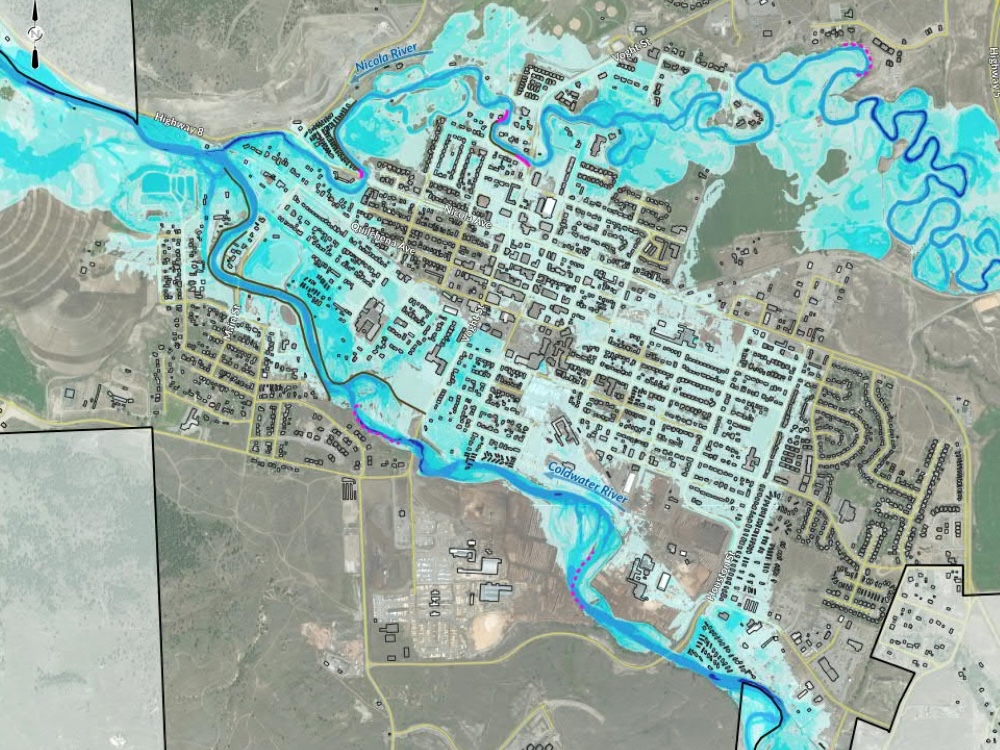
The two rivers meet in Merritt, and both blew through dikes meant to protect the town. The floodwaters not only swept through entire neighbourhoods but also caused the city’s wastewater treatment plant to fail. That prompted the evacuation of the entire city — the largest displacement of residents during the 2021 disaster.
The plaintiffs say local officials knew that dikes protecting homes in Merritt were susceptible to failure. Their suit points to inspection reports between 2017 and 2021 that recommended maintenance work to strengthen the dikes and raise their crest. The suit says annual inspections noted that tree growth and erosion were threatening the stability and integrity of the dikes but that recommended work to fix and maintain the dikes wasn’t done.
The lack of dike maintenance, the suit says, “was a direct cause of the Merritt Flood.”
The inspections were first unearthed two years ago by a 2023 freedom of information request by Ben Parfitt, who was then a policy analyst for the Canadian Centre for Policy Alternatives and is now a Tyee writer.
The plaintiffs
The Merritt plaintiffs, Michelle Hintz and Jennifer Biddlecome, both had their homes flooded in 2021.
At the time of the flood, Hintz had lived in a rented home for seven years with her husband and three kids. The suit says her home was damaged, as were her personal belongings. She has yet to return to the home. Biddlecome had bought her home the year before the flood.
Luke Zacharias, the lawyer for the plaintiffs, said the flood has had an “utterly devastating” impact on his clients.
“A lot of people lost everything in this flood and there’s really been very little in the way of compensation from the province or the city to this point in time,” he told The Tyee.
Both Hintz and Biddlecome have been outspoken about the impact of the flood on their lives and critical of the city’s response. Biddlecome told Global News in 2022 that insurance inspectors declared her home to be a writeoff but that she was left paying utilities, garbage and tax bills to service it.
Hintz told the Merritt Herald that federal disaster assistance failed to come close to covering her family’s flood losses.
“There were enough subtle warnings before it got to the point that we needed to evacuate that the City should have at least been aware, even to put out a warning,” Hintz told the Herald. “Nothing like that happened.”
The Abbotsford case
The Merritt suit follows another filed in 2021 by Caroline Mostertman on behalf of Abbotsford residents impacted by the flooding of Sumas Prairie.
That class action is still winding its way through the court process, demonstrating how long a suit can take to reach a resolution.
As in Merritt, Abbotsford’s dikes failed and were known to be too low. But the Sumas Prairie class-action suit is focused on whether the city’s operation of its floodgates aggravated and caused the flooding of low-lying areas.
Only last summer did a Supreme Court justice certify the suit, ruling that the class action could proceed and that the plaintiffs could represent the broader group of impacted people. The City of Abbotsford had contested certification of the suit, saying that it could not be determined how much of the flooding was the result of the city’s actions.
The judge, however, accepted testimony from a hydrologist who declared that it was possible to determine just how much of the water would have been the result of the allegedly improper handling of the city’s floodgates.
Since the suit was certified, two more plaintiffs have been added.
What comes next
Zacharias, the lawyer for the Merritt plaintiffs, said certification tends to be the key turning point of a class-action suit.
“If you do get certified, the vast majority of cases are resolved after that through a settlement because class actions as trials are extremely difficult to navigate,” he told The Tyee.
The Merritt case will likely involve wrangling over whether the plaintiffs have taken too long to file their lawsuit, Zacharias said.
The statute of limitations generally requires civil lawsuits to be filed within two years of the event at the centre of a case. It has now been nearly four years since the atmospheric river. But Zacharias said the plaintiffs will argue that the case should be allowed to proceed because it is based on information — the discovery of the dike inspection reports — that was obtained less than two years ago.
That argument is based upon the “discoverability rule,” which declares that the clock starts ticking on a claim when a person might reasonably have known that an act or omission may have contributed to an injury, loss or damage.
The Merritt suit was filed on Sept. 9, almost two years since the first news stories were published about the dike inspection reports unearthed by Parfitt. (Parfitt is now a reporter for The Tyee but was not involved in this story.)
There is little precedent for class-action suits in British Columbia related to flooding, and the legislation that enables such suits is relatively new. Class actions are designed to allow plaintiffs to pool their resources for legal fights that may otherwise pose too much of a financial burden for individuals, Zacharias said.
The suits can allow plaintiffs to attempt to recoup damages from natural disasters. But the lawsuits filed following the 2021 atmospheric river may have a broader impact across British Columbia, influencing how municipalities and governments approach emergency management and respond to warnings that their communities are vulnerable to future disasters, Zacharias said.
“They have to take this into consideration as a risk and be attendant when they’re given warning by consultants they hire to tell them what’s going on.” ![[Tyee]](/design-article.thetyee.ca/ui/img/yellowblob.png)
Read more: Rights + Justice, Environment







Tyee Commenting Guidelines
Please note that email notifications for replies are not currently working due to a software issue which may be resolved in a future update.
Comments that violate guidelines risk being deleted, and violations may result in a temporary or permanent user ban. Maintain the spirit of good conversation to stay in the discussion and be patient with moderators. Comments are reviewed regularly but not in real time.
Do:
Do not: