


 SHARE:
When backlash to kids’ books featuring queer and trans characters or content rears its head, outraged adults often ask why such children’s literature would exist in the first place.
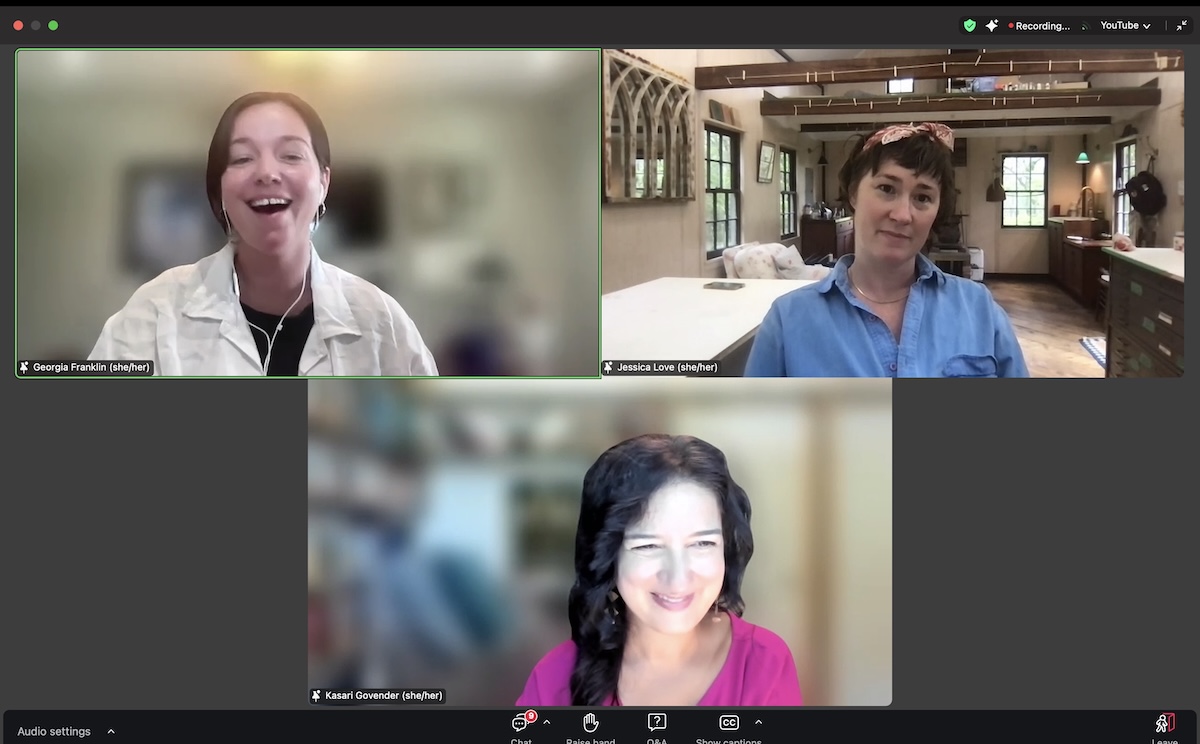
During a mid-July talk with B.C. Human Rights Commissioner Kasari Govender, the U.S. author and artist Jessica Love had a clear answer.
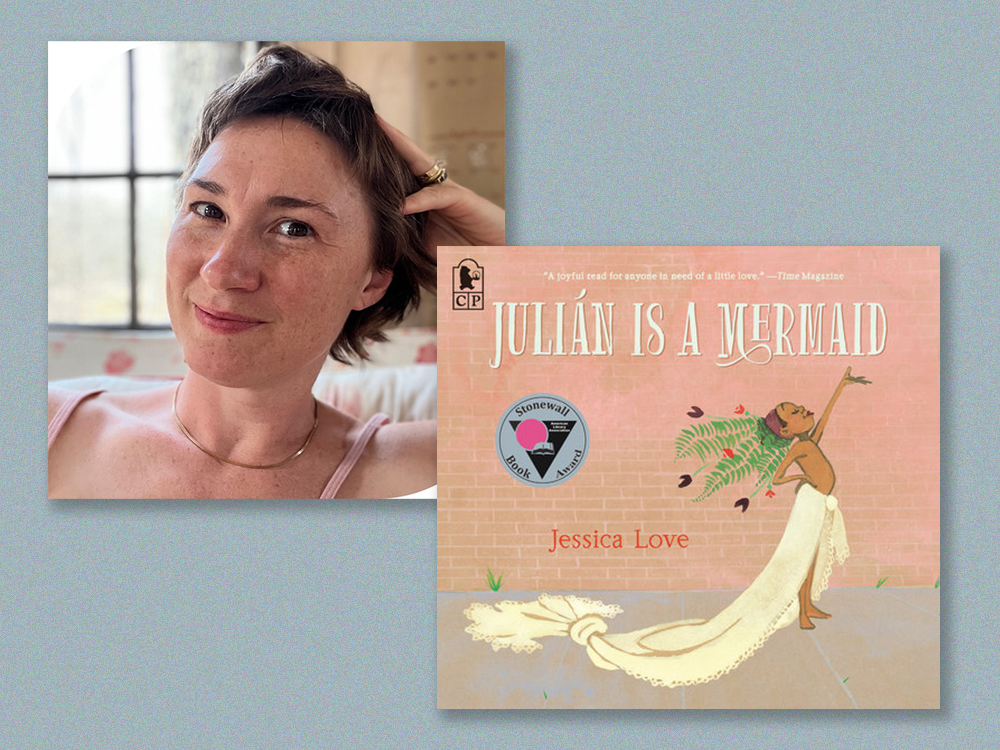
When conceiving of her 2019 children’s picture book Julián Is a Mermaid, the importance of creating a book about acceptance and love between a gender-fluid child and his Abuela, or grandmother, was obvious, Love said.
“When we look for love in life, any kind of love — the love of a parent, the love of our friend, romantic love — I think the way you know when you’ve got it is this feeling of being seen,” she said.
“It’s that shock of recognition, where you can see yourself reflected back in someone’s eyes with love.”
Julián Is a Mermaid, which Love both wrote and illustrated, is about an Afro-Latino child living in New York City who wants to be a mermaid, and his supportive Abuela who loves, recognizes and celebrates Julián for who he is.
Julián Is a Mermaid was the second most banned picture book in the United States for the 2023-24 school year, according to PEN America.
That’s why Govender invited Love, along with BC Summer Reading Club provincial co-ordinator Georgia Franklin, to participate in a livestreamed Beyond the Headlines conversation focusing on gender identity expression in children’s books.
The series’ topics all focus on one of 10 “key systems” impacting human rights from the commissioner’s 2024 report “Rights in Focus: Lived Realities in B.C.”
Past conversations have included Ketty Nivyabandi, secretary-general for Amnesty International Canada’s English-speaking section, on structural factors that allow for the exploitation of migrant workers, and federal housing advocate Marie-Josée Houle on tackling the housing crisis with a human rights focus.
The BC context
Unlike its U.S. counterpart, PEN Canada doesn’t publish an annual report on book bans.
But there’s a long history in B.C. of clashes over kids’ books with LGBTQ2S+ characters and themes.
In 2002, a Supreme Court of Canada ruling declared the Surrey school district’s attempt to ban books featuring same-sex parents violated the School Act’s secular and non-religious requirements.
Since SOGI 123 materials were introduced in 2016, so-called “parents’ rights” groups have pushed back on the optional, age-appropriate and government-approved LGBTQ2S+ education resources and lesson plans on sexual orientation and gender identity.
In 2023, thousands joined anti-SOGI rallies across B.C. and Canada, though they were met with, in some cases larger, pro-LGBTQ2S+ counter-rallies.
Drag time story hours for kids and parents have been met with protests, death threats and confrontations for years across B.C., Canada and the United States.
Groups like Action4Canada, described by the Canadian Anti-Hate Network as an “anti-2SLGBTQ+ advocacy group,” have tried to influence school districts to ban books for children like It’s Perfectly Normal and All Boys Aren’t Blue, titles for kids and young adults also frequently subjected to bans in the United States.
In Chilliwack in 2023, Action4Canada founder Tanya Gaw filed a police complaint claiming there was child pornography in the school district’s libraries. That complaint was dismissed by the RCMP.
During last fall’s provincial election, the Conservative Party of BC, already vocal about their anti-SOGI stance, ran on a platform that included a promise to review all textbooks used in B.C. public schools to “remove ideology from the classroom,” including content about sexuality. They narrowly lost the election to the NDP.
There have not been widespread successful book bans or challenges in B.C. public libraries and schools, librarian Franklin noted during the talk.
But that doesn’t mean books with LGBTQ2S+ themes and characters in libraries are always celebrated.
“We do see a lot of individual acts in libraries where books are being removed from shelves and hidden from the public, where books are vandalized and having pages ripped out of them,” said Franklin, adding public libraries continually stand up for people’s right to read these books.
“These are being tracked, so we know and can see where this is happening.” There is also a database tracking attempted book bans in Canada, Franklin said.
‘There’s a lot of joy in being yourself’
Being transgender, gender queer or non-binary often comes with a lot of struggle, Govender noted.
But that struggle is imposed from the outside world, she said.
Govender also pointed out that there is no human rights framework recognizing “parents’ rights” to determine what education content their children consume.
“There are rights that parents hold, for sure, but not in relation to their children,” she said.
“For example, if a mother is experiencing violence, she has the right to be free from violence in her house. It’s also in her children’s best interests to leave, but it's in her best interest to receive some protection.”
There is, however, an international framework for children’s rights, she said, including a child’s right to an education.
“There’s a lot of joy in being yourself, in being able to be yourself and to be recognized for who you are and your fundamental right to human dignity,” she said.
“We’re hoping... in our conversation today to feed into that joy through the power of story and deepen our understanding of why access to books like this is so important.”
After Love did a reading of Julián Is a Mermaid, which is included in the B.C. human rights commissioner’s book club selections, Govender put the question of the importance of LGBTQ2S+ kids’ books to Franklin.
Referencing the diversity of themes, characters and ideas in the books available for kids in the province’s public library, including the ongoing BC Summer Reading Club for kids, Franklin echoed Love’s point about the importance of kids seeing themselves and people they know in books.
“I have an eight-year-old friend whose grandpa is gay and has a partner. And when I was doing my work, I came across a book called Grandad’s Camper,” Franklin said, referring to a 2022 book about a young girl encouraging her grandfather, who happens to be gay, to return to adventuring in his camper van.
“When I shared it with my little friend, she just lit up at being able to see her Poppy represented in stories, and her own experience, which she might not have seen as easily in her community, in her friend group, in her peer group.”
It isn’t just kids who are excited by books like these, either.
Julián Is a Mermaid was partially inspired by the classic queer documentary Paris Is Burning, about the New York City ballroom scene, featuring interviews with queer youth who had found their chosen families in ballroom “houses” after being rejected by their birth families.
Love told Govender and Franklin she wanted the book to be, in part, a way to give these dancers the childhood love and support they deserved. Love said she heard directly from adults who saw themselves in Julián Is a Mermaid, including one person featured in Paris Is Burning.
“I got this one message from a man named Julian, and he was like, ‘Knock, knock, hi, this is me. This book was about me.’ He’s like peripherally in Paris Is Burning, he was in the House of Extravaganza,” she said, adding he also had a supportive grandmother.
“[He] told me this story about when he was 20 or 19,” Love said. “His grandma gave him $50 and she’s like, ‘You’re gay. Go out, go to a party, make your friends. Go. We’re happy for you, nobody cares.’”
Love, who is also a parent, noted books cannot change anyone’s sexuality or gender identity, nor is that the point of reading them to your kids.
“All of these stories are just making a little bit of room for people to be the way they already are,” she said. ![[Tyee]](/design-article.thetyee.ca/ui/img/yellowblob.png)
Read more: Rights + Justice, Education, BC Politics, Gender + Sexuality










Tyee Commenting Guidelines
Please note that email notifications for replies are not currently working due to a software issue which may be resolved in a future update.
Comments that violate guidelines risk being deleted, and violations may result in a temporary or permanent user ban. Maintain the spirit of good conversation to stay in the discussion and be patient with moderators. Comments are reviewed regularly but not in real time.
Do:
Do not: