

 SHARE:

[Editor’s note: This story was produced as part of Spotlight: Child Welfare, a collaborative journalism project that aims to improve reporting on the child ‘welfare’ system. Tell us what you think.]
More than 3,300 British Columbians who grew up in the child services system have had some post-secondary education, and nearly 800 of those have earned a post-secondary credential in the eight years the B.C. government has covered the cost of their tuition.
For Melanie Lecoy, the support she’s received to pursue post-secondary education has been a real relief.
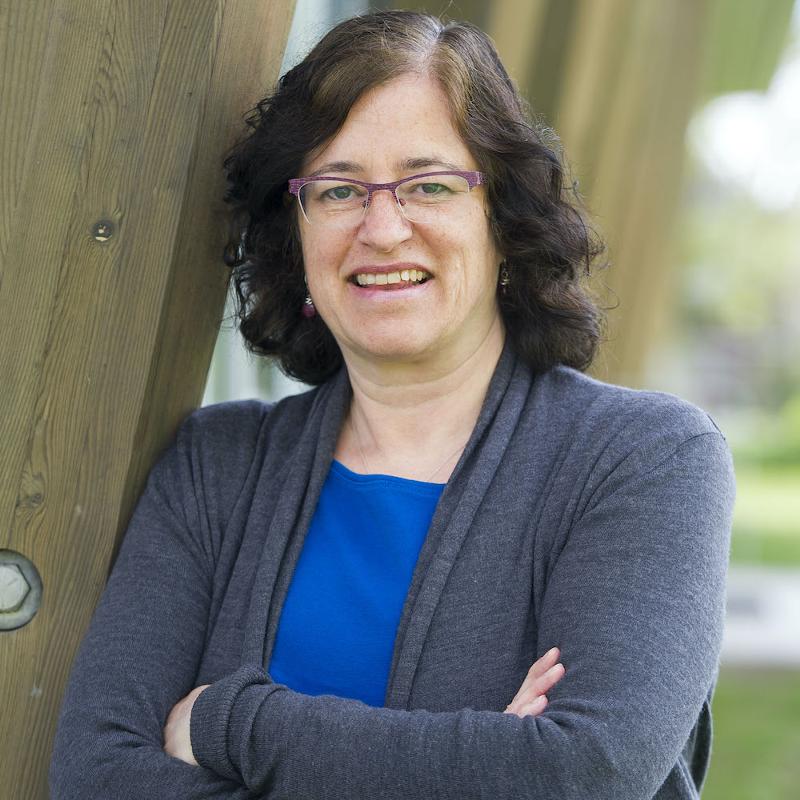
“I can’t even believe where I am today. It feels unreal to say that I’m a fourth-year bachelor student,” said Lecoy, who is Indigenous and a bachelor of social work student at the Nicola Valley Institute of Technology’s Burnaby campus.
She wants to use her education to help other families with the knowledge she gained through her own experience.
“I was bouncing in and out of care between the age of five and 13,” Lecoy said. “At 13, I was made a ward of the ministry.”
The experience, she said, was “like a battlefield of intergenerational trauma.”
Because of their insecure upbringing and the abrupt loss of supports that occurs when youth age out of their placements in the child services system, people who’ve grown up in the system experience “higher rates of homelessness, less educational attainment, less attachment to the workforce, lower rates of income and poorer mental health among youth leaving care and transitioning to adulthood as compared to their non-care peers,” notes the December 2020 Representative for Children and Youth report “A Parent’s Duty.”
B.C.’s tuition waiver programs strive to address some of the structural challenges in transitioning to adulthood by reducing the barriers to post-secondary education for people who grew up in the child services system and may therefore lack the family supports that many rely on to get them there.
The province has emerged as a leader in Canada in this regard.
Back in 2013 Vancouver Island University in Nanaimo became the first university in B.C. to waive tuition for former youth in care. The University of British Columbia soon followed, and within a couple of years, several other post-secondary schools started offering tuition waivers to former youth in care.
In 2017 the province made the program official for former youth in care up to age 27 for undergraduate degrees.
Then in 2023 the province lifted the age cap and made all youth who were in care for at least 24 months or who turned 19 while in care eligible for free post-secondary education.
The response from the community was strong. Applications skyrocketed by 70 per cent over the previous year, according to data from the B.C. Ministry of Post-Secondary Education and Future Skills.
“The Provincial Tuition Waiver Program (PTWP) is a key part of our government’s commitment to removing barriers and expanding opportunities for people across British Columbia,” Minister of Post-Secondary Education and Future Skills Anne Kang said in an emailed statement.
“We know that people are our greatest asset. That’s why we continue to invest in programs like PTWP that empower individuals to grow, learn and succeed. Our government is proud of the impact this program has had.”
BC leads, but national standards are lacking
Tuition waivers can change lives, said Jennifer Charlesworth, B.C.’s representative for children and youth.
“Tuition waivers make a huge difference in the life of a young person who doesn't have family privilege and who wouldn't have access to education if they didn't have tuition waivers,” she said. “There’s no question about that.”
Equally important, Charlesworth and other experts said, are supports for living expenses, mental health support, housing support and other types of support that young people living in families have access to while they go to university.
Charlesworth was in Ontario for a meeting of the Canadian Council of Child and Youth Advocates in June and brought a proposal to create a national tuition waiver program.
“I just assumed, to be perfectly honest, that every province and territory would have something, but they don’t. The only places that have some modicum of tuition waiver are Manitoba and Alberta, but there are a lot more restrictions and there aren’t the same sort of post-majority supports,” she said. “I just thought this would be a no-brainer.”
But the group instead agreed to advocate for tuition waivers in their own jurisdictions rather than push for national standards.
B.C. deserves credit for being the first province to offer provincial tuition waivers at all public post-secondary schools, but nationally there is a patchwork approach, said Jacquie Gahagan, associate vice-president of research at Mount Saint Vincent University in Halifax.
Gahagan has researched tuition waivers and other supports for former youth in care across the country, comparing Canadian data with other Organization for Economic Co-operation countries.
“The punchline is, we could do better,” she said in an interview. “There were lots of inconsistencies from province to province about what’s available, age cutoff for benefits, for schooling.”
Canada is one of the few western countries without standards or guidelines for supports for youth as they age out of care, a 2022 report Gahagan worked on for Economic and Social Development Canada found.
“I think we should probably have a national standard,” she said.
Charlesworth said a national standard would allow young people who have been in care in one province to attend university tuition-free in another province, which makes a difference if there is a specialized program or if a student moves out of province.
How to scale it up? More data is needed
Gahagan wishes more data about outcomes for former youth in care was shared across the country.
“Currently, there is no legislative requirement for a feedback loop between education as a provincial responsibility, and going back to the federal government and saying, ‘Eureka, we have found the secret sauce to improve access to post-secondary education in province X and Y, and we should scale it up nationally,’” she said.
“So we’re not giving access at the provincial level to know how to do things, bigger, bolder, differently.”
In B.C., the program was tweaked two years ago to remove an age restriction. When that happened, the average age of recipients rose from 21 to 24 years old, where it has remained.
Lecoy, 44, had to take a student loan for her first year of studies because she was over the tuition waiver age limit at that time. She has been eligible for the tuition waiver for the final three years of her studies, after the government lifted the age cap.
‘I want to smash that stigma’
Children whose parents cannot raise them grow up in foster care, which can be a challenging environment.
The high school graduation rate for children and youth in foster care is lower than that of children who live with their parents, often because children in foster care move homes several times and often have to change schools.
In addition, the trauma of being removed from one’s family home can make learning difficult.
Lecoy has six children of her own, aged 10 to 26, including one son who passed away. None of the children has been in care, she said.
“I broke that cycle,” she said.
She’s hoping to help break the cycle for other families after she graduates, which is planned for next June, and she hopes to work in child protection.
“I want to smash that stigma and help people heal,” she said. “I want to help families today with the knowledge that everything I’ve been through in my life.”
Across B.C., the 800 former youth in care who have earned post-secondary credentials have received trades certificates, human and social services credentials, arts and sciences degrees, health credentials and business credentials. They have also earned credentials in developmental, engineering and applied sciences, education and visual and performing arts, the ministry said in an emailed statement.
Even though Lecoy was in foster care, her mother was able to keep her connected to her Indigenous culture, she said. Today, she uses that knowledge with other students, including as a knowledge keeper and doing land acknowledgments.
About 850 young people age out of their placements in the B.C. child services system each year, and while improvements in support have been made in recent years, it can still mean they lose things they rely on, such as their foster parents and their social worker.
Provincial tuition waivers cover full-time or part-time courses leading to a certificate, diploma or undergraduate degree, non-credit courses, apprenticeship programs and continuing education courses at public post-secondary schools, the Native Education College or one of 10 approved union-based trades-training providers.
When the age cap was lifted in 2023, the province also introduced the Learning for Future grant, which is $3,500 per year to help with other educational expenses like textbooks and computers.
Since this grant was introduced, there have been 1,866 recipients and $9 million in grants disbursed (over 2,500 total grants) as of March 31, 2025, the ministry said.
UBC has nearly 150 former youth in care students
At the University of British Columbia, B.C.’s largest and oldest university, the removal of the age cap has led to a large increase in the number of students studying on tuition waivers.
“Since the age restriction went up, we’re seeing a number of students in their 30s and 40s coming in,” said Joseph Stevens, enrolment services adviser at UBC. “So the average age is still within the 20s for most students, but we’ve been seeing many more students that are mature learners coming in.”
In the past year, UBC had 149 students on either the provincial tuition waiver or a UBC-funded tuition waiver that covers some former youth in care who don’t qualify for the provincial waiver, Stevens said.
Since the beginning, the school has had just 256 students who have had their tuition waived through one of those programs. Eighty students have graduated with a credential so far, and their fields of study are across the university.
“I think that this program allows a lot of students who may not have felt that they could approach post-secondary, or may have had a lot of financial concerns with how they could pay for post-secondary, to be able to access post-secondary,” Stevens said.
“And for students that are studying in an incredibly expensive city like Vancouver, I think this program helps a lot in the tuition, outside of housing costs, the biggest expense that students will incur.”
Stevens, who works in financial aid helping students access the funding they need to complete their studies, said the university doesn’t have specific programs to cover housing for students who are former youth in care, but that his office will work with UBC Housing to help students find a home. His office can also help Indigenous students, who may be eligible for band funding, cover the costs of their education.
In California, public universities give priority for housing to people leaving care and allow them to stay year-round at no extra charge if the facility is open, SchoolHouse Connection reports.
Children’s representative worries about budget constraints
Charlesworth said the income support program in B.C. — SAJE, or Strengthening Abilities and Journeys of Empowerment — is a positive step forward, but she worries about the provincial budget and what will happen if demand exceeds the budget.
“They’ve not accepted any new applicants for the rent supplement, I think, since February of last year,” she said.
The rent supplement covered up to $600 per month for former youth in care renting in the private market who were receiving SAJE.
Stevens wants to be sure potential students are aware of the tuition waiver program.
“I often do run into students who just aren’t aware of the program, and we get them set up and maybe the eligibility, and from that point forward, they can study under it,” he said.
Gahagan said she discovered in her research that there were several post-secondary programs in the United States for children who grew up in care, but that they often went unused because potential students did not know about them.
One recent change is that the provincial tuition waiver will cover some programs at UBC that require a previous degree, such as the juris doctor law degree, the doctor of medicine degree and the bachelor of education, Stevens said. There are former youth in care students in each of those programs at UBC, he said.
But traditional master's degrees, which help in today’s job market, are not covered.
“I think with a lot of the students that I work with, there is still this question of wanting to do a level of graduate study that is not currently covered by tuition waivers,” Stevens said.
Lecoy is considering doing her master of social work, which would mean applying to UBC. As of today, master’s degrees are not covered by the tuition waiver, something she says would help.
Now that there are more than 800 former youth in care who have earned post-secondary credentials thanks to having their tuition costs covered, the demand for postgraduate studies can be expected to grow.
This successful tuition waiver program in B.C. provides an opportunity for this province to serve as an example for the rest of Canada. ![[Tyee]](/design-article.thetyee.ca/ui/img/yellowblob.png)
Read more: Rights + Justice, Education











Tyee Commenting Guidelines
Please note that email notifications for replies are not currently working due to a software issue which may be resolved in a future update.
Comments that violate guidelines risk being deleted, and violations may result in a temporary or permanent user ban. Maintain the spirit of good conversation to stay in the discussion and be patient with moderators. Comments are reviewed regularly but not in real time.
Do:
Do not: