


 SHARE:

Performing minor surgeries in rural hospitals could help improve the provincial surgery backlog without cutting corners on the quality of health care, according to one rural health expert.
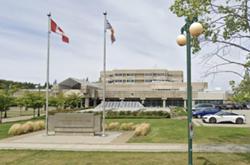
A recent study published in the Canadian Journal of Surgery compared patient outcomes for minor surgeries, looking at how patients did if they were operated on by a family physician with enhanced surgical skills or by a specialist surgeon, and if they were at a rural hospital, like the Creston Valley Hospital and Health Centre, or a larger referral facility, like the ones in Kelowna, Kamloops, Cranbrook and Prince George.
Turns out patients did great no matter who their surgeon was or where their surgery was, which shows that there’s room to grow high-quality rural health care in B.C., said Jude Kornelsen, lead author of the study. Kornelsen is also an associate professor in the department of family practice at the University of British Columbia and co-director of the Centre for Rural Health Research.
That doesn’t mean all surgeries should be moved to small towns, she said. But low-risk patients from across the province who need low-acuity surgeries and procedures, such as colonoscopies, hernia repairs, appendectomies or caesarean deliveries, could be given the choice of getting their surgery at a hospital near their home or travelling to a rural hospital.
This would help lower the demand for operating rooms in larger urban centres, which would free up those teams to focus on the more complex or high-risk surgeries that they’re set up for, Kornelsen said.
In an emailed statement the B.C. Ministry of Health said it already uses a variation on this strategy by allowing patients to talk with their referring provider about where they want their surgery done, and if there is another surgeon with a shorter wait-list. Generally surgeries will happen within the regional health authority a person lives in.
Where a patient has their surgery is determined by a number of factors, including what specialist a patient is referred to, what hospitals the surgeon has approval to operate at, the type of surgery and the health of the patient, the ministry added.
It said the province continues to increase surgeries and personnel at all sites after the COVID-19 pandemic disrupted surgeries, and health authorities continue to monitor wait-lists and redistribute capacity across sites as appropriate to maximize surgeries and procedures and minimize wait times.
In Canada doctors can get extra training to become a family physician with enhanced surgical skills or a family physician anesthetist. These doctors will often have day jobs in rural hospitals as family doctors and work as a surgeon or anesthetist a couple of days a week or on call, Kornelsen said.
She views these doctors and surgical teams as an underutilized resource that could be built out to improve overall health in the province by relying on them more.
The promise of regionalization
In the early 2000s B.C. created regional health authorities to centralize health services in five regions across the province. As part of this, the province set up regional referral centres that patients could be sent to. Regional referral centres are larger hospitals that are set up to perform higher-acuity surgeries and are staffed with specialist surgeons.
“People from Golden, who used to have to travel for specialist procedural care to Vancouver, can now go to Cranbrook,” Kornelsen said.
“The intent of regionalization was to bring health care closer to home,” she said.
But an unintended consequence of this move was that basic procedures that used to be performed in small rural communities began to also be sent to the regional referral centres.
Regionalization created a sort of cultural stigma against rural hospitals, suggesting that the care they provided wasn’t as good as care in the larger hospitals, Kornelsen added.
Which is why this recent study is so important: it shows that’s not true.
The study looked at seven rural hospitals, in Creston, Revelstoke, Golden, Fernie, Smithers, Hazelton and Vanderhoof, supported by the provincial Rural Surgical and Obstetrical Networks initiative, and compared patient outcomes with how patients did when they went to regional referral centres.
The Rural Surgical and Obstetrical Networks initiative is a program run by the Rural Coordination Centre of B.C., which led and executed the work in partnership with rural communities for years, creating data that Kornelsen could then analyze.
It also compared family physicians with enhanced surgical skills and specialist surgeons.
Because complex patients are often sent to specialists, the study only compared patients who didn’t have other complicating health factors who had a colonoscopy, hernia repair, appendectomy or caesarean delivery between 2016 and 2021, totalling 448,057 visits and 166,069 unique patients.
That was a big enough data set to find statistically significant outcomes, Kornelsen said.
A ‘win-win-win-win-win-win’ for the province
Encouraging more low-acuity surgeries in rural hospitals would be a “win-win-win-win-win-win” for the province, said Paul Adams, executive director of the BC Rural Health Network, which advocates improving rural health care across B.C.
When patients living in rural B.C. have to travel to access health care, it increases patient stress and out-of-pocket costs because they are separated from their support networks and paying for travel, food and accommodation in an urban centre.
This can be particularly stressful for pregnant people who have to leave home during their third trimester so they can access emergency care if needed during delivery.
Travelling for health care creates a self-fulfilling prophecy, Adams said. Over the last few decades health authorities haven’t invested in building out surgical teams because the assumption was that patients would go to larger health centres.
Surgical teams in rural hospitals might have the competence but may lack the confidence that comes with regularly doing surgeries and working closely together, Kornelsen said.
If the province started promoting low-acuity surgeries in rural hospitals it would improve local primary care because health-care workers would be attracted to living in small communities where they can use their full skill set, Adams said.
Promoting surgery at rural hospitals would be a bit of a “made-in-B.C. solution” because the province is already outfitted with the infrastructure of rural hospitals and a history of family physicians with enhanced surgical skills and family physician anesthetists working in small communities, Kornelsen said.
One “incredibly successful” program, which continues today, is the Rural Surgical and Obstetrical Network, or RSON, Kornelsen said. This program invested in technology for rural surgery and built coaching and mentorship networks across the province.
The RSON initiative increased the number of low-acuity surgeries done in rural hospitals and decreased the rate of complications, Kornelsen said. It has high levels of patient and staff satisfaction.
RSON was started with a $19.3-million investment for 2018 to 2023, and funding continues today with $1.1 million for the 2025-26 fiscal year, the ministry said. ![[Tyee]](/design-article.thetyee.ca/ui/img/yellowblob.png)
Read more: Health











Tyee Commenting Guidelines
Please note that email notifications for replies are not currently working due to a software issue which may be resolved in a future update.
Comments that violate guidelines risk being deleted, and violations may result in a temporary or permanent user ban. Maintain the spirit of good conversation to stay in the discussion and be patient with moderators. Comments are reviewed regularly but not in real time.
Do:
Do not: