


 SHARE:
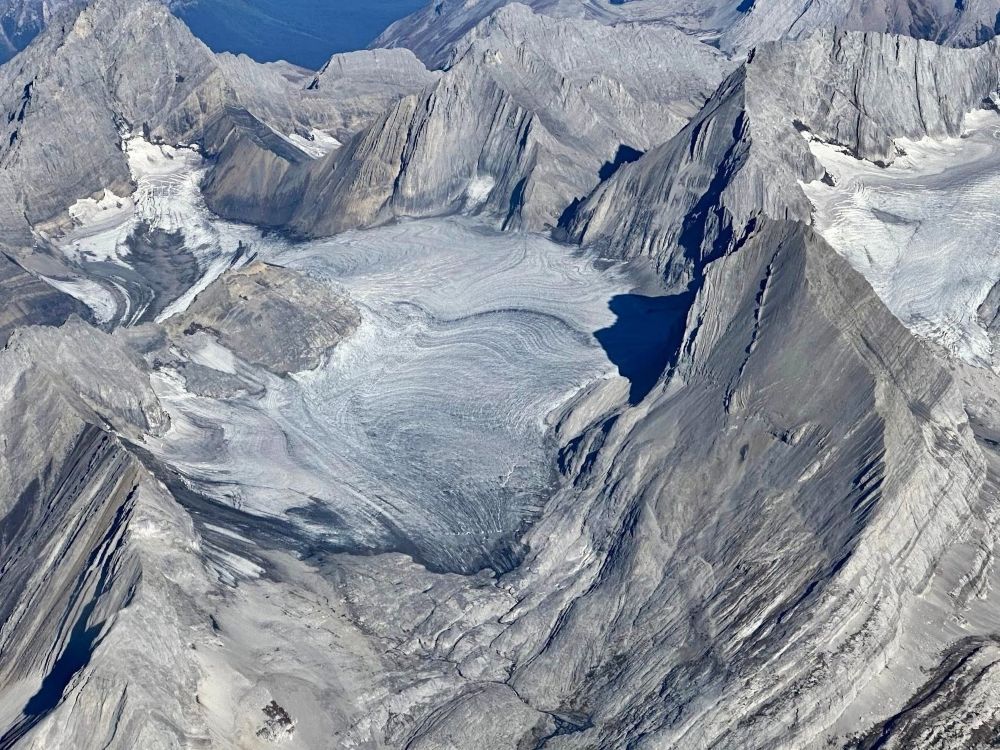
Glaciers in British Columbia are disappearing faster than ever before, shrinking in the last four years at nearly twice the rate of the previous decade.
The finding is in a new study by a research team led by Brian Menounos, a glaciologist based at the University of Northern British Columbia, and a chief scientist at the Hakai Institute. The research, published today in the journal Geophysical Research Letters, underscores the prediction that most ancient icefields in B.C. will disappear by the end of the century.
What is making the glaciers retreat at a faster pace than before? The higher temperatures and heat waves due to climate change are one part of the equation. Wildfires are the other — but not in the way you might think. Instead of the heat from the flames melting the glacier, the smoke from the fires is darkening the snow and ice. This causes the surface of the glacier to absorb more energy from the sun and melt faster.
It’s all part of a complex feedback loop, called the ice albedo effect, that intensified as fire weather broke records in western North America over the last few years, the study found.
Menounos and his colleagues used aerial surveys and ground-based monitoring of three glaciers in Western Canada, four in the U.S. Pacific Northwest and 20 in Switzerland. The authors conclude that since 2021 glaciers in Western Canada and the United States have become 12 per cent smaller than they were in 2020. And that since 2000, glaciers have lost about 23 per cent of their volume in total.
“If this is signalling what’s in store for the future,” Menounos told the Tyee, “then we are seeing rates of change that are even faster than what we may have predicted before.”
Here’s how the ice albedo effect is playing out in an era of intensifying wildfires. As the climate warms droughts persist, making it easier for wildfires to ignite and spread throughout the province. More wildfires produce more smoke carrying black carbon and dust particles, some of which are carried by winds far and high to blanket glaciers.
At the same time, melting from the warming climate thins the glaciers’ darkening surfaces and exposes more soil and rock.
The hotter temperatures also make the surfaces of the glaciers wetter. The wetter the surfaces get, the darker the glaciers become.
This alters the glacier’s albedo — meaning that instead of reflecting the heat energy from the sun as it usually would with bright white snow, the glacier absorbs more and more heat.
This dynamic in B.C. has caused glaciers to melt at a rate that researchers did not anticipate. According to Menounos, glacier loss is accelerating so rapidly that it has “fallen off a cliff,” rather than following a gradual decline.
‘Down the cliff’
British Columbia is home to some 17,000 glaciers, Alberta to around 800. Glaciers contribute to maintaining ecosystems, providing water and cooler conditions during drought, feeding waterways that are harnessed to help produce electricity.
The albedo effect is well-known to researchers. What’s causing rising concern is the fact that annual snowfalls that normally would be expected to reset the surface of glaciers to a bright white state aren’t having the same impact. In fact, glaciers are losing snow and ice at a faster rate than they are getting it back because of fires and heat waves.
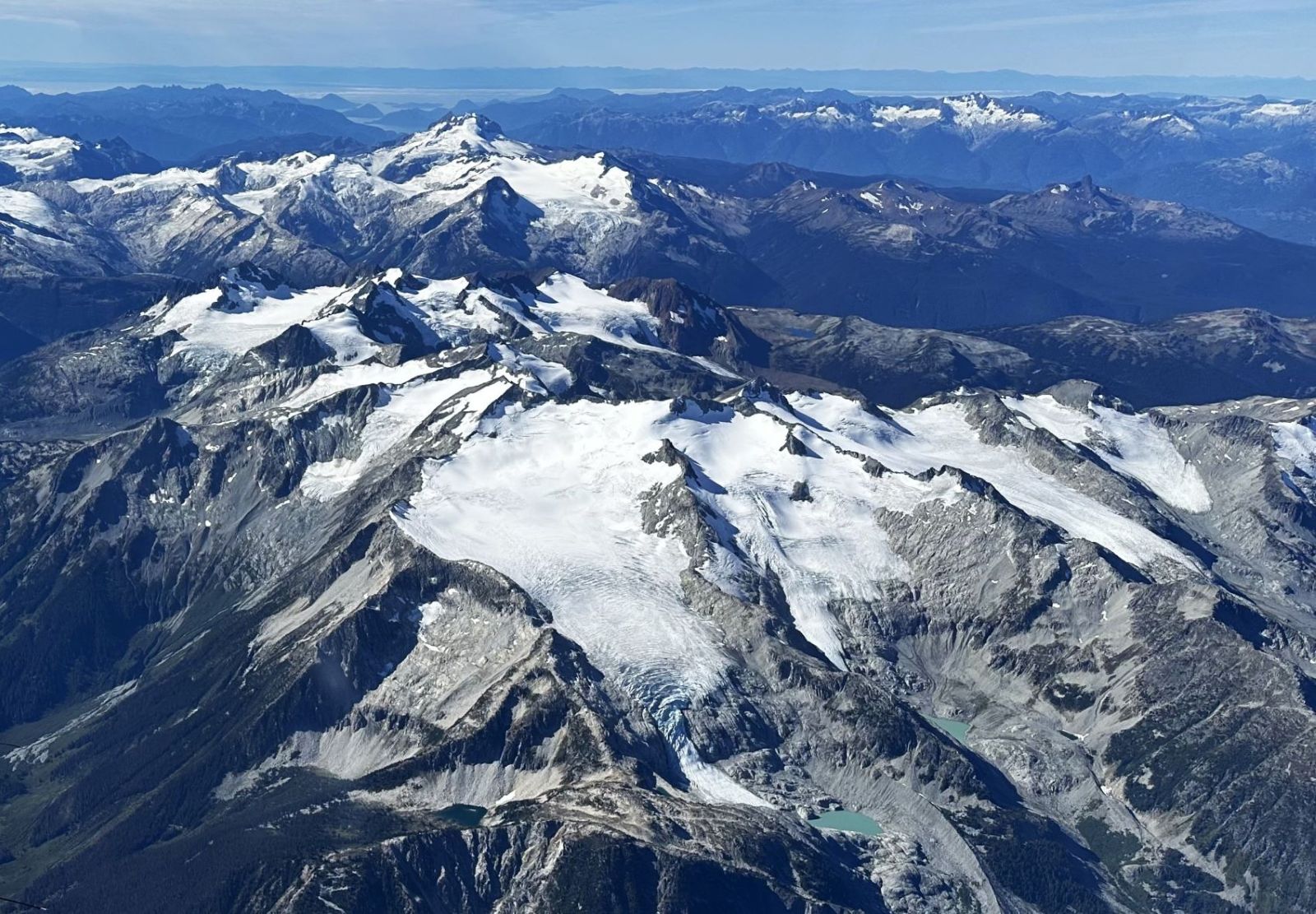
Researchers found that from 2021 to 2024, the temperatures exceeded those of the previous decades in all regions. In western North America and in Switzerland this included record-breaking heat waves in spring and summer.
“It’s like a bank account,” explained Menounos. “You’re adding $500 each year, you’re taking out $2,000 and so you’re going to find that after a number of years, you don’t have a lot of money left.”
Meaning that even though it might still snow on the glaciers, it’s not enough to replace the loss from extreme heat and wildfire seasons.
What’s at risk
Menounos and his co-authors conclude that even though B.C.’s glaciers are melting faster, they may have reached their peak amount of annual water run-off. That’s because as they shrink, they have less and less water to shed.
As a result, from now on glaciers will supply decreasing amounts of water to streams and rivers over the summer months until the ice is completely gone.
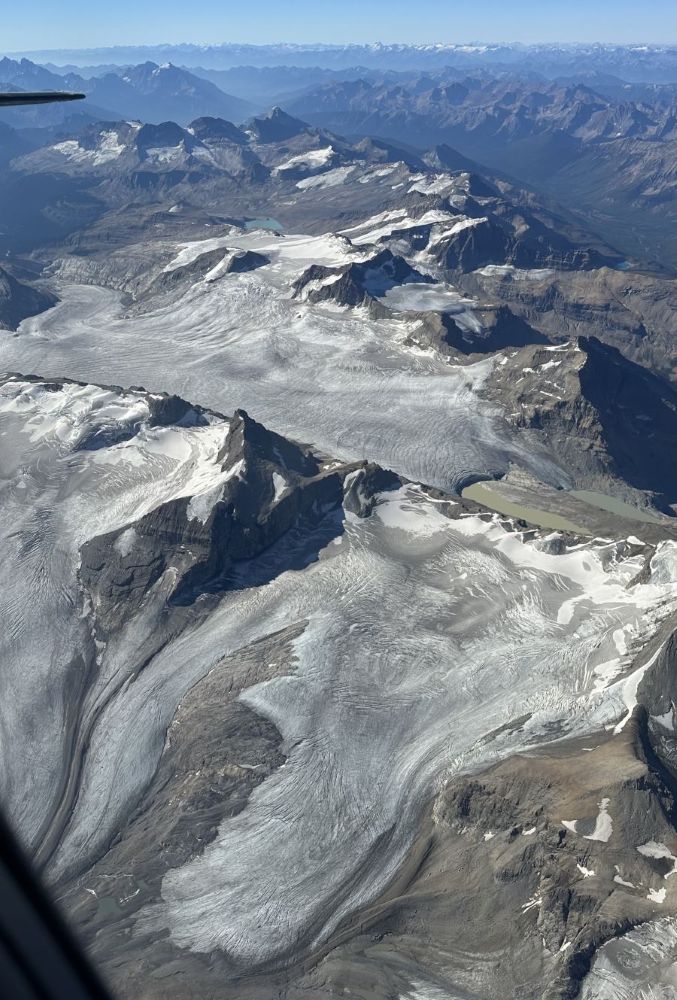
When the glaciers disappear, B.C. and Alberta will lose their natural freshwater storage along with it. Which is important in the late summer, during droughts and heatwaves. During those periods, glaciers provide reliable drinking water to communities.
Losing glaciers would also have large impacts on salmon. Glacier run-offs provide salmon with cooler temperatures to spawn in. The diminishing cool streams and the changing river systems might influence their spawning cycles.
Disappearance of glaciers will have large implications for the active ecosystems in the province, and make communities “less climate resilient,” explained Menounos.
We can’t put a blanket over 17,000 glaciers
While conditions seem dire for most glaciers right now, Menounos is still optimistic that we can pivot to save medium to large ones.
“If you want to change the fate of some of the largest, medium-sized glaciers, then a reduction in greenhouse gas emissions globally would help,” said Menounos.
Menounos explained that solutions like the reflective blankets in place to protect glaciers in Switzerland, wouldn’t work for B.C. “We can’t put a blanket on 16,000 individual glaciers, it's not possible,” said Menounos.
Instead, Menounos says a collective effort to reduce greenhouse gas emissions is the best strategy to mitigate the rate of glacier loss.
Canada’s federal government has made plans to cut emissions to 45 to 50 per cent below 2005 levels by 2035. Yet climate experts have recommended a higher reduction goal.
Even if we were to rapidly improve greenhouse gas emissions and heat conditions, there are certain smaller glaciers that are past the point of saving, explained Menounos.
This is because of what Menounos described as a response time in the glaciers. Which means that while the glaciers are responding to current conditions, they are also responding to the climate conditions of the last several decades.
“Let’s say we held the earth’s temperature, stabilized it right now at whatever temperature it is, the glaciers collectively would continue to lose mass,” said Menounos.
Menounos and his team also highlighted the importance of new models being created to research the shifts in glacier melt over time.
Right now, the current research methods to track glaciers are not up to date with the latest impacts of glacial melt, like wildfire smoke changing the albedo. As Menounos explains, the tracked impacts and predictions of wildfire smoke to glaciers are anecdotal.
Until they can fully catch up with the changing environment for glaciers, “we’re just dealing with a runaway freight train,” said Menounos. ![[Tyee]](/design-article.thetyee.ca/ui/img/yellowblob.png)
Read more: Alberta, Environment





Tyee Commenting Guidelines
Please note that email notifications for replies are not currently working due to a software issue which may be resolved in a future update.
Comments that violate guidelines risk being deleted, and violations may result in a temporary or permanent user ban. Maintain the spirit of good conversation to stay in the discussion and be patient with moderators. Comments are reviewed regularly but not in real time.
Do:
Do not: