


 SHARE:
On days when I’m feeling glum about the state of the world, I re-watch The Devil Wears Prada. The 2006 movie is based on a 2003 novel of the same name by Lauren Weisberger. The book was ostensibly a work of fiction, but it turned heads because of Weisberger’s real-life experiences working as a personal assistant to Vogue editor Anna Wintour.
The Devil Wears Prada is not the best film ever made, nor even a particular favourite of mine (Anne Hathaway still gives major cringe), but there is something about the world it presents, one from recent history, that provides a form of comfort.
Once upon a time, I bought every fashion magazine on the newsstand: Vogue, Elle, Harper’s Bazaar, Marie Claire, W, sometimes stooping as low as InStyle. Then I’d wait impatiently for the beginning of the next month, when all the new issues hit the streets.
In the pre-internet era, glossy mags ruled the roost like the dinosaurs of old, roaring about hemlines and handbags. Vogue’s annual September issue weighed as much as a newborn baby.
The overstuffed edition was the pièce de résistance in the fashion calendar, an exhaustive compendium of glossy ads and iron-clad fashion dictates. It was wadded to the absolute gills with everything covetable and stylish. I bought it without fail and pored over every page.
That world seems long ago and far away now.
Fashion and media have transformed
The Devil Wears Prada 2, the sequel to the original, opened in theatres on May 1 and is well on its way to making a boffo box office profit.
Prada 2 updates the original story based on Weisberger’s roman à clef, but Weisberger wasn’t the first to tear aside the silken curtains of the high fashion world. Other books like Mary Cantwell’s 2000 Manhattan Memoir and André Leon Talley’s 2021 The Chiffon Trenches: A Memoir also examined the highs (haute, in fashion parlance) and lows of working in fashion media without resorting to thinly disguised versions of the real people involved.
In the years between the book and now the two films, media and fashion have both changed enormously. This truism provides the body from which springs a veritable multi-headed hydra of issues — everything from corporate conglomeration to body positivity or lack thereof, the rise of the digital realm and the tech bro billionaires who oversee it.
In a recent re-watch of the 2006 film, a few things were jarring, especially the emphasis on thinness. The heroine of the story, Andrea “Andy” Sachs (Hathaway), is nicknamed “Six” in reference to her dress size. But it also infers a certain cluelessness. Even classlessness.
When Andy wanders into the offices of Runway Magazine (a thinly veiled version of Vogue) and meets its fearsome editor Miranda Priestly (Meryl Streep), she is very much a babe in the fashion woods. With ambitions to become a real journalist, Andy takes the job as Priestly’s assistant, thinking a year at the magazine will open multiple doors and potential employment.
What follows is a plunge down the rabbit hole into an entirely new world, one governed by the rules, dictums and opinions of the arbiters of style. In this realm, Priestly is the Red Queen, a dictatorial ruler who keeps her subjects in check with a purse of her lips, a withering gaze and a facility with insults that operate on the level of cruise missiles. Utterly obliterating, in other words.
In her lumpy blue sweater (actually, cerulean) Andy is almost too easy a target. But after being blown to smithereens, she decides to fight back. She transforms into a glamazon and whittles herself down to a size four. The plaudits are immediate: in come the men, clothes and a tiny smidgen of respect from her ice-queen boss.
In the new film, Priestly is kept on a tight leash, no longer allowed to comment on women’s bodies, but still finding a way to slide in a few vicious barbs under cover of boomer confusion. As she states in the film about the new concept of inclusivity and body positivity, “Why?”
In ‘Prada 2,’ money metastasizes into a monstrosity
There is a bit of waxy mummified air in the sequel with its constant nods to the original film, whiffs of theme music and winking nods to famous bits of dialogue, but there is some critique underneath. Call it the cake beneath the sugary frosted icing of clothes, style and makeup.
First and foremost, Prada 2 takes on the role of money, and how it has infiltrated almost everything, hollowing out artistry and ideas in the pursuit of profit. Money has been always at the heart of fashion, but it has since metastasized into a monstrosity, transforming the priesthood of editors, writers and photographers into little more than content farmers.
The mournful undercurrent that swirls beneath the narrative is very present, despite the heaps of shiny baubles layered on top of it.
When Prada 2 starts, the award-winning newspaper that Andy works for has been devoured by its corporate masters, and the entire editorial staff fired. So she ends up back where she started at Runway Magazine, this time as its features editor, much to the horror of Priestly and the bemusement of Nigel (Stanley Tucci), her second-in-command at the publication.
A major scandal involving Runway’s endorsement of a sweatshop fashion line has left the publication and its editor with egg on her face (not a good look) and Andy is brought in to address the issue and add some journalistic gravitas to the magazine.
In the intervening years, since Andy’s tenure, Runway has pretty much ceased to be a magazine. As Nigel informs Andy, there is still a “book,” or the physical copy of the magazine. But the majority of Runway’s business is online content in all its many iterations.
With the premise established, it’s off to the style races, with the usual scheming, backstabbery, bitchy barbs and a whole lot of shoes, bags and giant caftans.
To its credit, Prada 2 adds some new elements like billionaire idiots and their fed-up ex-wives. The inference that nerdy tech bros, modelled on the likes of Jeff Bezos and Mark Zuckerberg, have destroyed the heady climes of high fashion are entertaining enough.
But here’s also where things get a mite tricky.
Can we celebrate fashion while ridiculing its excesses?
Biting the hand that feeds isn’t quite sufficient to encapsulate it. The film wants to celebrate fashion, even as it purports to ridicule its excesses. In this, it’s a bit like a snake swallowing its own tail, and in the process becoming a Birkin bag.
Fashion has always been aspirational; about fantasy. It’s a perfumed, giddy-making seduction that floats into the most remote and rural places.
In the first film, this exotic dream is given voice by Nigel, who explains to Andy that Runway Magazine was a shining beacon, proffering a place where beauty, elegance and style were all that mattered.
I had a similar experience growing up in the Kootenays in the mid-’80s. An issue of Vogue in my Christmas stocking with a feature dedicated to the designs of French designer Yves Saint Laurent, and it was all over for me. Haute couture had me by the throat and it never let go.
But money has a way of ruining everything.
The seams burst open
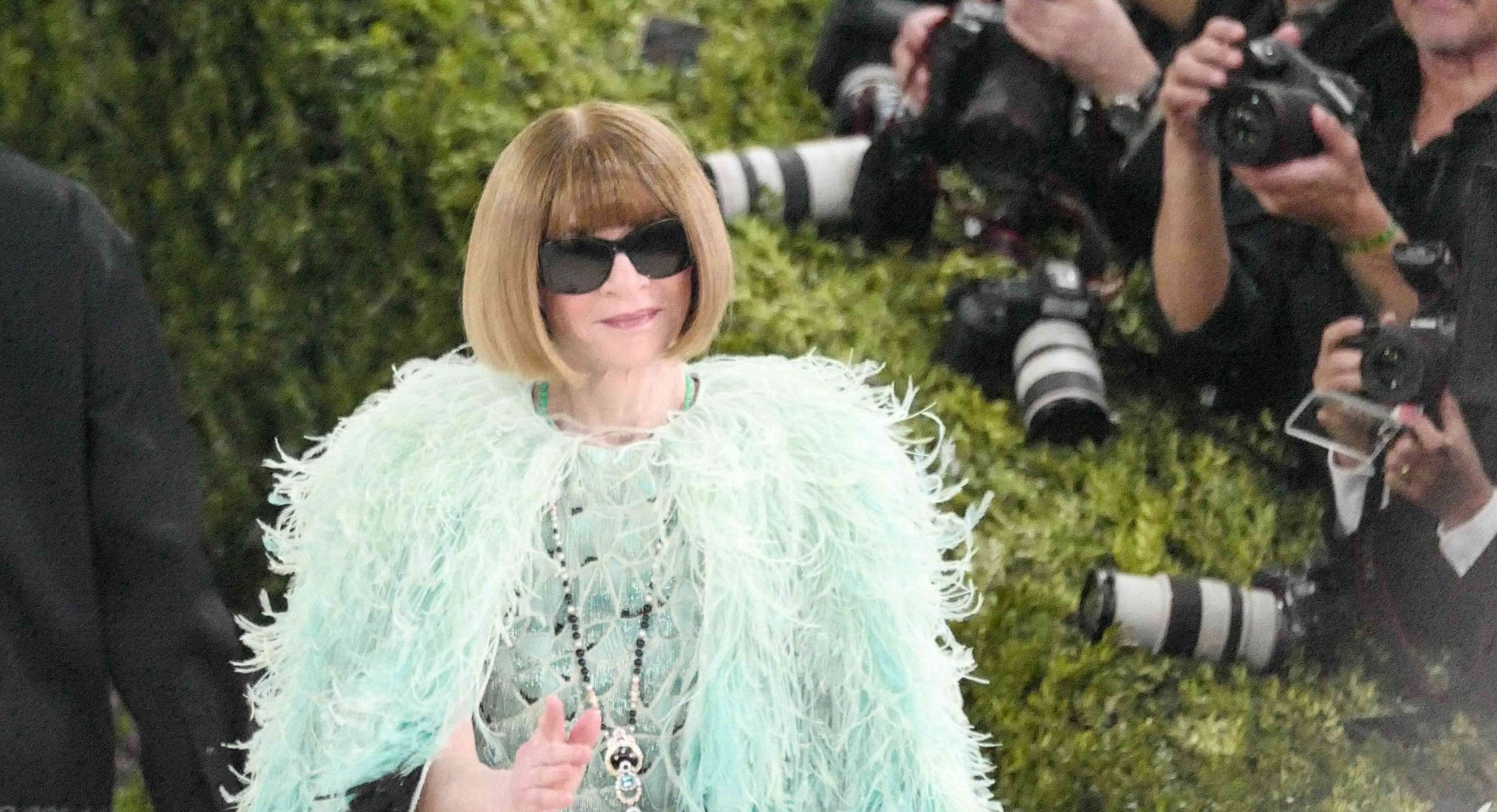
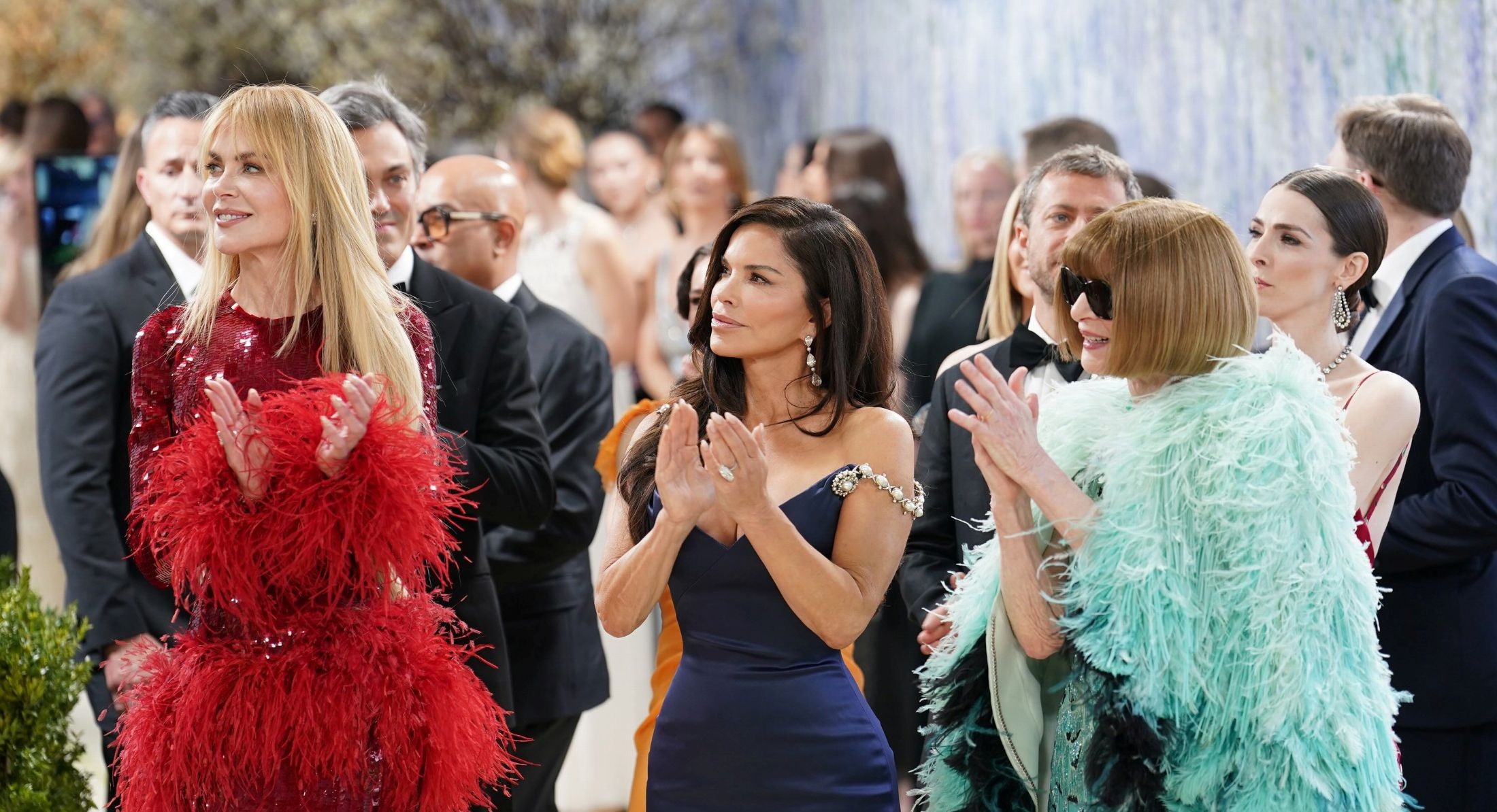
After watching The Devil Wears Prada 2, I came home and scrolled through the hundreds of photographs of the different ensembles gracing the figures of celebrities and fashionistas on display at the 2026 Met Gala, an annual high-profile fundraiser for the Metropolitan Museum of Art’s Costume Institute in New York City. Even the most resolutely uninterested would be hard pressed to avoid the coverage of the event. It is everywhere.
The furor around the Met Gala has grown exponentially in recent years, with influencers and TikTok content producers fuelling the flames with endless takes on what people are wearing, but also the politicking behind the scenes. This year, public backlash against the gala focused on Amazon founder Jeff Bezos and his wife Lauren Sánchez Bezos, who were major financial sponsors of the 2026 gala and were named its honorary chairs.
The antipathy that Vogue editor Anna (Nuclear) Wintour purportedly has for Sánchez Bezos has garnered a fair amount of chatter. With her overflowing bosom and plastic surgery, Sánchez Bezos looks like the very embodiment of nouveau riche gaucherie.
In the photos from the Met Gala, Sánchez Bezos largely looks completely terrified. Maybe not just of Wintour, but of the great unwashed public in their T.J. Maxx outfits and Coach purses.
Protests, rival events and protesters hiding bottles of fake urine at the 2026 gala poked some holes in the glamour of the evening. The bottles were a reference to widespread worker allegations against Amazon for its workplace culture of prioritizing efficiency over humanity; Amazon drivers have claimed they must urinate in empty bottles rather than take bathroom breaks while on shift.
High fashion and the culture surrounding it was once a bit of diversion. Now it just seems kind of gross.
But even as a great many Americans, and probably the rest of the world soon enough, are feeling the economic pinch from the U.S. administration’s economic meltdown, The Devil Wears Prada 2 is on track to make barrels of money. That’s the weird part. Maybe because we’re all still complicit.
I used to use fashion as a means of escape. An off-ramp for when the world got to be too much. The cycle of daily news horrors fell away in swaths of crisp cotton, thick wool, serpentine silk.
But even that feels suspect, undermined by the constant worm of money grubbing at the heart of the rose.
Even gussied up in the high gloss of haute couture, The Devil Wears Prada 2 feels threadbare. ![[Tyee]](/design-article.thetyee.ca/ui/img/yellowblob.png)
Read more: Fashion, Film, Science + Tech





Tyee Commenting Guidelines
Please note that email notifications for replies are not currently working due to a software issue which may be resolved in a future update.
Comments that violate guidelines risk being deleted, and violations may result in a temporary or permanent user ban. Maintain the spirit of good conversation to stay in the discussion and be patient with moderators. Comments are reviewed regularly but not in real time.
Do:
Do not: