


 SHARE:
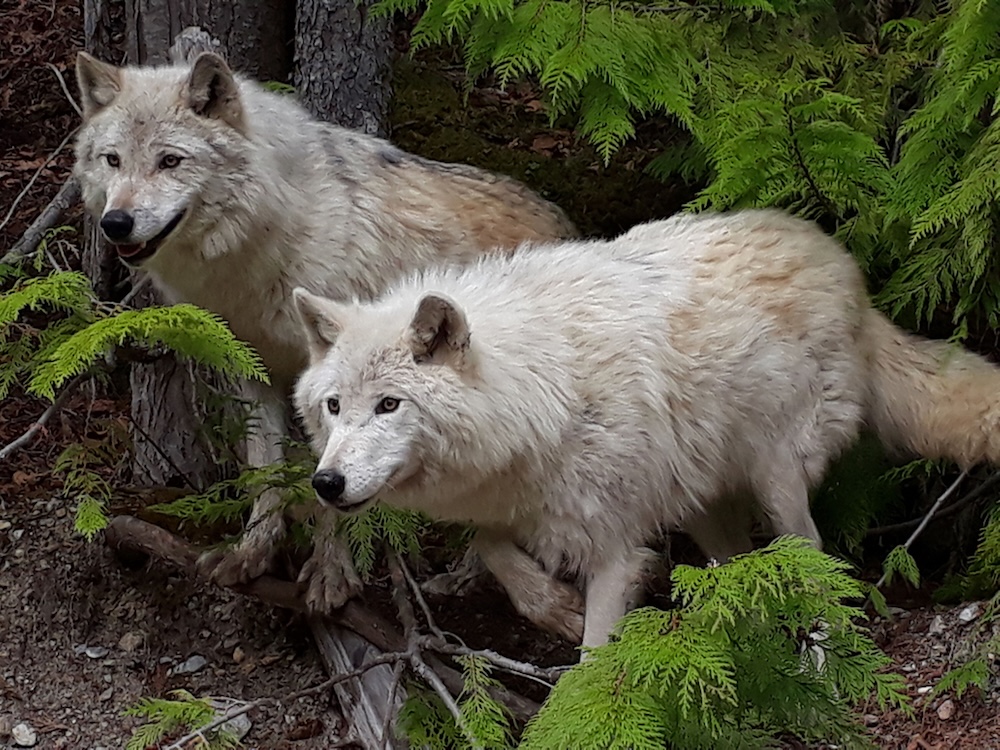
Each winter for the past decade, sharpshooters hired by the B.C. government have killed hundreds of wolves from helicopters in a last-ditch attempt to save struggling caribou herds.
This year, the B.C. government spent $1.55 million to shoot 301 wolves that posed a threat to boreal and mountain caribou herds, according to unpublished information The Tyee obtained from the B.C. Ministry of Water, Land and Resource Stewardship.
That’s an average of $5,150 for every dead wolf.
But the cost per wolf was much higher for some herds. In the Kootenays, where eight mountain caribou herds have become locally extinct, the government paid $74,900 to shoot just one wolf in the habitat of the Columbia North herd, and $15,780 for every wolf killed to protect the Central Selkirks herd.
It also spent $56,500 on the wolf cull in the habitat of the Barkerville herd in B.C.’s Cariboo region, but no wolves were killed.
The wolf cull was slated to end this year. But the ministry is now considering a five-year extension, rekindling a smouldering debate about the cost and ethics of killing wolves as the government continues to sanction old-growth logging and other resource extraction projects in critical caribou habitat.
The proposed extension has not been advertised publicly. The Tyee learned about it from conservation and animal welfare groups that the ministry is consulting.
“We’re killing one species to save another,” Chris Johnson, a professor of wildlife ecology at the University of Northern British Columbia, told The Tyee.
“I know lots of caribou biologists who wish that we weren't killing wolves but understand that it's a necessary evil.”
Johnson, who has co-authored studies about the wolf cull and caribou recovery, said evidence from B.C. and Alberta shows that killing wolves stabilizes caribou herds and reverses population declines.
“It costs a lot of money to charter a helicopter and to pay people to do that work, but it is actually probably the most efficient, or least expensive, method for conserving caribou in the short term,” he said.
Other approaches to saving endangered caribou — such as penning pregnant females until their calves are strong enough to stand a better chance of surviving in the wild — are even more expensive, he noted.
If the cull is discontinued, Johnson said, wolves will likely return to prey on vulnerable caribou herds, causing further population declines and herd losses.
“If we back away from this now, we will likely see caribou populations disappear from British Columbia.”
Johnson said B.C. won’t need to kill wolves indefinitely if sufficient caribou habitat is protected and the predator-prey balance — which is off-kilter in large part because industrial logging, road building and other human disturbances have given wolves easy access to caribou — is restored.
“The hope is that we’re going to do good things for caribou.”
Wolf cull has ‘no exit plan’
But First Nations, conservation organizations and animal welfare groups say the B.C. government is not doing nearly enough to protect and restore caribou habitat.
In the past two months, Syilx Okanagan Nation and Xatśūll First Nation have separately asked the federal government to step in with an emergency order under Canada’s Species at Risk Act to protect caribou herds in their territories.
An emergency order would give Ottawa the power to make decisions that normally fall to the B.C. government, such as whether to issues permits for industrial logging in old-growth forests that provide food and shelter for at-risk caribou herds.
The emergency order requests come as calls to end the wolf cull are growing. More than 100 environmental and wildlife protection organizations, scientists, Indigenous advocates and wildlife-based businesses recently signed an open letter to B.C. Premier David Eby, calling for an end to the aerial gunning of wolves.
“The wolf cull was sold as a short-term bridge to recovery,” the letter says. “A decade later, habitat destruction continues unchecked in areas that are important for caribou recovery, and the wolf-kill program has no exit plan.”
Sara Dubois, a biologist who is the senior director of animal welfare science and standards for the British Columbia Society for the Prevention of Cruelty to Animals, told The Tyee that chasing wolves with helicopters to facilitate aerial gunning is very stressful for the animals.
The society objects to the practice of using a “Judas wolf” — a wolf that is caught alive and outfitted with a tracking collar — to lead sharpshooters to its pack. Dubois called the use of Judas wolves “very unethical,” saying it is “not fair chase in the world of hunting.” B.C. has used this tactic in the past, but it’s unclear whether it did this past winter.
Dubois also questioned if wolves are being killed humanely. Helicopters don’t usually land after aerial gunning, so sharpshooters can’t necessarily ensure an animal has died quickly.
In the absence of fulsome habitat protections for caribou, wolves are just a scapegoat, Dubois said.
“There is no end game. When can we stop culling wolves? No one’s asking that.”
Decisions ‘not made lightly’
The B.C. Ministry of Water, Land and Resource Stewardship told The Tyee that the wolf cull is necessary to prevent the continuing decline of caribou herds.
Fourteen out of 15 caribou herds where predator reduction has been implemented have either stabilized or increased in number, and the remaining herd is still being evaluated, the ministry said.
More wolves — 56 — were killed in the habitat of the Takla southern mountain caribou herd in B.C.’s north-central Interior than anywhere else, at a cost of $2,245 per dead wolf.
In the habitat of the Hart Ranges caribou herd in central B.C., the price tag for killing 22 wolves this year was $165,000 — $7,500 for each wolf.
The ministry confirmed that the Coastal GasLink pipeline project, operated by TC Energy, contributed $1.5 million to recovery efforts, including wolf culls, for the Hart Ranges and Telkwa herds after pipeline construction destroyed critical caribou habitat. The pipeline supplies fracked gas from B.C.’s northeast to the LNG Canada export project.
The ministry said there are an estimated 1,500 more southern mountain caribou in B.C. than there would be without human interventions such as wolf culls. It pointed to a 2024 study that found recovery actions have increased the abundance of southern mountain caribou.
The Columbia North herd grew from 124 animals in 2014 to 185 animals last year, while the Klinse-za herd in B.C.’s Peace region — helped by a First Nations-led penning project — increased from 38 animals to 193 over the same time, the ministry noted.
“Predator reduction decisions are not made lightly and are one part of a broader recovery approach that includes habitat protection,” the ministry said, adding that B.C. has taken “significant habitat action” for caribou since 2021.
That includes expanding the Klinse-za / Twin Sisters Park in the Peace region by more than 200,000 hectares, establishing the Whitesail Wildlife Habitat Area in west-central B.C. and protecting 1.4 million hectares in the province’s northeast, the ministry said.
The ministry said B.C. remains committed to long-term caribou habitat protection “while taking targeted, science-based actions now.”
Kristen Weiss, a conservation scientist with Pacific Wild, said killing wolves is not a substitute for the “harder political decision” to protect and restore essential caribou habitat.
“We’re not seeing a sufficient amount of habitat protection,” she said, pointing to a June 2026 study showing that the pace of destruction of critical habitat for southern mountain caribou, through logging and road building, hasn’t slowed since the wolf cull began.
The open letter to Eby also notes that the government’s caribou recovery program spent about $2.5 million on direct habitat restoration efforts between 2017 and 2023, compared with more than $10 million on predator reduction over a similar period.
Pacific Wild and other groups are calling for an independent audit of the government’s “predator reduction” program. Although wolves are the focus, three cougars were also killed this year, according to the ministry.
Weiss, who is Pacific Wild’s wildlife and forests campaigner, said there’s a huge ecological cost to eliminating so many wolves. That cost needs to be documented, she said.
Wolves are a keystone species that can shape moose and deer populations and weed out sickly animals to stop the spread of diseases, Weiss added. “What does killing this many wolves do to the ecosystem at large?”
Dubois, from the BC SPCA, played a key role in developing seven international principles for ethical wildlife control.
The principles — outlined in the journal Conservation Biology — ask questions that must be answered before wildlife culls are approved. Can the problem be mitigated by changing human behaviour? Is the desired outcome clear and achievable, and will it be monitored?
Dubois said when the principles are applied to wildlife control efforts such as killing deer on Sidney Island, near Victoria, or on Haida Gwaii, it’s clear that the best course of action is to proceed with a cull.
But when the principles are applied to B.C.’s wolf cull, she said, “it fails the test.” ![[Tyee]](/design-article.thetyee.ca/ui/img/yellowblob.png)
Read more: Environment












Tyee Commenting Guidelines
Please note that email notifications for replies are not currently working due to a software issue which may be resolved in a future update.
Comments that violate guidelines risk being deleted, and violations may result in a temporary or permanent user ban. Maintain the spirit of good conversation to stay in the discussion and be patient with moderators. Comments are reviewed regularly but not in real time.
Do:
Do not: