


 SHARE:
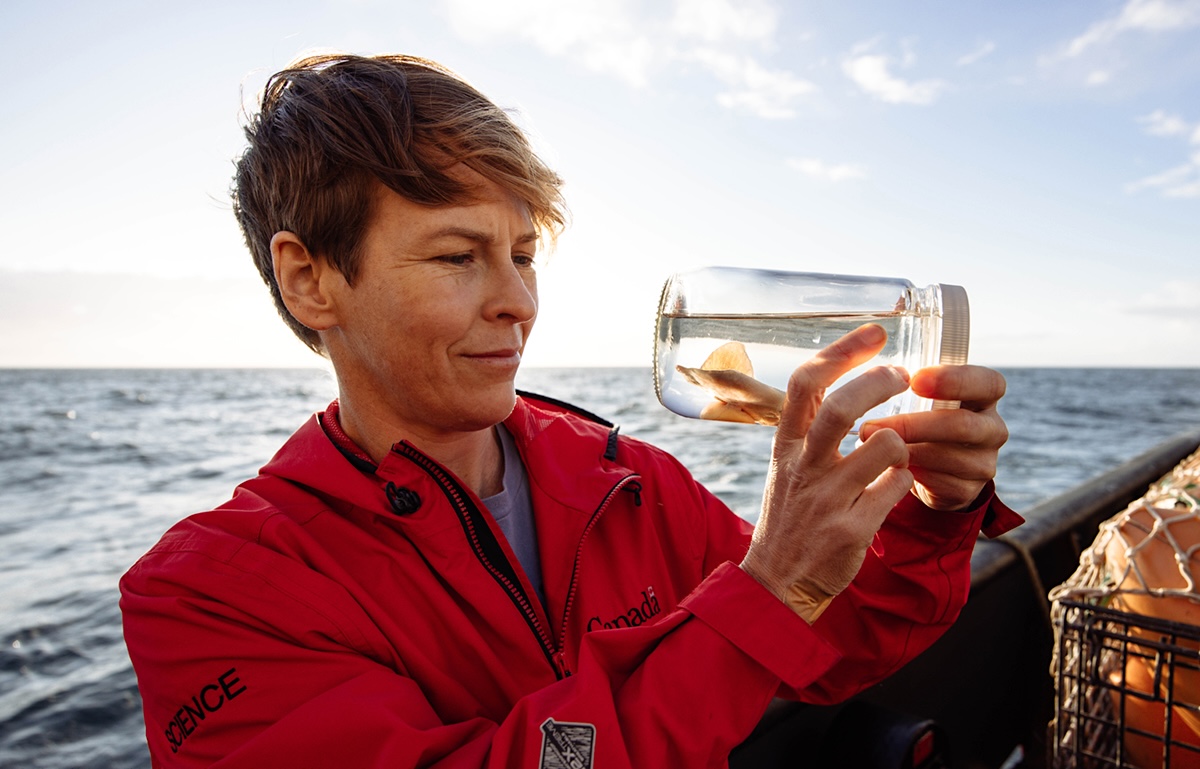
Deep-sea mining will cause more direct damage to the oceans than climate change, pollution, ocean acidification, global warming and oil spills combined, said Cherisse Du Preez, head of deepwater ecology at Fisheries and Oceans Canada.
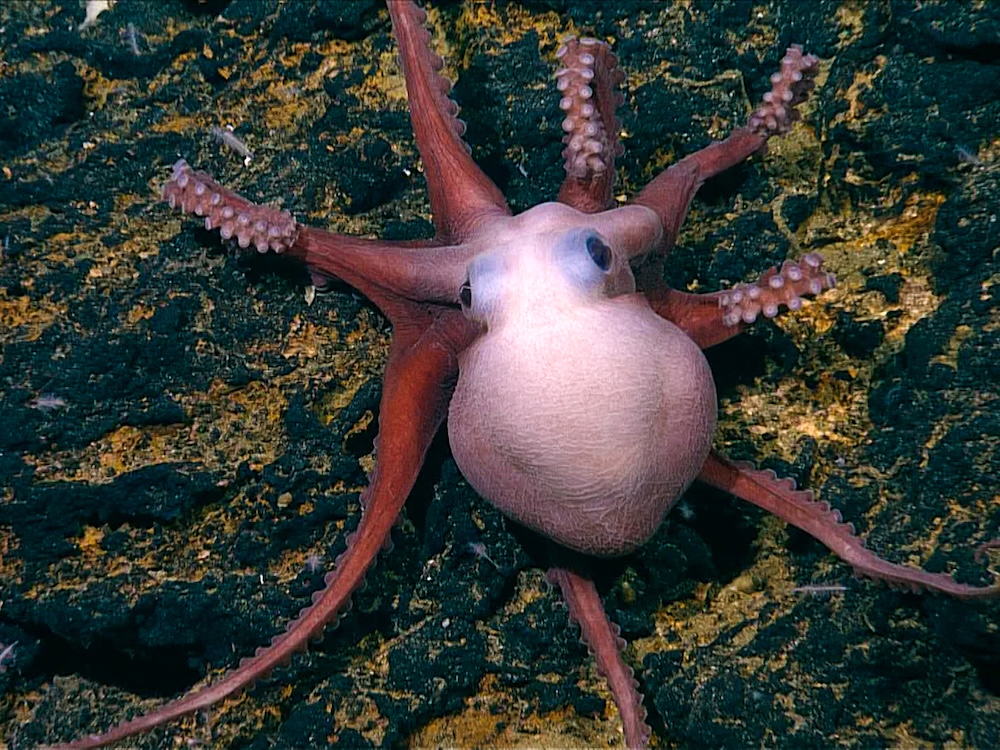
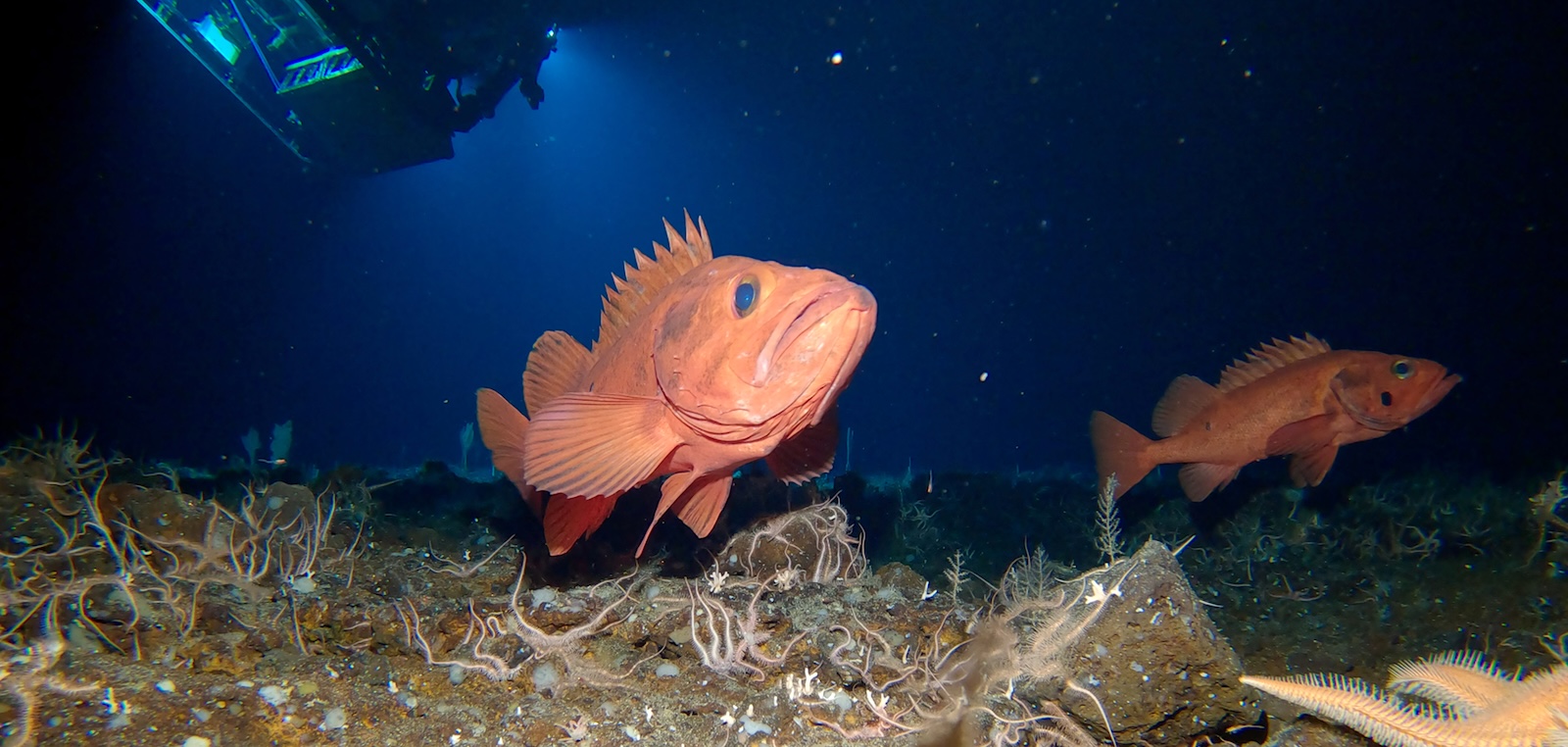
Life in the deep sea is silent and slow-moving and adapts on geological time scales, she said. Sponges form living reefs 10,000 years old, sharks can live to 600 years old and rockfish can live more than 200 years.
Therefore, deep-sea creatures will never adapt to or outrun the effects of deep-sea mining, she said, adding that “there are lineages in the deep sea that have survived all of Earth’s mass extinctions, except potentially what we’re about to do.”
Du Preez said it’s a “sucker punch” to see the world gearing up to start deep-sea mining.
As a scientist, she said, it’s her job to make sure decision-makers fully understand the consequences of deep-sea mining. If more people realized what’s at stake and what is about to be lost, there’s no way they would allow it, she said.
The open ocean produces half the oxygen humans rely on to breathe.
It’s the largest carbon sink in the world and has absorbed more than half of the heat from human-caused climate change.
Ninety-five per cent of all livable space for life on Earth is in the deep sea, with rainforests, mountain ranges, savannahs, plains and cities squeezed into just five per cent of habitable space, Du Preez said.
And deep-sea mining threatens the entire ocean, she said.
It will do this in two major ways.
First, by devastating life on the sea floor as machines obliterate everything in their path in order to suck up precious metals.
And second, by dumping almost everything sucked up back into the ocean, causing plumes of toxic sediment that contain radioactive material and heavy metals to spread around the ocean, suffocating and poisoning animals.
This devastation could soon be happening close to home as the U.S. Bureau of Ocean Energy Management considers approving mining seamounts on the Canada-Alaska border.
The Vancouver-based Metals Co. has been working with the Donald Trump administration to eventually mine the Clarion-Clipperton zone, located in the waters between Mexico and Hawaii.
Zeroing in on seamounts
Many precious metals deposits in the ocean are found on and around seamounts — underwater volcanoes and mountains. That’s because underwater volcanic activity is pumping out interesting minerals and creating hard surfaces for metals to precipitate around, Du Preez said.
Seamounts can have cobalt-rich ferromanganese crusts and be peppered with hydrothermal vents, which contain polymetallic sulphides. Polymetallic nodules will be scattered on the seamounts and vents and around the base of the volcano on the abyssal plain, according to a recent paper published by Du Preez.
It’s inaccurate to claim that polymetallic nodules sit on plains with no life or biodiversity hot spots nearby, she added — most nodule fields are on or around seamounts.
Seamounts are often extremely steep, which makes each seamount a bit like an underwater island oasis for marine animals, she said. They can’t just swim out into the open ocean to find another seamount to call home.
Animals are similarly reliant on the mineral-enriched warm water of hydrothermal vents, and the life there is already threatened due to climate change and pollution. Up to 62 per cent of the mollusks that are endemic to hydrothermal vents are red-listed.
Du Preez doesn’t want to see these vulnerable ecosystems bulldozed to access a small amount of precious metals.
“You’d never use one of these machines to drive through a forest and be OK with crushing deer, squirrels, trees and rocks. People would never allow that kind of mass death to occur,” she said.
The introduction of high levels of noise pollution into “the most silent place on the planet” would also have far-reaching impacts, she said.
As an example she pointed to sperm whales, which can dive three kilometres below the surface and hold their breath for two hours. Juvenile sperm whales stay at the surface and keep in touch with the diving pod through sound. They could become separated if there were noise pollution coming from the ocean floor, she said.
Slow growth, quick destruction
The mineral-rich nodules mining companies have set their sights on can take millions of years to form, so it’s not as if the ecosystem would be able to recover any time soon if we begin mining, said William Cheung, a professor and Canada Research Chair in ocean sustainability and global change at the University of British Columbia Institute for the Oceans and Fisheries.
Cheung said he shares Du Preez’s concerns about deep-sea mining and hopes governments follow the precautionary principle, where they choose to be overly cautious and protective when dealing with the deep sea, which is still largely undiscovered.
Research on the real-world impacts of deep-sea mining is limited because it’s not widely practised, but Du Preez said she got to study the underwater eruption of Hunga Tonga-Hunga Haʻapai in 2016, which formed an island. The volcanic eruptions spread a thin layer of ash on the surrounding sea. The ash sank and scientists have documented that it killed everything it settled on, she said.
Sediment settling after toxic plumes would suffocate and kill glass sponge reefs in B.C., which filter vast amounts of water, sequester carbon and form vital habitat for fish.
It would also pump heavy metals and radioactive material into the water column.
When deepwater ecologists send remotely operated vehicles into the deep to collect rocks, they have to check samples with a Geiger counter to test for radiation. Depending on the site, about one in two or one in three rocks have to be put back because they’re too radioactive to safely keep on the ship, Du Preez said.
Seamounts act as huge ramps that push water from the sea floor up to the surface. If deep-sea mining slurry were dumped near a seamount, the slurry would be pushed up to the surface and likely caught in an eddy at the top. Eddies are circular currents that form as water is pushed around a seamount and can be 100 kilometres in diameter, Du Preez said.
An eddy could quickly spread sediment through the water, which would pollute the clear blue of the open ocean.
Whales and turtles that get caught in the slurry could become disoriented and exposed to radiation and heavy metals. Fish would get sediment in their gills and possibly suffocate, or eat toxic material, which will bioaccumulate in their bodies and possibly poison humans who later eat the fish.
This could have a disproportionate impact on coastal developing nations that rely on seafood as their main source of protein.
It’s also possible sediment could affect plankton that form the base of the food web for many fish species, which could have wide-ranging impacts, Cheung said.
Nick Dulvy, a professor in marine biodiversity and conservation at Simon Fraser University, took it even further.
He’s concerned deep-sea mining plumes could create a highly toxic layer that separates the upper and lower ocean, which would affect the largest daily movement of animals on the planet.
When the sun sets, enormous numbers of fish, squid and plankton rise up to the surface of the open ocean. During the day they hide in the dim waters of the mesopelagic zone, which stretches from 200 metres to 1,000 metres below the surface.
Species such as tuna, billfish and sharks rely on this daily migration for food, Dulvy said.
How exactly underwater mining plumes could affect this daily migration isn’t well understood, but at best it’s likely to pollute fish, such as tuna, that humans rely on, and at worst it could “poison the food web with nigh-on impossible mitigation strategies,” he wrote in an email.
How deep-sea mining would affect BC
The bottom ocean current on the Canada-Alaska border flows north to south, so mining seamounts on that border would make pollution sweep into northern B.C. and Haida Nation territory.
Du Preez and the Haida Nation are worried about the SG̲áan K̲ínghlas-Bowie Seamount, a 3,000-metre-tall volcano that hides just below the surface of the ocean, 180 kilometres west of Haida Gwaii, and 10 kilometres down current from where the United States is looking at mining.
The seamount holds historical, cultural and spiritual significance to the Haida Nation, who have oral histories from 10,000 years ago when the mountain was an island.
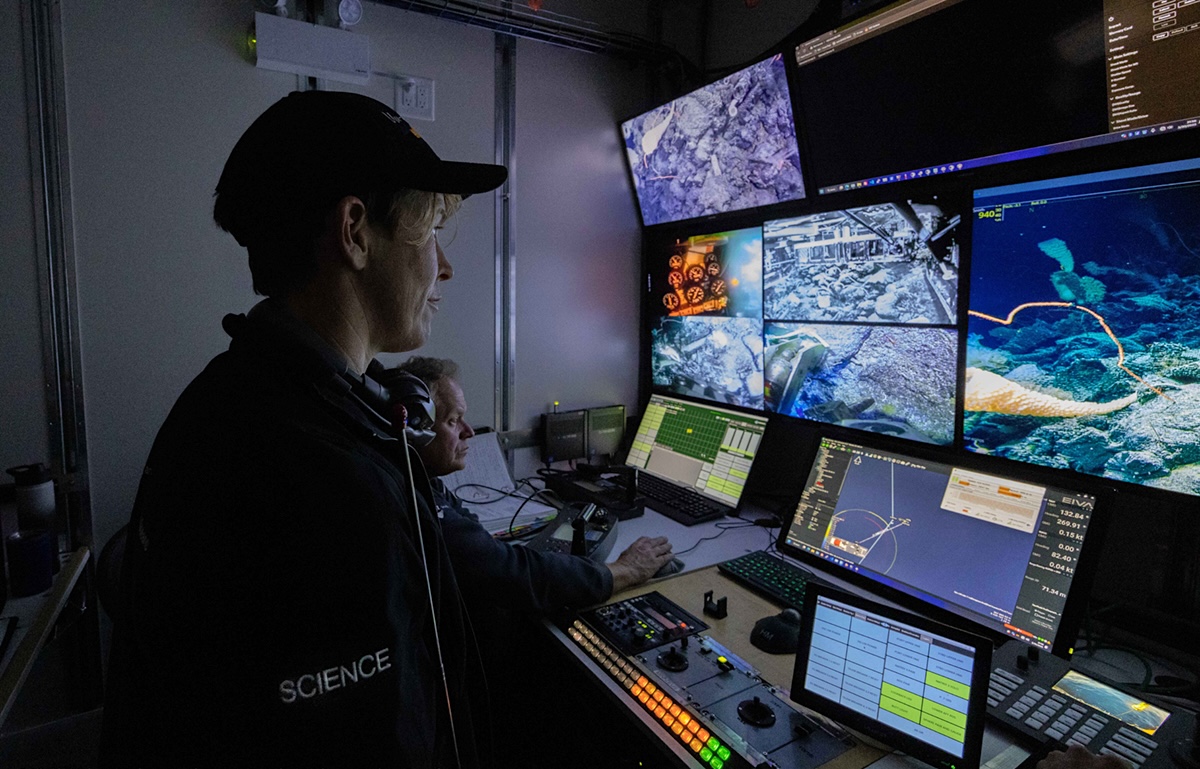
The water is so crystal clear there that seaweed can grow 200 metres below the surface. There are “literally millions of rockfish,” prowfish and oceanic sharks near the top, Du Preez said. Slightly down the slope is a kelp forest flourishing 20 metres underwater. It ends in a 3,000-metre drop to the sea floor.
The sea star wasting disease, which a decade ago killed billions of starfish, never reached the area, and Du Preez hopes one day this healthy population could use marine currents to repopulate the coastline.
The rich biodiversity of seamounts
B.C. has discovered 65 seamounts in its waters.
Du Preez, who has visited about one-third of them, said every one is unique.
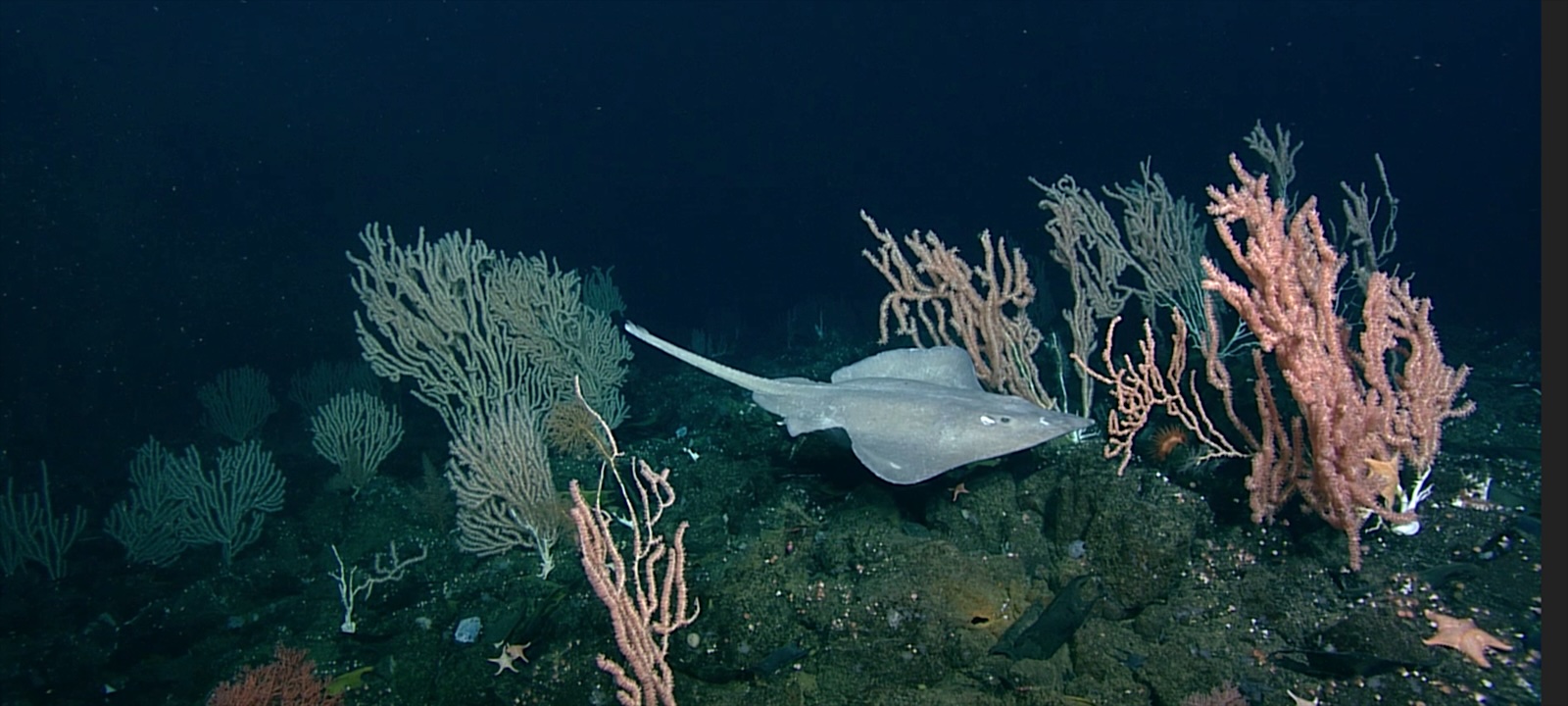
For example, a real-life dragon — the Pacific white skate — lives on the Ts'íidaa seamount and K̲uuɢ̲a seamount elsewhere in the Haida territory. This skate grows to be several metres wide and lives on top of lava fields. It lays giant golden-coloured egg cases that fade slowly over the course of their 10-year incubation period. The eggs can be half a metre in size and stay warm thanks to water vented by the volcano.
A single nursery Du Preez visited via remotely operated vehicle held more than two million eggs in an area just 800 metres across.
This area is now recognized as an International Union for Conservation of Nature and important shark and ray area. Scientists are working on having it recognized as a UNESCO World Heritage Site too, Du Preez said.
SG̲áan K̲ínghlas-Bowie Seamount is also a marine protected area. But deep-sea mining in Alaska will threaten it.
A spokesperson for Global Affairs Canada told The Tyee in an emailed statement the government is aware of proposals for deep-sea mining within and outside of its national jurisdiction, and is keeping an eye on it.
They added Canada is signed on to, and a strong supporter of, the United Nations Convention on the Law of the Sea, and the International Seabed Authority, and supports the development of a robust regulatory framework governing any future mineral-related activities outside of its jurisdiction.
Canada and the United States have "a long history of productive co-operation on marine, environmental and transboundary issues," and the federal government expects this to continue, they said.
Canada does "not currently" allow deep-sea mining in its waters, the spokesperson continued, and "remains committed to protecting the marine environment through science-based approaches, international co-operation and respect for international law."
Scientists are just starting to scratch the surface in understanding how the deep sea works, Du Preez said.
In the inky depths of our oceans, she said, cause and effect plays out in three dimensions on time scales that are hard to imagine, with a million animals that have yet to be discovered by humans.
“Pull out one of those strings, and the web just starts to fall apart,” she said.
In addition to catastrophic costs to our oceans, deep-sea mining won’t stop mining on land, as the deep sea contains only a fraction of the volume of metals available from terrestrial mines, Du Preez said.
“That is the trade-off. Animals will go extinct,” she said. ![[Tyee]](/design-article.thetyee.ca/ui/img/yellowblob.png)
Read more: Environment











Tyee Commenting Guidelines
Please note that email notifications for replies are not currently working due to a software issue which may be resolved in a future update.
Comments that violate guidelines risk being deleted, and violations may result in a temporary or permanent user ban. Maintain the spirit of good conversation to stay in the discussion and be patient with moderators. Comments are reviewed regularly but not in real time.
Do:
Do not: