



 SHARE:
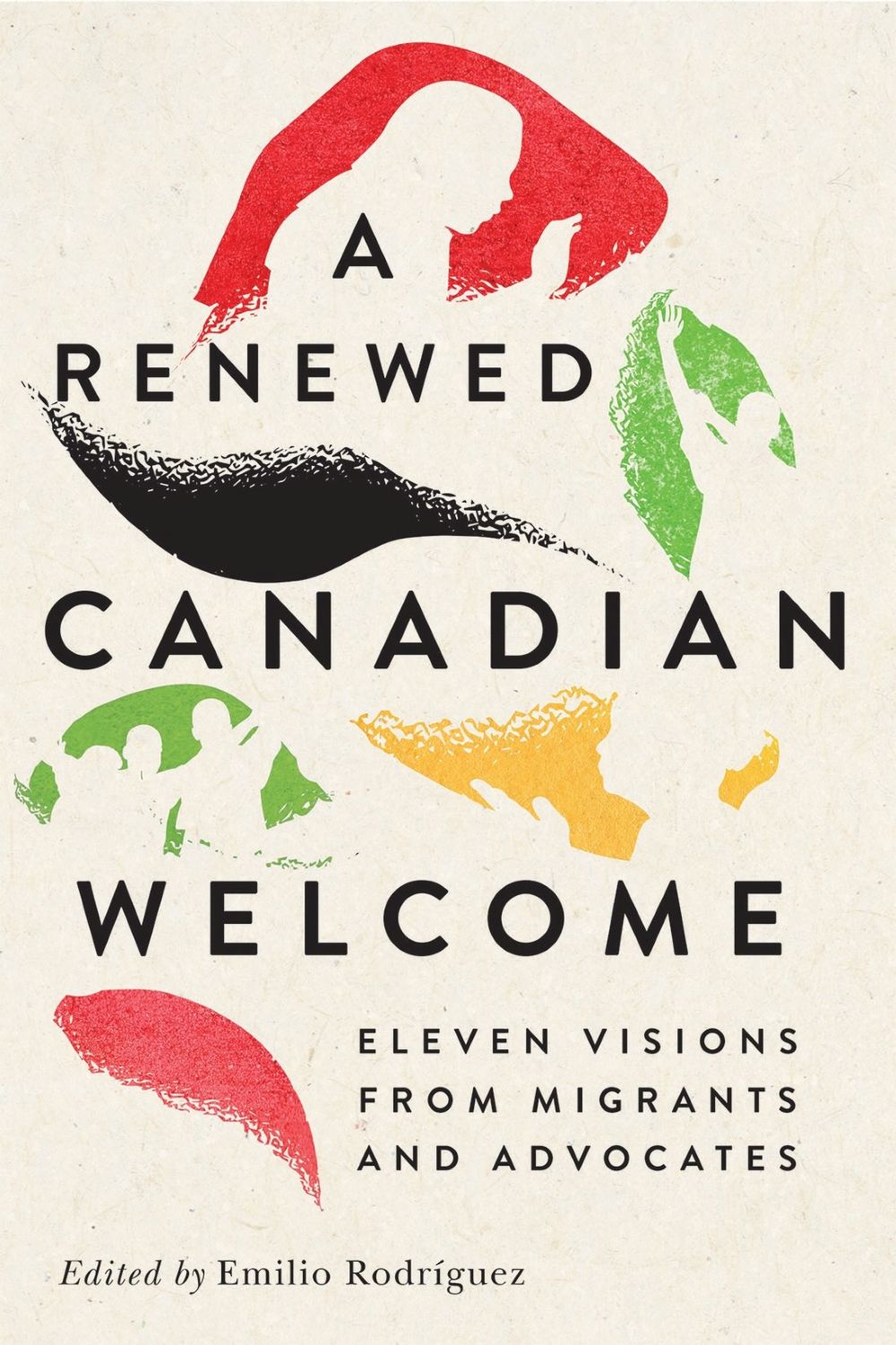
- A Renewed Canadian Welcome: Eleven Visions from Migrants and Advocates
- McGill-Queen’s University Press (2026)
The story of Alberta is the story of generations coming to the prairie province in search of a better life. This has been the force that shaped Alberta’s earliest days as a province, and it continues to drive the experiences of newcomers working here now.
Before it even became Canada’s 10th province in 1905, Alberta’s broad prairie skies and rolling foothills were already lodged in the imaginations of people seeking for a better life.
In the late 1800s, thousands of Ukrainian, Hungarian, Romanian and German families arrived in Alberta to farm wheat, barley and oat crops. At the same time, American cattle drivers found in the prairies the ideal landscape to set up permanent ranches, launching a cattle industry that would become an Alberta staple.
Towards the end of the 20th century, Alberta’s booming oil and gas sector attracted Canadians from Nova Scotia and Newfoundland in search of a fresh start after the Atlantic fishing industry collapsed in the early 1990s and a surge of unemployment battered the Maritimes.
More recently, in the 2020s, the promise of high-paying jobs, shorter commutes and reasonably-priced suburban homes lured more than 116,000 Ontarians, and roughly 111,000 British Columbians, to move to the prairie province.
To support the influx of new arrivals, more than 19,000 employers in Alberta sought to leverage the federal temporary foreign worker program to recruit the labour needed to build new homes, stock shelves and pour double-doubles without jeopardizing the prairie province’s affordability advantage.
Since 2022, roughly 90,000 migrants have received a permit to work in Alberta via the temporary foreign worker program alone.
Like the generations of newcomers before them, temporary foreign workers came to Alberta seeking to improve their livelihoods — and their families.
Earning a wage in Canadian dollars can afford the children of temporary foreign workers an education in their home countries, access to adequate health care or simply a more stable life.
Their hopes, however, often come with a hefty price tag.
A new book uncovers the realities of foreign workers across Canada, and seeks to reimagine immigration policy from a perspective that centres the humanity and lived experiences of newcomers.
In A Renewed Canadian Welcome: Eleven Visions from Migrants and Advocates, Salvadorean Canadian policy analyst and refugee rights advocate Emilio Rodríguez brings together the voices of activists, organizers and academics whose lived experience informs their sharp critiques of an immigration system that they say is exploitative and drenched in racism.
“Migrants and refugees are integral to the fabric of our communities,” Rodriguez writes.
“But the recognition of our importance must go beyond rhetorical or merely symbolic gestures. What we demand, and believe are owed, is dignity, equality and justice.”
For workers in the Global South, migration offers a way out of poverty
With few opportunities back home, lower-income workers from the Global South can seldom choose to stay at home. It’s a reality for many to seek employment opportunities abroad, as their countries of origin rely on their migration as a source of revenue, writes Marco Luciano, a labour rights activist and director of Migrante Alberta, an Edmonton-based advocacy group for the Filipino diaspora.
In the Philippines, Luciano explains, workers have become a profitable export. The remittances of more than 10 million workers living abroad account for roughly nine per cent of the country’s economy, World Bank data shows.
But there are few pathways for permanent immigration available to migrant workers. And non-permanent residents lack the basic rights that their fellow Canadians take for granted.
Leaving an abusive employer, or facing a life-altering illness or injury, can cause foreign workers to lose their immigration status in Canada.
“The number of undocumented migrants reflects on the failure of Canada’s immigration programs,” Luciano writes, pointing at the up to 500,000 undocumented migrants Immigration, Refugees and Citizenship Canada estimated to be living in Canada in 2022.
“Most low-wage migrants in Canada cannot stay permanently, and only 60 per cent of refugees are accepted.”
Meanwhile, Canadians can live abroad with relative ease
The precarity Canada imposes on non-permanent residents, particularly those from the Global South, stands in stark contrast with the migration experience of Canadians themselves.
Canadians are free to seek employment anywhere in Canada, and for many, moving abroad is a lifestyle choice. Some move out of the country to stretch out their pension in a charming beach town in Mexico, or simply to experience a foreign culture in a cosmopolitan city while working remotely.
Canadians have plenty of options to choose from, including the possibility of returning home.
Fewer alternatives are available to people from the Global South, as war, economic turmoil and climate change force them to migrate, often to the very countries that have made them vulnerable, a situation contributors Patti Tamara Lenard and Shabnam Salehi, as well as Asvini Uthayakumaran, emphasize in their respective contributions to A Renewed Canadian Welcome.
In Alberta, non-permanent residents are further marginalized by a provincial government set on blaming migrants for the rising cost of health care and education, as if newcomers didn’t all contribute to Alberta’s economy, regardless of their origin.
Recently, Alberta’s United Conservative government claimed that non-permanent residents cost Albertans an annual $1 billion in social services, and more than $600 million in education, amounts Avnish Nanda, an Edmonton lawyer, characterized as misleading for failing to account for the taxes non-permanent residents contribute to the provincial coffers.
The office of the premier didn’t respond to The Tyee’s inquiry regarding the methodology used to estimate the costs being pegged on non-permanent residents.
To expand on the complexities of a system that has turned racialized workers into an exploitable commodity, The Tyee recently met with labour rights activist and Migrante Alberta director Marco Luciano, who contributed to A Renewed Canadian Welcome. This interview has been edited for length and clarity.
The Tyee: Canadians often view migration as a lifestyle choice, but the options available for people from the Global South are much more limited. Why?
Marco Luciano: Migration isn’t as straightforward, as Canada needs migrants and therefore they invite people to come here. Migrants are leaving their homelands — the Philippines, in my case particularly — because of socioeconomic reasons. There’s no work back home.
Unemployment is often caused by countries in the Global North, whose “development” programs drive privatization. In countries of the Middle East, war causes displacement, many refugees come from countries where conflict has pushed them to leave their country and find work in a safe place.
We need to acknowledge the role Canada plays in displacing people out of their country, so that they won’t be forced to leave their homeland. That includes the role of Canada as a military equipment exporter, as well as in terms of climate change, as both war and climate create refugees.
Another driver of migration is climate change. Whether it’s drought or rising sea levels, people are being pushed out of their homeland, so they have to find safety abroad. It’s very easy to recruit people who are searching for a safe place to live and work.
By requiring different conditions to qualify for temporary and permanent immigration pathways, Canada cherry-picks who “deserves” to stay in Canada permanently. The restrictions introduced by Bill C-12, or the Strengthening Canada’s Immigration System and Borders Act, mean that very few migrant workers, refugees and international students can become permanent residents.
Yessy Byl, a retired lawyer and advocate for migrant workers in Alberta, has said that the Canadian immigration policy can be summarized in three words: use, abuse and dispose.
I think she’s correct.
Our immigration policies ensure that workers from the Global South come to work as cheap labour, get disposed of when they get sick or injured and then employers can hire a new foreign worker — it’s a vicious cycle.
One of the issues you mention in your contribution to A Renewed Canadian Welcome is that the Philippines has turned labour into a commodity. What drives a country to use workers as an export — and who benefits?
Everybody benefits from migrant workers except for migrant workers themselves.
Immigration has become a billion-dollar business because countries like the Philippines, Mexico, India and China act like an employment agency, where workers have to pay a fee to leave and work abroad, while migrants already abroad send money back home. This motivates countries to profit from migrant workers, commodifying people like any other consumer product.
To make matters worse, the United Nations created an agency called Global Forum on Migration and Development to link migration to the development agenda of countries in the Global South. This means that the remittances workers send back home have now become a development aid. Thus, countries like the Philippines are lauding migrants as the new heroes of the economy.
Canada makes money by raising the cost of permit renewals, and some immigration consultants are asking migrants pay up to $10,000 just to renew their work permit.
Our food security in Canada is also tied to migrant labourers. Seasonal agricultural workers from Mexico and the Caribbean ensure that the Canadian people can eat.
Both the federal and provincial governments seem to be holding immigrants responsible for the challenges facing Canadians — from housing affordability and rising unemployment, to limited access to health care and education — why has immigration become such a contentious topic in Canada?
In times of crisis, migrants are scapegoated because they are foreign. Because they don’t “belong” they are presented as the reason why Canadians lose their jobs.
Immigration has been a divisive issue for a long time. From the time of the Chinese [labourers] that built the railway, to the introduction of the temporary foreign worker program, migrants have been the cheap labour building the nation.
When Canada is in need of labour, immigration pathways open. But when a crisis happens, like in the last couple of years, they shut down the doors to migrant workers, especially those who are already here.
In Alberta, the October referendum is a platform for anti-migrant rhetoric, hidden behind the prioritization of Albertans, but the questions presented ignore the significant contribution migrants make to the provincial economy.
To improve the situation of migrants, provinces should ensure employers pay all workers a living wage, reducing the need for temporary foreign workers as cheap labour.
If there’s actually a need to recruit migrant labour, workers should have permanent residency upon arrival, and have the same rights as any other Canadian.
Temporariness creates precarity, and perpetuates exploitation. ![[Tyee]](/design-article.thetyee.ca/ui/img/yellowblob.png)
Read more: Alberta












Tyee Commenting Guidelines
Please note that email notifications for replies are not currently working due to a software issue which may be resolved in a future update.
Comments that violate guidelines risk being deleted, and violations may result in a temporary or permanent user ban. Maintain the spirit of good conversation to stay in the discussion and be patient with moderators. Comments are reviewed regularly but not in real time.
Do:
Do not: