


 SHARE:
The kids were bored, their parents bamboozled.
Not for the first time, I was observing one of the scariest of child species: the kids who had become immune to the lure of television.
In this case, two sets of parents had suggested their children head upstairs to watch a movie so they could visit in peace. But it quickly became apparent that not all the kids were eager to settle in front of the TV and watch the latest Pixar fare.
Not to brag, but my kids were stoked to stare at a screen for hours. Their friends, on the other hand, were less enthusiastic about our suggestion that they trade our company for that of a girl who turns into a red panda when she experiences strong emotions.
The kids weren’t having it, though, and us parents were left to deal not in gossip, but in plaintive pleas for the kids to go play somewhere else. It again highlighted for me a rarely discussed factor in parental debates about when and how to let kids access games, television and screens.
Television (and its screen cousins) can be a godsend for stressed-out parents desperate to occupy children. We’ve known this since the 1950s, when television became mainstream.
Today’s parents are more engaged in their children’s lives than any previous generation. They’ve taken a larger role in both directing their kids’ days, and in engaging with their emotions. That is probably for the better. But when parents do take their hands off the control buttons, the opportunities available to kids have changed considerably. Today’s children (and parents looking to distract their kids) have almost unlimited options.
And yet, kids can still find a way to become bored. Since becoming a parent 12 years ago, I’ve noticed a version of immunity hewn by too much screen access starting to kick in for some kids.
Too much of anything, even the wholesome world of Bluey, can result in it becoming tiresome.
And when that happens, nobody ends up thankful for screens.
TV as a parenting tool
This essay is not about how I am a terrific parent. I want to leave the massive, loaded question about the impact of television and video games on children for others to battle over. I have my own strong opinions, but they are hardly new or interesting.
Let’s instead consider the usage of TV as a tool by parents.
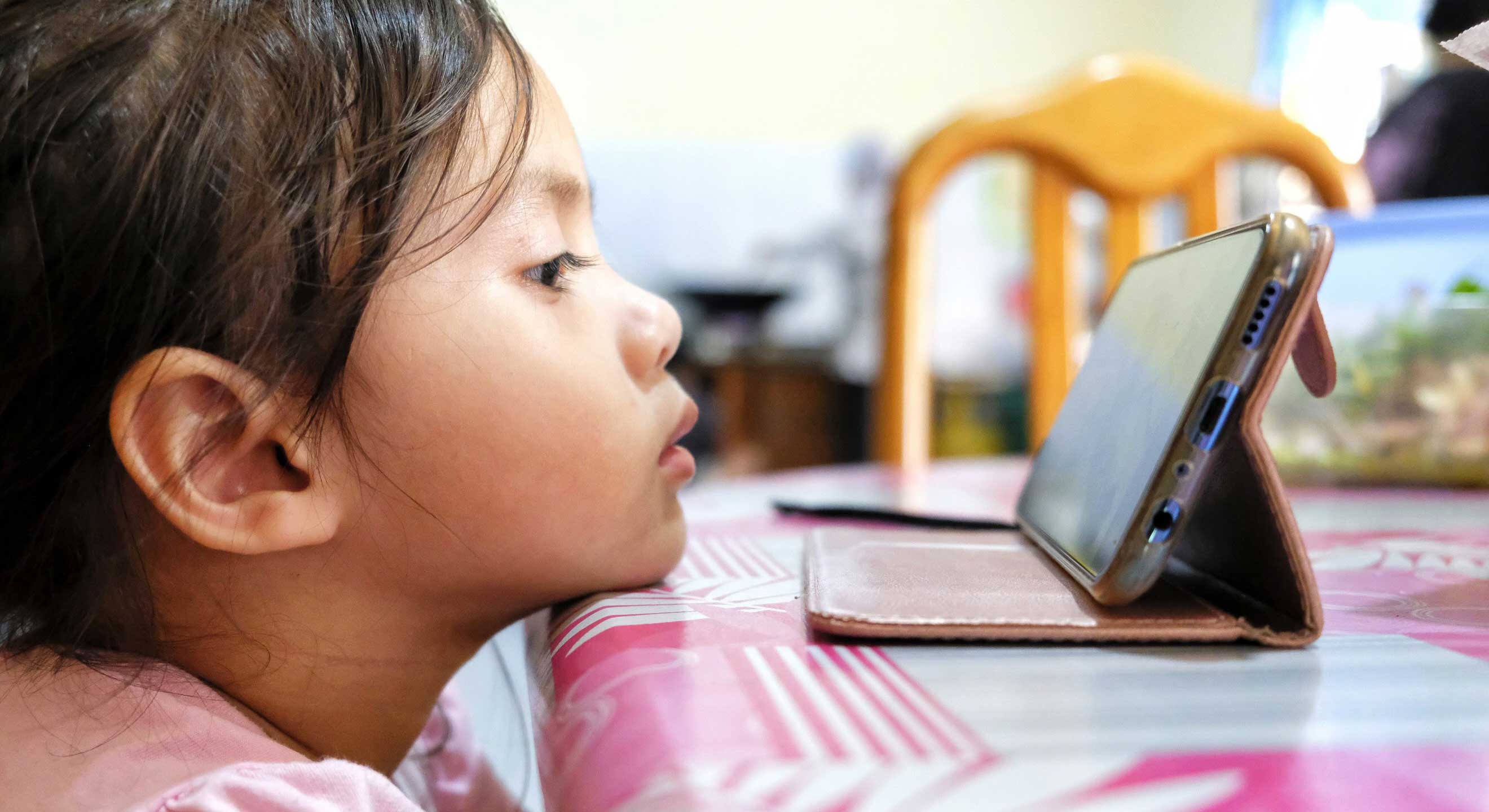
In certain educated social circles it is, apparently, a mark of a bad parent to let their young children watch a TV show on a mobile device like a tablet or phone. Self-conscious parents of toddlers might wince sheepishly when they surrender their smartphone to their little one in a stroller to let them watch Ms. Rachel so they can shop for groceries in peace.
“I have yet to hear a parent discuss screen time without it being in a hushed tone of someone admitting to a shameful secret,” a Guardian columnist wrote in 2024. One parent recently wrote in the Cut about letting her kid engage in a daily FaceTime visit with her grandmother.
But such fretful parents aren’t the norm everywhere.
Indeed, in my experience, it’s not uncommon to see young kids staring at YouTube on their own personal phones.
Studies of screen-time usage back this up. The precise findings, inevitably, depend on both the location of the family and their background, but many have found that most kids watch an incredible amount of TV.
One 2018 study of kids in Alberta suggested that three-year-olds watched an average of 3.6 hours of TV every day.
This is the case particularly in lower-income households, where children tend to spend more time on screens and with less regimented schedules.
I’ve seen this up close in the working-class neighbourhoods where I have raised my own children.
When my daughter was younger, she would occasionally end up at the house of a friend who, at the age of six, had her own television in her room. It was excessive, my wife and I quietly agreed.
But she, as the experts say, had also learned to self-regulate — or at least she had watched everything that would ever be worth watching. Despite the TV, she would still emerge from her room and join the pack of kids roaming the townhouse complex.
We have family friends who have also taken a looser approach to screen time than our own, and whose kids will also abandon their screens for other activities. Those screens, clearly, have been normalized and are no longer a special exception or a treat.
Let them eat cake?
This does not seem necessarily bad and the approach — or at least a milder version of it — seems to be gaining some favour among groups that obsess over every detail of their kids’ lives.
In recent years, parents (or at least parents who are writers) in historically screentime-skeptical circles seem to be increasingly receptive to the benefits of letting their kids watch much more television. Or at least they’re not so self-conscious of doing so.
This year, Vulture published an article with the headline: “Let Your Kids Watch TV. It’s Fine.”
A writer for Grazia declared, “Often the tablet is a form of self-care for me.”
And USA Today published a “judgment-free” guide to letting kids watch television or YouTube.
These articles are consistently reasonable and deliver rational advice. Few suggest allowing kids unlimited screentime.
But most parents realize that it’s also easy to slip once you open the floodgates a bit. Allowing a kid to watch one show while you cook dinner can turn into two shows and more.
I don’t think that brings much risk of harm. And for busy parents, screens can be a useful tool. But I’m here to warn new parents: the usefulness of television (and video games and screens in general) as a diversionary tool may be inversely related to how often your child is allowed to play with it.
And that means there is parenting value in not letting your kids look at that tablet until you really, desperately need them to give you some moments of quiet.
The case for keeping your powder dry
This fact — that kids get bored of things — seems too simple and obvious to spend much time on. But amid all the parenting-related screen-time discussions I’ve encountered, I’ve never heard others make the self-preservation case for restricting screen time.
The argument tends to run like this: it’s OK to let your kids watch some television because it will help you preserve your own precious sanity, which is important both for your own mental health, and your kids’ well-being.
I don’t argue with that. But it needs to be accompanied by a recognition that restrictions on screen time can also aid in the use of television as parenting and lifestyle tools.
As I noted above, I’ve encountered children who have become so accustomed to television’s glow that it fails to hold their attention. And when you don’t have a babysitter and can’t rely on a screen to do the heavy lifting at an anniversary dinner, a precious night out can turn into a frustrating nightmare of negotiation with the kids.
Twelve years into parenting, my kids get plenty of screen time. But it has been sufficiently limited so that, for better or not, my kids will watch a movie when the opportunity presents itself. That’s no morally upstanding accomplishment on the part of me and my wife. But it is a record of personal mental self-survival and successful nightmare-avoidance for which I am grateful.
I’ve seen other parents take a similar approach. Last weekend, I sat on a plane behind a couple and their toddler daughter. As the plane waited on the runway, the parents pulled out their phone and gave it to the child. I’ll admit, I judged the parents. We had a five-hour flight ahead of us and I worried that the kid would grow bored by the fourth hour.
But these parents were pros. The kid watched a little show, the plane gained altitude, the seatbelt sign went off and the phone disappeared. The screen didn’t emerge until the plane started to descend and the kid started to moan. The parents had delayed and waited, and now was the moment for trusty, glorious television to do its job. I could have stood and applauded.
There are benefits to screen scarcity for both kids and their parents. There are moments when allowing a kid to use a device might be mildly useful. But for one’s own sake as much as one’s children, there is value in keeping your powder dry.
Because you will encounter a time when you will need to distract your child. Car rides, emergency room visits and flights can last for hours. A child’s passive acceptance can drift into confrontational rebellion. And when that happens, you’d hate to discover that the movie that has been playing in the minivan for the last six months has worn out its welcome. ![[Tyee]](/design-article.thetyee.ca/ui/img/yellowblob.png)
Read more: Health, Media, Science + Tech












Tyee Commenting Guidelines
Please note that email notifications for replies are not currently working due to a software issue which may be resolved in a future update.
Comments that violate guidelines risk being deleted, and violations may result in a temporary or permanent user ban. Maintain the spirit of good conversation to stay in the discussion and be patient with moderators. Comments are reviewed regularly but not in real time.
Do:
Do not: