

 SHARE:
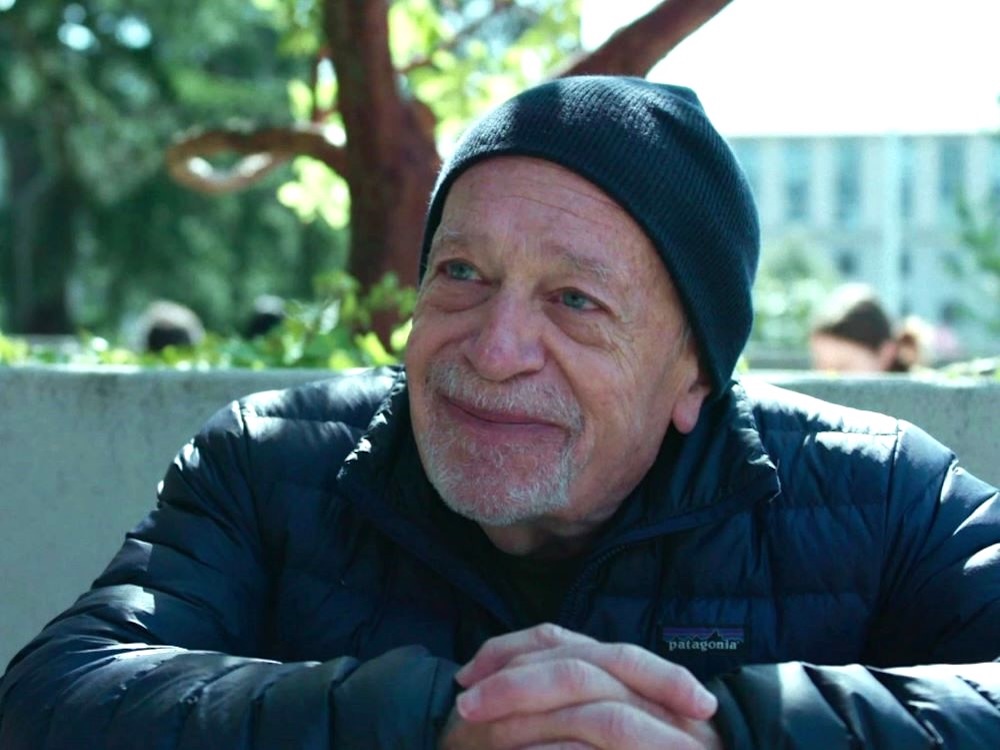
Elliot Kirschner was surprised by the Robert Reich he met one morning in 2021.
Over an informal breakfast with the progressive luminary and former U.S. secretary of labour, Kirschner was struck by Reich’s emotional introspection, a personal side rarely seen in his extensive public appearances.
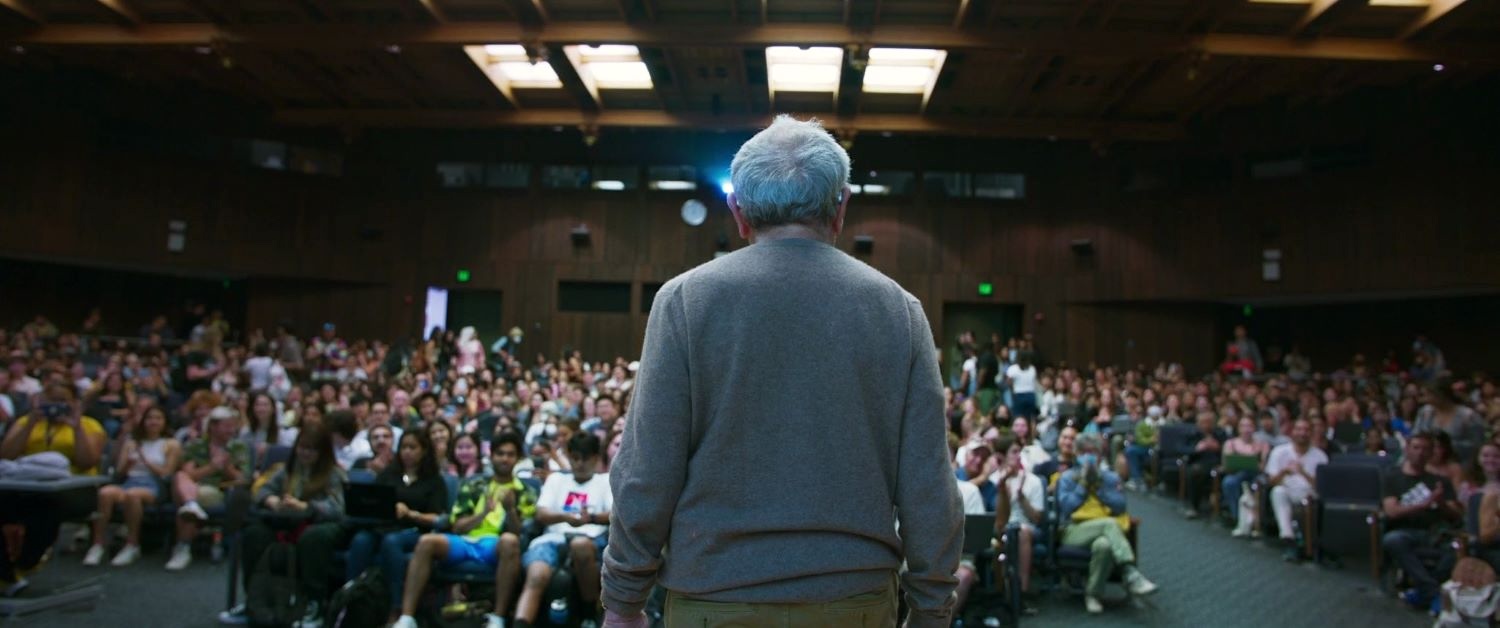
Inspired to share the more contemplative Reich with the world, Kirschner followed him through the final semester of his teaching career at the University of California, Berkeley, producing a moving tribute to Reich’s 40-plus years behind the lectern.
Kirschner is the longtime producer for broadcast journalist Dan Rather and co-author of his New York Times bestseller What Unites Us. So he’s talked to a lot of brilliant people.
“I've never interviewed somebody who gives a higher percentage of useful answers than he does,” Kirschner says of Reich.
“He speaks in well-crafted paragraphs. It was still obviously Robert Reich, but it was with a certain emotion in his voice and a certain perspective that was different from how he was on Meet the Press or Larry King, or even on his TikTok videos.”
For Kirschner — an Emmy-winning news and documentary producer, and executive producer of the non-profit Science Communication Lab — this was more than a chance to profile a towering intellectual who has been sounding the alarm on economic inequality since the Gerald Ford administration. It was an opportunity to paint a nuanced and deeply personal portrait of a master educator teaching his final course on wealth and inequality during a period of great national upheaval and personal transformation.
The resulting documentary, The Last Class, has been playing at Vancouver’s VIFF Centre since Friday and finishes Thursday.
This interview has been edited for length and clarity and is adapted from a longer version first published on Vancouver writer Chris Cannon’s Substack Best of Substack.
Chris Cannon: What brought you to this film?
Elliot Kirschner: I met Robert Reich for the first time a little over 30 years ago when I was in college. I had an internship for ABC News at their Boston bureau. It was a very small bureau. And I was sent to meet the then-secretary of labour, Robert Reich, at Logan airport on the Wednesday evening before Thanksgiving to get a sound bite for what was then the ABC nightly news.
So I met him and I was star-struck. It was like my big break interviewing a cabinet secretary, and it was all for a single sound bite. He sat down, he gave the sound bite he wanted to give, got up, wished me a happy Thanksgiving and walked out the door.
Of course he doesn't remember it, but that sort of helped launch me on a career in journalism. Since then, I’ve spent a lot of time working with Dan Rather — I started a Substack with him called Steady — and Robert Reich was thinking about starting a Substack and this person who runs his non-profit, Heather Kinlaw Lofthouse, reached out to me and asked if I’d come meet him for breakfast and talk to him about writing a Substack.
And then talking to him quickly turned to a lot of other subjects, and I just sort of saw in him a version of the way he expressed himself, and how he was thinking about the world, that differed from his public persona that you see in a lot of his media appearances over the decades.
And he talked a lot about education. I was really taken by that. I was like, is there some way to tell this story to the world? And then Heather told me that Bob had decided to retire after the next spring semester, and he hadn't yet told UC Berkeley.
And I thought, aha, here's a story that I can use to explore these bigger themes with him, like aging and what education means, and all these other themes that became the backbone of the film.
Outside of the traditional classroom, more than ever there are opportunities for people to learn. In fact, in a Substack post this morning, Robert was talking about what he was doing now that he’s retired from teaching, and the answer is still teaching — through his book, through this film, through his Substack — he is doing the same thing, but outside the classroom, because there are so many avenues to do so out in the community. What do you think about this intersection of community and education?
It's a great question, and I think that there's something about being human that is best when we're coming together in physical community.
I think that's going to become all the more important with AI and for other reasons. Community is in classrooms and it's in theatres, but it's also in public protests. It's in music venues. It's in restaurants. It's in civic engagement. We saw this with the pandemic, that it is not good for society when everybody's isolated.
That being said, there's technology that facilitates connections that otherwise wouldn't have been possible. A lot of reasons why people are coming to the theatre to see our film is because we're using social media, we're using Substack, we're using texts, all these other things to make them aware, so we're able to distribute it more easily without having to bring physical film copies and send them through the mail.
Technology can push us into our own little isolation, but it can also be a tool for bringing people together. There should be balance.
One thing that's been wonderful with this film is that people come see it and they go, “Wow, I forgot how wonderful it is to be in a theatre.” I really do believe in movie theatres, and traditionally places where people came together, where people met across different divisions of socio-economics and age and all of that to watch movies. And I think that we've seen some of the damage that's happened to these kinds of institutions — it’s not just theatres where those social spaces have broken down.
Do you think education is collapsing the same way you believe film and journalism are? Particularly in the current political climate where academia is being attacked and, honestly, in a lot of academic venues like Columbia, where you think they would be holding their ground, they’re caving to political pressure. Do you have any thoughts on that?
Yeah, I do. It's obviously deeply worrisome. This film is itself a celebration of education, of independence and critical thinking. I think that the assault on education is highly political. It's part of a general assault on institutions that can be a bulwark of independent thinking, of democracy.
This is calculated. It's very pernicious. I think that the assault on higher education has gotten a lot of attention. But there's been similar assaults on public schools, on school boards, on books, in libraries. But I think that we also can find some hope that in many ways, those assaults at the local level that predated this, they've been a hallmark of recent years. And in a lot of local elections these very sort of right-wing or reactionary school board members were voted off. The public is responding to some of these assaults, saying “This is not what we want.”
So I'm ultimately hopeful that we're living through an era of overreach, and we're going to have to remember what institutions we took for granted and why they're important. And I predict — I read this somewhere — when Columbia caved initially, the day will be marked several years hence by a blue ribbon commission at Columbia researching why they caved.
I think there's going to be a lot of future recriminations for these moments. I don't think this is where the public wants to be. A lot of my work revolves around science, and that's a particular area of assault in terms of government grants and such that's being held hostage by this anti-education movement.
But as I said, ultimately I'm hopeful that people are recognizing why education's important and that it will be a place of civic re-engagement.
Pendulums swing. That's the nature of pendulums.
They really do.
I have a daughter who's applying to colleges right now. She just started her senior year of high school, and I look at her and her peer groups and what they're looking at, and I think there's going to be a reorganization and reckoning about what kinds of institutions are valued. People will speak up and there will be some verdict on this. And I think one of the reasons why this film is popular is because it allows people to engage with issues that are central to our democracy, but without it being all about the current politics.
You're allowed to think about broader themes that are under assault without the daily, nanosecond news cycle that's bombarding you with outrage. You're allowed to step back from that but still reckon with the idea of the importance of leadership and the common good and our values and education. I think that's one of the reasons why the film is resonating.
The word that pops to mind when I think of Robert Reich is “tenacious.” He just doesn't stop. He's always fighting the good fight, and he's been doing it for decades. But then he retires, and he has a conversation with a former student at a coffee shop who asks him, “How's retirement going?” And he says, “Terrible.”
He says he’s retired from the classroom, but he’s not retired from teaching. He's got this book out, he's got the film out, and he's continuing to do social media and publishing almost daily on Substack — and again, tenacious.
I don't want you to speak for him, but where do you think he's going to go from here?
He is tenacious. Over the course of this conversation, he'll probably publish two or three more Substacks. There's no shortage of his output. And I think that it's what the moment demands, and people are really responding well to it.
There's a lot of different kinds of content that we need, and there's certain content — I hate that word, but for lack of a better word — that the marketplace undervalues. Fear introspection. Emotion. Complexity. And I wanted this film to be a marker for the world — for him too, and for me — hopefully proving that in the overall marketplace of media and ideas, there's a place for this type of content, this type of film, this type of gathering.
And I feel this way about long-form journalism. The hardest thing to do is get people to start reading it, but when they do — wow. Getting immersed in an article that's not just a headline or a tweet or a Facebook post or whatever.
I came up in relatively long-form television — news magazine programs that show what you could do in a 15-minute piece. And it’s not what you could do in a two-minute piece. I think we need long-form. I think we need nuance. I think we need emotion. I think we need complexity and humanity. I think that needs to be part of the media landscape.
And there's amazing filmmakers that don't have Robert Reich and his social media presence. They're making beautiful films that are similar in their nature in terms of the big themes that they deal with. I think there's a lot of conventional wisdom about what people are interested in, and that needs to be challenged. We have a lot of corporate consolidation. That means there's fewer risk takers, fewer people to challenge assumptions.
I think that technology and our algorithms push us into certain boxes and become self-fulfilling. And then once you create an ecosystem that only rewards one kind of output or a limited amount of output, then only that output gets made for it. We need media that challenges that.
I just want to leave room for anything that you wanted to add, something I didn't ask. Something that you think is interesting or relevant that you wanted to tack on.
I just really want to thank the people who are coming out and supporting this. We have a way that people can do theatrical on demand — you go to our website, where you could bring it to your own theatre. And this sort of bottom-up nature of it, I really am heartened by the sense of community that we're seeing.
One thing that's really exciting, I hear all the time that people are gathering in the lobby afterwards. It’s a statement of hope. There's a lot of negative narratives out there, and they're all real and we need to take them seriously, but we cannot undervalue or ignore that there's real humanity out there too. And I think that’s why this film's resonating. ![[Tyee]](/design-article.thetyee.ca/ui/img/yellowblob.png)






Tyee Commenting Guidelines
Please note that email notifications for replies are not currently working due to a software issue which may be resolved in a future update.
Comments that violate guidelines risk being deleted, and violations may result in a temporary or permanent user ban. Maintain the spirit of good conversation to stay in the discussion and be patient with moderators. Comments are reviewed regularly but not in real time.
Do:
Do not: