

 SHARE:
Last week, the devastating news that the American Corporation for Public Broadcasting would be shuttering operations after 58 years in service arrived like a nail in the coffin of culture. The non-profit announced it would start the process of winding down after President Donald Trump signed an executive order in May to cease federal funding for America’s Public Broadcasting Service, or PBS, and National Public Radio, or NPR.
For the first time since 1969, government funding for American public broadcasters will be zeroed out.
The last time PBS faced this kind of existential threat was in the form of a proposal to halve the broadcaster’s funding from $20 to $10 million. That prompted the Senate Committee on Communications to defend the federal allocation with a little help from Fred Rogers of Mister Rogers’ Neighbourhood. It is worth watching Rogers’ testimony for a reminder of exactly what is at stake today.
That was 56 years ago. Former U.S. President Richard Milhous Nixon was in the White House and the Vietnam War was raging. In other words, it was a very different world.
PBS’s long-running investigative documentary program, Frontline, did not go quietly following the news of the funding cuts. On July 15, it broadcast Trump’s Power & the Rule of Law as possibly its final film.
Rule of Law is not an easy film to witness; the documentary follows Trump as he and his supporters flout established standards and pervert the legal system, testing the limits of presidential power and control. The courts have been one of the only institutions that have actively pushed back against the current administration, but that too might be changing.
Watching the film, I felt sick to my stomach in more than a few instances. It’s not just that many of the people interviewed are some of the worst humans on the planet, but they are seemingly proud of this fact. The triumph of smug, smirking evil isn’t simply hard to take, it’s soul-destroying.
What is the best tool to fight back? The immediate answer might be culture. But this time, the arts themselves have been forced into a battle for their very existence. This is not a problem for the U.S. alone, as the same forces exist in Canada.

Culture is a life force. And Trump is cutting it off
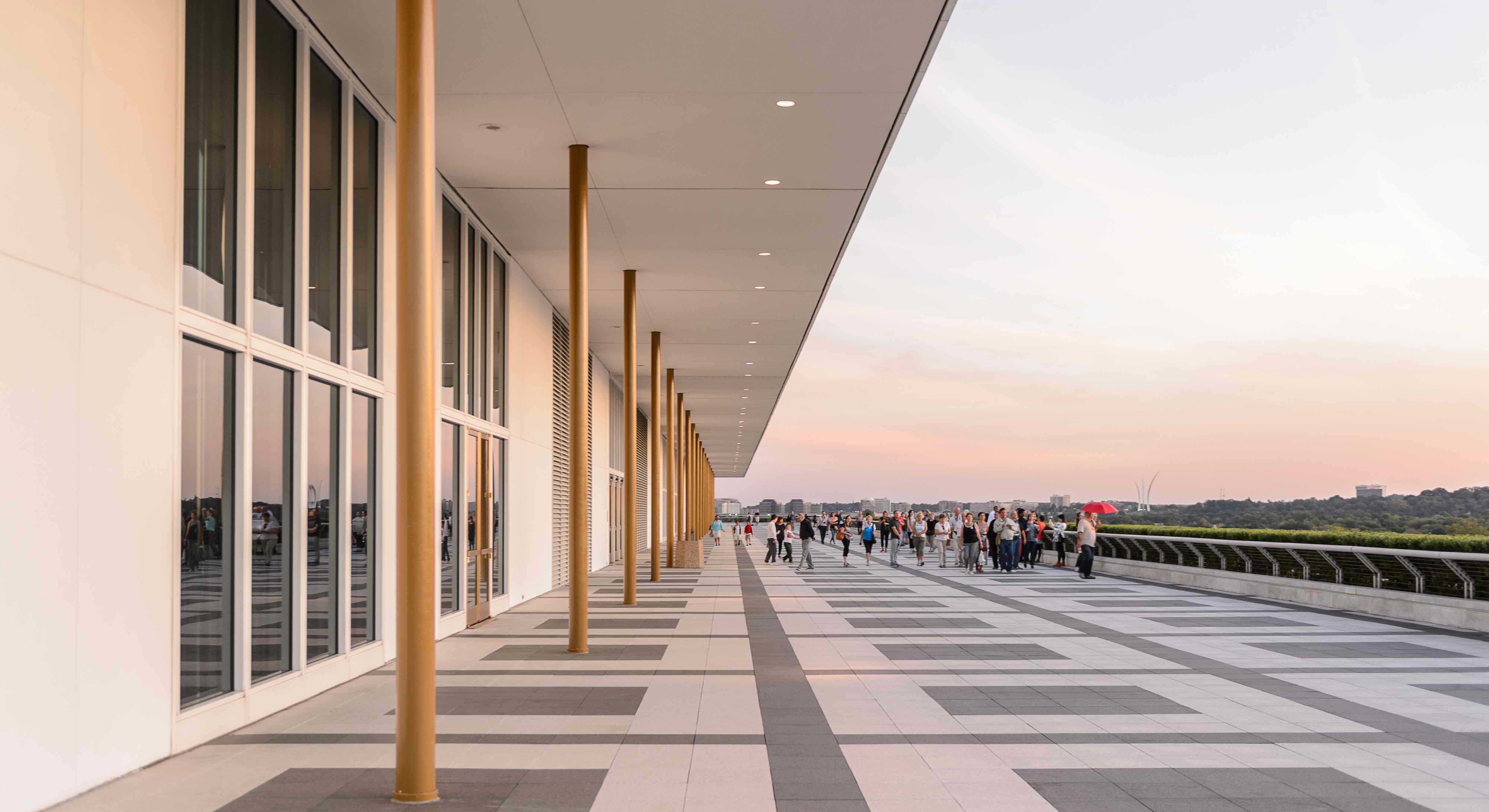
One of the key points in Rule of Law is that the Trump administration has its eye on culture as a means of reshaping American society. High-profile cultural venues like the John F. Kennedy Center for the Performing Arts were among the first he targeted.
On Feb. 12, Trump fired the Kennedy Center’s board members and replaced them with his supporters and family members. Trump himself was then appointed the center’s chair by the new appointees. In response to the evisceration of the center’s long-time staff and board, many artists and musicians abandoned their confirmed performance dates at the high-profile venue.
The shows that did go ahead featured enthusiastic boos and hisses from the audience when the Trump family were in attendance. Similar scorn was extended to Vice President JD Vance and his associates.
Despite the public pushback, the Trump administration’s assault on the arts rolled on with news last month that the Kennedy Center Opera House would be renamed after Melania Trump. Another crusty bit of icing on a rancid cake.
Given the U.S. and Canada’s cultural entanglements, things that happen down there have a way of working their way up here.
In March, I was supposed to travel to Seattle to attend the opening of the Ai Weiwei exhibition at SAM, or the Seattle Art Museum. I was excited about the prospect, but as the war of words heated up between the two countries with repeated threats of American annexation, I felt that I couldn’t suggest to fellow Canadians that they cross the border to see the show.
The decision did not come easily. Do you boycott and hurt artists and institutions like SAM, or do you take a carte blanche approach to all cultural products from the U.S. by cancelling subscriptions to ubiquitous American streaming services Netflix and Disney Plus?
A lot of people have taken a piecemeal approach, but as things get darker and more ominous, there is the impulse to pull up the drawbridge and bunker down.
A challenging arts landscape in Canada, too
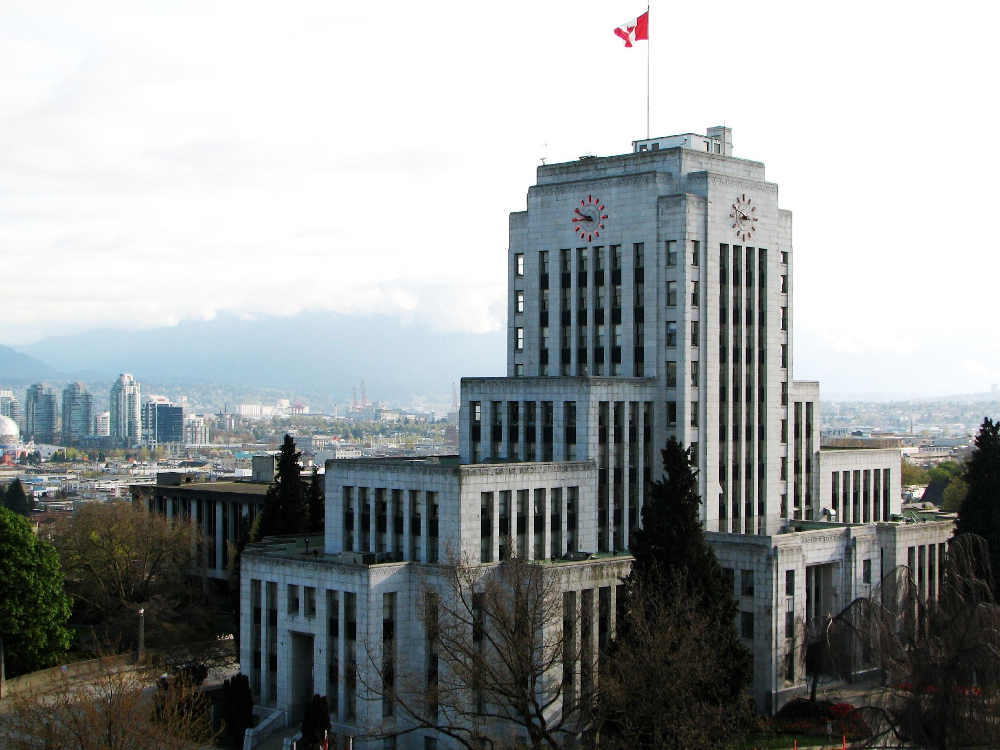
Curious forms of cultural attrition are happening closer to home as well. Before they recessed for their annual break in August, Vancouver city council decided to rewrite a late-July motion put forward by the city’s arts advisory committee that called for additional funding for the cultural sector, including more spaces for artists.
The council meeting was attended by many cultural workers and organizers who passionately attested to the dire need for greater infrastructural supports. But after multiple speeches and testimonies, city staff amended and passed the motion, gutting its original intention.
While the drama in Canada might seem like small potatoes compared to the U.S., the silencing of diverse voices in the arts has popped up in the strangest places — National Geographic, for example.
In a July 30 essay for the new American sports and media company Defector, writer Eva Holland from Whitehorse, Yukon set out to discover what happened to For Winter, a climate documentary that follows a team of scientists as they ascend Canada’s tallest peak to unearth valuable climate data. The film was supported by the National Geographic Society’s Impact Story Lab.
“Because For Winter had been produced directly by the National Geographic Society, the non-profit organization that owns a stake in the various Nat Geo-branded for-profit ventures, it would be made widely available for screenings — in schools, for instance. In the audience, I pictured a generation of girls and queer kids watching For Winter and feeling a world of possibilities opening up to them,” Holland wrote.
“Did I cry repeatedly throughout the screening and the Q&A? You bet. Did I stream the film on the festival’s online platform, this time with my wife, when I got home to Whitehorse? I sure did — and we both cried then, too.”
After its October 2024 premiere at the Banff Centre Mountain Film and Book Festival at the Banff Centre for Arts and Creativity, the film was pulled from the film festival tour, and effectively vanished.
The news is more than a little disturbing given that the decision, affecting a Canadian film festival, was made following Trump’s presidential victory.
“National Geographic in all its iterations is an incredibly powerful institution, both a critical funding body for research or creation and a potential platform for films, photography, and other media, which makes it difficult for anyone in our corner of the industry to criticize or question it,” Holland wrote. She explains in her essay that she too has written for them.
As larger organizations feel political pressure, they pass it along to creators and audiences. Cultural workers on the ground are among the first to feel the effects. What has changed in the first half of 2025 is the scale and scope of the people being silenced.

Great work is getting cancelled. But artists are up for a fight
Even the biggest names appear at risk these days. In July, the American commercial broadcast television network CBS announced that it was cancelling The Late Show hosted by comedian Stephen Colbert, who has proven a powerful critic of the Trump administration in both of its presidential terms.
Even as the U.S. president celebrated the show’s demise, the deeper intent became clear as the deal between Paramount Global (the parent company of CBS) and Skydance Media required the approval of the federal government.
Also last month, Trump threatened celebrated superstar Beyoncé with prosecution. The idea stemmed from a fallacious claim that the singer had been paid $11 million dollars to endorse Kamala Harris during her presidential campaign. The singer herself refuted this in grand fashion.
Whether all of this has been a series of distraction from the horrors of the Jeffrey Epstein files, the dismal economic numbers or the utter incompetence and corruption of the Trump administration, connecting the dots takes time and attention.
But in bringing more folks into the fight, never rule culture out. Just when you think it’s down for the count, a film, a painting or a cartoon show pops up and starts hauling off the haymakers and roundhouse punches like there’s no tomorrow.
When CBS took the path of least resistance (i.e., the coward’s road) by cancelling The Late Show, Colbert’s fellow comedians rallied to the cause. As late-night host Jon Stewart (The Daily Show) quite reasonably pointed out, the network’s decision to cancel Colbert for whatever reason was akin to shooting themselves in the foot.
Talent, ability and skill are what draws audiences. Without those, people will find other means and places to enjoy culture.
What to make of a resounding silence across the arts?
But here is where things get weird. If you have ever spent much time in the company of actors and performers, you will know that they’re not always the most reliable when it comes to integrity, moral courage or courting unpopularity.
I thought about this during the Oscars telecast in the spring, and the near-total lack of political speeches. This was before the firehouse of insanity really got loose and began dissolving social and political norms and sending folks running for cover. With a couple of notable exceptions, nobody said a damn thing about the state of things in the U.S. during the telecast.
This eerie silence has continued, with left-leaning celebrities like Oprah Winfrey or Leonardo DiCaprio appearing to drop off the face of the planet rather than speak out. Is this self-imposed silence about the fear of being targeted by Trumpian forces? Or is it related to something more insidious, like rich peoples’ unholy alliance with other rich people?
Of course, not every celebrity has hunkered down, hoping perhaps to weather the storm. Musicians Bruce Springsteen and Doechii, actor George Clooney, and, bizarrely enough, Kim Kardashian have spoken out against ICE targeting the Latino community in Los Angeles.
In the visual art world, painter Amy Sherald’s decision to cancel her solo exhibition at the Smithsonian’s National Portrait Gallery offered a rare demonstration of personal courage and commitment. After Sherald was told that her painting of transgender performance artist Arewà Basit dressed as the Statue of Liberty might offend Trump, she pulled out of the show altogether.

But the legions of people that one might imagine would weigh in are largely mute. Where are the hip-hop artists like Killer Mike, who stumped for Bernie Sanders? Rage Against the Machine, please rage a little louder. Old punk bands like Green Day, turn it up a little louder, please.
Kneecap, the U.K. hip-hop sensation, has come under serious fire in recent months for its public statements of solidarity with the people of Palestine and against the Israeli government.
In response, people have been calling for Kneecap members to have their visas revoked and for them to be labelled as terrorists.
Whether the duo make it for their two sold-out shows in Vancouver this fall remains to be seen.
A fractured media landscape, and hope for the future
Cancel culture is certainly a part of this reluctance to take a position among artists. But the sheer pervasiveness of the phenomenon makes me feel like there is something larger afoot. So, what is it exactly?
Maybe simply how information is conveyed or isn’t. The fragmentation and siloing of media publications is probably to blame, along with the mainstream media being brought to heel by billionaire owners. Maybe here is where even more serious silencing starts.
With Amazon CEO Jeff Bezos rumoured to purchase the American magazine publishing giant Condé Nast, the implications of quashing any dissent or pushback looms over publications like the New Yorker or Teen Vogue.
I’d like to circle back for a moment to PBS. It hosts programs designed to educate and elucidate — shows like Sesame Street (a hotbed of DEI ideas!), and Frontline documentaries that were unafraid to pull out the major guns and go hunting for the biggest predators on the planet.
In his film about the Trump administration’s attack on the rule of law, director Michael Kirk deftly handles the disparate narrative strands and allows for all the different stories and interviews to inform each other so that a bigger picture begins to emerge. In an era of breaking news, how can conventional documentary keep up? In short, by doing exactly what Kirk’s film does.
But as the climate for serious investigative documentaries continues to dwindle, PBS was one of the few remaining broadcasters committed to the form. Never has the level of cogent analysis been more needed as the ongoing daily chaos continues, let loose like a pack of wild dogs.
National Geographic suddenly reversing course on challenging fare does not bode well. The pangs and perils of documentary cinema, even in relatively healthy cultural times, has long been detailed and delineated to a granular extent, but it feels different at the moment.
Maybe because almost everything cultural feels precarious and under siege.
Here also is where the arts are again critical not only for fearless investigation and analysis, but as engines of empathy and understanding. I cannot count the number of times I have seen a film and felt differently about a given subject, issue or community afterwards.
Here in little old Canada, we have an interesting opportunity to rise to the challenge of the moment. Whether that means attending a city council meeting, supporting artists and cultural events in your own community, or simply refusing to back down and shut up as authoritarian forces seek to use the arts for their own purposes.
It seems fitting that I write this on the anniversary of the birth of Canadian painter Tom Thomson, an artist who captured the beauty of our country in all its diversity, breadth and splendor.
As a number of smart people have noted, no one is coming to save us. We must save ourselves, and that includes the cultural community, artists, comedians, musicians. The battle lines are drawn, sung, performed and joked about. Time to march. ![[Tyee]](/design-article.thetyee.ca/ui/img/yellowblob.png)



Tyee Commenting Guidelines
Please note that email notifications for replies are not currently working due to a software issue which may be resolved in a future update.
Comments that violate guidelines risk being deleted, and violations may result in a temporary or permanent user ban. Maintain the spirit of good conversation to stay in the discussion and be patient with moderators. Comments are reviewed regularly but not in real time.
Do:
Do not: