


 SHARE:
It’s the height of the summer travel season, when many people are on the road to visit family and friends or to take vacations. For performing artists, the summer calendar is often packed with professional travel that coincides with a time of year known for its festivals, community gatherings and public events.
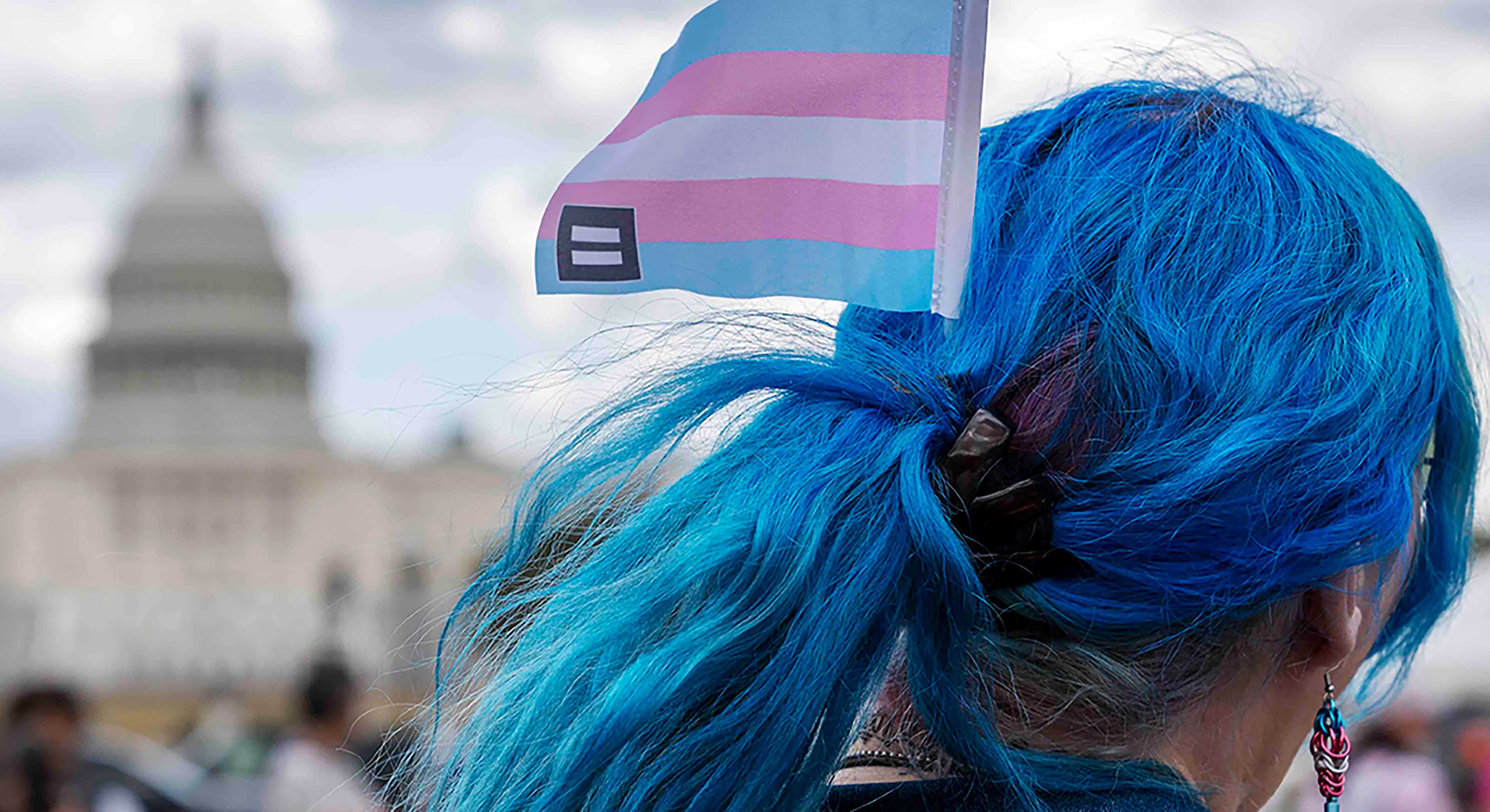
The situation is different this year for trans artists travelling to the U.S. Several trans musicians from Canada cancelled their summer 2025 tour dates in response to Donald Trump’s signing of 26 executive orders on the first day of his second term as president, including one that claimed to protect women from gender ideology extremism by declaring that all federal agencies in the U.S. will only recognize two biological sexes.
In April, U.S. Immigration and Citizenship updated their policy in accordance with Trump’s order, stoking feelings of uncertainty for trans folks in Canada who already experience discrimination travelling south of the border.
On June 17, a small break in the clouds appeared: the District Court of Massachusetts issued a preliminary injunction in response to the federal lawsuit Orr vs. Trump to halt Trump’s executive order. This has offered a brief window for trans people in the U.S. to update their passports to include gender markers that don’t match their assigned sex at birth.
Even so, the climate this summer for trans artists travelling to the States has been one of heightened uncertainty.
Here’s a closer look at what’s at stake, and the changes that people are calling for.
‘The communication there is, ‘Don’t come’’
“The dangers for trans people have heightened. It was already dangerous before, [and] it’s even more dangerous in this context where there’s so much scrutiny,” said Corinne Mason, a professor of women’s and gender studies at Mount Royal University in Calgary.
“The communication there is, ‘Don’t come. Trans people aren’t welcome here,’ and that’s really scary for those who need to travel across the border to work, compete as an athlete or complete their studies in the U.S,” they said.
Niko Stratis had already planned to tour the U.S. when she released her first book this spring. The Toronto culture writer had published her memoir, The Dad Rock That Made Me a Woman, through University of Texas Press in Austin, and was looking forward to a cross-country tour of the U.S. to connect with friends, colleagues and readers.
She was already aware of the risks of travel as a trans person, and at the outset of her U.S. tour this spring, felt unsure of how new legislation might further change the reality of travelling. Considering how often rules change, and how they may be enforced with variability across the U.S., Stratis was ready to continue on with her plans.
“I didn’t really care that there was a government in place that wasn’t super keen on people coming in,” she explained. “I spent my whole life afraid to do this work and speak up. I came out as trans almost 10 years ago now. I was just like, I don’t care enough to be afraid of that shit anymore. Let them do whatever they want. What’s the worst that’s going to happen?”
Stratis decided to continue on with her dates in New York and Boston and told herself if it started to feel too stressful or unsafe, she’d make a judgement call when the time was right.
By the time her California dates came around in June, she decided to cancel for a combination of reasons.
“It’s not just flying there. It’s ‘Where do I stay? Is the place that I’m staying going to be safe?’” Stratis said. For her California dates, she was planning on travelling solo, which made it tougher to rationalize.
“I thought, there’s too many variables here that make me feel unsafe. I’m losing sleep over this, the anxiety around this is high. I’m just not going to do it.”
Still, Stratis is wary about nationalistic narratives that pit Canadians and Americans against each other and that shame Canadians for travelling to America at all.
The conversation, she says, is far more nuanced than that.
“People need to make the decisions that are the safest for them, arm themselves with the knowledge they can find, and try not to stoke fear,” she said.

With anti-trans rhetoric getting louder, and the nebulous inconsistencies with how federal policies are enforced in the U.S., Stratis hopes that people who do choose to go to the U.S., whether for work or personal reasons, are met with compassion.
“It is harder than ever for trans people to speak with their own voices to the problems that we’re facing, and what we would like to do to see those situations be better,” Stratis noted. “That’s true in America, and that’s true in Canada, too.”
Shared solidarities
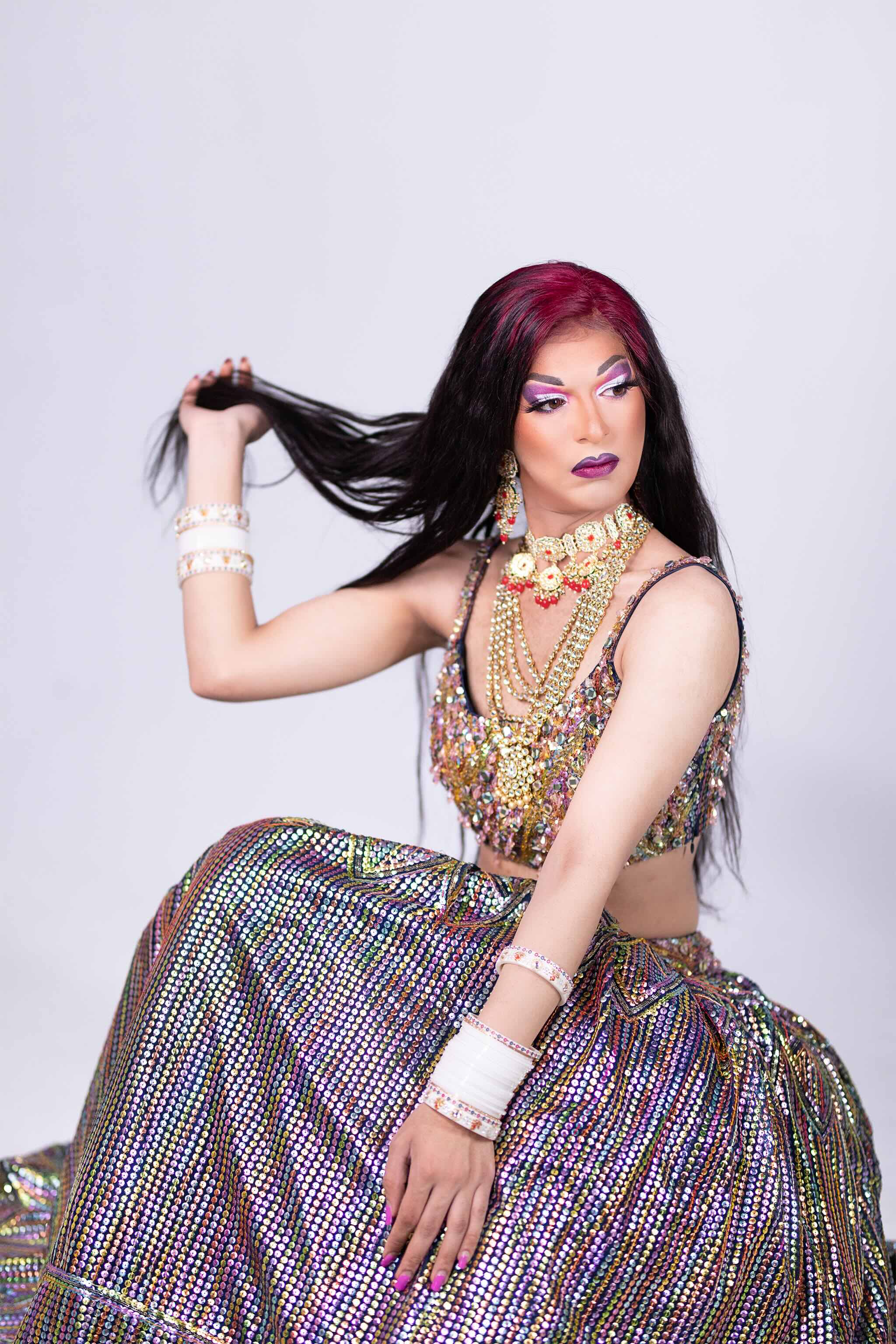
Since landing in Canada as an international student 10 years ago, Jolene Queen Sloan has made a name for herself merging Punjabi folk and Bollywood dance with drag. Over the last five years she has performed in cities across the country, creating spaces for audiences to celebrate their South Asian culture, along with their queerness, in one space.
Over the last year, Sloan has been invited to perform at shows in the U.S., especially in Seattle and New York, since, she said, there isn’t as much South Asian representation in drag spaces there. The earning potential for drag performers is much higher south of the border, she adds. But she turned the offers down.
“I’ve always been hesitant because I’m transgender and I’m also South Asian. I’m double scared because what happens if I get banned?” she said. “Eventually I do want to go and perform there, so it breaks my heart that I’m not able to do that now, just because of the fear.”
As an immigrant to Canada with permanent resident status, news of widespread ICE detainments as a result of the Trump administration’s immigration crackdown have made Sloan especially averse to travel.
“I’m still an Indian citizen and I carry an Indian passport, so the biggest fear that comes to mind is, ‘What if I get detained by ICE? I’m not Canadian yet.’ Me being South Asian and a person of colour, the consequences I might have to go through are going to be really different,” she said.
Mason says this is an important moment to acknowledge how anti-immigration and mass deportation policies are intersecting with anti-trans policies.
With migrant justice protests happening across the U.S., it’s important to acknowledge the struggle of trans migrants, and the shared realities of both communities.
“For queer and trans communities, it’s important to take up migrant justice solidarity. Similarly for newcomers, migrants, folks on visas, folks who are undocumented, it’s important to see how the threads of control that are demonizing their communities, are the same ones demonizing our communities,” Mason said.
“It's not just trans and intersex people. It's anybody who doesn't conform to standards of masculinity or femininity or doesn't look the way that people assume men and women should look. All of our abilities to move and all of our ways of nonconformity, however we show up in the world, are under scrutiny,” they said.
Despite her fears about U.S. travel in the immediate future, Sloan remains hopeful that there will soon be a day when she feels comfortable and safe travelling across the border to share her love of performance.
For her, legislation that seeks to deter trans people from travelling means so much more than a gig or a vacation ever could.
“It’s never just about a passport or a visa form. It’s about who gets to move freely in this world and who doesn’t,” Sloan said.
“Right now trans people, and especially racialized trans people, are being left behind.” ![[Tyee]](/design-article.thetyee.ca/ui/img/yellowblob.png)
Read more: Gender + Sexuality












Tyee Commenting Guidelines
Please note that email notifications for replies are not currently working due to a software issue which may be resolved in a future update.
Comments that violate guidelines risk being deleted, and violations may result in a temporary or permanent user ban. Maintain the spirit of good conversation to stay in the discussion and be patient with moderators. Comments are reviewed regularly but not in real time.
Do:
Do not: