

 SHARE:
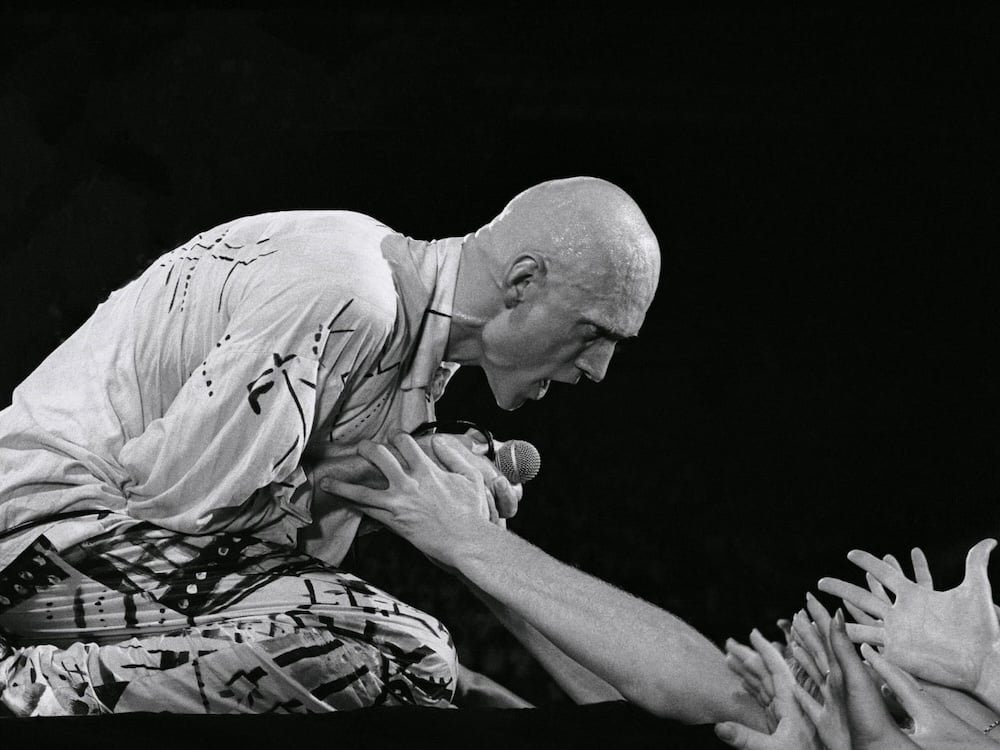
“Hope’s only a word until it’s made real by action.”
So says Peter Garrett, frontman of the iconic Aussie rock band Midnight Oil, reflecting on a half century of music and mischief making that brought the band often to Vancouver to play and once, memorably, to the frontline of Canada’s War in the Woods in Clayoquot Sound.
The band’s appearance out in the wilds of the west coast in the summer of 1993 fit how Midnight Oil mixed art with politics, unafraid to take sides on issues they cared about — in this case clearcut logging — and if they ruffled a few feathers, so be it.
“We always knew and I always was very keen that... we didn’t shy away, either out of politeness or fear of offence,” said Garrett in a conversation we had in Sydney in December.
So out to Clayoquot Sound they went in the midst of a tumultuous year of resistance to old-growth logging on Vancouver Island, culminating in mass arrests that amounted to what was then the largest exercise in civil disobedience in Canadian history (since eclipsed, sadly, by a grim rerun south of here to save Fairy Creek from the same fate).
The Oils were at the height of their fame and their power to draw and move huge global audiences, their big sound and percussive stage presence matched by a willingness to give a shout-out, literally, in opposition to issues that offended them: logging, for one, nuclear power, oil and gas drilling, mining, the denial of Indigenous rights and assaults on the environment and social justice generally.
Just three years earlier, they had staged a smash-and-grab lunchtime concert in New York City on a flatbed truck at the foot of the Exxon Building on Sixth Avenue, shaming the company for its negligence over the Exxon Valdez oil spill in Alaska in 1989.
A “carrier pigeon” — in this case folks from Greenpeace whom Garrett knew from his conservation activism in Australia — alerted the band to the growing foment in the forests of Vancouver Island. The band turned up in the summer of ’93 and performed in the so-called “black hole,” a burned-out clearcut off the side of Highway 4 that was a forward base for the protesters. These days, tourists flocking to Tofino and Ucluelet to glory in its old-growth forests drive past the black hole in their thousands every day in summer, oblivious to what happened here a generation ago.
The concert was a publicity coup for the activists, but it also drew a crowd of loggers and their families who gave the band an angry sendoff when their set was done, claiming their livelihoods were at stake. Scenes from that confrontation, shot from inside a vehicle carrying Garrett and other band members, have since made it into a brilliant documentary released last year, Midnight Oil: The Hardest Line. A trailer for the film (the documentary itself can be viewed in full on Apple TV) includes a few frames of that encounter, one woman’s review of the concert being an exhortation to the Oils to “go back where ya come from!”
On Monday the film will play in the Clayoquot Sound Community Theatre in Tofino, a fundraiser for the Friends of Clayoquot Sound made possible by Garrett, and Sony Pictures. The film screening will be followed by our December interview captured on video.
Garrett remembers the showdown in the woods as being a bit scarier than just a few unhappy people banging on the car window.
“Actually some of them were trying to roll that car. We were going across a bridge at one point, and they were trying to roll us off the bridge into that ravine below... which did look rather a long way away.”
Did the loggers not have a legitimate point?
“Well I think we’ve always been aware of the implications of what we said, what we played, what we produced, but not enough people take sides — particularly when it comes to protection of the environment.... In that case the campaign had built some sort of crescendo which we’d been aware of previously when we were in town and... we did things like that. I mean that’s what Midnight Oil used to do.”
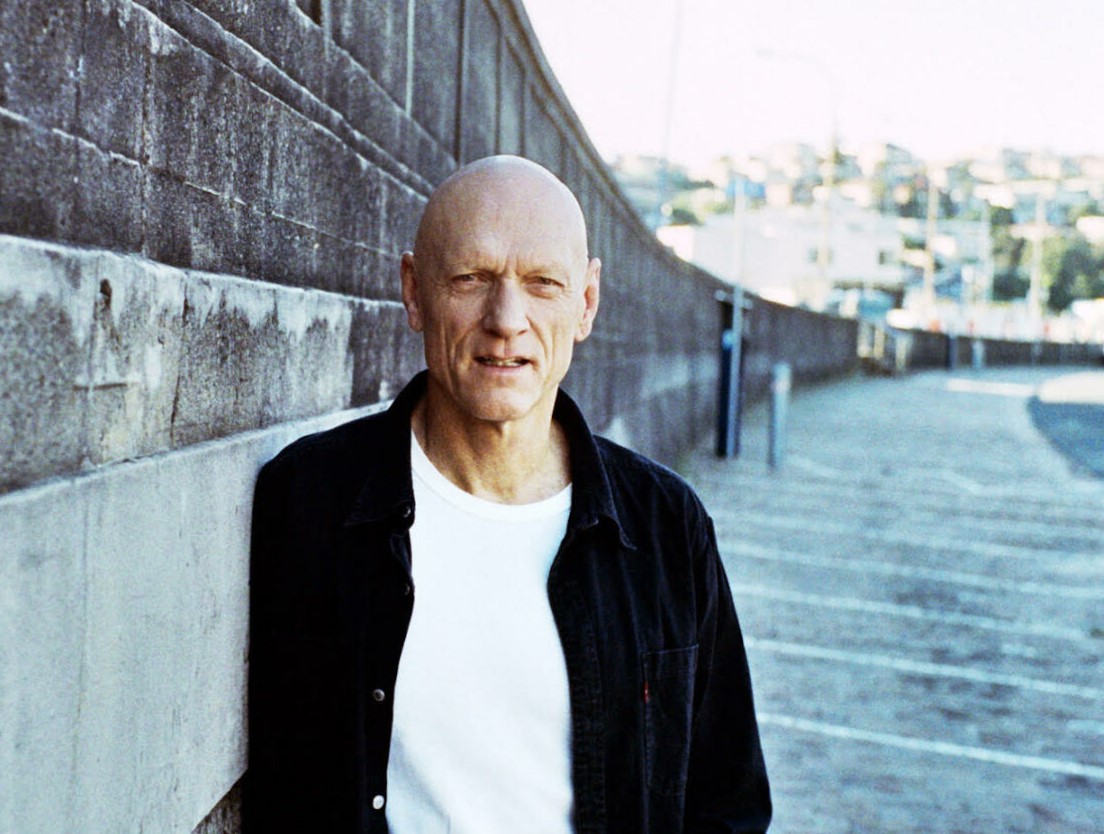
If anything, he regrets the continued “unfettered thoughtless interactions with the natural environment” that persist in relatively wealthy countries like Canada and Australia — “I think of tarsands in Alberta, I think of the northwest shelf in Australia, these massive exploration and gas plants” — which cause us to continue to go backwards, especially on climate policy.
Garrett, who turns 72 two weeks from now, said watching The Hardest Line left him feeling “tired, or exhausted, or a little stunned at some of it. For me, the overall sense of it... is how did we manage to pull off what we did and how did we manage to stay together and how grateful I am that it was a group of individuals that were able to hold that place, somehow, making that noise on a stage, coming together in performance to make music and then reaching out to an audience and communicating with them in a really visceral way.”
One reviewer in Australia said the Oils’ hugely popular anthems actually helped shape modern Australia, perhaps none more so than “Beds Are Burning,” which is listed in the Rock & Roll Hall of Fame as one of 500 songs in the world that shaped rock ’n’ roll itself.
The band’s last studio album, Resist, was released in 2022, which was the last time they played in Vancouver, at the Malkin Bowl. That album and tour came about after Garrett survived a decade-long detour onto Australia’s notoriously fractious political stage, serving as a federal cabinet minister under two Labor prime ministers in an effort to champion environmental issues and Indigenous rights from the inside — with mixed results.
“Our political classes are the ones who have let us down,” he reflects, in thrall as they are to pastoral and mercantile interests that resist change, especially when it comes to Indigenous rights (evidence the failure of the Voice referendum to give constitutional recognition to Aboriginal and Torres Strait Islanders in 2023).
But Garrett also blames the middle class and the boomer generation, of which he is a part, for their failure to act.
“We’re a cosseted, closeted, comfortable generation who have basically been around while many things have been going in a very bad direction, and we do a bit of social media-izing and talk about it at our dinner parties and it’s not good enough, you know, for a human that’s fully connected.
“I can’t express strongly enough how the world is changed by people that show up.... Our challenge and responsibility is absolutely stark; we have no excuses for not being active. We have no excuses for not mobilizing and working with others.
“If there are people showing up who are arguing stuff that you think is morally wrong, or politically dangerous, or it is going to be to the harm of the population, you need to show up... you have to be in the race, you have to be on the field.
“An emergency situation that the world faces, global health, politics, whatever you want to call it, a polycrisis, requires us to act as though it were an emergency, and instead of ringing a bell or blaming someone for it or asking someone to come and bail us out, you have to go out and do some of it yourself.”
“There is hope so long as people hope and then act, but it’s the action part that’s as critical as the hope.”
If not, as he sings in “Rising Seas,” the opening song on Resist:
Every child, put down your toys
And come inside to sleep
We have to look you in the eye
And say, “We sold you cheap”
Let’s confess, we did not act
With serious urgency
So open up the floodgates
To the rising seas
![[Tyee]](/design-article.thetyee.ca/ui/img/yellowblob.png)
Read more: Politics, Music, Film, Environment







Tyee Commenting Guidelines
Comments that violate guidelines risk being deleted, and violations may result in a temporary or permanent user ban. Maintain the spirit of good conversation to stay in the discussion and be patient with moderators. Comments are reviewed regularly but not in real time.
Do:
Do not: