

 SHARE:
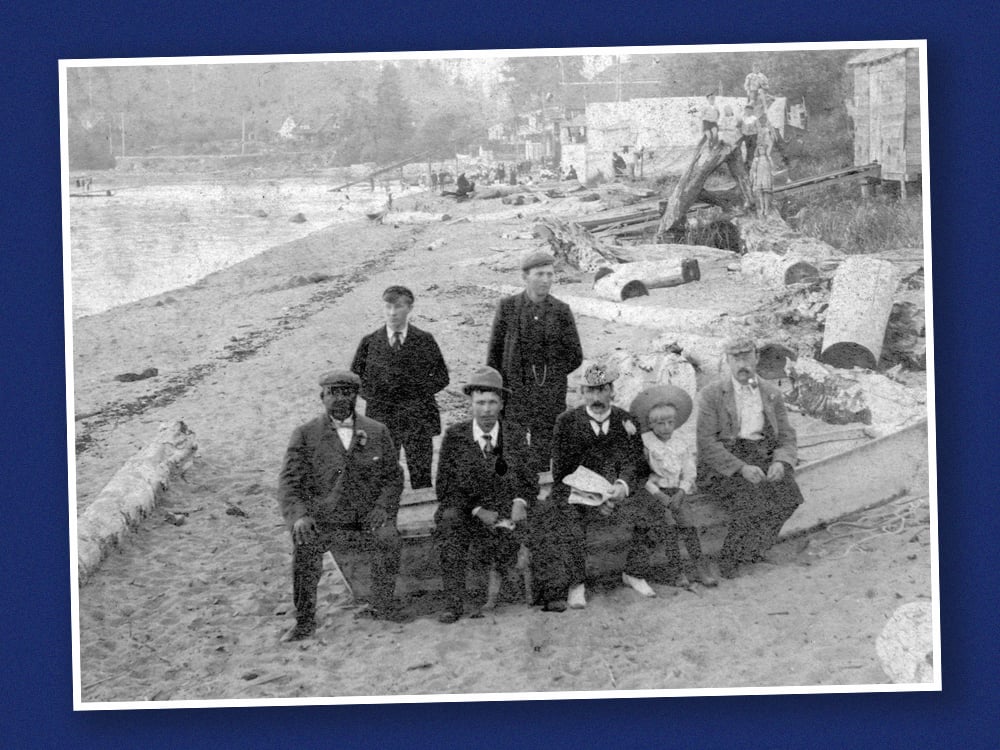
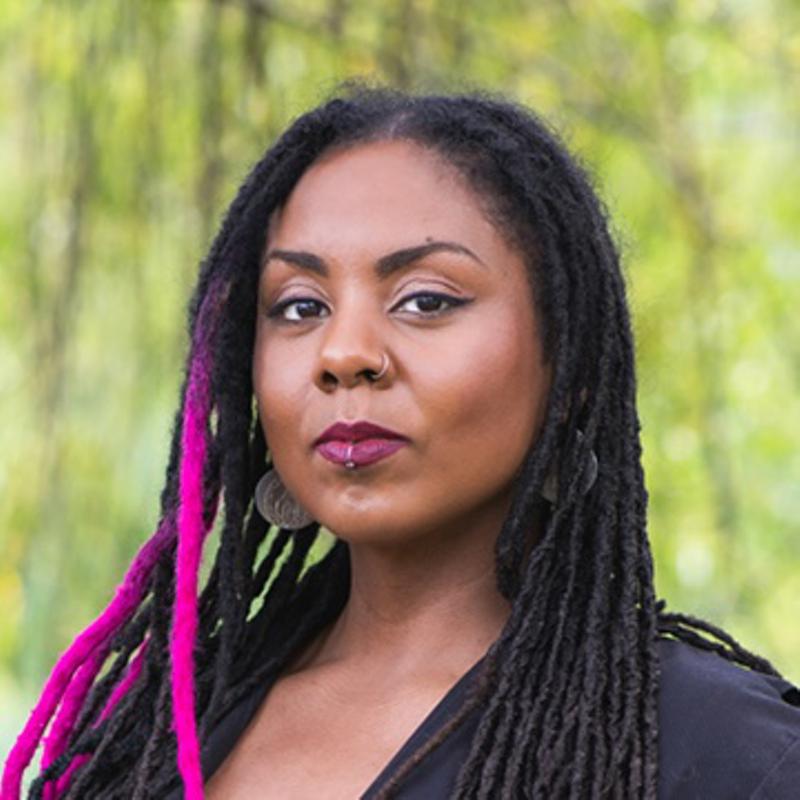
[Editor’s note: Originally from Trinidad, Serafim “Joe” Fortes arrived in Canada in 1885, setting up a tent near Íy̓el̓shn (English Bay) in Vancouver. Fortes was heralded as a hero for saving dozens of people from drowning, and his funeral drew the largest crowd ever recorded in the city's history. In ‘Searching for Serafim,’ out now from Arsenal Pulp Press, author Ruby Smith Díaz draws from historical documents to form an insightful critique of the role that settler colonialism and anti-Black racism played in Fortes’ publicized story. From a contemporary Black perspective, she seeks to unravel who Fortes was as a person, weaving poetry and personal reflections into rigorous, deep archival research.]
Suppose that Serafim Fortes was a white man.
Would he have been seen as exceptional?
Suppose that Serafim, as a Black man, chose to set up camp farther east than Íy̓el̓shn (English Bay) and interacted only with Indigenous and racialized communities.
Would he have been seen as exceptional?
Suppose it was only Indigenous and racialized communities that Serafim had taught how to swim and that it just so happened it was only their lives that he saved.
Would he have been seen as exceptional?
Suppose that Serafim is considered exceptional only because of whose lives he saved.
Does it then mean that some lives are valued more than others?
Are the lives he saved what makes him exceptional?
The permanent contradiction in the acceptance of Serafim Fortes as a Black man and a beloved hero cannot be understood without delving into the societal context of the turn of the 20th century.
Serafim made a name for himself just one year after his arrival in Vancouver for his help in evacuating citizens during the Great Fire of 1886. Years later, he rose to prominence again for saving the life of the American vice-consul at Íy̓el̓shn. As one article in the Windsor Evening Record explained:
Col. Cook, American consul at Dawson, has asked that an effort be made to secure the Humane Society medal for the coloured man, Joe Fortes, bartender at the Alhambra Hotel, Vancouver, who saved from drowning Vice-Consul Burke of Dawson, at English Bay, Vancouver, by diving for him when he disappeared for the last time. Fortes had saved six human lives in as many years at Vancouver’s bathing resort, English Bay, and he deserves the medal far more than many of those who have for it.
Although Serafim had been working as a lifeguard for years at this point, his saving of the vice-consul’s life seems to have proliferated his popularity in Vancouver and finally validated his role as a lifeguard. Consul Cook goes so far as to say that others who have received the award in the past, namely whites, are not as deserving as Serafim — a statement that surely would have turned heads, given the open subjugation of Black communities at this time.
The article ends abruptly by providing a small window into Serafim’s awareness of anti-Black racism at the systemic level in Canadian society, concluding that “‘Joe’ thinks the Humane Society has drawn the colour line on him,” which directly contradicts the reputation that “Joe” was easy to please and always ready to serve, as well as the assumption that Serafim wasn’t acutely aware of the anti-Black racism that he navigated in Vancouver.
The only other window into Serafim’s true feelings about living in settler society that I came across was published in the Oct. 14, 1903, edition of the Vancouver Daily Province about the first Thanksgiving holiday in Canada.
Prominent Vancouver citizens were asked what they were thankful for, and between other responses about being thankful to be alive or, conversely, not dead, Serafim responds, “That the kiddies have stopped coming to the beach.”
Once again, this stands in stark contrast to the reputation or, dare I say, fantasy, of Serafim being always ready to serve without complaint. Although he did genuinely seem to enjoy teaching children how to swim, he too grew tired and needed time to himself, not being in service of others.
Many Vancouver citizens were indeed aware of Serafim’s invaluable service to the city. In 1900, a petition began circulating, appealing to the municipal government to provide Serafim with a salary in exchange for his lifeguard duties.
Just a few years after the petition to pay Serafim was presented to city council, downtown Vancouver streets were lined with a mob of armed white men holding large banners that read “Stand for a White Canada,” their loud chants and singing of “The Maple Leaf Forever” reverberating against storefront windows. Among these men were prominent politicians, policemen and wealthy businessmen.
The mob headed to Japantown and Chinatown to smash the windows of Japanese- and Chinese-owned businesses and homes and threaten the lives of individuals of East Asian descent. The year was 1907. Serafim’s home remained safe.
One year later, the Vancouver Opera House hosted The Clansman, a play based on Thomas Dixon Jr.’s “Historical Romance of the Ku Klux Klan (KKK),” on its fourth record-setting tour, which captivated over four million people across Canada and the United States. The show sold out, Serafim continued to save whites at Íy̓el̓shn, and he continued to receive high praise for his work ethic and skill set.
The year was 1908. Serafim was safe.
Serafim’s home was safe.
Serafim was safe.
Under six elm trees, Serafim was safe.
But why?
[To my best friend in Grade 3, my only Black friend in elementary school: I’m sorry there were no elm trees to keep your house safe. I didn’t know what it meant when they threw a brick through your living room window just months after you moved in. I thought that maybe it was a prank. I never understood why no other house on the block got pranked. Your mother never said anything when I asked why. Maybe now, I will gift you an elm tree.]
In an essay included in the book Black Geographies and the Politics of Place, critic Peter James Hudson proposes that Serafim “was assumable into Vancouver’s white culture in a way that the Asian population — because of the fears generated by their numerical preponderance and their potential economic clout — was not. Fortes could become a mascot because Asians had remained a menace,” suggesting that what shielded Serafim from the white supremacist violence of the era was the voracity of anti-Asian hatred at the time.
Asians were considered a menace simply because their growing presence in the Lower Mainland, both physically and economically, threatened the social positioning of whites.
I would suggest that Serafim may also have been shielded from the white supremacist violence of the era because he sometimes participated in anti-Asian racism himself, (mis)using his special constable’s badge multiple times to discriminate and assault members of the Chinese community. The public praised him for his doing so.
Excerpted from ‘Searching for Serafim: The Life and Legacy of Serafim “Joe” Fortes’ by Ruby Smith Díaz. Copyright 2025 Lori Fox. Published by Arsenal Pulp Press. Reproduced by arrangement with the publisher. All rights reserved. ![[Tyee]](/design-article.thetyee.ca/ui/img/yellowblob.png)
Read more: Books, Rights + Justice










Tyee Commenting Guidelines
Comments that violate guidelines risk being deleted, and violations may result in a temporary or permanent user ban. Maintain the spirit of good conversation to stay in the discussion and be patient with moderators. Comments are reviewed regularly but not in real time.
Do:
Do not: