


 SHARE:
Media is full of adults voicing their concerns about young people: what they are taught in school, the impact of climate change on their futures, the rising mental health crisis that’s particularly acute for girls and queer youth.
But how often do we actually hear from youth themselves about how they feel and what’s important to them?
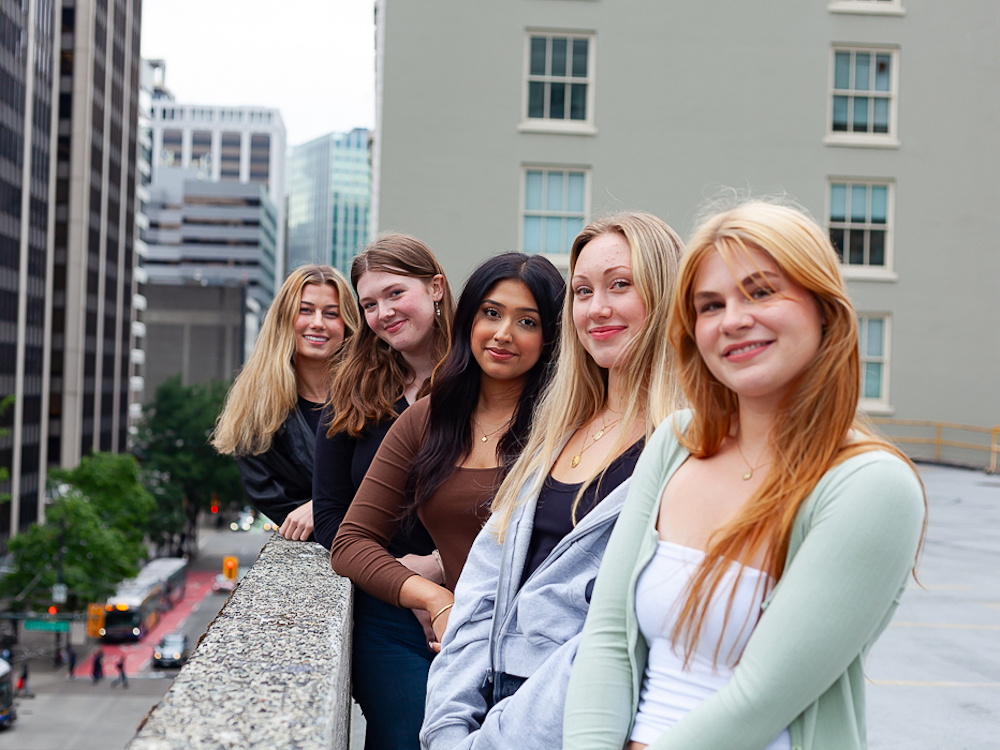
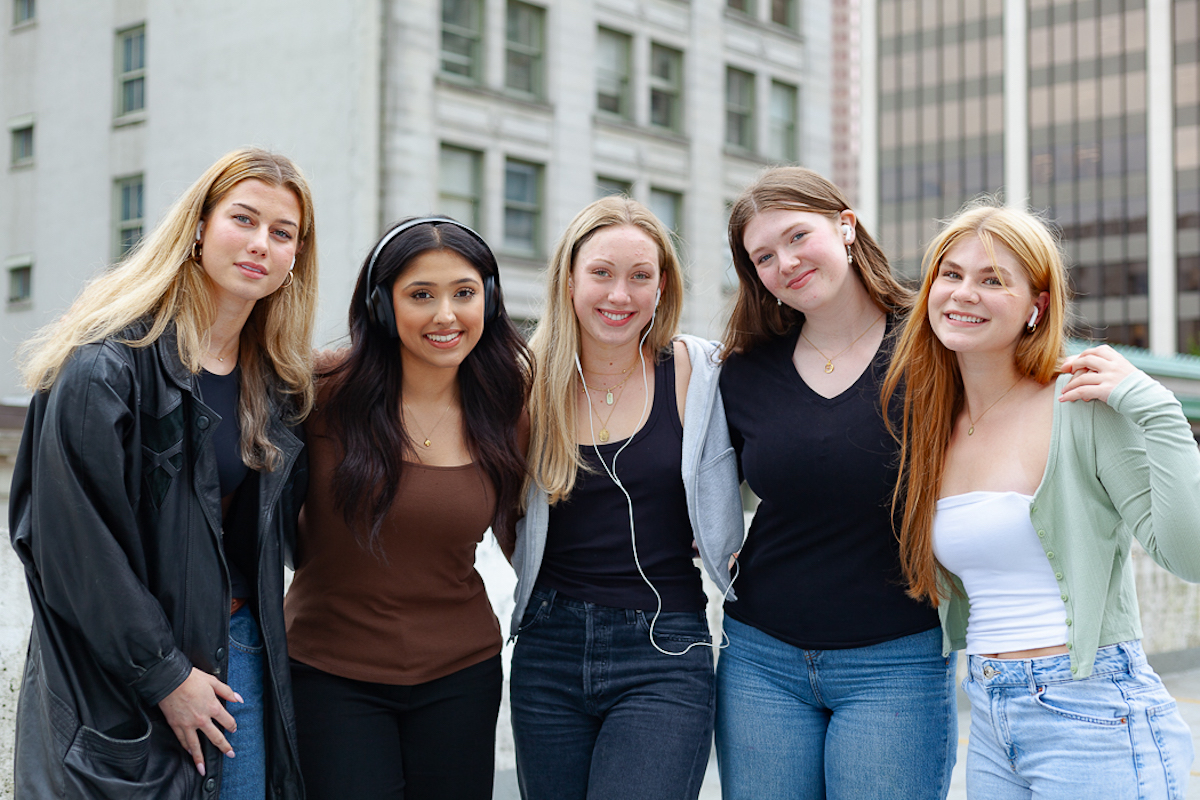
Five students from Sir Winston Churchill Secondary in Vancouver are providing a window into the soul of the modern teenage girl with their podcast Hell is a Teenage Girl, which tackles what it’s like to navigate adolescence under patriarchy and capitalism. Two episodes have been released so far, with more planned for this fall.
There are plenty of podcasts about the experience of being a woman, podcast creators and hosts Simran Rahal, Sophie Reimer, Grace Hannay, Lucy Loewen and Elyse Barton told The Tyee this past June.
But podcasts by and for teenage girls are more rare. That’s the void these 17-year-olds hoped to fill when they decided to put their podcast — originally conceived for their Grade 11 New Media class this spring — on Spotify.
“We wanted to fill a bit of a hole on social media, where a lot of people talk very negatively about young women and their choices,” said Hannay. “Just being as positive as we possibly can, while still being honest and real.”
The show’s name comes from the opening line of Jennifer’s Body, a 2009 horror-comedy about friendship put to the test when a teenage girl discovers her best friend is a boy-eating demon.
Even without literal demons, girls have plenty of challenges to navigate. From the impacts of puberty on the body and brain, to the stress of school and parental expectations, to navigating changing social dynamics, teenage girls are expected to handle it all while defying stereotypes about their gender and age.
“The name is a little bit tongue-in-cheek. Kind of reclaiming all the negative connotations of being a teenage girl,” said Loewen, adding stereotypes of being too “emotional,” “hormonal” or “crazy” still follow girls today. “We’re not taken as seriously as we should be.”
While the podcast’s listener numbers are around 200, their TikTok account has 5,200 followers, with one video, featuring “streeter” style interviews asking people to describe teenage girls “in one word,” viewed 1.8 million times so far. (A sampling: “rambunctious,” “smart,” “messy.”)
“It really does help with reaching around the world,” Hannay said of TikTok. The podcast has already reached listeners in South Africa, Australia, the United Kingdom, the United States, Canada and the Netherlands.
Each episode focuses on a different theme, the first episode acting as an introduction to the podcast and the second episode focusing on girls’ mental health. At the encouragement of their New Media teacher, the students have embraced ChatGPT for episode research. (Don’t worry, they double-check the results for accuracy.)
They also include primary sources, such as an interview with their school guidance counsellor in episode two about the mental health impacts of social media.
The students taught themselves to use software needed to make the podcast, a website and videos for social media. This included learning how to use audio editing software on an “ancient” computer in the school’s media lab.
They even made their own sound effects, including the horn from Loewen’s car, their own hands clapping, and Hannay playing the ukulele for their intro and outro.
The students hope the skills they gain from making
“That makes it a better final product,” Barton said. “If we are enjoying it, it helps other people enjoy it.” ![[Tyee]](/design-article.thetyee.ca/ui/img/yellowblob.png)
Read more: Health, Gender + Sexuality, Science + Tech












Tyee Commenting Guidelines
Comments that violate guidelines risk being deleted, and violations may result in a temporary or permanent user ban. Maintain the spirit of good conversation to stay in the discussion and be patient with moderators. Comments are reviewed regularly but not in real time.
Do:
Do not: