


 SHARE:
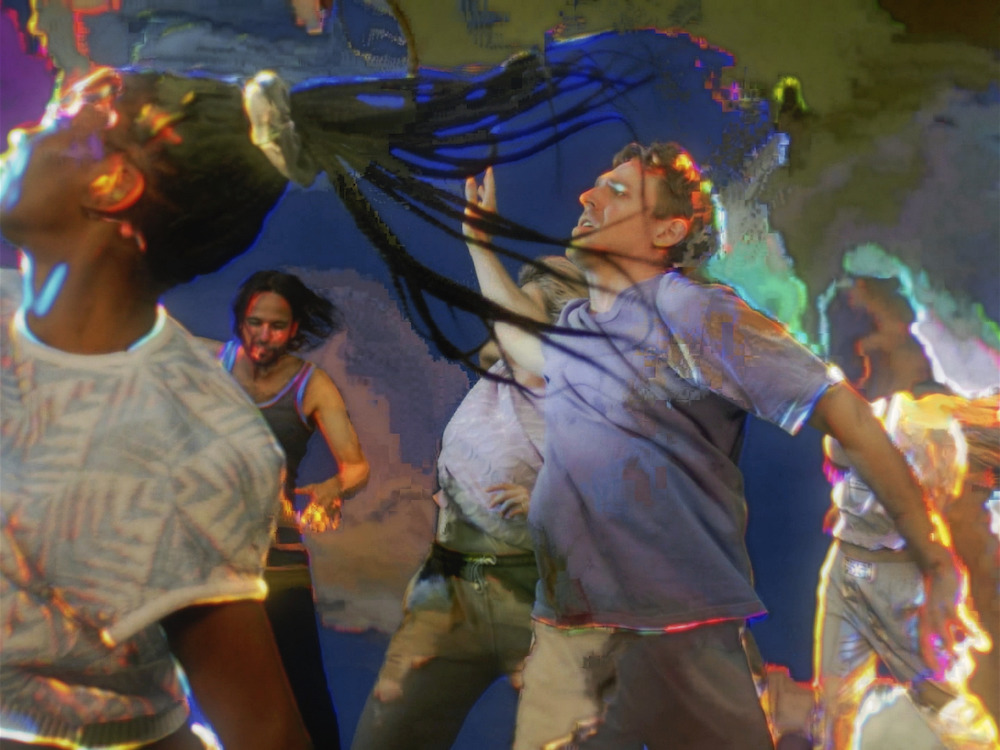
Multidisciplinary artist Jeremy Shaw’s Phase Shifting Index is a reminder that dance, despite being one of the most common social activities practiced by humans, doesn’t always lend itself to clear interpretation. After exhibitions at the Centre Pompidou in Paris and other prestigious European galleries, the North American premiere of Phase Shifting Index is now on at the Polygon Gallery in North Vancouver, the artist’s hometown (Shaw now lives in Berlin).
It’s something of a cacophonous barnburner.
Shaw arrives with Phase Shifting Index after having carved out a successful international art career, with solo exhibitions at a dizzying number of major galleries and prestigious awards. His work exists at the intersections between film, performance, altered states and research. Rich and loamy turf, to be sure.
Some components from Shaw’s earlier series Towards Universal Pattern Recognition foreground Phase Shifting Index. The sculptural elements affixed to the wall outside of the main gallery space contain archival photos of dance artists in various postures of conniption and capitulation. These crystalline structures fracture the interior images into a series of black and white shards, the prismatic angles offering a kaleidoscopic perspective on the central image.
The act of splitting into different points of view is echoed in the installation itself. Seven video screens staggered throughout the gallery provide a glimpse of dance groups in mid-performance or rehearsal. The different productions are captured in a variety of media (16mm, Hi-8 video).
At first glance, the footage appears authentic, perhaps sourced from some long-ago dance company’s archives. Some images recall early La La La Humans Steps and the company’s choreographer Édouard Lock. Others look like mid-'90s club kids in full raving rampage.
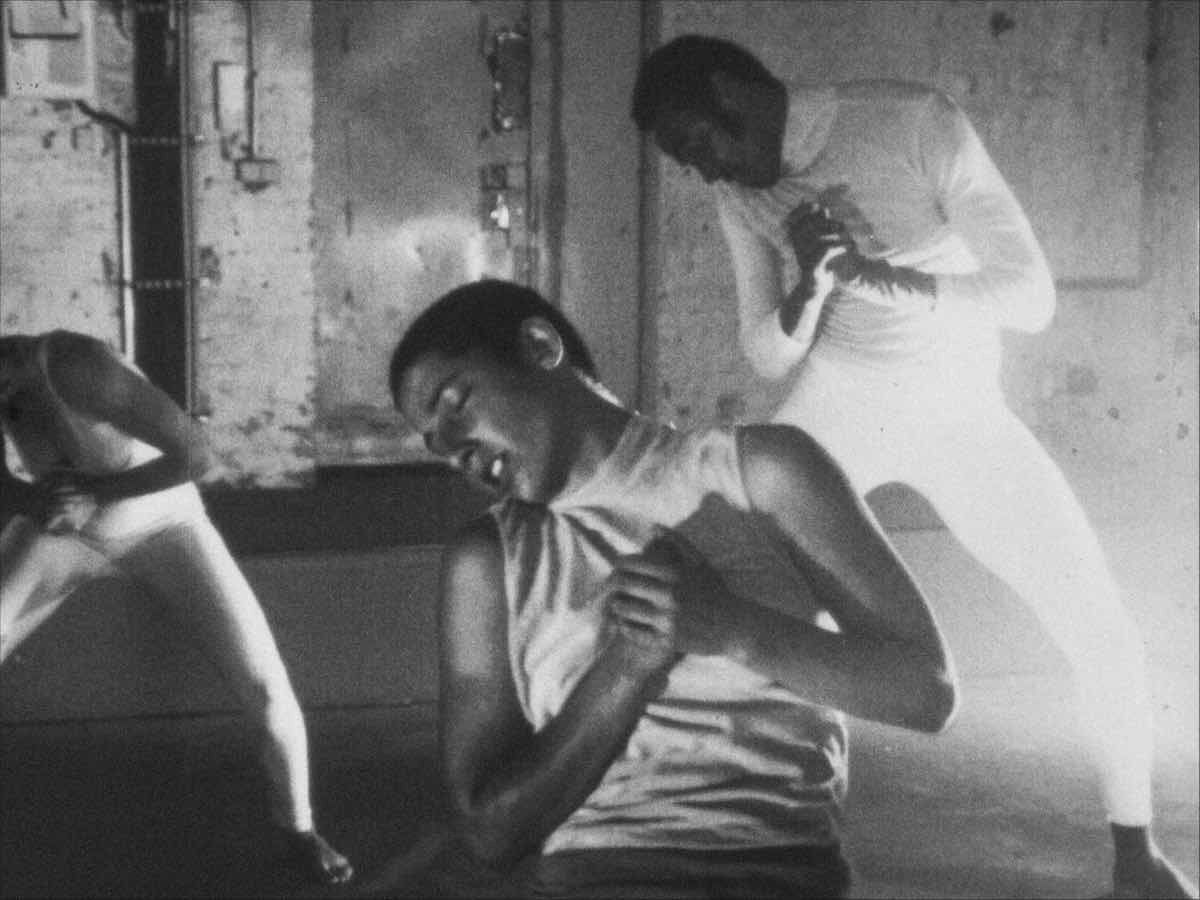
The titles of the different sections — The Violet Lux, Quantum Modern, The Alignment Movement — also seem to refer to distinct times and places. The details of costume appear correct to the different eras they represent (big hair and makeup for the pseudo-‘80s, and undershirts and cargo pants for the hardcore ‘90s). But it isn’t long before you twig that something is awry.
Despite the veracity of their appearance, each of the dance videos were entirely created by Shaw. They are choreographed, performed and filmed with meticulous care so as to seem authentically of another era.
The physical layout of the work provides another curious entry point into the work. I’m not sure why the softly carpeted banquettes running almost the full length of the gallery wall obsessed me so. But they made me intensely aware of being a body in space.
Given the meticulous attention to detail lavished on the video elements, it only makes sense that the other parts of the show, like the gallery layout and the fuzzy banquettes, play an equally critical role. Where you sit or lie down will have an impact on your perception and understanding of the work.
The faux dance cultures that Shaw fashions in his videos pull from real-life movement vocabularies, whether it be Body-Mind Centering (a therapy that, like its name implies seeks to bring together and physical experience) or what looks to be some hardstep thrash wherein the dancers, in baggy pants and undershirts, blend dance and violence into a brutally exquisite catharsis.
In his earlier work, Shaw has stated his interest in altered states: the paranormal, psychedelia, the euphoria wrought not by religion, but by art itself. Music and sound also play a key role. Before he moved into visual art, Shaw was a musician. His partnership with composer Konrad Black gives the work a sonorous thunder that brings the sections together into a rapturous finale.
It is here, in the final conflagration, that the true meaning of the work becomes apparent. The trompe l'œil aspects of the videos fall away, and a sudden coherence unites the performers into collective catharsis.
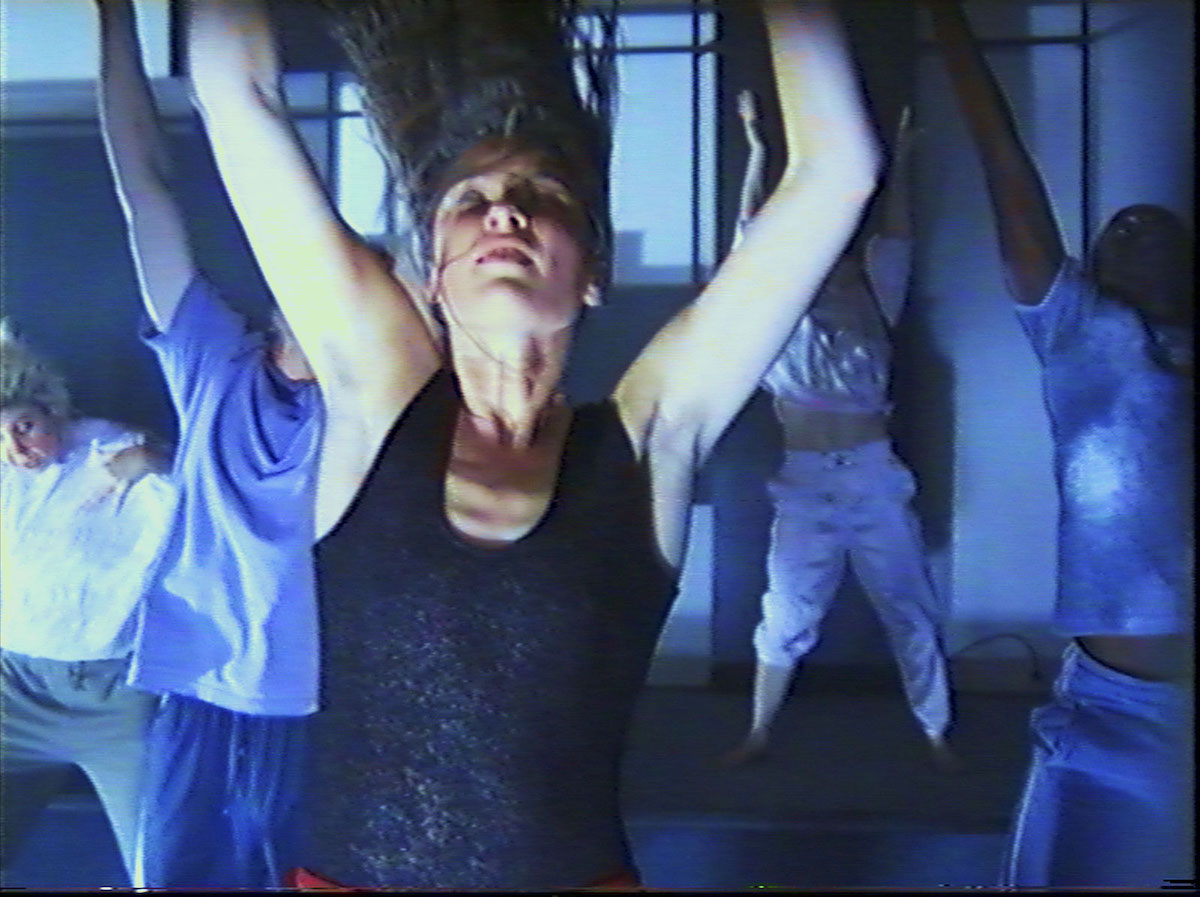
Accompanied by a rising soundtrack and strobing lights, the performers sync up, the action building to an almost orgiastic apotheosis.
As German choreographer Pina Bausch once famously said “Dance, dance, otherwise we are lost.” So it is here, as well.
Separated by time, distance, form and meaning, the dancers come together in a collective effort to create a new kind of reality. Images of the performers begin to disintegrate into a digital mosh pit. Colours and forms break down, morphing and dissolving into one another. The clear boundaries between bodies dissolve into various states of catharsis, ecstasy and euphoria. The frenzied movement takes you in a bodily way, supplanting all theory, all backstory. It lands you in an entirely new state.
This final place of rest, the calm after the storm, is an interesting place. One is tempted to reside here for a while, taking in the reactions of mind, body and more ephemeral receptors as they fizz and snap.
Then the film elements loop around to the beginning, and the thing kicks off all over again.
‘Jeremy Shaw: Phase Shifting Index' runs until Sept. 24 at the Polygon Gallery in North Vancouver. ![[Tyee]](/design-article.thetyee.ca/ui/img/yellowblob.png)
Read more: Art









Tyee Commenting Guidelines
Comments that violate guidelines risk being deleted, and violations may result in a temporary or permanent user ban. Maintain the spirit of good conversation to stay in the discussion and be patient with moderators. Comments are reviewed regularly but not in real time.
Do:
Do not: