


 SHARE:
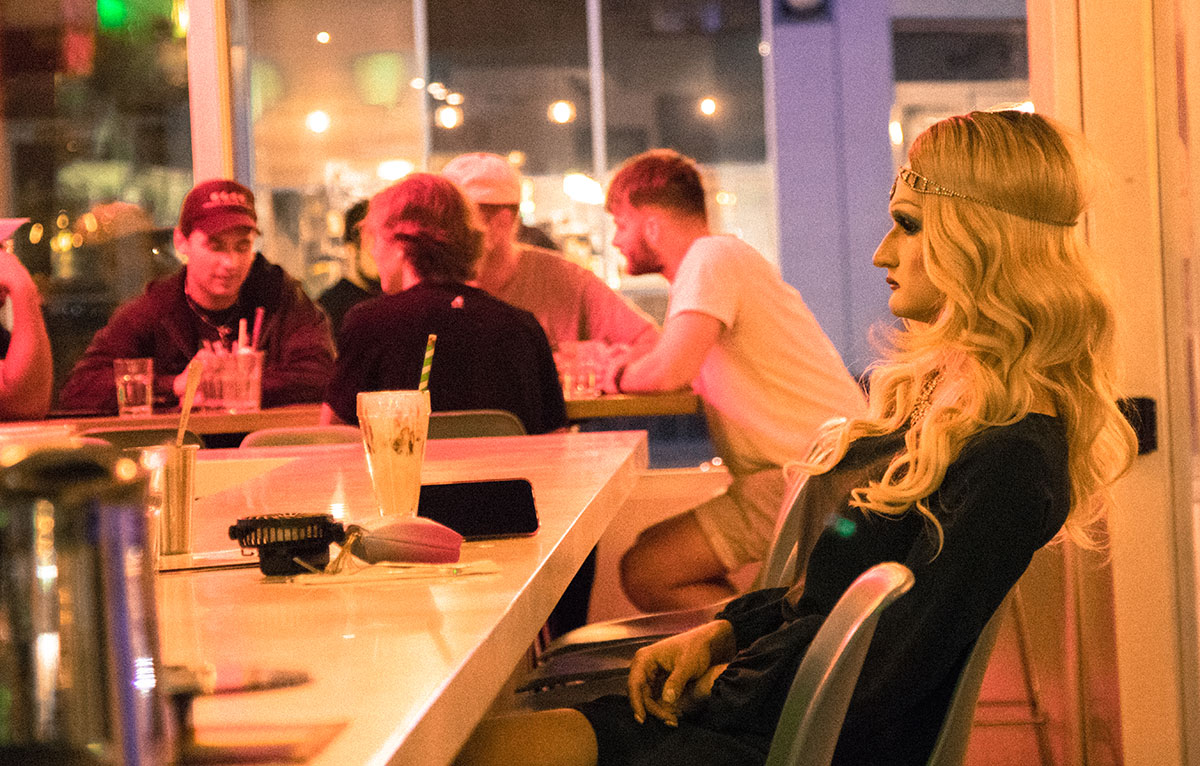
Following our story on late-night diners, we invited readers to share their own memories. You wrote back with touching accounts of hours spent in booths and perched on stools, wrapped in the aroma of hearty food and good company.
The stories below all speak to something special. They are a testament to how a city, and its spaces, shape who we become. But they are also testament to how we, as people sitting on an innocuous chair or quietly serving coffee, nevertheless shape the city around us. As contributor Rocke Wightman said, so much better than I ever could, “I had no idea I was part of history.”
Thank you to everyone who contributed.
A fine meal
We used to go to an all-night restaurant on Davie back in the ‘70s when we were young after dancing at the Love Affair. I think it was called Fresco. They sold these absolutely enormous mushroom burgers and equally enormous slices of cheesecake. A fine meal at 3 in the morning.
— Jane McCall
‘Things feel sturdy’
Often after playing gigs, still sweaty and glowing, I would pay a visit to the House of Dosas. It was open 24 hours then. Cricket was always on the TV. I don’t understand cricket at all, but it’s a game that goes on forever, and that sense that time is elongated is a good thing for the late-night food seeker.
I love spice. Masalas, pungent with coriander and cumin, creamy with ghee and coconut milk and burning with chili pepper are my favourite. Once I asked for mine to be made as spicy as possible. “Kill-the-customer spicy?” they asked. “Yes!” I answered.
They delivered. I barely survived.
Peculiar to the House of Dosas is that the lateness of the night is never acknowledged. It is a calm place. It provides an extensive South Indian menu at all hours, bound in ponderous leather. Things feel sturdy, the tables and chairs made of heavy hardwood, even the heft of the cotton tablecloth is considerable. And I like that. Although musicians can easily be mistaken for party-goers, we’re actually just workers with unusual schedules who need somewhere to eat. And that’s what I craved at night after playing in loud bars: a place to wind down from the mania, somewhere I could feel normal and eat a delicious meal at 4 a.m. without waking up my sleeping kids.
I’m lucky to have known those contemplative early-morning hours; gazing out the windows like an astronaut, cricket playing interminably, the night and its fireworks fading and settling into its final act, aromas and spice bringing me slowly back to Earth.
— Jack Garton
The usual for table seven
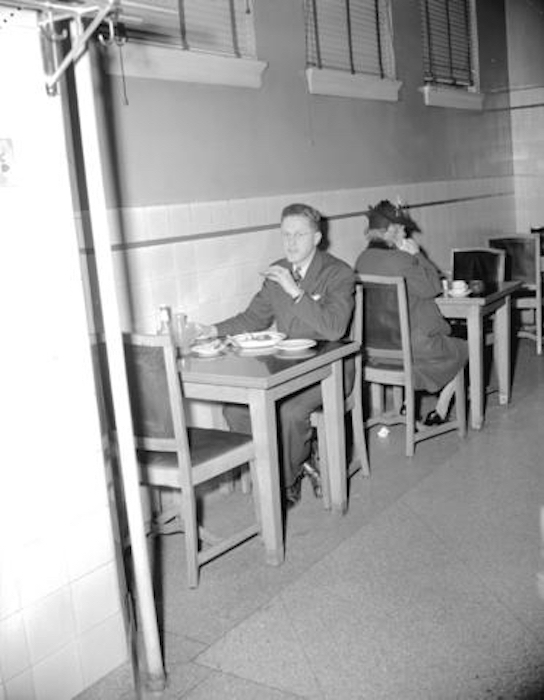
There’s a middle-aged couple who comes into the Templeton every Friday night. They sit at the back table and order two grilled cheese sandwiches with a side salad to split. From my water refills and plate clearings, I can tell they’re in love with each other in the slow, complicated way only a long marriage can create.
The man has long hair and wears band shirts. He works in music production. The woman is beautiful, but she always looks tired. She publishes magazine ads for old people. I always stay and talk to them after they pay because they remind me of my parents. They tell me with sighs and heavy eyes that both their careers feel like they’re coming to an end. What if you opened a flower shop? I tell them. Moved to a different country or took a college class? They smile at this like I’m a child and it feels familiar. They are out of practice in how good it feels to be naive.
— Tessa Mok, server at Templeton Diner on Granville Street
Lunch break at 2 a.m.
In 1960 and ‘61 I worked for a contractor delivering the Vancouver Province to its various distribution outlets in downtown Vancouver and the West End. Our shifts started at 11 p.m. We’d deliver to houses in the West End that always had police cars parked across the street. No one told us what went on there, but we always gave the cops papers and they always thanked us.
Lunch break was at 2 a.m. Our go-to place was Scott’s on Granville. For a kid from the sheltered confines of West Van, it was an overwhelming experience. Two of our fellow drivers or “swampers” owned and raced horses. There was always a bookie and a couple of professional gamblers hanging around, as well as other shift workers.
Scott’s served the usual fare, but my favourite item on the menu was Dollar Hots, small pancakes about the size of a silver dollar. If I’m making my own pancakes, that’s how I make them still.
— Rocke Wightman
Like home, but not really
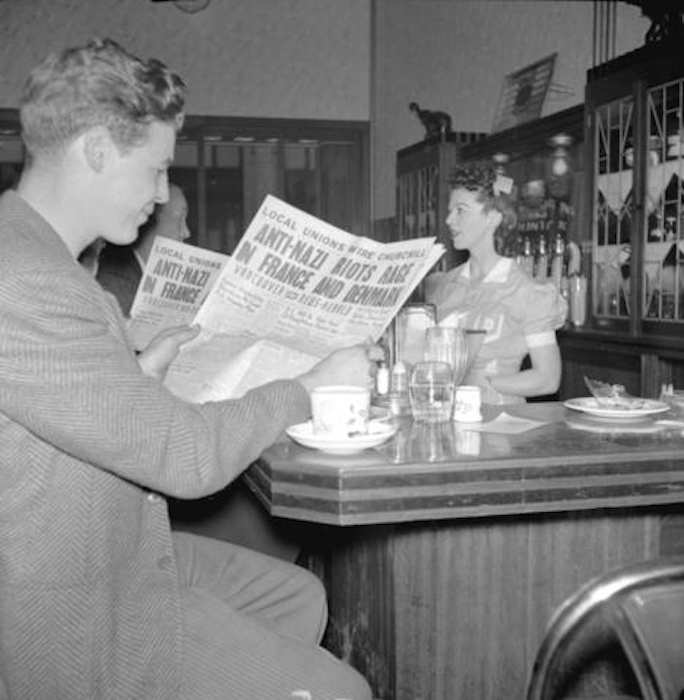
While most people’s post-prom plans involved quasi-clubbing, I found myself at Lucy’s Eastside Diner. Despite being obviously overdressed, the staff didn’t bat an eye. Sinking into a worn leather seat, my gown sweeping the black and white penny tile floor, I felt as comfortable as I did back at home. Except it wasn’t home, and that’s what made it so special.
The squeaky swivel stools and bright orange formica countertops somehow made me feel more alive. With high school behind me, I felt I had so much to look forward to — starting with a mocha shake and a pile of crisp, golden french fries. Those first few morsels tasted like freedom. I felt like a cool, independent young adult.
Granted, 20 minutes later I would call my dad for a ride home because I didn’t want to sit at the bus stop, but that doesn’t matter. At that moment, I could pretend to be otherwise. And I think that’s the power of the late-night diner. It’s like they exist a little outside of reality, allowing you to transform without losing sight of what’s familiar.
— Sara Wong
That lopsided smile
It was under diner lights and over cheesy bread and milkshakes that a boy with dark brown eyes and a lopsided smile told me that I was beautiful, regardless. I try to think of that moment every time I step on the scale.
— Jess Rocke
Stale buns and empty tables
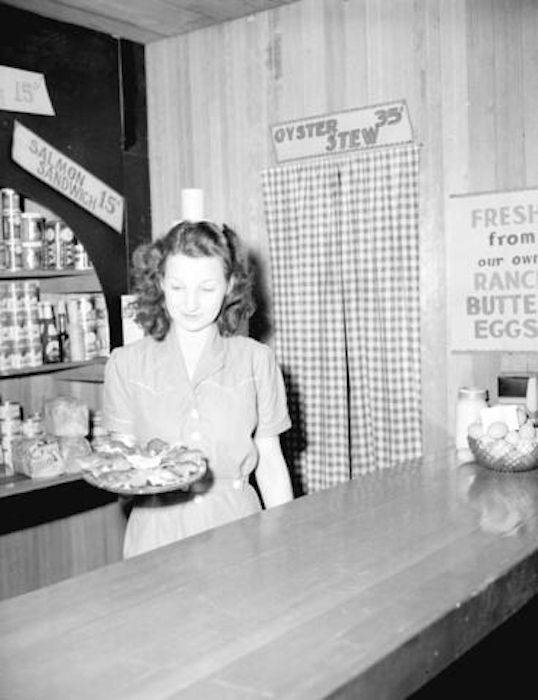
I don’t have any memories of being in a late-night diner willingly, but I guess that’s because I was working behind the counter.
In high school I worked Friday and Saturday nights and summers at the local restaurant in the first mall in Calgary. We were open until 1 a.m.
Over the years I got to know the regulars who were coming off late shifts and usually ordered the same thing for their meal. I also got to know some of the truckers who were looking for a meal and a bathroom. And then I’d serve the randoms who were mostly looking to warm up on a winter night over a cup of coffee.
I think I finally quit and handed in my horrible nylon uniform in my third year of university. But I learned a lot of different things at that job, mostly from the other women who worked there, from cooks and dishwashers to servers. When the place emptied out and neared closing, and after we’d put the coffee machines to bed and filled up the napkin dispensers, we’d sit in the back booth with a coffee and maybe a piece of pie or a stale bun. We’d talk and they treated me like an equal.
Maybe it would have been nice to be a willing customer, but I think it was better for me to be where I was.
— Nancy ![[Tyee]](/design-article.thetyee.ca/ui/img/yellowblob.png)
Read more: Local Economy, Food










Tyee Commenting Guidelines
Comments that violate guidelines risk being deleted, and violations may result in a temporary or permanent user ban. Maintain the spirit of good conversation to stay in the discussion.
*Please note The Tyee is not a forum for spreading misinformation about COVID-19, denying its existence or minimizing its risk to public health.
Do:
Do not: