


 SHARE:
This year Hanukkah landed in November, well ahead of Christmas. Most years, the two events arrive closer together, sometimes even overlapping.
There are, however, two celebrations that always coincide — Christmas and Jewish Christmas. The modern Jewish custom of marking Dec. 25 with “Chinese food and a movie” has become such a part of western culture that it has even been adopted by the public at large.
“Now you’ve copied it, like everything else,” laughs Rabbi Dan Moskovitz.
Moskovitz, senior rabbi at Temple Sholom Reform synagogue in Vancouver, grew up in the San Francisco Bay area and was very familiar with the annual Jewish tradition of a Christmas Day meal at a Chinese restaurant, followed by a movie — a tradition that arose from the lack of other options for people not celebrating the birth of Christ, particularly in an earlier era when Christmas Day retail closures were even more complete than today.
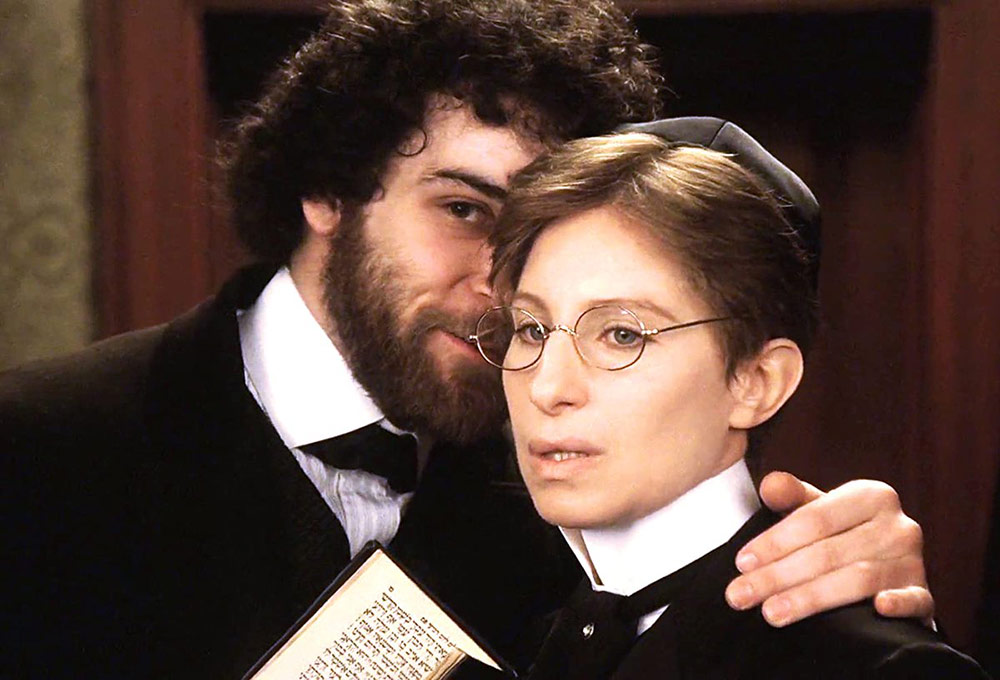
“One year,” he recalls, “the movie was Yentl with Barbra Streisand. The entire Jewish community, which in other years would have been at a few different movies, were all at Yentl. As I recall my rabbi stood up and gave a sermon because the entire congregation was there in the theatre.”
Paradoxically Christmas has often been a time that strengthens Jewish identity. When most of your friends and neighbours are engaging in traditional Christmas activities, it highlights your own distinct tradition.
“I think of Christmas as a proud time to be Jewish,” says Moskovitz.
“I’m quite happy to have a quiet day or to get together with a few Jewish friends and family for a walk and a meal and maybe a movie,” says Vancouver Rabbi Susan Shamash. “I know people who volunteer to serve Christmas meals in shelters and to the homeless as their way of giving back to our society. I also know that Jewish health-care workers will volunteer to work on Christmas Eve and Christmas Day so that their Christian colleagues can take the time off.”
All the same, the cultural behemoth that is Christmastime has made its impact felt.
“My grandmother had a Christmas tree for a while,” Moskovitz says. “It was a cultural thing you did in the community. And some families had a Christmas tree just so they wouldn’t be singled out as being Jewish. It was a shield against antisemitism. We drove around sometimes and looked at lights because lights are beautiful. I think some carollers came to our door and we listened politely and offered them hot chocolate or cookies. We didn’t chase them down the street or anything. I was in the Christmas pageant at my public school and it was like, ‘Oh, we have a Jew, so we have to have the Dreidel Song.’”
He shakes his head. “There are so many better Hanukkah songs than the ‘Dreidel Song.’”
Hanukkah celebrates the second century BCE revolt by the Maccabees against the Seleucids and the subsequent rededication of the Temple of Jerusalem. “Hanukkah is a minor holiday,” Moskovitz points out. “It’s not mentioned in the Bible. Its significance on the Jewish calendar is questionable.”
Rabbi Shamash agrees. “It isn’t a religious holiday and essentially celebrates a military victory, which is uncomfortable for many of us. The bit about the ‘miracle of the oil’ was only introduced by the rabbinic sages in the early part of Common Era because they didn’t like the Maccabees and wanted to redirect the celebration into a more religious, God-centred place.”
But the proximity of Christmas and Hanukkah has led to both an inflation and distortion of the Jewish tradition.
“It has only become such a major celebration in our era and culture because of Christmas,” Shamash says. “And Hallmark.”
Attempts to blend Christmas and Hanukkah can descend into the grotesque. Witness Fox & Friends host Ainsley Earhardt, who recently bemoaned an arson attack on the Fox News Christmas tree by proclaiming of the tree: “It is about Jesus, it is about Hanukkah.”
A recent Washington Post article by the hosts of the Unorthodox podcast decried attempts to mash Christmas and Hanukkah together, with merchandise including throw pillows embroidered with “Oy to the World.”
“I love Christmas,” says Shamash. “I love everything about it — the religious significance, the decorations, the music, the kitschy movies, the warm feelings, the gifts. If I am invited to a Christmas dinner, I go. In fact, pre-COVID I always went to a midnight mass or a Holy Eucharist on Christmas Eve. And I sing all the words to all the songs without fear that I am doing something idolatrous.”
But, she adds, “I resist of all the mashups that try to roll all the holidays together into one big seasonal celebration, like ugly Hanukkah sweaters and other Hanukkah merchandise that is really about Christmas. I think these efforts diminish both holidays.”
“There was nothing Christmas about our Hanukkah,” Moskovitz says. “For a Jewish child Hanukkah and Christmas don’t go together. It’s like being a vegetarian who eats meat. There is no such thing as a Hanukkah bush, you don’t put a Jewish star on a Christmas tree or hang Hanukkah stockings. It’s about merchandise and selling rather than religion.”
Blending Christmas and Hanukkah does seem like a convenient solution for interfaith families, but Moskovitz urges a separate-but-equal approach.
“In a year like this when Hanukkah started in November, it’s not a problem. But when they overlap I say to them, ‘Whenever Christmas Eve and Christmas Day is, don’t do Hanukkah that day. Skip it. Let it be Christmas. Don’t light the menorah and then do the Christmas tree. Let each stand on its own.’”
Of course it’s always a struggle for parents to fight the power of Santa Claus. “With all the ads on television it can be difficult to tell your children, ‘No, we’re Jewish, we don’t,’” Moskovitz says. “It’s hard enough to do that with pepperoni pizza, which I tell my children ‘No we’re Jewish, we don’t.’ But try it with Lego or Transformers.”
The usual gift given to kids at Hanukkah is “Hanukkah gelt,” or Hanukkah money. That too has evolved from its origins. “It was a 17th century Polish custom,” Moskovitz says. “Parents gave children money to give to their teachers at Jewish schools.”
Now it has become more of a Jewish equivalent of Christmas gift-giving. “Most children receive gifts on Hanukkah,” Moskovitz says. But there are no reindeer or jolly Jewish elves involved. “It’s from their parents, not from ‘Hanukkah Harry’ or something like that.”
“I have never encountered anyone in the Jewish community who embraces Santa,” Shamash says. “It’s not a thing.”
But Chinese food and a movie on Christmas Day definitely is a thing. Like so many other traditions however, it is under threat, or at the very least evolving. “There’s always Netflix now,” Shamash says.
“Fewer and fewer Chinese restaurants are open on Christmas Eve or Christmas Day,” she adds, “so it’s been harder to observe in recent years.”
Plus there is the growing popularity among the goyim of marking the day the same way Jews have done. “The Chinese restaurants are full, the movie theatres are full,” Moskovitz says. “When I was a kid nobody was at the Chinese restaurants on Christmas Day except the Jews.”
It’s finally happened — we have commercialized Jewish Christmas.
Here are the previous pieces in this series:
Sikh Christmas in the Bible Belt
![[Tyee]](/design-article.thetyee.ca/ui/img/yellowblob.png)










Tyee Commenting Guidelines
Comments that violate guidelines risk being deleted, and violations may result in a temporary or permanent user ban. Maintain the spirit of good conversation to stay in the discussion.
*Please note The Tyee is not a forum for spreading misinformation about COVID-19, denying its existence or minimizing its risk to public health.
Do:
Do not: