


 SHARE:
Indigenous cinema is riding a wave at the moment.
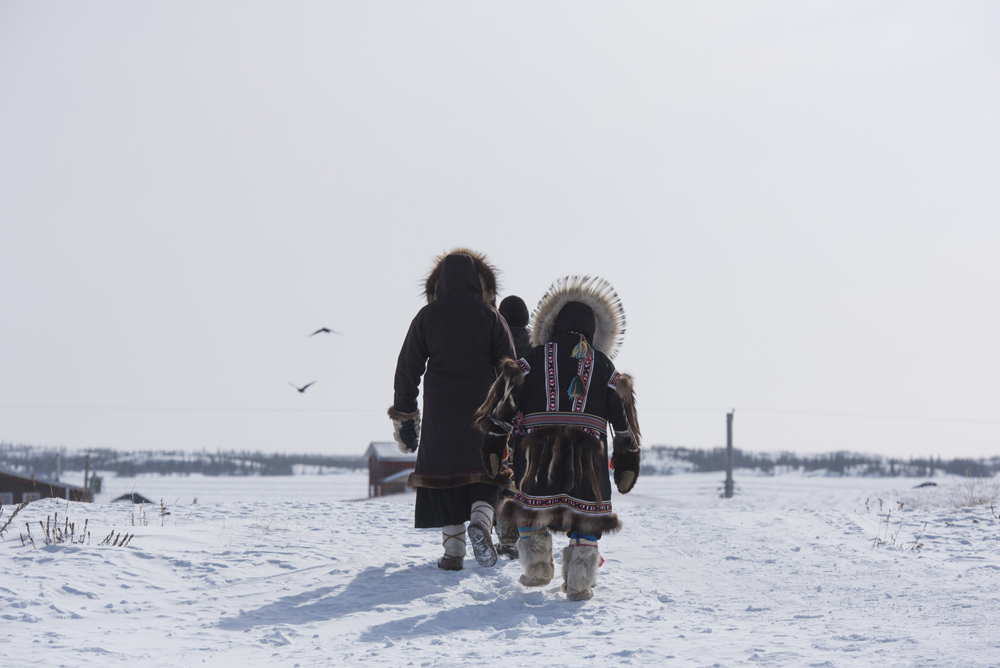
Director Marie Clements’ film Red Snow the story of a Gwich’in soldier from the Canadian Arctic is only one example of this renaissance. The film opens in theatres on March 13 across Canada, including at the Cineplex International Village in Vancouver.
After its premiere at the Vancouver International Film Festival last year, the film screened in Berlin, London, New York and the Yukon before opening the Vancouver International Women in Film Festival this month, where it captured many awards.
Clements is one of several Indigenous filmmakers breaking down boundaries and garnering critical acclaim and audience attention.
She joins artists like Chris Auchter, whose film Now Is the Time about Haida carver Robert Davidson was recently featured in the New York Times Op-Docs series after screenings at Sundance Festival, which also featured fellow Canadian Indigenous filmmaker Lisa Jackson.
Doreen Manuel, director of the film Unceded Chiefs, won the Integral Artists Impact Award at the Vancouver International Women in Film Festival.
And Elle-Máijá Tailfeathers’ The Body Remembers When the World Broke Open continues to screen widely, as well as picking up multiple awards.
It’s a great moment for Indigenous filmmakers, but it’s taken a while to get here, as Clements drily notes.
The woman has paid her dues. Clements started in theatre, cutting her teeth in school performances in Northern Ontario, an experience she remembers with a shudder. Not only from the cold, but the demands of entertaining kids. With a career performing, writing and directing, she is a veteran of the long, brutal slog that is independent film.
The Tyee recently sat down for a cup of tea with the thoughtful, funny and incisive Clements. When she mentions that her film is screening at an upcoming festival in New Zealand, we both remember the first time we saw Once Were Warriors.
The seminal film about a Māori family, directed by Lee Tamahori, was one of the first narrative films about contemporary Indigenous life in New Zealand. Released in 1994, it was something of a groundbreaking movie, but also not without controversy for its depiction of abuse, violence and addiction.
The recent Oscar win by Māori filmmaker Taika Waititi for Jojo Rabbit might have brought new attention to Indigenous filmmaking, but many people have been toiling away for years, creating a path for subsequent filmmakers to follow.
In Canada, the pioneering efforts of directors like Alanis Obomsawin and Zacharias Kunuk and Michael Kanentakeron Mitchell laid the groundwork.
Indigenous filmmakers have long shone in documentary, but the bumper crop of narrative films is relatively new.
Clements has worked in both forms, but is dedicating her energies more towards narrative storytelling. She is deep in the writing process for a new series for CBC entitled Bones of Crows, described as a matrilineal story filtered through five generations of experience, including residential school. She’s also at work on a number of features including Tombs and Sparrow.
The most exciting aspect of this recent surge in Indigenous storytelling is just that — the stories.
Red Snow is a good example. The idea came to Clements while she was looking at photo essay about Afghanistan and realized that the people didn’t look dissimilar to Indigenous people in Canada. This experience grew into a story about a young Gwich’in soldier named Dylan (Asivak Koostachin) who is forced to confront his difficult past after he is captured by the Taliban while on tour in Afghanistan.
When Dylan is taken under the wing of a Pashtun family, similar experiences of hardship, struggle and oppression draw this unlikely group together as they stage a daring bid for escape and freedom. Parallel storylines cut back and forth between the Canadian Arctic and the mountainous deserts of Afghanistan, moving backwards and forwards in time but maintaining a core of emotional resonance that brings these two different cultures together.
Red Snow was not easy to make, with only 20 shooting days and locations that ranged between minus 51 and plus 38 degrees Celsius. Add in kids, dogs and four different languages and you have a recipe for stress. But Clements says this kind of extremity can bring a cast and crew together. “It pushed us together. It’s the nature of the beast, but I love that.”
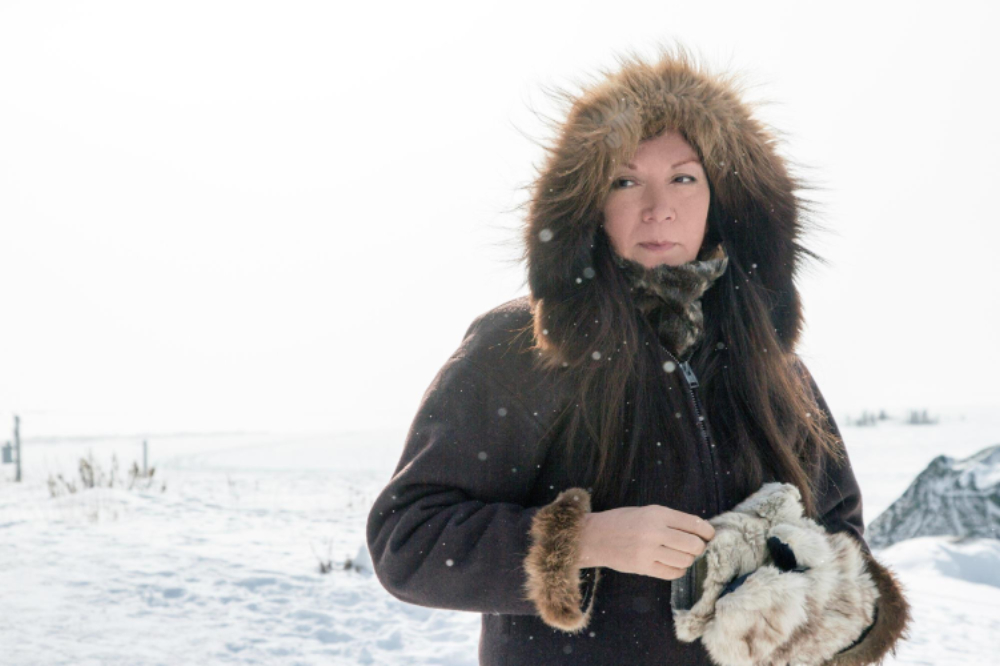
The producing team was dedicated to shooting the film in the north, despite the weather and the increased costs for food and accommodations.
Clements says that although the cold was difficult during the Arctic shoot, she found the extreme heat in locations like Kamloops and Cache Creek (standing in for the mountains of Afghanistan) harder to take. “It was kind of surreal, you’d walk through these waves of heat.”
Even though the actors wore protective clothing and used ice to mitigate the extreme temperatures, the first day of shooting tested everyone’s fortitude, especially when the cast were fitted with weighted backpacks and sent off to climb mountains.
Clements says a film shoot is not unlike going to war: you’re in it for the fellow grunts in the trenches with you. But the film, with its twinned narrative of heat and ice, has proven to be worth the hard trek to get it made and, more importantly, seen.
Part of this current surge in Indigenous cinema may be structural, with funding commitments from the Canada Council and the National Film Board. Does Clements see real changes in support for Indigenous filmmaking?
“There has been a paradigm shift of sorts with the commitment by different organizations to structurally support Indigenous filmmaking,” she says. “The creation of the Indigenous Screen Office and the inclusion of an Indigenous presence within almost all major national funders, as well as the continued and increased support of organizations such as the Canada Council and the National Film Board, is starting to be a game change in regard to what gets made and how.”
That extends to ensure films benefit from inclusion and diversity.
When the producers of The Body Remembers When the World Broke Open couldn’t find Indigenous people for every department, they set about training people, offering paid internships. Taika Waititi did something similar during the production of Thor: Ragnarok, insisting there be Indigenous trainees in every department.
Did the production of Red Snow include similar efforts to ensure Indigenous people were represented in all areas?
“Red Snow was an incredibly ambitious film for the budget, given it demanded to be filmed outside an urban setting, primarily on land and in weather conditions that were extreme, so there were no additional monies or the infrastructure to build in a large-scale training department,” Clements says. “We did, however, hire Indigenous artists in lead creative positions, develop and integrate film creatives and crews from two remote communities into the production, hire translators/cultural keepers from three different languages and communities in a process that was integral to the story and their distinct cultures and hired an all Indigenous and culturally diverse cast.”
“In short, we hired so that Indigenous and culturally diverse people were represented throughout the making of Red Snow.” One of the most exciting things about Indigenous film is the chance to go beyond traditional stories and forms, whether it’s with the zombie outbreak in Blood Quantum, an experimental arthouse approach like Jackson’s Lichen or the urban Indigenous experience in The Body Remembers When the World Broke Open.
What narrative forms are particularly interesting to Clements as a filmmaker?
“I think I have always been drawn to drama and variations within it, but I sometimes think that Indigenous film is its own genre because it has its own unique spin regardless of the form,” she says. “I am currently interested in thrillers and action films, but I am basically passionate about what the bones of the story demands.”
It’s a movement in film whose time has come, one embraced by Taika Waititi as he accepted his Academy Award.
“I dedicate this to all the Indigenous kids all over the world who want to do art and dance and write stories.... We are the original storytellers.” ![[Tyee]](/design-article.thetyee.ca/ui/img/yellowblob.png)
Read more: Film







Tyee Commenting Guidelines
Comments that violate guidelines risk being deleted, and violations may result in a temporary or permanent user ban. Maintain the spirit of good conversation to stay in the discussion.
*Please note The Tyee is not a forum for spreading misinformation about COVID-19, denying its existence or minimizing its risk to public health.
Do:
Do not: