


 SHARE:
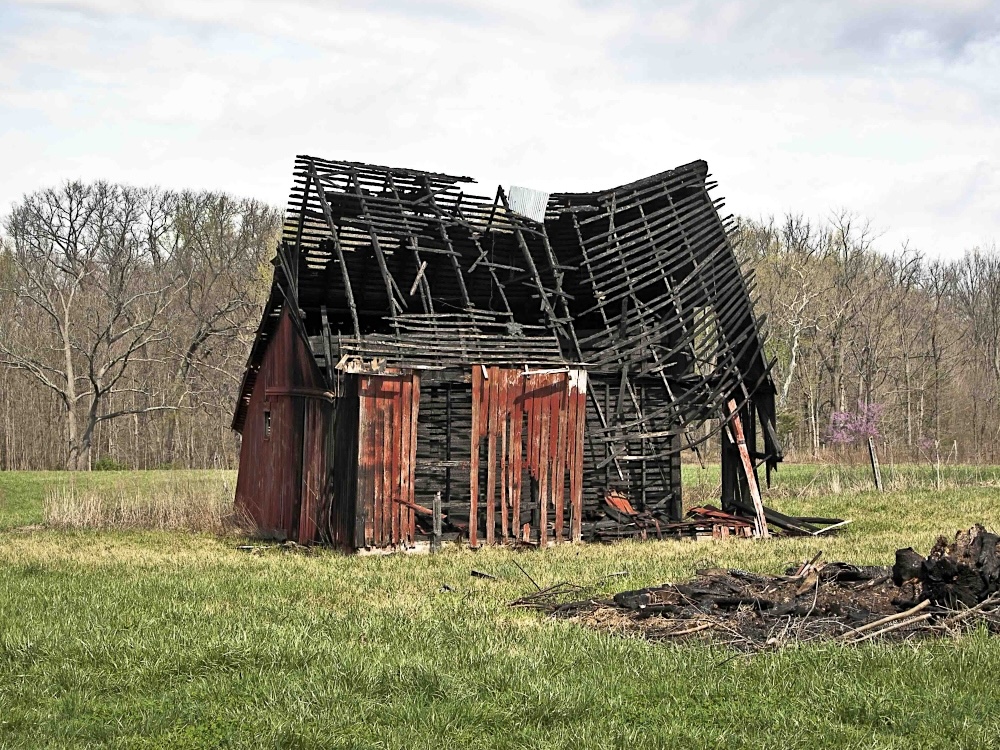
Nearly 40 per cent of Canadian workers say they feel burnt out often or always, according to a 2025 survey by Mental Health Research Canada and Canada Life. The term has become part of a broader lexicon of modern work, alongside quiet quitting, hustle culture and grindset and “taskmasking.”
But burnout is older than this current moment of concern suggests. The World Health Organization first classified it in 1990, in the International Classification of Diseases, defining it as “a state of vital exhaustion.”
The WHO later redefined the term as a syndrome “resulting from chronic workplace stress that has not been successfully managed” characterized by feelings of exhaustion, detachment and a lack of accomplishment.
The Oxford English Dictionary dates the word itself to 1937, but the term is even older than that.
More than 200 years ago, agriculturalists and workers used the phrase “burnt out” to describe fertilizer kilns, fuel, matches, fires and the consequences of excessive work.
A phrase that is centuries old
Writing in his 1771 travelogue The Farmer’s Tour Through the East of England, agriculturalist Arthur Young documented farmers pushed to physical and emotional collapse by relentless work.
For instance, he tells the story of a subtenant farmer, William White.
White worked hard to master new techniques of irrigation and climbed from “a day labourer to a little farmer” despite having been “twice burnt out, by which accident he lost a hundred pounds, notwithstanding the uncommon industry of repairing his buildings with his own hands.”
In other words, White’s barn burned down twice. He couldn’t stop farming while rebuilding it, which meant he was working much harder than before, to the point where he lost 100 pounds. In Young’s account, “burnt out” joins material destruction with “vital exhaustion,” and “uncommon industry” with accomplishment.
Here, burnout has both a material and a social basis — material because a barn burning down necessitates extra work, and social because workers were expected, if not compelled, to do extra work and were supposedly rewarded for it with status and stories.
From literal to figurative
Burnout’s meaning shifted from literal to figurative over time. It began as a description of candles burning out or fuel being used up, then shifted to a barn burning down and a worker’s energy or body being depleted in the rebuilding. Eventually it came to simply describe a worker’s exhaustion.
This change makes an analogy or even an identity between objects and workers. This change is figurative because this kind of identity is a metaphor: “Workers are fuel.”
We typically associate metaphor with imagination or rhetorical flourish. But philosophers George Lakoff and Mark Johnson argue that “most of our ordinary conceptual system is metaphorical.”
Metaphorical concepts structure “what we perceive, how we get around in the world, and how we relate to other people.” Because we rely on them for everyday activities, they aren’t necessarily obvious.
In “burnout,” the metaphorical concept within the term is something like “Workers are fuel.” This metaphor suggests that what’s true about fuel is true about workers. Both can be extracted, bought and sold, and used to power machinery. Using more of them produces more power or commodities.
Burnout referred, and still refers, to people’s response to certain conditions, not just to personal choice or poor stress management. It was, and still is, the consequence of a social structure that normalizes and compels excessive work.
Did workers always work extra?
The material and social bases of burnout have been generalized over time. It soon became normalized that workers always work extra, regardless of cause or result.
Consider the term “moonlight,” meaning “to do paid work in addition to one’s regular employment; to take on a subsidiary job in order to supplement one’s income.” This term may date to the same period as burnout, much earlier than the Oxford English Dictionary’s first attestation in 1957.
In A Six Months’ Tour Through the North of England (1770), Young writes of a coal miner and farmer named James Croft, “a genius of peculiar cast” he praises for receiving no “assistance either of money or labour” nor skimping on his work in the mine to work on his farm.
Croft worked tirelessly:
Since his beginning he has never had more than four hours sleep, and, of moon-light or bright star-light nights, seldom so much. The regular severe fatigue of the colliery has not been sufficient to bow down the spirit of this poor fellow; — he applies the remainder of the day, and even steals from the night, to prosecute his favourite works of husbandry — that is, to make up his hours of work 20, out of the 24.
Young figures Croft was working 12 hours at night in the mine and then at least eight hours more on his farm. He adds that Croft had “inward complaints, that are, in all probability, the consequence of repeated strains.”
Writing like Young’s is often cited by historians for its statistics and stories, but these aren’t value-neutral.
They were intended to advance the transition to capitalism, in part by using characters like Croft and White as models to encourage complaint-free, excessive work.
The period’s georgic and pastoral writing accomplished much the same task, often by obscuring or redefining agricultural labour.
Burnout is a structural problem
In my forthcoming book, Whistling at the Plough: Poetic Infrastructure from Improvement to Romanticism, I argue that we need critical histories that examine how concepts like burnout have built our world.
Poor wages compelled Croft to “moon-light” on his farm so he could produce enough food for his family, and fires compelled White to “burn out” by rebuilding his barn twice while operating his farm. This history casts burnout in a new light.
Today’s version of burnout is often framed as an individual mental or emotional state to be managed with therapy, time off or better coping strategies. But the personal mental or emotional nature of today’s concept belies its social, material basis. This structure hasn’t changed since the 18th century. Burnout is built into capitalism, not a problem capitalism is motivated to solve.
Yet for those 40 per cent of Canadian workers who feel burnt out often or always, a temporary solution might be structural rather than personal: a seaside retreat, like the Victorians prescribed for “overwork,” perhaps, or a four-day workweek, which has shown promise in Australia.
![[Tyee]](/design-article.thetyee.ca/ui/img/yellowblob.png)
Read more: Health, Books, Labour + Industry









Tyee Commenting Guidelines
Please note that email notifications for replies are not currently working due to a software issue which may be resolved in a future update.
Comments that violate guidelines risk being deleted, and violations may result in a temporary or permanent user ban. Maintain the spirit of good conversation to stay in the discussion and be patient with moderators. Comments are reviewed regularly but not in real time.
Do:
Do not: