



 SHARE:

Four years ago today, when the Russian army crossed the Ukrainian frontier, the world froze in disbelief. Though long feared, the invasion of a European democratic country had been considered unimaginable since the breakup of the Soviet Union more than 30 years earlier.
It was an attack, as United Nations Secretary-General Antonio Guterres put it, on the very soul of freedom and human rights. And how the world responds, he said, “will shape our world and directly affect the lives of millions upon millions of people.”
As Russian tanks and war machines began their thrust into Ukraine, world leaders and the political class struggled to comprehend what it meant for the future of free societies. They spoke of arms shipments and crippling economic sanctions. They examined their own military readiness and mutual defence pacts, wondering if their nations were ready to defend the free world again. Putin’s regime wasn’t just anti-democratic; it was a criminal racket peddling oil, weapons and disinformation worldwide. It targeted free societies with its tyranny. Nobel economist Paul Krugman asked: “Can the democratic world rise to this challenge?”
While leaders and governments debated their response, Ukrainians didn’t wait. In the early days of the war, groups of them came together to sew camouflage nets to protect homes and infrastructure from bombing, and flags to raise in defiance. They shared videos on how to make Molotov cocktails and build bomb shelters, and used social media to document the invasion, mobilize resources where they were needed and rally each other in solidarity. They crowdsourced supplies for soldiers heading off to the frontlines and training for civilians to participate in the defence of their cities and towns. Their lives, and their country, were at stake — there was no question about rising to act together.
Even beyond Ukraine — in Poland, Slovakia, Hungary, Romania and Moldova — citizen groups arranged temporary housing for more than a million Ukrainians fleeing the war. People in the Polish border town of Przemyśl left empty strollers at the train station for arriving refugees. Residents of two Slovakian border towns, Michalovce and Humenné, organized and distributed supplies of food and donations coming from all over the country through volunteer food banks, and arranged mental health support for refugees.
And all over the world, the global fundraising campaign to support Ukraine was by some measures the largest in history.
In Canada, in the first two weeks of the war, the federal government pledged $20 million to the Red Cross’s Ukraine Humanitarian Response Appeal; Canadian citizens collectively donated $59 million. Others were even more innovative: in the first month of the war, people around the world booked (and paid for) over 434,000 rooms in Ukraine on Airbnb, and the platform waived fees so all the money would support Ukrainians in their struggle to resist the invasion.
The response of Ukrainian and global citizens to the cataclysm of invasion called to mind the mobilization of the American public in response to the Second World War: rationing food and fuel for the war effort, buying war bonds, planting “victory gardens,” organizing recycling efforts for scrap metal and rubber, and women taking up jobs in factories to compensate for men serving overseas, as portrayed by the iconic image of Rosie the Riveter.
It’s a reminder of the extraordinary capabilities people can muster when faced with a seemingly overwhelming challenge, to come together and act for a common purpose. War is certainly the most extreme example, but we shouldn’t wait for an invasion to summon the capabilities of the public.
The power of ‘civic challenges’
In our new book, Democracy’s Second Act: Why Politics Needs the Public, we argue that democracy itself is facing an existential threat, one that requires a mobilization of the public commensurate with war itself. One way to do this is through cultivating what we call civic challenges.
Civic challenges are structured initiatives that invite governments to tap into the everyday capabilities of the public and its willingness to serve. They enable citizens to address complex social issues through collaborative, high-trust, time-bound public action. Unlike many forms of traditional volunteerism, civic challenges are designed not to deliver services, but to solve certain problems. They set a clear objective — say, supporting refugees, responding to local emergencies or strengthening community mental health — and provide participants with the structure and support needed to organize themselves and act. They demand more than time: they ask for judgment, initiative and networks.
When they work, civic challenges create something more enduring than charitable goodwill — they pay a democratic dividend, making society more prepared, more resilient, in the face of overwhelming challenges.
In St. Louis, in the 1950s, more than 100,000 schoolchildren donated their baby teeth so that scientists at George Washington University could prove that a radioactive isotope, strontium-90, from faraway nuclear testing was a threat to public health. The U.S. government had been skeptical of the risk to its citizens, so local governments and organizations — community associations, school boards, faith groups — stepped up to help.
Two scientists, Louise Marie Reiss and her husband Eric Reiss, issued a challenge: they needed at least 50,000 children’s teeth to measure at scale the accumulation of strontium-90 in dentine; through community mobilization they received nearly three times that number. By giving their teeth to science instead of the tooth fairy, the children of St. Louis helped scientists prove that strontium-90 was accumulating in dangerous amounts in human bodies, creating a risk for bone and blood cancers.
A Canadian version of the tooth survey, led by renowned Canadian scientist Ursula Franklin, similarly studied more than 40,000 baby teeth.
The 1963 Partial Nuclear Test Ban Treaty between the Americans and the Soviets would not have happened without this massive civic mobilization. President John F. Kennedy himself called the Reisses to thank them.
A decade ago, the image of a drowned Syrian toddler, whose family tried and tragically failed to escape the civil war, galvanized the Canadian public to open the country to more refugees. The federal government pledged to settle 25,000 Syrian refugees through its community partners, but Canadians themselves clamoured to do more. So, the government activated the “group of five” sponsorship program, which allowed a minimum of five Canadian individuals or families to band together to sponsor a refugee family and help them get settled.
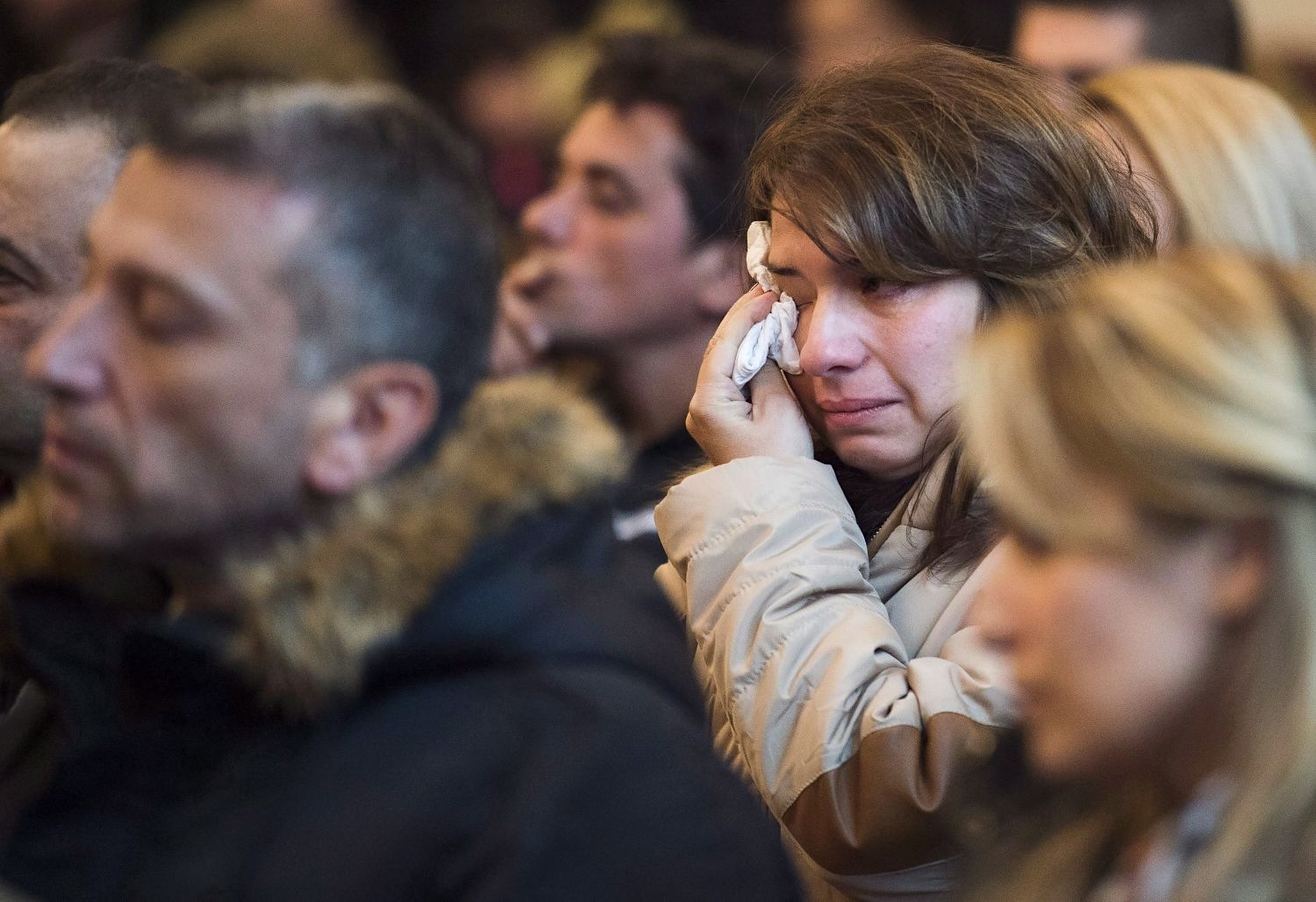
Within four months, more than 125,000 Canadians had stepped up as private sponsors, forming themselves into groups with the capacity to settle even more refugees. Over two million Canadians participated in at least some aspect of refugee settlement — donating money, material goods or just the time and effort to help.
By 2020, more than 62,000 Syrian refugees had been settled in over 350 Canadian communities, more than half of them through sponsorship groups. It was “an unprecedented national mobilization,” in the words of Keith Neuman of the Environics Institute.
Studies have since shown that refugees sponsored and settled by Canadians themselves became integrated into their new local communities with even greater success than government-sponsored refugees. This is because the Canadian public, with its own community networks, was better able to help newcomers acquire social capital — the friendships, connections and sense of belonging we all need to participate in social and political life.
Around the same time, Oregon faced a growing challenge around informing the public about ballot measures during statewide elections — for example, decriminalizing cannabis and reducing mandatory minimum sentences for non-violent crimes.
As with many other facets of U.S. democracy, the corrupting influence of partisan politics and clandestinely funded disinformation campaigns overshadowed the critical need to ensure the public had access to credible, unbiased, accessible knowledge to inform their vote. The state government published an official voter guide, but, as a document created by government lawyers and administrators, many people considered it either unreadable or untrustworthy.
So, Oregon asked its citizens to meet the challenge. Working with a non-profit called Healthy Democracy and a small team of scholars, the state created a citizens’ initiative review, a forum of 24 randomly selected voters from diverse socio-economic backgrounds who spent a week together learning the facts of each measure, listening to presentations by experts on both sides of the issue, and deliberating the pros and cons — not unlike a jury of peers. Then each citizens’ initiative review produced a simple, one- or two-page summary document in plain language that was mailed to every household in the state ahead of the election.
The members of the citizens’ initiative review did the hard part on behalf of their fellow voters — sifting fact from fiction, synthesizing complex information — and, because they were a representative group of fellow citizens, and because their document was concise and readable, they were considered a more credible source of public information. The citizens of Oregon showed they could be capable learners — and teachers — even in the face of extremist rhetoric and misinformation.
These are just some of the cases and stories we followed as we searched for evidence of a public more capable of serving democracy than our institutions and leaders often realize.
Involving citizens in crafting solutions
Calling for civic challenges is not a knock against government — it’s a case for designing initiatives that invite and enable the public to act. Too often, democratic systems rely on a narrow repertoire of engagement — polling, raucous town hall meetings, social media campaigns that are often lost in the noise of online rancour.
But democratic government is about more than just delivering information and services; it’s about involving more people in defining and achieving solutions. When governments treat citizens as partners rather than passive recipients, they expand their own legitimacy and capacity. That’s why every level of government — municipal, provincial, national — should commit to initiating civic challenges with each term of office. These initiatives could target real, tangible needs in their jurisdictions and invite the public to play an active, visible role in meeting them. The result would be stronger communities, more capable institutions and a richer democratic culture.
Civic challenges aren’t a replacement for the work of the public sector — they are a complement to it. They broaden the scope of how we imagine state-citizen collaboration, and they show how governments can create value not just for the public, but with the public. In a time of political distrust and institutional strain, that shift may be one of the most valuable things governments can offer.
Democracy is on a war footing — the assaults are real, and they will not be repelled by a public that sits on the sidelines. To mobilize for the fight back, our societies must empower their citizens to rise and organize around solving problems from the national to the grassroots level — directing outcomes and benefits for the communities in which they live, as Canada did with Syrian refugees.
We have to embrace the possibilities that come when citizens can leverage the concerns they rightly have for public health and well-being and turn them into action, as the residents of St. Louis did, leading to a ban on atomic testing.
And we must empower and fund the deliberate creation of representative bodies like citizens’ assemblies and citizens’ initiative reviews to help repel disinformation, curb extremism and find common ground.
What these and other solutions need is the support, trust and imagination of politicians, public servants, the media and the mass of citizens itself.
When it comes to actual war, there is no question of mobilizing the public to rise to the challenge of saving democracy. If it came to it, Canadians would sew camouflage nets and learn how to make Molotov cocktails, too. But by then it might be too late.
Canada cannot wait for invasion to strengthen its resilience, nor leave it to elections, experts and MPs to determine how we respond to grave threats. With a resource of millions of people ready to serve their communities and our country, it’s time to practise democracy every day — in order to save it.
Adapted from ‘Democracy’s Second Act: Why Politics Needs the Public,’ available now from University of Toronto Press. Join co-author Richard Johnson and Tyee reporter Jen St. Denis for a conversation about the future of democracy on April 15 at Vancouver Public Library. ![[Tyee]](/design-article.thetyee.ca/ui/img/yellowblob.png)
Read more: Politics










Tyee Commenting Guidelines
Please note that email notifications for replies are not currently working due to a software issue which may be resolved in a future update.
Comments that violate guidelines risk being deleted, and violations may result in a temporary or permanent user ban. Maintain the spirit of good conversation to stay in the discussion and be patient with moderators. Comments are reviewed regularly but not in real time.
Do:
Do not: