


 SHARE:
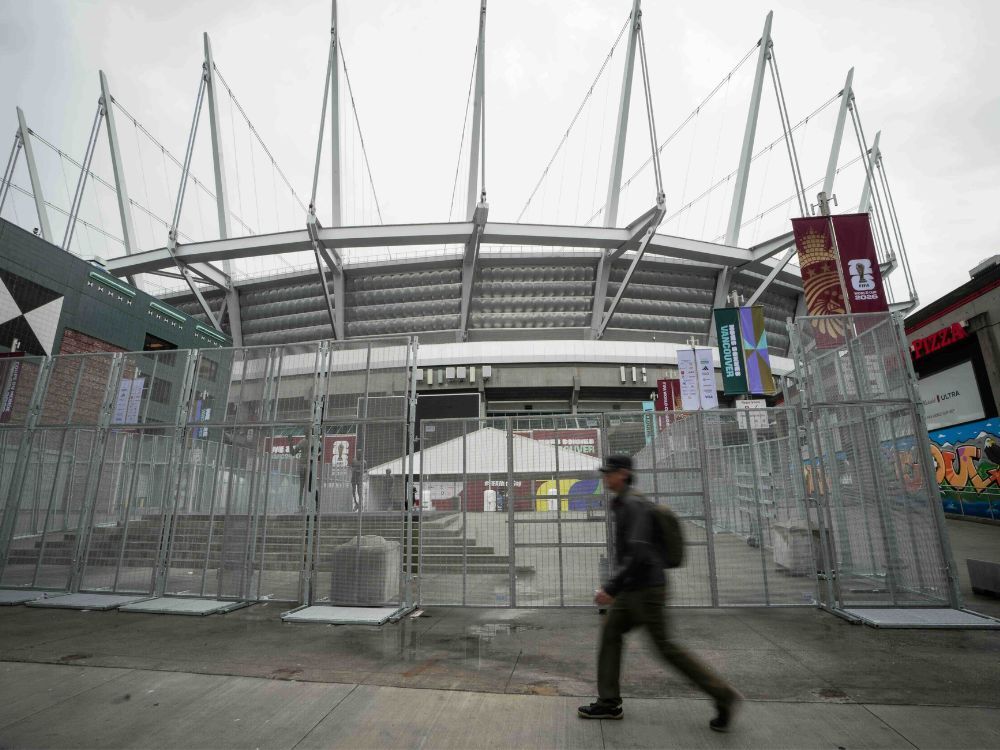
As the 2026 FIFA World Cup kicks off, millions of soccer fans around the world are following the tournament taking place across 16 host cities in Canada, Mexico and the United States.
Like other mega sporting events, the World Cup requires major public investment and regulatory changes. To meet FIFA’s requirements, Toronto, Vancouver and other North American cities have spent hundreds of millions of dollars, suspended bylaws and reorganized infrastructure to stage just a handful of matches each.
Municipal governments are often slow to act on changes residents demand. However, hosting mega-events like the World Cup reveals that it is not always financial and legal constraints that cause municipal inaction, and that the reasons cities routinely cite are often political choices.
It turns out that when municipal governments want to act, they can move quickly.
Bylaw changes for FIFA
Hosting the World Cup is expensive. Toronto has committed $178.6 million, while Vancouver has committed more than $320 million. Both figures come directly from municipal budgets.
Across all levels of Canadian government, public spending works out to over $1 billion, or roughly $82 million per match. These figures, of course, do not include potential cost overruns.
These financial commitments are matched by sweeping bylaw changes.
Toronto city council has authorized temporary exemptions to its plastic water bottle ban, and extended permitted noise hours at Nathan Phillips Square. Vancouver passed a special World Cup bylaw to streamline approvals for temporary structures like tents and shipping containers.
In both cities, municipal bylaw officers will enforce FIFA’s commercial trademark protections, including the temporary renaming of BMO Field as Toronto Stadium.
None of this means that hosting the World Cup is inherently problematic. The stated rationale for these changes, be it tourism, public safety or cultural prestige, reflects legitimate civic goals. Attending the World Cup is a dream for many soccer fans and a draw for many local businesses.
The tangible economic benefits, however, tend to be overhyped. The 2015 Women’s World Cup, co-hosted by six Canadian cities, did boost national interest in women’s soccer. But a post-event economic analysis found that it largely reshuffled existing tourism spending rather than generating substantial new activity.
Political choices
Whether the trade-offs cities make are ultimately worthwhile is for voters to decide. Still, the host cities’ displays of governance agility stand in sharp contrast to the usual rhetoric that municipalities cannot address other civic needs with comparable urgency.
Municipalities regularly cite budgetary constraints and limited legal powers as reasons for failing to act on pressing societal problems.
For years, Toronto has pointed to its budgetary and legal constraints to justify its inability to build shelters or expand its transit network. Yet to satisfy FIFA’s demands, city hall found the political will to draw millions from city coffers and temporarily reverse its own environmental bylaws.
Vancouver exemplifies the same pattern. City leaders have long cited a $500-million annual infrastructure deficit to justify scaling back its response to the housing and opioid crises. Yet to satisfy FIFA’s demands, Vancouver partnered with the provincial government to introduce a special 2.5 per cent hotel tax hike, projected to generate millions in new funding over seven years.
Regulatory flexibility is not normally extended to smaller cultural events. In Toronto, the Little Jamaica Festival was reportedly cancelled after the city declined to issue a permit. In Vancouver, the African Descent Festival was also blocked due to permitting issues. Ordinary festivals are often required to navigate rigid rules, while FIFA benefits from bespoke bylaws.
These World Cup measures show that municipal rigidity is not an unavoidable straitjacket. It is a choice.
A pattern, not an exception
Scholars have long described this kind of municipal selectivity as an urban “state of exception.” When global sports leagues, tech companies or multinational developers come knocking, cities act with speed and flexibility. They suspend ordinary rules, fast-track approvals and bypass normal channels of public scrutiny.
Corporations are accommodated in ways not typically available to local residents. This pattern is not unique to sports.
A notable example is the Amazon HQ2 competition, in which 238 North American cities spent months assembling packages of tax breaks, zoning concessions and extensive data disclosures to attract one company. More recently, the same dynamic has appeared around artificial intelligence, with corporations seeking to build massive data centres.
Municipal regulatory processes that move slowly for affordable housing, infrastructure projects or transit somehow suddenly accelerate when a major corporation promises investment.
The result is that regulatory flexibility and fiscal creativity are not treated as general municipal capacities. Instead, they are tools selectively deployed to attract investment. What this pattern exposes is not inability, but choice.
If cities can move quickly for FIFA, they should be able to move quickly and fairly for their residents too.
![[Tyee]](/design-article.thetyee.ca/ui/img/yellowblob.png)









Tyee Commenting Guidelines
Please note that email notifications for replies are not currently working due to a software issue which may be resolved in a future update.
Comments that violate guidelines risk being deleted, and violations may result in a temporary or permanent user ban. Maintain the spirit of good conversation to stay in the discussion and be patient with moderators. Comments are reviewed regularly but not in real time.
Do:
Do not: