


 SHARE:

For a couple of years in her late 30s, Nicole Donnelly went to walk-in clinics and saw doctors, returning again and again with the same problem and leaving without answers.
One doctor told her there was nothing wrong and questioned why she had even come in. Others had little to offer beyond advice to wear cotton underwear and avoid scented soaps.
“I went to so many doctors, so many times,” she said. “There was never anything they said that I could do about it.”
Donnelly, a Vancouver resident now in her late 40s, is one of many women who have dealt with bacterial vaginosis, or BV — the most common vaginal infection among women of reproductive age. Researchers estimate it affects about one in four women globally, yet scientists still do not fully understand what causes it or how to reliably prevent it from returning.
BV happens when the normal balance of bacteria in the vagina shifts and certain bacteria begin to overgrow. Some women experience discharge or a strong fishy odour, while others have no symptoms at all.
Left untreated, BV has been linked to complications including pelvic inflammatory disease, increased susceptibility to sexually transmitted infections and, during pregnancy, preterm birth.
Donnelly estimates she spent about $500 trying different remedies on her own.
“I tried the regular over-the-counter douches. I made suppositories using coconut oil. I used garlic, I used all the things,” she said.
None of those worked. At one point, she said, the condition contributed to the end of a relationship.
‘They didn’t help me’
BV is typically treated with prescribed antibiotics, according to HealthLink BC. Donnelly said she was never prescribed antibiotics. Instead, she started searching online and came across suggestions about diluted hydrogen peroxide. She tried it and found it helped ease her symptoms.
“They didn't help me out,” she said. “I had to help me out.”
Even when antibiotic treatment is prescribed, relief is often temporary. Studies show that BV returns in 50 to 80 per cent of cases within a year of antibiotic treatment. Antibiotic treatment can also trigger yeast infections by wiping out the good bacteria alongside the bad.
Nicole Pasquino, registered nurse and clinical director at Options for Sexual Health, estimates that roughly 30 to 40 per cent of people treated for BV end up with a secondary yeast infection as a result.
“It ends up being like an unfortunate cycle of trying to manage the BV versus the yeast, especially with people who have recurrence,” Pasquino said.
Another Vancouver resident, Julia Goudkova, said she spent close to two decades dealing with recurring yeast infections, sometimes needing medication almost every month.
“It would change my lifestyle,” she said. “I would have to think twice — am I going to go on a bike ride or not?”
It was only when she saw a gynecologist for an unrelated issue that boric acid treatment was mentioned, she said.
Boric acid works as a mild antiseptic by restoring vaginal pH and creating an environment less hospitable to the bacteria and fungi associated with both BV and yeast infections. Research supports its use for recurrent cases.
“I was so pissed,” Goudkova said. “It costs pennies. It's so much cheaper than over-the-counter medication and it’s much more effective.”
Tanisha, a Black Vancouver woman whose name has been changed to protect her privacy, has been dealing with vaginal infections since she was 15. She is now 32.
Black and Hispanic women in North America experience BV at significantly higher rates than other groups. Tanisha believes racial bias affected how seriously some doctors treated her concerns.
Left to her own devices, Tanisha also pursued alternative treatments that research showed held promise. She has treated her infections with boric acid, lactic acid, ascorbic acid and hydrogen peroxide, and paid privately for vaginal microbiome testing because the standard testing available through her doctors was not giving her clear answers.
“I got so sick of wasting days at a time trying to get a diagnosis and medication that I just bought a microscope,” she said.
She said she eventually started making folders with all the documents to track her symptoms and doctor visits.
“I've even made so many graphs and timelines to consolidate everything into one document so that I can print it out and take it to appointments,” Tanisha told The Tyee via email.
Self-diagnosing helped with yeast infections, she said, because medication for them is available over the counter. But BV has been more difficult.
Getting a BV diagnosis in B.C. usually starts with a clinic visit. A doctor orders a swab and sends a sample to the lab. Patients wait for results and followup treatment. Tanisha said that for her, that last step has never happened.
“I have literally never been called back or offered treatment when I've tested positive,” she said.
And so the process would start over: another appointment, another swab, another wait to see whether anyone would actually call her back this time.
Tanisha has also noticed that positive BV results have not been flagged as abnormal on patient portals such as LifeLabs’ MyCareCompass. She has sometimes wondered whether her doctors were being notified at all.
Tanisha, who is based in B.C., eventually began booking telehealth appointments with Ontario-based doctors because she wasn’t getting local followup.
At one point, she tested positive for ureaplasma, a bacteria linked to recurring vaginal infections. She asked her doctor for antibiotics and was refused. Tanisha said her doctor told her ureaplasma is not normally tested for or treated. She pushed back with a study she had found in a medical journal, but her doctor dismissed it.
“My doctor said what I read online isn't the real medical literature that she has access to,” Tanisha said.
She later received antibiotics. By then, she had also started suspecting sex was triggering recurrent infections and that her partner might be reintroducing bacteria. She asked her doctor whether he should be treated too and was told no. She then persuaded her partner to see his own doctor, and they both took antibiotics at the same time. After that, the infections stopped recurring.
Tanisha said she feels women’s concerns about vaginal health tend to be taken more seriously only when pregnancy is involved.
“They only start to care if a fetus is involved,” she said. “I'm not satisfied with leaving BV untreated. If it’s harmful to a fetus, then how is it harmless for me to have it over and over and over?”
‘Medicine is doing a bad job’
Scientists still cannot say for sure why BV recurs so frequently or how to reliably cure it.
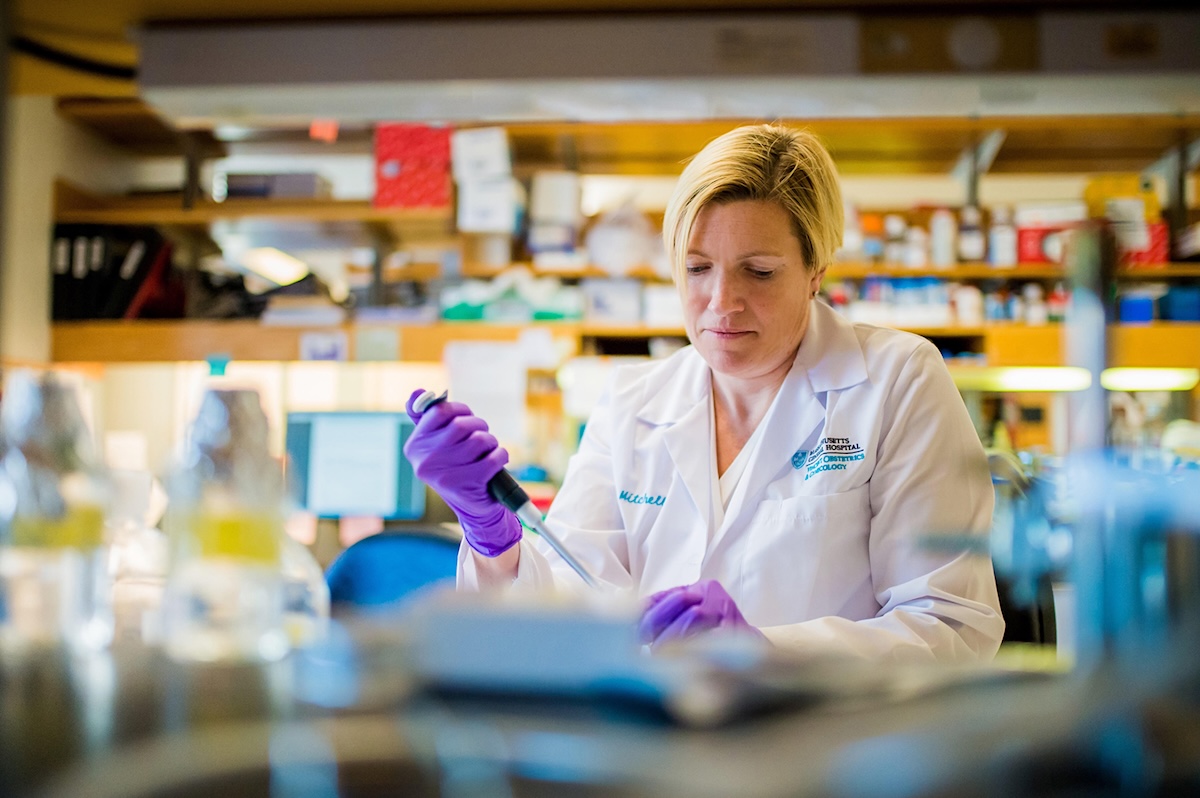
Dr. Caroline Mitchell, director of the vulvovaginal disorders program at Massachusetts General Hospital, has spent two decades studying BV. She’s blunt about where things stand.
“Medicine is doing a bad job,” Mitchell said. “And I'm really sorry, because we should be able to do better than this.”
Mitchell said that unlike most infections, BV has no animal model, meaning every study must be conducted on people, which is slow and expensive.
When antibiotics do work, she said, the relief is often short-lived. About a quarter of patients see no change at all. For the rest, antibiotics may clear the infection temporarily, but without restoring the right kind of protective bacteria, BV tends to come back.
Research, like a lot of things, follows the money, and for conditions that affect women specifically, there has never been much of it to follow. Only seven per cent of Canadian Institutes of Health Research project grant abstracts from 2009 to 2023 focused on female-specific research, a share that remained unchanged across 15 years, according to a 2025 study.
Dr. Jerilynn Prior, professor emerita at the University of British Columbia and scientific director of the Centre for Menstrual Cycle and Ovulation Research, has witnessed those barriers in action throughout her career.
“When a woman is writing a proposal about something that relates only to women, there are two strikes against it,” Prior said. “One is that women's issues are not considered very serious or scientific, and two, that the principal investigator is a woman.”
Mitchell said that dismissal extends to the condition of BV.
“The most common symptoms are smelly discharge,” she said. “It's a quality-of-life-destroying infection; it really destroys people's sense of self, and I don't think many people value that.”
Pasquino, who has worked in sexual health for nearly two decades, said the stigma around vaginal infections also prevents some people from seeking care.
“Women have been told over the years that the vagina is a dirty place,” she said. “Any time there's some kind of imbalance, there's that cultural and societal stigma of not being clean.”
Access to care remains another challenge. About 23 per cent of people in B.C. do not have a primary care provider, meaning many patients rely on walk-in clinics with little continuity between appointments.
Cost can also be a barrier for medications, lab tests and alternative treatments that are not covered under PharmaCare plans or patients’ employer-based coverage.
There is, however, reason for cautious optimism. A 2025 clinical trial found that treating male partners alongside female patients reduced BV recurrence rates to 35 per cent from 63 per cent.
Mitchell said researchers are also working on treatments aimed at restoring protective bacteria in the vaginal microbiome.
“It's been four decades since we had a change in recommendations for treatment for BV,” she said. “Medicine is still doing a bad job, but I do think there is hope.”
Prior is less patient. The culture of medicine, she said, must change before the science can catch up.
“The culture of medicine is a culture of maleness, and man as the appropriate normal, whereas women are an aberration,” she said.
Fixing that, Prior said, will not come easily. “It will take a total rebellion of women.” ![[Tyee]](/design-article.thetyee.ca/ui/img/yellowblob.png)
Read more: Health












Tyee Commenting Guidelines
Please note that email notifications for replies are not currently working due to a software issue which may be resolved in a future update.
Comments that violate guidelines risk being deleted, and violations may result in a temporary or permanent user ban. Maintain the spirit of good conversation to stay in the discussion and be patient with moderators. Comments are reviewed regularly but not in real time.
Do:
Do not: