


 SHARE:
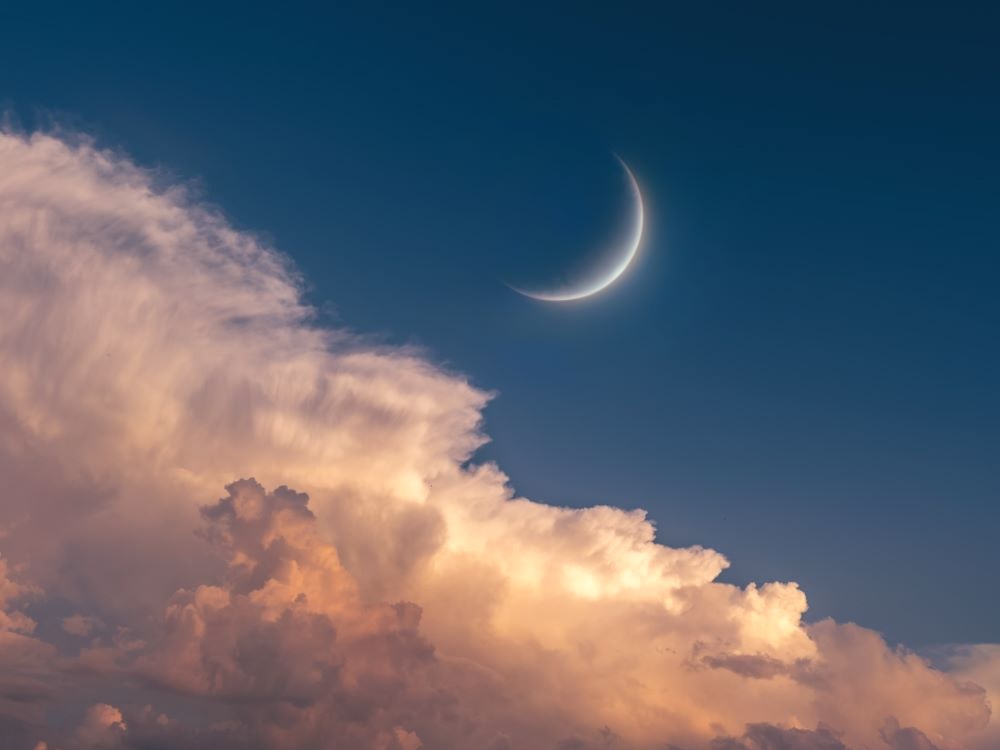
No one has set foot on the moon in over 50 years, but now it’s the arena of a new space race: to build human settlements there, complete with nuclear reactors. China, Russia and several other countries plan to establish an International Lunar Research Station by 2035. The U.S. Artemis project expects to build a habitat on the moon in 2030.
I’m a great supporter of space exploration, but this isn’t it. It’s just a more elaborate sequel to the space race that started with the Soviet Union’s Sputnik, the first satellite to be launched into orbit, and ended with Neil Armstrong’s “giant leap” from his spaceship’s ladder to the lunar surface.
That race, especially the U.S. lunar program, was essentially a series of stunts, in which American astronauts and Soviet cosmonauts did stuff in space to show how great their political systems were, and especially how powerful their rockets were. The subtext was always that those rockets could be carrying nuclear warheads, not just men.
But the idea of building settlements on the moon also highlights the absurd costs of including humans in space exploration.
Let’s start at the beginning. We already know that water ice may be available on the always-shaded floors of craters near the lunar south pole.
This is critical. Humans on the moon will need a great deal of water, not only for drinking and hygiene but also to provide oxygen. No accessible water on the moon means no humans on the moon for more than a few days.
Once water is confirmed in sufficient amounts, a procession of uncrewed spacecrafts could bring in the components of a habitat, to be assembled by humans assisted by robots.
This poses another problem. As Notre Dame engineering professor Clive Neal has noted, every spacecraft landing on the moon will kick up a cloud of “regolith” — the dust and rock fragments that cover the surface. So the habitat modules, the reactor and other structures will have to be shielded from regular waves of sandblasting. Neal suggests putting structures behind large boulders, or even below the lunar horizon — a distance, he tells us, of about 2.4 kilometres.
This begins to look impracticable. If every component of the lunar habitat must be moved a couple of kilometres from spacecraft to habitat, the vehicles doing it are making more demands on the available energy — leaving less energy for actual exploration and experimentation.
The kind of micro-reactor a lunar station would require is remarkably small. According to a Chinese design team’s report, it would be about 70 centimetres wide and 72 centimetres high. Still, it would weigh about a tonne, and would of course require plenty of support technology, including cables, monitoring equipment — and probably another reactor (plus batteries) as emergency backup.
The reactor is gas-cooled, so it doesn’t need water. But humans do, so the reactor’s first job would be to provide energy to extract ice, melt it, filter the water and pipe it into some kind of reservoir. At the lunar pole, where the average temperature is -13 C, the reservoir would not be exposed to sunlight and the high temperatures of the moon’s two-week-long day, but the reactor would also have to provide enough heat to keep the water from freezing again.
Priority 1: Keep people alive
Let’s assume we solve the regolith problem and can build a habitat, with reactor, near the landing site and a water source. The reactor must provide most of its energy simply to keep humans alive — including technicians whose only purpose on the moon is to look after the reactor. And technicians to monitor the systems that monitor for leaks of air or water, and to look after plumbing and ventilation in general.
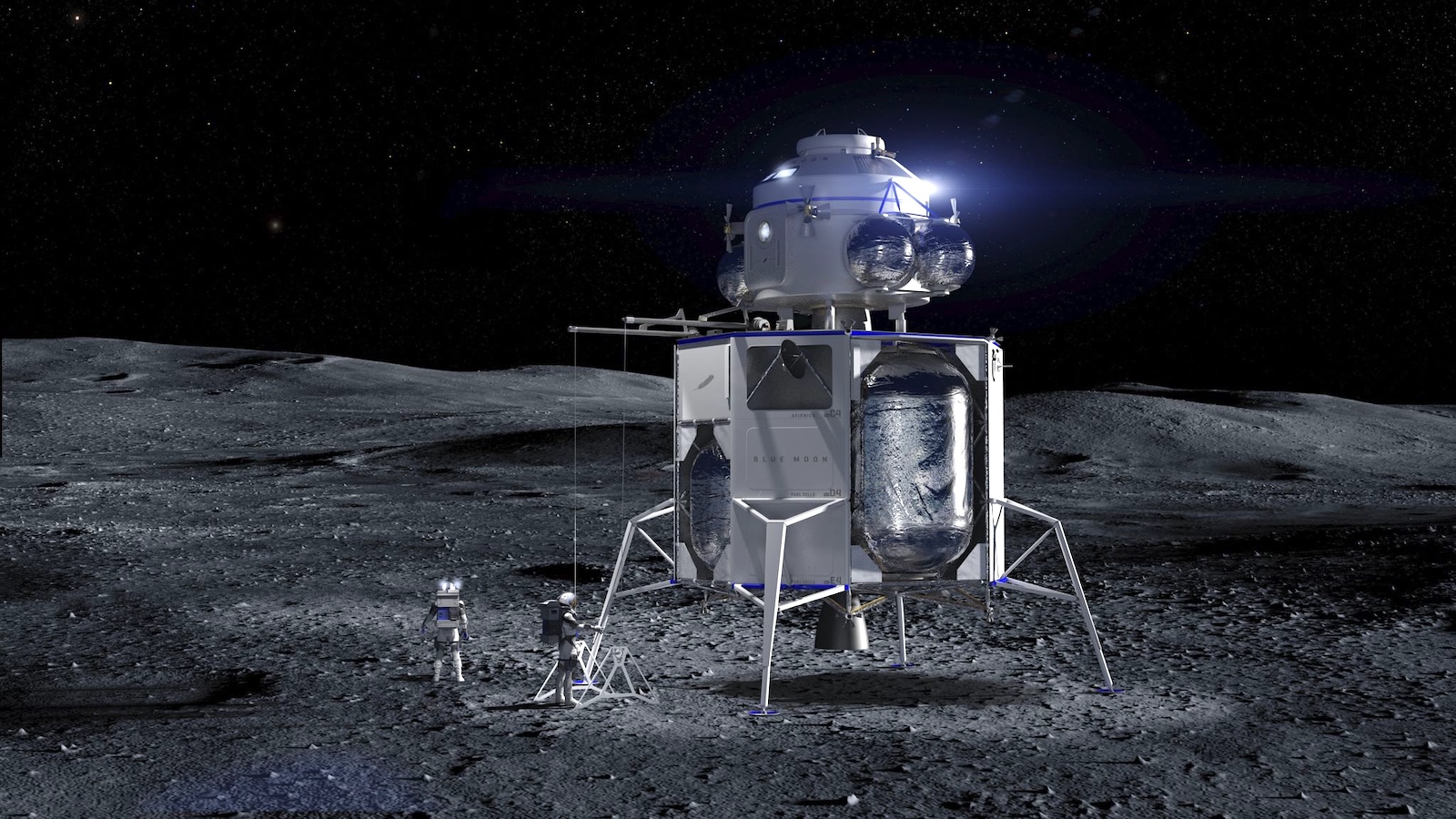
The settlement also has to support medical staff to monitor people’s health. In one-sixth of Earth’s gravity, people living on the moon would rapidly lose both bone and muscle mass. They would spend much of their time working out, just to mitigate those losses; otherwise, going home could mean multiple bone fractures during deceleration and landing.
And the cost? The Chinese don’t say what their base would cost to set up and maintain, but a 2009 report by the Center for Strategic and International Studies estimated that an American base would cost about $35 billion to develop and $7.35 billion yearly to maintain. A modern estimate would likely be at least twice those amounts.
One argument for such a settlement is that it will teach us how to prepare for crewed missions to Mars, which would require a minimum six-month journey and a stay on the planet under one-third of Earth’s gravity. But we already know that people on such a mission would endure high levels of radiation as well as losing bone mass and muscle tissue. By the time they were ready to return to Earth, their condition would be even worse, and on return they would likely require hospitalization for weeks or months.
Astronauts as stuntmen
But the drive to build space bases is essential to public support for space exploration, just as putting men on the moon was. People want drama and adventure, brave men and women risking their lives. John F. Kennedy could have launched a rocket to crash on the moon and thereby show American missile power. But he needed astronauts, and a massive media campaign, to get support for what was essentially a stunt.
The public soon realized it was a stunt, which is why the moon landings stopped over 50 years ago. People began saying “If they can put a man on the moon...” to highlight the social services they would rather have.
This time around, the moon race is a contest between two kinds of capitalism: the state-directed capitalism of China and the oligarch-run capitalism of the United States. All things considered, China seems likelier to succeed. The oligarchs like Elon Musk will seek glory in helping to set up a base, but they could easily be distracted or simply lose interest. China under Xi Jinping is dedicated to making itself the world’s scientific leader — an easier job than it once seemed, now that Donald Trump is demolishing U.S. science and the economy that science once enriched.
Both sides could well establish their bases, and we would receive vivid reports on the lunar explorers’ discoveries and adventures. But it will be clear that the effort and expense of trying to live on the moon would have been better applied to trying to live right here on Earth. Keeping three or four astronauts alive on the moon will seem trivial when heat domes make the Middle East or northern India uninhabitable and wildfires poison the air everywhere.
The research and engineering that are planned for the moon should instead help to future-proof our cities and farms. If we really must keep exploring space, robots will continue to do the job at a fraction of the cost of sending humans. Glory-seeking nations would do better competing to save their own people from disaster. ![[Tyee]](/design-article.thetyee.ca/ui/img/yellowblob.png)
Read more: Politics, Science + Tech











Tyee Commenting Guidelines
Please note that email notifications for replies are not currently working due to a software issue which may be resolved in a future update.
Comments that violate guidelines risk being deleted, and violations may result in a temporary or permanent user ban. Maintain the spirit of good conversation to stay in the discussion and be patient with moderators. Comments are reviewed regularly but not in real time.
Do:
Do not: