


 SHARE:
DRIPA wasn’t supposed to be political.
When the Declaration on the Rights of Indigenous Peoples Act was passed — unanimously — back in 2019, it was designed to give First Nations and the province of British Columbia a chance to get away from the fire and brimstone of question period, iron-clad court decisions and all the anger on social media.
It was a way to sit down and negotiate Indigenous rights and land title as partners sharing this land.
So far, that hasn't worked out so well.
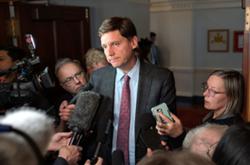
DRIPA erupted into a political firestorm this past spring. Premier David Eby tried to fundamentally alter the act in response to recent court rulings on land title and mineral rights. That was followed by online uproar stemming from fears and misinformation stoked by some politicians about those decisions.
According to the premier, DRIPA as it stands brings with it too much legal risk, too much uncertainty to the province.
Former Green Party MLA Adam Olsen has a different perspective.
“What creates uncertainty is a government that’s trying to evade its responsibility, not just to Indigenous people but to all British Columbians,” says Olsen on the debut episode of The Tyee Podcast.
“It’s not Indigenous people’s rights that are the inconvenience in this. It is the government’s response to the fact that Indigenous people have rights.”
Olsen joins host Harrison Mooney on The Tyee Podcast as we try to reconcile the unreconciled land rights question at the heart of B.C.’s history, and whether the province can forge a new path forward.
Listen to this episode by clicking the embedded podcast player below or by following The Tyee Podcast on Apple Podcasts, Spotify, iHeartRadio, Amazon Music, Pocket Casts or YouTube.
Transcript
Note: Episode transcripts may contain errors. Always check the corresponding audio before quoting any part of the transcript.
Harrison Mooney: There’s an unresolved question at the core of what British Columbia is. A question that all of us — government, institutions, industry, you and I — have been trying to avoid answering for almost 200 years.
What are Indigenous Peoples’ rights to this land?
One way or another, we’re going to find out.
This is The Tyee Podcast. I’m your host, Harrison Mooney. Every episode, we dive deeper into the stories shaping the West Coast, because Canada needs more B.C.
The Declaration on the Rights of Indigenous Peoples Act, or DRIPA, was considered a milestone for reconciliation when it was passed in 2019. But after a couple of major court decisions declared that all those nice promises were actually enforceable law, the mood changed.
Earlier this spring, Premier David Eby ignited a firestorm when he tried to dismantle DRIPA, first by saying he would amend it, then suspend it, then backing off the idea completely when his own party revolted. Now the province is scrambling over the summer to figure out a new path forward.
According to Adam Olsen, this moment was inevitable. The former B.C. Green Party MLA was there when DRIPA was passed. He was in those meetings Eby held this past spring with Indigenous leaders, and he explains on today’s show how this mess is the consequence of more than a century of ignoring treaty rights. And how there may be a way to ease our political hangover. Stay with us.
Harrison Mooney: Hi, Adam. How are you doing?
Adam Olsen: Yeah, I’m well, thank you. How are you?
Harrison Mooney: I’m good. All right. Well, yeah, let’s just get into this. I think, first thing we should do is try to bring our listeners up to speed. Adam, what is DRIPA?
Adam Olsen: The Declaration on the Rights of Indigenous Peoples Act. It is an act that was passed in 2019 unanimously by — that’s all members of the B.C. legislature. At the time, there was 87 of us. I was the member of Saanich North and the Islands. I was one of three Greens in a confidence-and-supply agreement with the B.C. NDP’s minority government, and it was a very unique time in British Columbia history.
Harrison Mooney: So, just unanimous support then, and now it seems like it’s becoming, we’ll say, more complicated, you know. I know that David Eby is being criticized for mishandling it now. Why? And what’s changed since the unanimous support from back then?
Adam Olsen: Well, I think that there are both global and national politics at play here that’s impacting B.C. politics, for sure. We’re seeing the impact of social media, and, and the pile on effect that can happen. The outrage machines of social media really reward… increasingly outrageous behaviour on social media gets rewarded. It creates virality, you know?
Back in about 2023, 2024 we started to see in B.C. a split in the political right, so it was the B.C. United at the time. John Rustad is out of the B.C. United caucus, he becomes the leader of the B.C. Conservatives, and he really starts to drive what is the beginning of this anti-Indigenous sentiment. And I think that, that all of these factors had a very substantive impact on the tone and tenor of the conversation, the dialog that’s happening right now. And the, the, the, the opposition has spent the last two years since spending almost every day in Question Period just hammering on the Declaration Act, just hammering on reconciliation, and One B.C. emerges out of that B.C. Conservative Party in a very same way that the B.C. Conservatives emerged out of the B.C. United, and they’ve driven that narrative even further to the right.
Before we get to the business as usual in Canada, there’s two pieces of this story that really supercharged this. The first is the Cowichan decision, and the second is the Gitxaala decision on the Mineral Tenures Act and the justiciability of the Declaration Act to all B.C. law. These are two court decisions that the British Columbia official opposition and other opposition parties at One B.C. have paid an awful lot of attention to. In fact, they’ve kind of blended them, and they have used these decisions as their primary attack on David Eby and the B.C. NDP. And rather than really standing up and using this moment to try to explain to British Columbians the history of this province and why it is that we find ourselves in the situation we find ourselves in, in Crown Indigenous Relations, the B.C. NDP government has made some very curious decisions in how that it is going to frame its response to this.
And, and in many respects, you know, my, one of my primary criticisms over the last number of months is that they played right into the hands of those opposition parties trying to not lose votes or something. It feels like it’s been a very political response, rather than what we need is a very measured public policy response, which is what the Declaration on the Rights of Indigenous Peoples Act actually was meant to be, was a measured response to this long history in this province that we have.
Harrison Mooney: Yeah, as a, you know, as an under-informed observer, like this seems like a really Canadian problem, where we want to be able to say one thing and do something else, you know. So we passed this act, we’ve put our commitments in writing, made our words legally enforceable, but it seems to have also changed everything, or at least threatens to change everything about how we do business in British Columbia. Is that a fair assessment?
Adam Olsen: Well, look, look, I’ll just, I’ll just say this. The Declaration Act was, was intended to be a recognition of Indigenous rights and title in a way that this province has never done. We have a history of denying it, right, going right back to the founding figures of this province. Joseph Trutch basically said, you know, Indigenous people, Indian people had no rights to their land, no rights to their territories, and was open for pre-emption and settlement for settlers and people, Europeans heading this way. And so the Declaration Act was supposed to take us out of the court system. It was supposed to put us at the negotiating table, and, you know, I think that what we’ve seen over the last several years is the slow implementation of it, unfortunately, of the Declaration Act, unfortunately, has led us to court decisions that have that, that have been both inevitable and inescapable for this province.
We were eventually going to get there if, if the, if the Crown continues to use the courts as, as the, as the primary place for these issues were going to be resolved, then we were always going to end up where we’re at today, where the government is failing to move these issues forward with any expediency. The courts become the place that the government is held accountable for their, for those decisions that First Nations bring their issues to the court to, to have to have them answer the question rather than finding those answers at the negotiation table, which is what the Declaration Act at its core was, was supposed to do. It was supposed to create a space where we could sit down and negotiate based on recognition of Aboriginal rights and title, rather than First Nations having to go to court to force the government to recognize it because they’re taking this position of denying Aboriginal rights and title.
Harrison Mooney: I appreciate you bringing up Joseph Trutch, because I mean, I think we can all agree that he was the worst, but you know, he kind of takes over as the deal maker after James Douglas is pushed out of Victoria, right? And I’ve been reading a lot about this because James Douglas fascinates me as just the most compromised Black man in B.C. political history. You know, and he, he kind of, he made his own little deals, you know, and they were kind of unofficial, you know. He’d have his paper and it would just be like, put an X here to say that this is our land forever. But he at least had some sense, especially after working with the Hudson’s Bay Company, of like, you know, yeah, Indigenous people are people, and then after the Gold Rush, and after all of these, you know, these miners come up, and Victoria becomes suddenly overwhelmingly white, racism spikes. He’s pushed out, Trutch is brought in, and he undermines all the work that Douglas did.
It seems like what’s happening here with DRIPA is that it’s really bringing us back to, you know, the early B.C. history, like how this really all started. I wonder if all of this anger and confusion that we’re seeing now is happening because First Nations suddenly have rights they always should have had.
Adam Olsen: I think there’s an awakening for British Columbia that British Columbia is experiencing right now, to the, to the history, like I said, I used two very specific words: inescapable and inevitable, right? We are at our inevitable, we are meeting this, this moment, and it is an inevitable moment. We were eventually going to get here, and you know that there’s this time in the, in the early century where the federal government outlawed Indigenous people from going and hiring lawyers and raising money to hire lawyers to defend themselves in the court, delaying the inevitable, because as soon as First Nations started to be able to hire lawyers and raise money to take these issues to court, the courts started to make their first decisions to the benefit of the fact that Indigenous rights and title were not, you know, were not extinguished.
There are not treaties across British Columbia, and so the reconciliation began even in 1876. The Governor General Lord Dufferin comes out here and says, "Whoa, whoa, whoa, whoa, whoa, you guys, you are unique in this country, and we have to admit that since Douglas left office, it’s real bad. You’ve not been following the, you know, the Crown’s own through the royal proclamation. You have to settle these affairs with Indigenous people, the Indigenous people of the land, before we can just start settling it in a wholesale way. You have to, you have to settle those accounts, you have to settle those affairs, you have to reconcile the land title.” B.C. took the position, “No, we don’t. No, we don’t. They have no rights.”
So, Douglas, as you pointed out, Douglas started from what was like a fur trader’s perspective, where relations with First Nations was much different than the settler perspective. The settler colonial project was a different project than the fur trade project, and I think that it’s important to acknowledge that the mindset of these two generations of Europeans that show up here was likely very, very different in the sense that Douglass, in order for the fur trade to be successful, needed to have positive, more positive relations with First Nations, because they were bringing these goods to trade at these ports with Hudson’s Bay Company. Douglas was seized with the instructions by the Crown that you have to settle these, and so he started to create treaties in on Southern Vancouver Island, and there’s lots of questions about those treaties, and we don’t need to get into them here, but just the act in and of itself identifies that, that Douglas had a different perspective, and that’s what Lord Dufferin was referencing, saying, like, look, you know, B.C. was on a track, it was starting.
Well, that, that mindset totally shifted once Trutch and his and his crew came in. There was this whole generation of reserve reductions, these cutbacks that happened, you know, taking and then in the early 20th century, then the McKenna McBride Commission goes through, and you know, they try to take the last remaining acre that they can, that they could possibly squeeze out of, out of the already impossibly small Indian reserves in British Columbia, and so you know, I think that this history is really important, and I think the fear that comes is in part the unknowing of the of the actual history of how we got it here, the injustice that has occurred decade after decade after decade, and has been maintained decade after decade, and the fear also comes from the unknown of how to, how to potentially unwind and solve this problem that we now confront in 2026.
This is based on the British Common Law, right? This is not Indigenous people turning to their own Indigenous legal orders, and saying, "Oh, you, you did a bad job." This is the First Nations people turning to the British system of law that they brought with them on those ships, and by their own standards, by their own rule of law, or by our own standards and our own rule of law, collectively as a society,
Harrison Mooney: Right? Like they say, “This is your law, and it’s unjust by your own law.”
After the break, why the government’s response to DRIPA is doing more harm than any court case ever could. Stay with us.
[music]
Harrison Mooney: There’s this quote from David Eby that I find downright delicious. He said, while this work is essential to our success, it could also be the undoing of our province as a place to do business. Now, am I nuts, or is this problem with DRIPA really more of a problem with how we have been doing business all this time?
Adam Olsen: Well put. You know, I was on a panel earlier this weekend, last weekend, and you know, I said that the province is not running out, that the provincial politicians are not running out to protect individuals’ private property rights. The political rhetoric sounds like it.
What they’re protecting is the system that they built on top of it. They didn’t solve the question in the land, they built this system, this land management system, on top of this unresolved question, and we have been trying to evade answering that question ever since. We’ve tried to escape it, and we, and we have been unsuccessful at it, and David Eby’s quote is more of the same of what we’ve seen. Being generation after generation after generation, Indigenous people are a threat to the security of our province. That, that is the, that’s kind of the underlying core of what the premier’s saying, that Indigenous rights create uncertainty. No, we don’t. No, they don’t. What creates uncertainty is a government that’s trying to evade its responsibility, not just to Indigenous people, but to all British Columbians who rely on the systems that the government has said we should all rely on, the land act, and all the land management, and all the other systems that the government has built on their confidence in those systems is really important.
It’s not Indigenous people’s rights that are the inconvenience in this. It is the government’s response to the fact that Indigenous people have rights, and it is rooted in this perspective going all the way back to the very beginning that those founding, those founders of this province ingrained in our DNA is this belief that Indigenous people don’t have rights, and so therefore anything that we do for Indigenous people is a gift to them. It’s not, it’s not the case. It’s that we have this unreconciled question that needs to be reconciled, and the Declaration Act, again, is the solution, is a solution to that, repealing it, which is what the political right, and this is where I think it comes back to the very first question that you asked me, and I answered it in a very political, like I answered the politics of the moment, we’ve got the political right who has driven this so far to a point where actually what they’re, what they’re proposing is the solution to this causes the, you know, potentially causes way more havoc and concern than the situation that we’re in right now. Repealing the Declaration Act is not just a matter of public policy, changing the public policy, especially when you don’t have a solution of what you’re going to replace that public policy, like what is the public policy you’re going to replace the public policy with?
Harrison Mooney: Right.
Adam Olsen: And they have not been able to answer that. The second piece is, is that the it’s symbolic when First Nations, who are now increasing in sophistication, whose administrations are all increasingly more sophisticated, see that the government is repealing this act, which is a basic expression of their human rights, symbolically that sends a message that we are now in confrontation with this entity, we are no longer in partnership with it.
Harrison Mooney: I have this, this, this analogy that keeps jumping into my mind. Are you familiar with Archie Lee, the 1850s California case? Can I get way in the weeds about history with you? Alright, so you know, 1850s California, San Francisco, you know, Gold Rush is winding down. Slavery is still U.S. law, but California is a free state. So there’s this famous case, Archie Lee versus Charles Stovall, and Stovall, the slave owner, brings Lee to California, and he settles there, but then he finds out that that means that Archie Lee is free now, so he tries to take him on a steamship back to Missouri, like, let’s get out of here. But the problem is that as soon as he grabs Archie Lee, now it’s considered kidnapping, so he winds up being arrested, and then he goes to the Supreme Court, and the Supreme Court, like, finds that Charles Stovall is right according to the Fugitive Slave Act, and then Archie Lee is put in jail, and Stovall is released, and this goes back and forth, like, maybe three or four times in California’s kind of early court system, as they’re figuring out their laws and their government, and you know, eventually the state of California basically decided that just all the Black people needed to leave. Like, this is too complicated, you know. We don’t want to, we don’t want to be a slave state, but we also don’t want to empower Black folks, give them the same rights as everybody else, or undo the racist laws that, you know, all of our other laws are based on; too many legal complications. And it just kind of seems like the same thing is happening here with DRIPA and reconciliation. Like, what we have done is we’ve really just highlighted the racism at the core of, you know, B.C.’s entire structure, land structure, business structure, and you know people don’t want to deal with that.
Adam Olsen: The vast majority of the elected, or majority of the parties in there, are treating Indigenous people as if they’re a liability. Even the premier is framing the liability that now Gitxaala, or the Mineral Tenure Act, and the justiciability of the Declaration Act on all the laws of B.C., it’s a massive liability. B.C. has been carrying a massive liability since the beginning, and every day that we do not reconcile, every day that we do not start to try to answer that fundamental question, the land question, the liability increases, and so the liability is not new. This goes back to. The question that you asked earlier, on it’s just that a lot of people are starting to realize what the, what the liability is, and the provincial government has done a tremendous job and has become very skilled at placing Indigenous people between them and their constituents, so the provincial politicians have been able to put Indigenous people in between them and the public, so the focus, you want to be afraid of something, be afraid of Indigenous rights. Don’t be afraid of a Crown that is not fulfilling its responsibility to all British Columbians. Don’t be mad at them. And that’s consistently what’s happened over and over and over in the history of this province that happened again with the Gitxaala decision.
December the fifth, somewhere between the decision coming down that morning and just later on that early afternoon, David Eby standing up at a press conference, and he says, “You know what, I’m open to amending the Declaration Act.” Before sitting down with the chief of the Gitxaala and saying, "What does this mean, and how do we work this out?” Before sitting down with the First Nations Leadership Council and saying, "How are we going to figure this out?" He goes to the media and he says, "I’m open to amending it." Now, the frame of that is, we’re going to amend the Declaration Act, and he plays right into the hands of the political right, which is saying that we need to repeal it. He is now agreeing that it’s the problem.
Harrison Mooney: Right. Yeah, he’s empowered them.
Adam Olsen: Rather than having our government running around the province with their hair lit on fire, saying everything is terrible. It would have been much better for the people of British Columbia to see their elected leaders take a deep breath and say just like all of these other decisions, there is a resolution, and we have to figure out what it is. How is it we’re going to address that? How is it that we’re going to implement the decisions of the court?
Harrison Mooney: Adam, is it wrong for me to harbour like a smidgen of sympathy for David Eby in all this? You know, being in charge of the swiftly unravelling settler colonial project seems pretty hard, even when you choose to unravel it yourself. You know, opposition parties have criticized Eby for failing to properly communicate with the public, like you’re saying, but part of me wonders how they can when they really can’t even answer the most pressing question, which is, and I’m going to put this to you, as well, what actually is the government’s obligation to First Nations?
Adam Olsen: Feel bad for David Eby in the same way that you feel bad for anybody that was left holding this bag. Some premier was going to hold this bag at this moment, at this time, and it happens to be David Eby, so you can feel bad for him that, or feel bad for his government that this, that they’ve found themselves at this spot, but they’ve also, because they’ve, they’ve had a specifically political response to this, rather than a public policy response to it, they have chosen to politicize this issue, rather than to put it in places that depoliticize this issue, so that’s where my sympathy for the way this government has handled this ends. It doesn’t matter whether they are on the right or the left. The government that is, that is left holding this, has a responsibility to it, to unpacking this history, and, and being leaders in this moment.
This B.C. NDP government has made some decisions, and the premier has made some statements that has actually made this a much more challenging issue than the one had he not made those statements, and so I think that’s where personally my sympathy for him in this moment diminishes, because he doesn’t need to go out on the same day that the Gitxaala decision comes out and says that I’m open to that. He’s open to amending the declaration. He doesn’t need to do that. You can say, "Look, the decision just came down today, we’re going to review it." This is just stock comms, and the language is definitely there from every other time the courts have made a decision, and they haven’t had a chance to review it yet. What do they say? We’re reviewing it. We’re gonna, you know, figure out what our options are, and we’ll get back to you next week.
Harrison Mooney: We’re gonna sleep on it.
Adam Olsen: He didn’t sleep on it, right? He just went immediately out and said, I know what I’m doing. I’m open to amending it. And now it’s not a question of whether or not it should be amended or what the five different options are, and how we’re going to deal with this situation. It’s ‘how much are you going to amend?’ And so unfortunately, what, what happened was Eby just moved himself on the political spectrum to just kind of right before where the conservatives were at. He left all that space for him to operate in, and I think that that was one of the real challenges over the last five or six months that has, on the government side, that has accelerated this issue, when, when actually their actions could have slowed the issue down, calm the nerves, took some time to communicate and educate the province as to why we’re at where we’re at that moment. Only the government has the ability to just calmly approach this and say, ‘look, we are methodically going to approach this in the way that we approach other decisions that are made’. So that’s, that’s the first part of the question. Now, the second part of the question you asked was…
Harrison Mooney: What actually is the government’s obligation to First Nations? In 30 seconds.
Adam Olsen: The government’s obligation to First Nations is to find constructive ways to reconcile the rights and title issue that, that has existed in this province. The obligation is to sit down at the table with First Nations and, and work that out. It’s not to become overwhelmed by the complexity, and ‘oh my goodness, there’s 200 First Nations, and how are we going to…’ No, it’s to calmly work through the problem that you have, which is a lot of First Nations communities and 170 years of history. That’s a challenging situation. Don’t become overwhelmed by it, but put together a program that does it.
I think that we have an obligation as a society to find ways to work with First Nations to remedy the socioeconomic gap that is, that exists as a result of public policy. The wealth of this province has produced one set of results on one side of the line, and the impoverished system that’s been created on Indian reserves has, has produced a different outcome. We don’t, we don’t need to do that anymore by changing the public policy. And this goes to the third piece to this that I want to highlight, and that is depoliticizing this issue, because it doesn’t matter whether it’s an NDP government or a Conservative government or Green government or any government. When the NDP were the first government in this country to pass the Declaration Act, there was a lot of celebration for that. There was a lot of congratulations for that. There were.. I was at those.. I was at some of those meetings where the NDP of Premier Horgan and his team would come in and they would just get showered with gratitude for doing the impossible in this province, and today, today I hold late Premier John Horgan in very high regard, because he was the first premier to stare this issue down and say I’m going to look at it in a different way, and that does, there is an amount of political courage and political capital that he expended, political courage that he needed to have in order to be able to look down this and say, ‘No, we’re going to, we’re going to do this in the entirely different way than any government has ever done it in this province.’ So he does deserve that. However, the victory laps and the, and the congratulations that they received as a party…
Harrison Mooney: Maybe a little premature.
Adam Olsen: Well, you know, I think that when you politicize this issue and you try to gain the points from doing the right thing, and you try to not let it damage you, you know, and I think that that’s a lot of, to some extent, what the B.C.NDP is trying to do right now is the positioning that they see that, ‘Oh my goodness, the public sentiment might have changed. How do we play into that?’ We need a government that’s going to lead through this right now. We need a government that, even when it gets tough to say, actually, no, you know what, even though the political winds have changed, I need to tell you, the legal issues remain. We need to be as keenly interested in this now as we were in 2019 when we were passing law in 2020.
Harrison Mooney: All of this puts David Eby at the centre of a huge political mess, but Adam Olsen says there might be a way out and a beacon of hope for reconciliation. That’s when we come back.
[music]
Harrison Mooney: According to a document leaked last month, Eby has outlined a plan to puzzle out how to move forward on DRIPA before the fall session begins in October, and that plan includes a steering committee, a task force, and a smaller consultative body. Can you explain the difference between a committee, a task force, and a consultative body, or at least explain the logic behind that structure that he’s proposing?
Adam Olsen: So, I think those are all how his government, or how the B.C. government, that his government is going to relate to First Nations. What I was just talking about was how does his government relate to the official opposition and the other opposition parties inside the legislature. So one of the ways to depoliticize this, and I’ll get to what he’s proposed in just a second, but I want to talk about this Aboriginal Affairs Committee for just one, just one more minute here,
Harrison Mooney: Please. Yes.
Adam Olsen: These select standing committees are the most productive spaces that I worked in, the most collaborative spaces. This is where I learned the most as an MLA, and so you know, I never thought that I was going to get into public safety and policing, but I got put on the policing committee. And I learned a lot about policing, and a lot about the, you know, relationships of policing in society, and way more than I ever thought that I would learn, and I also became far more familiar with my colleagues on from all parties in that space, because it was… the lights of Question Period were not on, you know? We were, we were meeting together, we were getting to know each other. It was a very collaborative environment, and in the end, it’s the only place in the legislature where the report is consensus. So, if there wasn’t full agreement by all members of the, of the committee, it doesn’t make it in the report, which is remarkably different than every other kind of conversation that is had in that, in that place.
So I’ve been saying we should be moving this conversation right now of how we reconcile and how we address this long standing intergenerational problem of our intergenerational issue of not answering the land question, move it into the Aboriginal Affairs Committee. Let’s empower the chair, empower the committee through a terms of reference to work as a collaborative institution with members of the Conservatives, with members of the Greens, with members of the government, and to come up with a consensus report on what needs to happen. That’s where solution making, that’s where you start to, they can bring in witnesses, hear testimony, you can, you know, you can hear both sides, you can bring in the historians, and have them, you know, and it can be an educative, educative process for all of British Columbians, because then you can have the reporters reporting on what was said in the committee.
So, so rather than creating a task force and a committee and a whatever it was that, whatever the three variations of tables that the premier was going to set up, which, which may very well be what needs to happen between the government and First Nations leadership. I think the most important work needs to be the government needs to take the responsibility of this issue and share it among all the members of the legislative assembly and say this is not on just the government, this is on the entire society represented by all of the members of this place to address this situation, and so what’s going to happen over this summer. The Crown, through David Eby and the Attorney General, have made some statements that we face such a grand liability that we need to amend or pause sections of, of the Declaration on the Rights of Indigenous Peoples Act. That’s the only solution. I think First Nations have, First Nations leaders, as that I’ve witnessed in these conversations have a different point of view on that, there are 200 communities in the, 200 First Nations communities in this province, and that creates a challenging environment to be working in, and over the next six months to try to find a solution and a pathway forward, and I think that you know there’s likely going to be a working group of elected leaders, so you know, First Nations and provincial leaders, there’s likely to be a technical working, you know, technical working groups with technicians from the Attorney General’s office and from First Nations lawyers, in all likelihood, or, or you know, constitutional people, and so you know that there could very well be a need and utility for the various tables that they’re setting up. But I go back and I say that the some of the most important work that needs to be done is within the legislative assembly, and by moving this conversation into the committee, when the question comes up in Question Period, the minister could stand up and say, that’s a great question, you’re on a committee…
Harrison Mooney: Thanks for the question, join this committee.
Adam Olsen: Raise it in committee, and it will be answered. Right? This isn’t the right venue for that kind of question. That’s a complex question that you’re asking when you’re dealing with systemic issues that you know have gone on for decades. You need a, you need a much slower process than that, a much drawn-out process that allows for people to learn and allows for the legislature to be informed and to gather ideas. I think that one of the real benefits from the committees that I experienced was when we brought community members in, when we brought experts in, we actually get informed about the issue and why it is that we’re facing it right now, and I think that when confronted with the history of this province and the reality that lighting your hair on fire and politicizing this issue actually makes the situation worse and does not improve our position, I think it, you know, politicians may still choose to take that approach, but at least they’re not making that approach from, or they’re not taking that approach from a position of ignorance.
Harrison Mooney: Yeah there’s, there’s actually a really interesting and, you know, complicated history here, and I think it’s suspicious sometimes that it’s so quiet and that we don’t get into it, and that, you know, this is a history that you kind of have to go looking for, and I think a lot of that has to do with an unwillingness to, you know, to really look at this stuff, and to look at how this province was built and engage with it, and I think that is what DRIPA is kind of going to, is, ‘No, we’re going to do this finally, we’re going to engage with this.’
Adam Olsen: I remain hopeful that we will embrace good relationships, and that we will depoliticize this to the point where we recognize that our society is much better when we are having good relationships, when Crown-Indigenous relations are grounded in good relations, and that that the poor relations or the toxic relationships are totally unnecessary for us to be successful as a society. And moving forward, we celebrate British Columbia as one of the most diverse regions in all of North America with biodiversity, but we are one of the most culturally diverse, linguistically diverse. The diversity goes much further than just ecological diversity, and that should be something that we’re celebrating, and that should be something that we, that we elevate, and say, man, this is a unique place in this, in North America, and in the world, in fact, to have so many different languages and so many different beautiful cultures, and how can we learn from those, and how can we integrate those cultures and those learnings into the way that we govern ourselves, so that we can have a society that’s based on reciprocity, we can have a society that’s based on good relationships and respect, just basic human respect for each other, so at the end of the day we can say what I hear our elders say when they, when they open events and things that you know, we love you, I love you. We, that we can show each other love rather than anger and angst and outrage.
I want to go back to something that I said earlier on, and that is that the social media impact on this has been, should, should not be overlooked. That has been inspiring outrage and been rewarding outrage. Social media rewards outrage. It is not beneficial to our society, and I think that we need to, we need to get back to finding ways that we can embrace each other and build good relations.
Harrison Mooney: Yeah, I appreciate you steering clear of cynicism in your answer there. I feel like that’s always so tempting, especially when we’re talking about, you know, these long-standing structural problems, especially structural racism. You know, we do need some hope, you know, especially when we’re thinking about social media, which is just so depressing these days. So, I’m going to tack on one last one, which is, why should the rest of us have hope for reconciliation? Is this something that we, we really think can happen here?
Adam Olsen: Yes, of course. Of course, we can reconcile, of course, we, of course, we can be a society that holds itself up as, as making sure that we’re looking out for the least of us, and I’m not just saying that in terms of First Nations, I’m saying that just as society in general, that we recognize that it is beneficial for us to lift each other up rather than push each other down. It is so much more difficult. It is so much easier to push. I could, you know, be outraged and push you down and say mean things about you, and that’s that is just base human behaviour. So, yeah, I am always hopeful that, that, that we can achieve a society where we embrace the diversity that exists here, we can become better for it. We can understand how it adds to us rather than how it’s a diminishment of us.
Harrison Mooney: Hell yeah! Now I’m hopeful too. Okay, let’s go.
Adam Olsen: Well, you know, I, I have worked, you know, and I will say that I’ve worked a lot around some of the key figures in the B.C. NDP government. I know them to be good people, and I know that we respond to fear in crazy ways, and when people are fearful, and when, and, and, and sometimes it doesn’t bring out the best in us, and so I always remain hopeful that you know, whatever happened in that press conference at that moment, you know, we had some rough patches in this. I’ve done 1,000 interviews, and I couldn’t wrap my head around some of the questions that you’re asking today, as my brain was just not, not functioning right. Sometimes that happens. And we have to be compassionate and empathetic for people, as someone who has, has a mixed heritage, as someone who grew up on an Indian Reserve but has European ancestry through my mother, this is not like I am not divisible, I can’t separate these parts out and say, you know, and, and I come to this as a whole person, you know. I am kind of that dash between the Crown-Indigenous relations in that, and so for me, I always have to remain hopeful that we, as a society, are going to overcome this, because otherwise it makes, it makes existence to be very difficult.
Harrison Mooney: Yeah.
Adam Olsen: To have these parts at war with each other, and you know it’s totally unnecessary. So, yeah, I always remain hopeful,
Harrison Mooney: Yeah, from one mixed person to another. Isn’t it just sometimes a little bit annoying being the logical conclusion of a historical mess that started long before you were born? Like, okay, well, so now I’m this and I’m this, and now I have to figure out how to reconcile that within myself and live in the world and feel proud and have self love, and I feel like oftentimes we want to try to say I’m half this and I’m half this, and the reality is that we’re just all of everyone that came before us. Yeah, that can make things very tricky,
Adam Olsen: And I hope that I hope that that can be an example to people to say, actually, you know what? Look, we don’t have to divide ourselves. We do not have to divide ourselves as a society. British Columbia, is far better, far better with all of us. It is my grandmother. My grandmother was one of, she’s a Saanich Elder, beautiful, beautiful person, Sequat was her name, Laura Olson. And I was going through a really rough time in my, in the 2000s early 2000s. I got sat down in front of her and she said, "Adam, this isn’t going anywhere, none of these people are going anywhere. We have to figure out a way to live together and work together," and she goes, "and you just happen to come from both parts. You’re that bridge, go and be that bridge." And so those of us who, who come to this with, with these mixed parts, all these parts have a responsibility, or at least I’ve been empowered to have this responsibility to be a bridge across these cultures, and to say, look, if I can exist, then we can exist. If I can, if I can love who I am and where I come from in this, this, this wild mixture of different cultures that I come from, then we can.
Harrison Mooney: So we are the hope for reconciliation is what you’re saying. If we can exist…
Adam Olsen: Not the hope, because that’s not just pressure on us, but we are an example of, yeah, of how, of how we can, yeah, we can.
Harrison Mooney: Adam, thank you so much for being with us today.
Adam Olsen: Yeah, thank you for the opportunity. Thank you.
Harrison Mooney: Adam Olson is the former B.C. Green Party MLA for Saanich North and the Islands and lead negotiator for the Tsartlip First Nation. He’s also a regular contributor to the Tyee, and his writing can be found on his Substack, adampolson.substack.com.
The Tyee is a non-profit, reader- and now listener-funded journalism organization, all of which is made possible thanks to the support of our Tyee Builders. We’re currently in the midst of a drive to sign up 650 new recurring members by June 15. Head over to support.thetyee.ca to sign up, so we can keep publishing journalism in the public interest. That’s support dot the Tyee — T Y E E — dot C A.
Today’s episode was hosted by me, Harrison Mooney. It was produced by Jacob Boon and engineered by Isaac Phan Nay. Our music is by Brian Binnema. Join us again in two weeks.
Read more: Podcast, Indigenous, BC Politics, Media




Tyee Commenting Guidelines
Please note that email notifications for replies are not currently working due to a software issue which may be resolved in a future update.
Comments that violate guidelines risk being deleted, and violations may result in a temporary or permanent user ban. Maintain the spirit of good conversation to stay in the discussion and be patient with moderators. Comments are reviewed regularly but not in real time.
Do:
Do not: