


 SHARE:
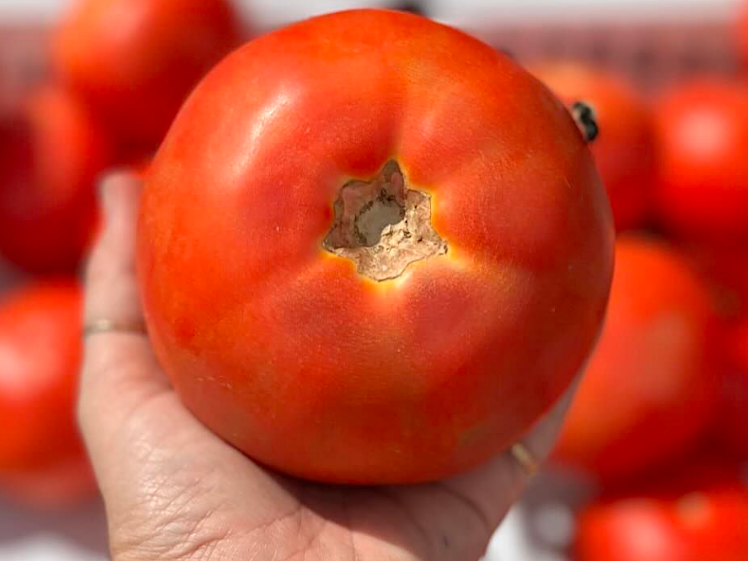
Have you ever wandered through a market in peak tomato season? That sunshine smell hitting your nostrils, drawing your attention to the inglorious folded and bulbous fruits carefully arranged in trays and rows of boxes overflowing with bite-sized red, purple and yellow snacks. Have you ever caught a farmer’s eye when you couldn’t resist squeezing one? Behind that tomato on your dinner table is a complex infrastructural dynamic: a farm, workers, a truck, a market stall, a permit, a public space, a neighbourhood — all part of a direct system that gets food from a field outside of the city into the hands of the people who live and work here. And increasingly, the system itself is being squeezed!
Vancouver Farmers Markets has been operating farmers markets in the city of Vancouver for more than 30 years. Today, our nine neighbourhood markets welcome thousands of visitors each year (675,000 in 2025) and create direct selling opportunities for hundreds of local farms and small businesses. In 2025, there were 264 vendors; 66 were new entrants, 147 were women-owned, 51 were youth-run, and 115 were BIPOC businesses.
The increased visits, long vendor wait-list and record sales clearly indicate that farmers markets are in high demand. And yet Trout Lake, Riley Park, West End and Kitsilano farmers markets operate in spaces that are increasingly restricted and under-resourced. Markets are being displaced.
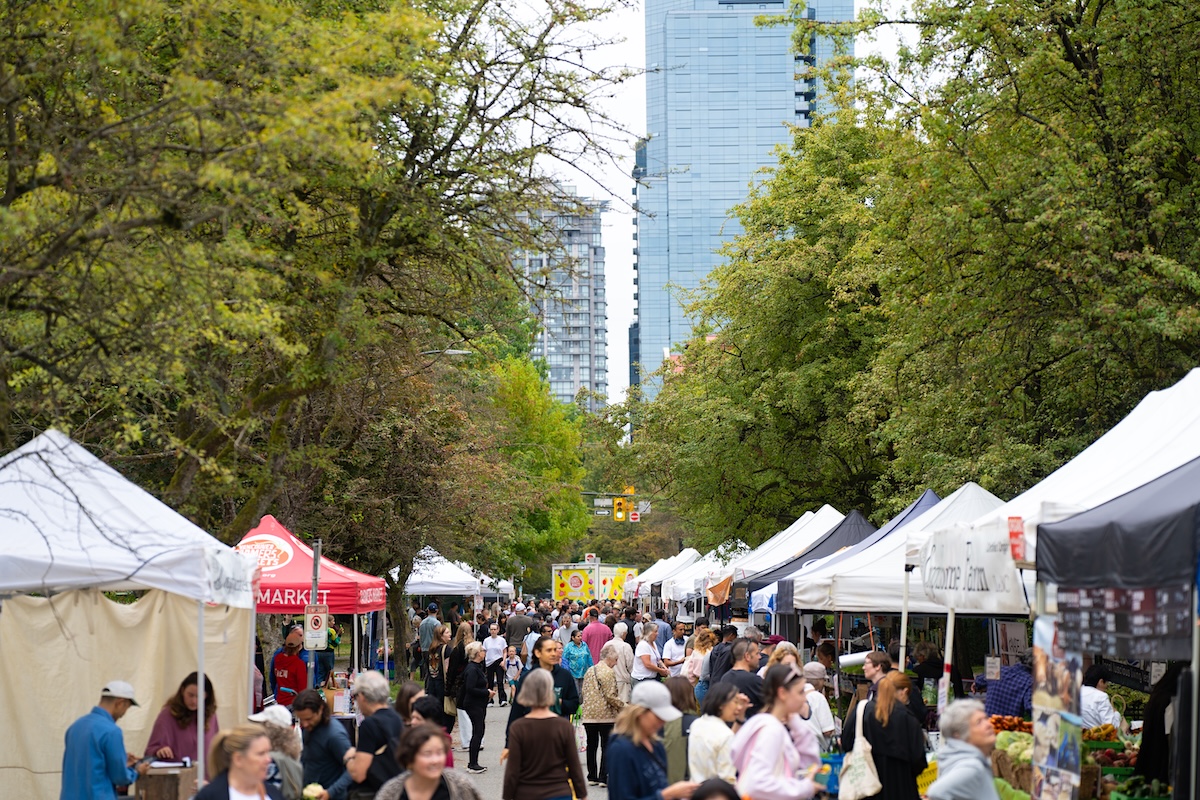
One of the actions in our 2022-26 strategic plan is “securing functional solutions for markets facing displacement by construction” (in 2023, we removed the word “construction”). Market spaces are subject to the same development, construction, resource and co-ordination pressures facing most of Vancouver’s social and economic infrastructure. But markets are not on the planning and development agenda — they’re special events. If Vancouver wants markets to continue to be part of its social, economic and climate-resilient landscape, the city will need to be intentional about making space for them before they’re squeezed out.
Call it a warning, but the opportunity is ripe!
Let’s talk about Glorious Organics. A Michelin-revered co-operative farm out of Aldergrove, Glorious Organics and Friesen Farm form the collective Organic Farm Connection, which has been a permanent fixture at the Trout Lake, Kitsilano and Riley Park markets for decades. Their certified organic produce is a staple at farmers markets and restaurants. Faced with growing piles of produce and increased customers crammed into their 20-by-27-foot stall space — particularly in the last five years — Mark Cormier and Ann Friesen have been applying for more space. But the markets don’t have any to give.
Cropthorne Farm has encountered this lack of space too, and for Lydia Ryall, who started her certified organic family farm on Westham Island in 2009, there’s a tension between making space for her tents, her truck and her customers. Year-round, the Cropthorne stall is one of the most popular, diverse and abundant at the West End, Kitsilano and Riley Park markets, making over 50 types of mixed certified organic vegetables available to Vancouver residents. Multiple days a week, the Cropthorne team displays piles of produce and manages a lineup of customers, but bringing all those vegetables to Vancouver neighbourhoods also means driving, unloading, moving and parking the truck — a labour and space trade-off that might not be necessary if Vancouver had more functional market space.
The need for market space is similar for urban food startups.
When Ben Healy — a 28-year-old Irish immigrant and a trained cook — joined Vancouver Farmers Markets in 2025, he brought something deeply personal to the market: traditional Irish brown bread inspired by the food culture of his home, customized with local grain available here in B.C. Today, Healy’s Irish Brown Bread sells across several Vancouver Farmers Markets locations, which have offered Healy a platform to build a business in his new home. What does he need to keep growing his business? He wants more dates.
For Natalie Cumberbirch of Merci Boulangerie, the market is another way of sharing a piece of home. Her French-inspired bakery, which joined Vancouver Farmers Markets in 2020, is her attempt to bring a little bit of Paris to Vancouver through croissants, pain au chocolat, baguettes and the experience of sharing good food with others. How does she afford the lease on her bricks-and-mortar bakery? Consistent market dates.
Trixie Ling founded the non-profit Flavours of Hope to help newcomer women entrepreneurs build and grow food businesses, using food, storytelling and entrepreneurship to bring people together across cultures. For newcomer entrepreneurs, markets provide something very fundamental: an accessible place to test an idea, meet customers and grow a business. When these women graduate the Dream Cuisines food business incubator program, what’s one of the biggest hurdles they face? Minimal access to market dates.
Every business and their food and story are different, and yet they share a common theme: they need viable, consistent spaces to run and grow a viable business.
“The greatest opportunity isn't simply improving permits or installing water, washrooms and electrification at temporary sites. It's creating a more co-ordinated municipal approach that aligns markets as low-cost, high-impact tools that support the city's existing goals around climate resilience, economic development, food systems, public space and healthy communities. Municipal leadership is required to champion the kind of change required to support farmers markets, communities and small businesses next year and into the future,” says Laura Smit, executive director of Vancouver Farmers Markets.
We’re telling more stories to demonstrate the need for municipalities to make space for markets on the ground, at the table and on the menu.
- On the ground — consistent, accessible spaces designed to actually work for farmers, vendors, shoppers and the logistics of a market.
- At the table — bringing market operators into planning conversations early on, before a public space has already been designed, or approved for new construction, and while there is still an opportunity to consult who gets impacted by a dislocated market.
- On the menu — recognizing farmers markets as part of the city's long-term food system and community infrastructure, rather than treating them as temporary events that happen to occupy public space.
Does Vancouver need local food, thriving small businesses, vibrant public spaces and stronger community connections? We all know it does. The real question is whether we’re willing to build the conditions that allow the people already providing those things to continue doing so.
So, please don’t squeeze the tomatoes.
Give farmers ground to grow, give small businesses tables to build, and give communities menus to gather around and connect.
And, most importantly, make strategic space for farmers markets in Vancouver’s future. ![[Tyee]](/design-article.thetyee.ca/ui/img/yellowblob.png)
Read more: Food
This article is part of a Tyee Presents initiative. Tyee Presents is the special sponsored content section within The Tyee where we highlight contests, events and other initiatives that are put on either by us or by our select partners. The Tyee does not and cannot vouch for or endorse products advertised on The Tyee. We choose our partners carefully and consciously, to fit with The Tyee’s reputation as B.C.’s Home for News, Culture and Solutions. Learn more about Tyee Presents.



Tyee Commenting Guidelines
Please note that email notifications for replies are not currently working due to a software issue which may be resolved in a future update.
Comments that violate guidelines risk being deleted, and violations may result in a temporary or permanent user ban. Maintain the spirit of good conversation to stay in the discussion and be patient with moderators. Comments are reviewed regularly but not in real time.
Do:
Do not: