


 SHARE:
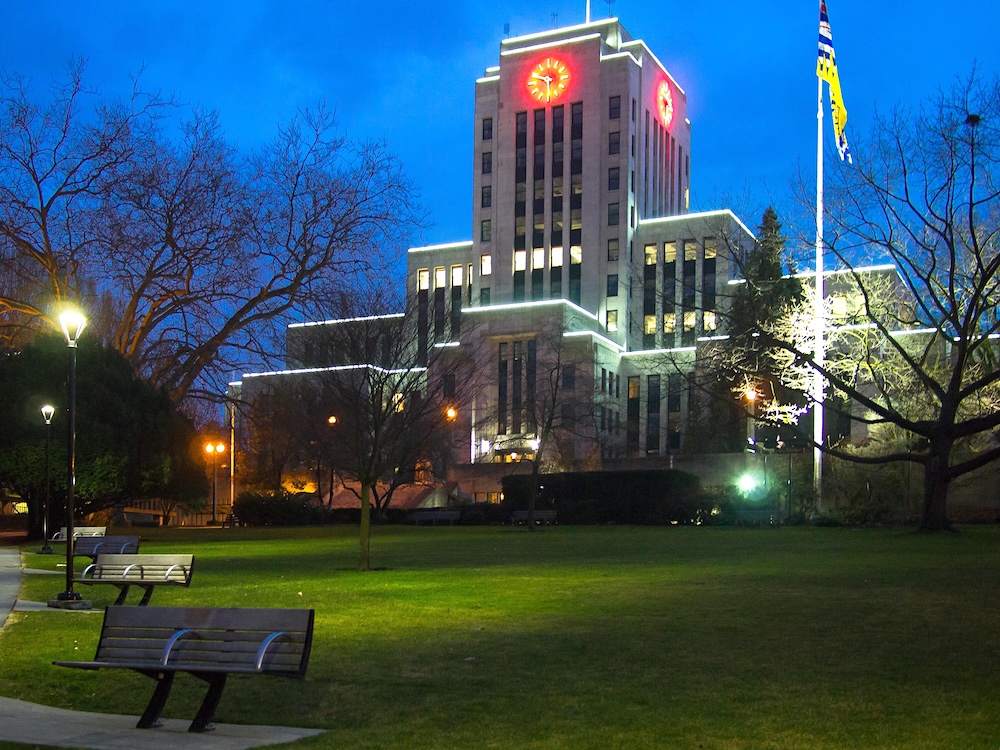
Dollars are scarce at Vancouver City Hall. The city’s 2026 budget, passed last fall, included no property tax increases and is triggering waves of staff cuts.
It’s a reminder that, beyond taxes, vital revenue comes from sales of city-owned land to private developers. In these deals, the city can gain or forfeit millions of dollars depending on what value the city assigns the land and how well it negotiates sale prices.
So, with money tight and getting tighter due to Mayor Ken Sim’s “back to basics” budget, how good is the city’s track record for conducting major land deals?
Poor enough to cause Mike Macdonell, the city’s independent auditor general, to release, on Feb. 5, a highly critical 52-page performance audit of 16 city land sales and exchanges between Jan. 1, 2016, and June 30, 2024.
Full disclosure: The Office of the Auditor General, or OAG, initiated this audit in response to whistleblower complaints I submitted regarding city land sales made at less than market value, with incomplete information provided to council. I have also written articles regarding these land sales and will provide further context and opinion in this one.
Let’s start with the OAG’s damning conclusions:
- The city could not demonstrate that it maximized value for its land sales.
- Land sales were reactive and ad hoc, not guided by a deliberate strategy aligned with city objectives and priorities.
- Important information was omitted when council approval for sales was sought, such as instructions given to appraisers or that the sale price was lower than the appraised value.
- Interest-free extensions were granted by staff, contrary to city policy and without council approval, forgoing a potential interest entitlement of over $26.3 million.
- Staff made a calculation error that undercharged a purchaser by nearly $13 million.
- Staff got approval to have the city pay a $12.1-million community amenity contribution without informing council that the legal responsibility to pay rested with the purchaser.
- Records and documentation were deficient.
The auditor general also expressed concern that Vancouver’s real estate and facilities management department had not implemented earlier recommendations from an external consultant in 2016 and an internal audit in 2018. Given this history, he concludes “additional scrutiny” would be warranted in the future.
The report makes it obvious that the real estate and facilities management department has not been an effective custodian of the public interest and that the city has missed out on many millions in potential income.
Pushback from the city manager
On the same day the OAG released its report, city manager Donny van Dyk’s office released a statement that criticized the report for not fully reflecting “the operational context or the information provided by staff during the audit” and giving insufficient consideration to the complexity of staff’s work.
Other commentary and news articles were more critical of real estate and facilities management department staff. One of the strongest comments came from lawyer and former city councillor Tim Louis, who wrote in his blog: “We now know with absolute certainty that the City’s Real Estate and Facilities Management department (REFM) — enabled through ignorance, oversight, or complicity by the city manager and Ken Sim’s ABC majority — are in bed with Vancouver’s development industry.”
The importance of appraisals tied to zoning
The auditor general zeroed in on a key factor in the setting of land prices by the city — how the land was or is currently zoned.
The city routinely and appropriately sells land it owns, such as lanes, for inclusion in an adjacent developer’s site that is being rezoned. Since a competitive sale is impossible, the city relies on appraisals to inform the sale price. The land the city actually sells is already rezoned, as the sale takes place only when the rezoning is enacted.
Nevertheless, real estate and facilities management department staff routinely instructed appraisers to value city land based on the previous zoning and to ignore the new rezoning and “highest and best use.” These instructions were not disclosed to council. In the case of three direct sales of lanes it analyzed, the OAG believes this approach “may have understated value by 20 to 40 per cent.”
The increase in land value resulting from a rezoning is called its “land lift.” Basing sale prices on previous zoning means that the purchaser-developer, not the city, collects the value of the land lift, which is often many millions of dollars.
Staff explain this approach by saying that the city can get a portion of the land lift back through community amenity contributions, or CACs. Indeed, city policy is for the real estate and facilities management department to negotiate for CACs worth at least 75 per cent of the land lift. However, that level of CAC is not always achieved. Also, some land sales with significant land lift are for rental housing developments, which are exempt from CACs.
The auditor general’s comment on this approach is that “cash received on sale is certain whereas the future receipt of value through CACs bears levels of uncertainty and risk.”
In other words, it would be better to sell city land based on its rezoned market value including the land lift. That’s glaringly obvious, and certainly how Burnaby priced its land sales during the many years I worked for that city as a senior development planner.
Why was negotiating power not flexed?
If you’d like an example of the kind of money that can be left on the table when the city knows a developer deeply desires to purchase its land but nevertheless assigns that land a low appraised value, consider the case of the lane adjacent to 1465 and 1489 W. Broadway.
This lane was in the middle of the 40-storey development site at Broadway and Granville, which also incorporates a public transit station. Acquisition of the lane was absolutely essential to the development, which should have given the city considerable negotiating power to achieve a selling price above market value, as explicitly called for by council-adopted policy.
Instead, the price achieved was about 60 per cent below market value.
No appraisal was commissioned for this $3.8-million land sale, contrary to a commitment city manager Sadhu Johnston made to council in 2017 to “get independent third-party appraisals for all land sales above $1 million in value.”
Instead, city negotiator Andrew Newman (then associate director, now director, real estate services) used an appraisal of the city’s nearby properties at 1431 and 1441 W. Broadway, which had no active proposals or plans for higher-density redevelopment.
That appraisal was based on zoning for density less than a quarter of what was zoned for the Broadway and Granville development. Nevertheless, the negotiated sale price per square foot for the lane was considerably below the appraised value of those neighbouring properties, which the city also sold, just five days later, at a 27 per cent higher price to a different purchaser. The auditor general’s report appears to attribute a negotiated $1.2-million discount for the lane sale to utility relocation costs, although these would normally be attributed to the development as a whole instead of to just a minor portion of the site.
The auditor general’s report does not address the land lift achieved by the change in zoning, underway at the time, that would more than quadruple the zoned density for the Broadway at Granville project. By valuing the lane based on the original zoning, the city granted that land lift, worth about $6 million, to the purchaser-developer, PCI. None of that land lift was recouped for the public through community amenity contributions as this was a rental residential development exempt from CACs.
A $13-million whiff
At the north end of the Granville Bridge sits 601 Beach Cres., a prime development site. In 2016, the city sold it to Pinnacle International for a low initial payment of $20 million (reduced to $7.9 million in April 2025), with the understanding Pinnacle would pay a deferred “adjustment price” payment based on density achieved through rezoning. That adjustment price currently stands at $97.7 million, due to upzoning.
The deal included some interesting fine print. If a five-year deadline for full payment and start of construction was not met, the city had the option of buying back the property for the initial payment.
The auditor general’s report documents shocking real estate and facilities management department conduct related to this sale:
Staff decided not to exercise the buyback option in 2021 and extended the deadline a total of three years, interest-free. This was done without council approval, in spite of city policies requiring payment of interest and council approval. The OAG estimated the potential interest forgone as up to $10.9 million.
A staff error in calculating the adjustment price led to the purchaser being undercharged by almost $13 million, although the payment has not yet been made. Just one month after I made staff aware of this error, they secretly sought and got council approval to charge the purchaser the incorrect discounted price.
The real estate and facilities management department did not acknowledge the error until the auditor general committee meeting on Feb. 12.
Bizarrely, in my view, the director of real estate services said that the loss due to the error was offset by $3-million annual interest payments to be made for the next three years on the $97.7 million still owing (after 10 years interest-free).
Staff sought and got council approval for the city to pay a $12.1-million rezoning CAC, using a portion of the purchaser’s initial $20-million payment. Staff led council to believe that paying the CAC was a city responsibility, instead of correctly informing it that the CAC was legally the purchaser’s responsibility.
One of the reasons staff gave to discount from the sale contract price was that the real estate market currently is much softer than the strong market in 2016 when the sale was made — and weaker than in 2021 when the payment date was first extended.
In my view, this shows how wrong-headed it was for the city to sell the property without first establishing density and height parameters for development, and then to structure the deal with deferred payment of about 90 per cent of the purchase price. That put the city at risk regarding full payment, and incentivized delay in developing the property.
The city could have learned to avoid that mess by studying a similar situation regarding the province’s infamous sale of the Little Mountain site in 2008.
The long delay in constructing the badly needed 152 social housing units to be included in the 601 Beach development has been a particularly bad outcome of the way the city structured the sale.
A combative response from real estate and facilities management
The auditor general is accountable only to council and functionally reports to the auditor general committee, which is a subcommittee of council composed of five councillors plus one alternate, and three non-voting external advisers.
The land sale audit was on the agenda of the Feb. 12 meeting of the committee, which was attended by Couns. Sarah Kirby-Yung (vice-chair, chairing), Pete Fry, Brian Montague and Lenny Zhou and the three external advisers. The chair of the committee, Coun. Lisa Dominato, was absent (providing no explanation) as was alternate Coun. Mike Klassen (taking a leave of absence for personal reasons).
After the auditor general’s 17-minute presentation on the land sales audit and before questions and answers, a 13-minute response (not noted on the agenda or minutes) was given by deputy city manager Armin Amrolia, who has been acting general manager of the real estate and facilities management department since 2021. Rather than being apologetic, the tone of her presentation was aggressively defensive, criticizing many of the findings of the auditor general.
Amrolia asserted that the auditors did not understand the complexities of the trade-offs and had been unresponsive to real estate and facilities management department input. She did acknowledge that council should have been asked to approve staff’s payment extensions and no-interest provisions, but said staff would have recommended no-interest anyway.
Amrolia reiterated information the real estate and facilities management department provided to council that payment of the $12.1-million CAC for the 601 Beach rezoning was a city responsibility, strongly disagreeing with the auditor general's report saying that it was the purchaser’s responsibility to pay. Later in the meeting audit principal Hamish Flanagan laid out why she was wrong, terming his clear explanation “Contract 101.”
Amrolia also stated that real estate and facilities management disagreed with some of the audit’s recommendations but would not specify which. Later, however, during the Q&A, Andrew Newman, director of real estate services, said the department did agree with the recommendations and disputed only some of the report’s findings.
Also during the Q&A, auditor general Macdonell was asked whether real estate and facilities management had been co-operative during the auditing process. He characterized real estate and facilities management’s response as needlessly contentious.
“This has been a challenging audit to clear, Coun. Zhou, in all honesty. You know, it's been stated repeatedly that we've been... told information, and we haven't been listening. And that's just not true.”
What next?
The report includes 10 detailed recommendations from the auditor general addressing key issues such as:
- Real estate strategy should align with broader city objectives.
- The real estate and facilities management department needs clear policy guidance for land sales and exchanges, including when staff need to seek further direction from council.
- The department needs to provide council with more complete information when it seeks approval for land sales.
- The department needs to improve its documentation and record retention practices.
- It should present council with options for dealing with the 601 Beach Cres. $13-million adjustment price miscalculation.
The recommendations are a positive step, and perhaps they will be implemented.
If history is a guide, there is reason to be pessimistic.
A decade ago, the real estate and facilities management department was implicated in a Yaletown land deal scandal. That involved a prime site adjacent to Emery Barnes Park that was valued by staff at $15 million for a land swap with developer Brenhill. Just five months after the transaction was completed, BC Assessment valued the site at $130 million. Records of staff’s valuation analysis could not be found when they were required for court. That mess offered a chance to learn and reform, as auditor general Macdonell noted in his report. But here we are today.
In some jurisdictions, the staff misconduct and loss of millions documented in the OAG’s land sales audit would be sufficient for senior staff resignation or termination. In Vancouver, the response has been defensive statements from the city manager and deputy city manager/general manager of the real estate and facilities management department.
Sadly, this is in line with the lack of accountability and transparency that seem to be part of the city’s corporate culture.
One avenue towards reform and accountability might be for the public to pressure council, and to make city real estate deals an issue in the election later this year. ![[Tyee]](/design-article.thetyee.ca/ui/img/yellowblob.png)
Read more: Municipal Politics










.jpg)
Tyee Commenting Guidelines
Please note that email notifications for replies are not currently working due to a software issue which may be resolved in a future update.
Comments that violate guidelines risk being deleted, and violations may result in a temporary or permanent user ban. Maintain the spirit of good conversation to stay in the discussion and be patient with moderators. Comments are reviewed regularly but not in real time.
Do:
Do not: