

 SHARE:

If you lived in a neighbourhood where people were dying from poisoned drugs, and over 2,000 were homeless, what would you say the solution is? At the Carnegie Housing Project we asked residents at various Downtown Eastside groups like the Aboriginal Front Door Society, Carnegie Community Centre, Our Streets and the Western Aboriginal Harm Reduction Society.
They said things like: housing people can afford, places to be, safer drugs, more garbage cans on the streets, jobs and job training, more greenery, more washrooms, access to detox and treatment — not a wait-list — and keeping essential service organizations funded. Aboriginal Front Door’s funding has not been renewed and is set to expire in September, bringing an end to this well-loved Downtown Eastside service that stores belongings for hundreds of homeless people, as well as providing food, rest, cultural programs, advocacy and dozens of emergency shelter beds.
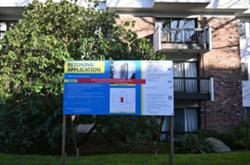
No one said the Downtown Eastside, or DTES, needs 32-storey market-rental housing towers with only a tiny percentage affordable to low-income residents. But that's what the city is about to propose in a report to council this fall.
City staff are working on recommendations to implement a 2023 motion by ABC Coun. Rebecca Bligh titled “Uplifting the Downtown Eastside and Building Inclusive Communities That Work for All Residents.” A consultation period where staff told residents what they planned and asked for feedback happened in May. I was at three of the engagements, and many folks said they didn't like the plan. Unfortunately, there is no indication that the city will change it.
The proposed plan would apply in the Oppenheimer District of the DTES, where the most poverty, homelessness and services are concentrated, and the Thornton Park area. The current Downtown Eastside Local Area Plan from 2014 says that private developers who build rental housing in the Oppenheimer District have to make 60 per cent of each building social housing. As a result, property values in the area have been low and lots of desperately needed social housing has been built or is under construction — more than was believed possible in the plan’s original target. The new plan would change this ratio, allowing developers the option to own the whole building, renting 10 per cent for $800 per month; or own 80 per cent, giving the other 20 per cent to the city or a non-profit to own as social housing.
The new plan would also change the old plan's rule that 33 per cent of the units in new social housing buildings in the DTES have to rent at the social assistance shelter rate, which is $500 a month today for a single person. The plan would reduce this to 20 per cent.
While Ministry of Social Development and Poverty Reduction stats for March 2024 show that there are over 2,000 people with no fixed address in the DTES (not counting people who aren't on social assistance like seniors and immigrants), the city plan does absolutely nothing for homeless folks. In fact, it may even make the homeless situation worse if the government reserves desperately needed empty units to rehouse single-room occupancy hotel residents who get demovicted, while thousands are on the social housing wait-list.
Billed as a single-room occupancy replacement plan, the city plan would allow towers of up to 32 storeys in these two sub-areas. (Single-room occupancy hotels, or SROs, are century-old buildings with small rooms and shared bathrooms that now mostly house low-income people.) If the tower replaced an SRO it would theoretically have to provide tenant protections like moving expenses, finding new affordable accommodation (maybe in social housing) and allowing the demovicted SRO tenant to return to the new building at the old rent.
What's not clear is whether developers want to build in a community where over 2,000 people live on the streets. Will this plan actually "uplift" the DTES? Or is it a plan to simply dilute the concentration of low-income and homeless people by mixing in richer residents? If so, will this involve even more police in the area?
While driving through the DTES can be a shocking experience because so many folks are on the street, it doesn’t capture the great things about the community. When the Carnegie Housing Project asked residents what’s special about the DTES, they said things like: it’s a community that takes care of each other; people are generous; residents don’t leave each other behind; the resources are stretched thin but the community never withholds from each other; and having a strong sense of place and belonging. They talked about how people are received as who they are at that moment, and they remembered the rich history of community building and action by the people.
For those of us who live or work in the community, it's pretty clear that we need a plan that actually deals with real DTES issues. “Nothing about us without us” has become a popular slogan in the DTES.
If you want to solve problems, you have to talk to the folks who are dealing with the problems. That should be the first step to “uplifting” the DTES, after we stop the city’s plan.
[Editor’s note: Watch a videotaped event examining the ‘Uplifting the Downtown Eastside’ plan where DTES neighbourhood residents expressed their thoughts.] ![[Tyee]](/design-article.thetyee.ca/ui/img/yellowblob.png)
Read more: Rights + Justice, Housing, Municipal Politics





Tyee Commenting Guidelines
Please note that email notifications for replies are not currently working due to a software issue which may be resolved in a future update.
Comments that violate guidelines risk being deleted, and violations may result in a temporary or permanent user ban. Maintain the spirit of good conversation to stay in the discussion and be patient with moderators. Comments are reviewed regularly but not in real time.
Do:
Do not: