


 SHARE:
When the British Columbia government published Budget 2026 in February, much of the initial focus was on its historic deficit and planned tax hikes.
Then people noticed a nugget buried in the backgrounder section of the press release: “government is adjusting the pace of some housing investments. This includes reallocating nearly $1.4 billion across the fiscal plan.”
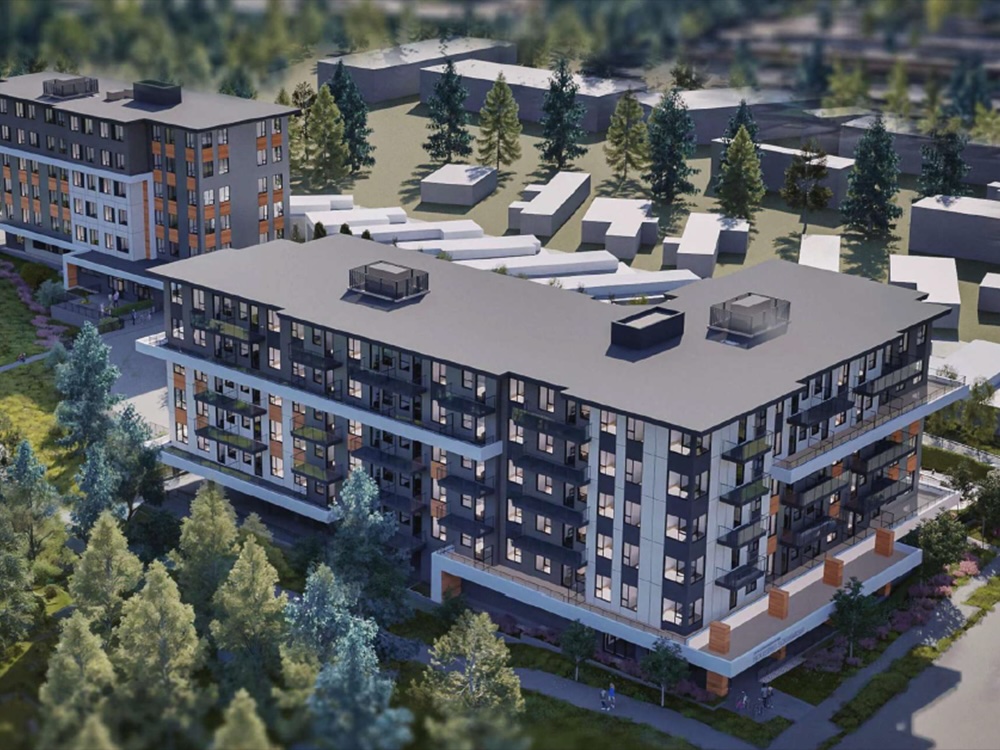
That adjustment included pausing the Community Housing Fund, which was created in 2018 to “build rental homes for people, including families, seniors, and people with disabilities.” Immediately, there were numerous reports about various projects being stranded by the change.
“Slowing down investment in light of the fiscal environment would have been understood by the sector,” the BC Non-Profit Housing Association said in an extensive and blunt press release. “But to decide not to proceed with last year’s call for proposals under the Community Housing Fund has the sector reeling.”
“We cannot think of another example of government asking any industry to spend millions in responding in good faith to planned investments, and then cancelling the call with no notice,” the association added. “It is unprecedented and shakes the confidence of the community housing sector, as well as our municipal and private sector partners.”
The BC Non-Profit Housing Association said the province told them that they “remain committed to meeting the overall targets for the CHF program but over a longer time horizon,” but did not provide clarity on the timeline and “offered no transition supports or mitigation measures for housing societies who invested significant time and money into CHF proposals, leaving the millions of dollars of financial impacts of these broken promises with the non-profit housing sector.”
The dust has settled a bit since then and a recent report authored by staff of the Metro Vancouver Regional District provides a clearer sense of just how many projects have been impacted.
“BC’s 2026 budget defers $1.4 billion in previously announced housing investments, including cancelling the 2025 Community Housing Fund call, deferring the Indigenous Housing Fund call, and reducing important rent supplements and operating grants,” the report states. “Member jurisdictions report at least 25 affected projects representing over 3,500 units.”
While Metro Vancouver estimated that 3,500 units across 25 projects have been impacted, a BC Non-Profit Housing Association document estimates 4,000 units have been lost across 49 projects.
The loss of so many units that were previously in the development pipeline will also make it harder for Metro Vancouver municipalities to meet the B.C.’s government’s own legally-mandated housing targets for municipalities, the report warns.
According to the MRVD, of the 25 projects, five have been outright cancelled, 12 have been paused indefinitely, and eight are in limbo depending on whether they can secure funding from other sources such as Build Canada Homes, the new federal agency announced by Prime Minister Mark Carney in 2025.
In terms of housing units, this means 486 affordable homes have been cancelled, 1,484 have been paused, and 1,533 are stuck in limbo.
“These projects represent significant investment by non-profit providers and member jurisdictions, with limited options to proceed, and reflect considerable sunk costs in staff time, pre-development funding, and project advancement incurred prior to the withdrawal of provincial support,” the report states, adding that local governments had made contributions in nearly all cases.
“The cancellation and deferral of key provincial programs — particularly the Community Housing Fund and Indigenous Housing Fund — have disrupted Metro Vancouver’s non-market housing pipeline,” the report says.
“Members anticipate a significant decline in affordable rental delivery and reduced capacity to meet needs identified in housing needs reports and Housing Target Order requirements.
“Existing strategies are being reassessed, as local tools — such as inclusionary zoning — cannot compensate for lost senior government investment or deliver comparable affordability in current market conditions.”
In 2022, Premier David Eby introduced the Housing Supply Act, giving the Government of British Columbia the authority to set housing supply targets for local governments and order policy changes if they failed to meet their targets. The Housing Target Orders are annual housing construction numbers that certain municipalities are supposed to try to meet.
Metro Vancouver says that the BC Non-Profit Housing Association conducted a survey of non-profit housing providers and found that an average of $432,500 had been spent per building application. Those fees are now essentially sunk costs that are unlikely to be recovered.
In response to this story, the Ministry of Housing and Municipal affairs said the decision to discontinue proposals for the community housing fund, and to slow down some projects, "was difficult."
"These steps were taken to align project timelines with available funding and to ensure fiscal responsibility.The current focus is on completing existing projects and opening them as quickly as possible."
The ministry said its overall housing targets haven't changed, and the province is working with non-profit organizations and the federal government to find other ways to fund housing.
"We are still committed to building 3,500 homes through the Indigenous Housing Fund (IHF) and 20,000 homes through the Community Housing Fund (CHF)."
Metro Vancouver also said it has been impacted. The regional district runs its own housing agency, called Metro Vancouver Housing. In 2023, Metro Vancouver Housing signed a 10-year memorandum of understanding with BC Housing for a series of affordable housing projects, and there are currently 854 units in the planning and development stage.
“The 2026 BC Budget has created uncertainty in the timing of the province’s contribution,” the Metro Vancouver Regional District report said. “MVH is advocating to the province to confirm funding timelines and ensure the fulfilment of the MOU to avoid material risks such as cost escalation and delays in delivery of projects that are already advancing through design and development.”
The purpose of the Metro Vancouver report was to provide member jurisdictions with some potential directions and responses.
“To move forward in this time of economic uncertainty, two proposed actions are identified that seek to build on the strengths of Metro Vancouver region and member jurisdictions: advocacy and collective action.”
On the advocacy front, Metro Vancouver said it would forward the report to the Ministry of Housing and Municipal Affairs “with a request that the province restart funding for cancelled and deferred affordable housing projects, provide support for organizations that have incurred pre-development costs, and restore stability and predictability in non-market housing programs.”
On the collective action front, Metro Vancouver said it “will engage member jurisdictions and housing sector partners to assess interest in convening a regional forum focused on long-term, predictable funding for affordable rental housing, and to develop options for Board consideration,” adding that such a forum could include “member jurisdictions, other levels of government, housing agencies, universities, housing advocates, and financial institutions.” ![[Tyee]](/design-article.thetyee.ca/ui/img/yellowblob.png)
Read more: Housing










Tyee Commenting Guidelines
Please note that email notifications for replies are not currently working due to a software issue which may be resolved in a future update.
Comments that violate guidelines risk being deleted, and violations may result in a temporary or permanent user ban. Maintain the spirit of good conversation to stay in the discussion and be patient with moderators. Comments are reviewed regularly but not in real time.
Do:
Do not: