


 SHARE:

After more than 10 years of searching, researchers have identified the pathogen responsible for sea star wasting disease, or SSWD.
Killing billions of starfish, SSWD has affected more than 20 species in waters from Mexico to Alaska, including the sunflower sea star found off the coast of British Columbia. It’s the largest epidemic to sweep through a non-commercial marine species.
Now, Vibrio pectenicida FHCF-3, an infectious bacterium, has been identified as the cause of the disease.
This finding is part of a study published today by researchers from Hakai Institute, the University of British Columbia and the University of Washington.
Researchers say this marks a key step towards combating SSWD.
“If you go to the doctor and you're not feeling well, they've got to figure out what's wrong with you before they can start prescribing you medicine,” said Melanie Prentice, a marine evolutionary ecologist at the University of British Columbia and the Hakai Institute, and first author of the study. “We had our hands tied behind our backs without knowing what caused the disease.”
Over the course of four years, Prentice and her colleagues conducted seven controlled experiments, injecting healthy sunflower sea stars with infected tissue collected in the field from diseased sunflower sea stars. Some healthy sea stars were also exposed to the disease through cohabitation.
Throughout the process, researchers found that Vibrio pectenicida was present in most diseased sea stars and absent from healthy sea stars, which indicated that the bacterium was the culprit. Through further testing, they confirmed that FHCF-3 was the strain that caused the disease.
This isn't the first time marine scientists have encountered a bacterium like Vibrio pectenicida. Bacteria from the genus Vibrio have devastated coral and shellfish. Humans can feel their effects, too, by contracting gastroenteritis after consuming raw shellfish and oysters, according to the BC Centre for Disease Control.
In the 1990s in France, a different strain of Vibrio pectenicida swiftly wiped out various species of scallop larvae.
Vibrio pectenicida causes sea stars to develop lesions that look like white spots all over their bodies. And the effect for some — like the sunflower sea star, which can grow up to 24 arms — is that their arms twist together. Eventually the sea star curls into a ball of twisted arms. Their tissues melt until, after about two weeks, the sea star dies, the study described.
“In some species, the sea star will disappear into the ocean,” said Prentice. “It'll completely dissolve.”

The sunflower sea star has been affected more than other species. Since the outbreak in 2013, the epidemic has claimed almost six billion sunflower sea stars, about 90 per cent of the population. As a result, the sunflower sea star is critically endangered, according to the International Union for Conservation of Nature. The sea stars are also being recommended for threatened status under the U.S. Endangered Species Act.
The SSWD epidemic has caused a grim ripple effect for other living things in ocean waters. “Sea stars are absolutely fundamental to the health of marine ecosystems,” said Prentice.
A cascading impact on kelp
While sea stars may seem to be immobile creatures, in fact they play important roles in nature as roaming predators. Sunflower sea stars found in Pacific Northwest waters feast on almost anything, but they have a particular taste for sea urchins, said Prentice.
As SSWD caused sunflower sea stars to vanish from kelp forests, an unchecked, rising sea urchin population overgrazed kelp forests off the coast of British Columbia, which already faced pressure due to marine heat waves. The result is a loss of biodiversity in kelp forest ecosystems.
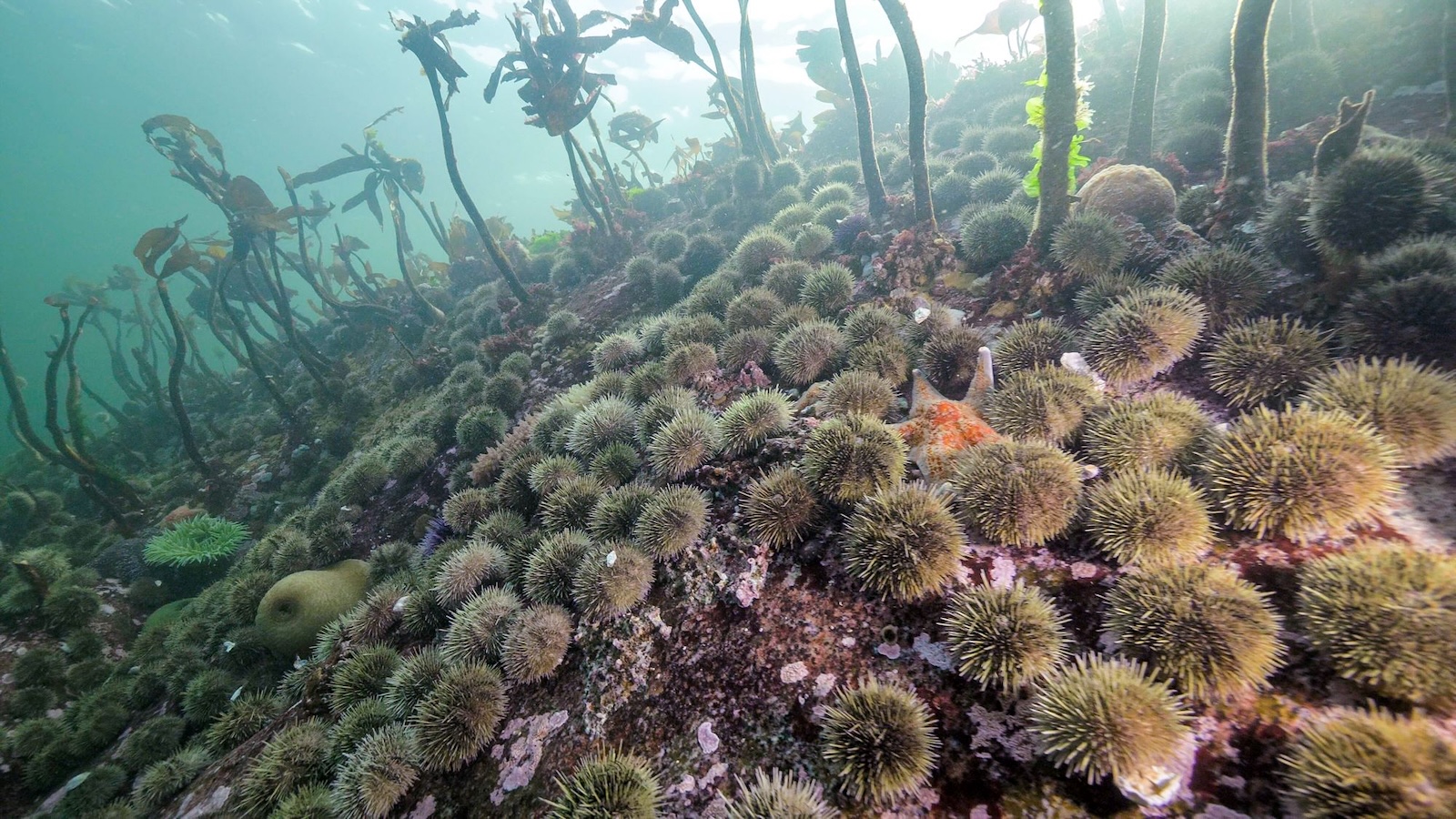
“What we see instead of these beautiful biodiverse kelp forests is urchin barrens,” said Prentice. “Thousands of urchins along the sea floor with nothing else there.”
In a balanced ecosystem, kelp forest covers are an essential pillar of coastal marine life. The kelp forest provides food and habitat for numerous marine species, filters water, helps to protect coastal communities from erosion from storms, has been acknowledged as an excellent absorber of carbon dioxide and is a potential carbon sink.
“When we're talking about things like climate change,” said Prentice, “we want healthy kelp forests to help us battle our emissions.”
Rising temperatures and outbreaks
The rising temperature of the sea posed a challenge for researchers trying to identify the cause of SSWD.
One reason is that sea stars exposed to high temperatures may twist and drop their arms and develop lesions — symptoms of SSWD as well, according to Prentice.
Researchers have also noticed that SSWD outbreaks may be linked to warmer waters. A recent study found that populations of sunflower sea stars in fjords are more abundant, suggesting that they are finding refuge from SSWD in cooler waters.
Researchers have also found that there are more cases of SSWD during summer. “When the sea water temperatures are warmer, we tend to see outbreaks occurring earlier,” said Prentice.
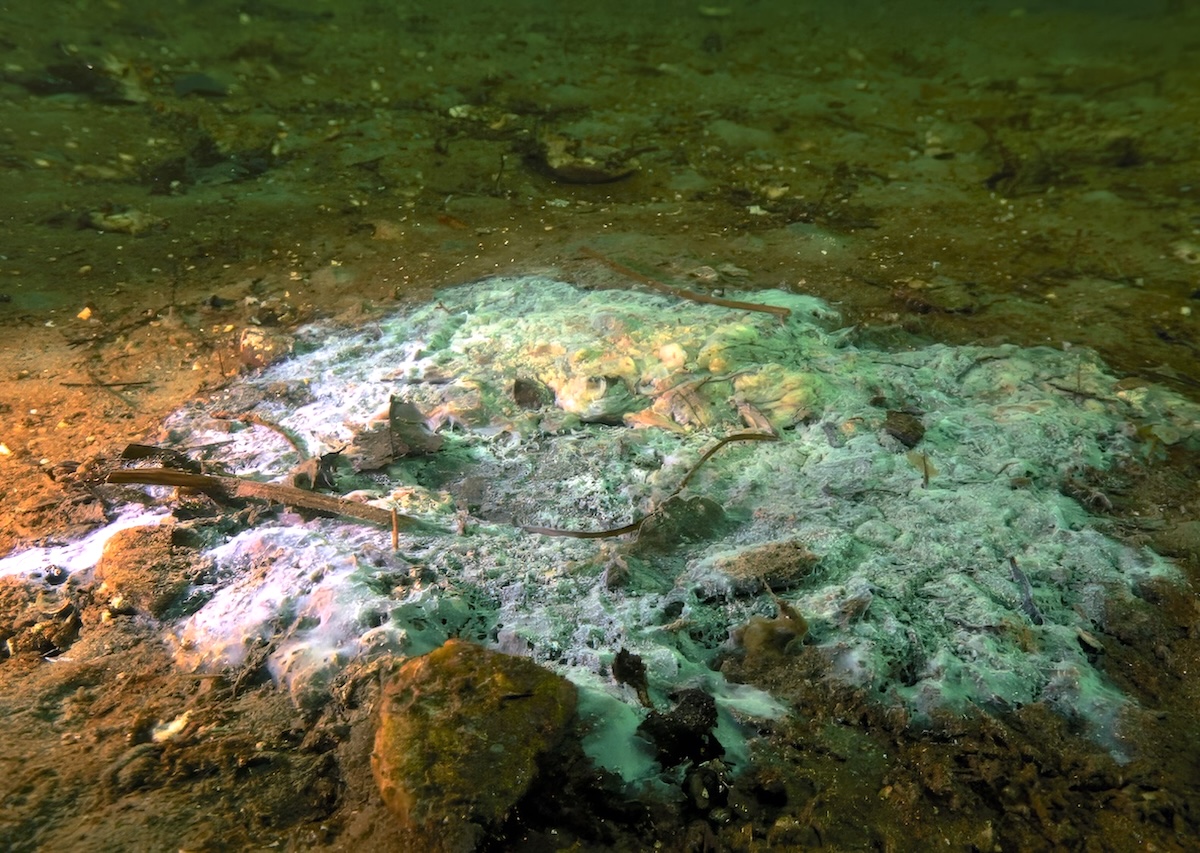
Now that Vibrio pectenicida has been identified as the underlying pathogen, researchers can begin to understand how temperature affects the disease, and Prentice has a few ideas.
One hypothesis is that warmer sea waters are providing the pathogen an optimal environment to survive.
Vibrio bacteria populations multiply in warmer temperatures, to the point that they have been coined the “microbial barometers of climate change” by researchers. Meaning that even though sunflower sea stars are resilient in warm waters, Vibrio pectenicida and its related strains thrive in those temperatures, allowing them to take over their host more easily.
Prentice said a next step for researchers will be searching for other strains of Vibrio pectenicida that may be infecting sea stars.
“We have one strain that causes sea star wasting disease, but I believe that there's probably going to be many more,” said Prentice. Still to learn, as well, she said, is “how does the pathogen interact with the sea star host to cause disease? That's going to be critical information in terms of thinking about things like treatments.”
Methods of treatment
Having identified the bacterium causing SSWD, researchers can better figure out how to treat infected populations of sea stars.
One option is to introduce probiotics into the water that help boost sea star immune systems so they can better fight off potential infections, said Prentice.
And now that the pathogen is known, they can start testing sites for SSWD, making it easier to know where to move healthy populations of sea stars after breeding.
Prentice also mentioned the potential of resistance breeding, which involves finding sea stars that are resilient to the disease, breeding them and putting then them back into the field.
“That might actually be more effective at fighting off this pathogen,” said Prentice. “And that would allow healthy populations to be sustained through time.”
Prentice noted the long-term goal is to see sea stars prospering without human interference.
“These are ecosystems that have evolved over millennia. They function completely fine on their own until they become dysregulated by things like disease,” she said. “I would love to one day see these ecosystems return.” ![[Tyee]](/design-article.thetyee.ca/ui/img/yellowblob.png)
Read more: Science + Tech, Environment












Tyee Commenting Guidelines
Please note that email notifications for replies are not currently working due to a software issue which may be resolved in a future update.
Comments that violate guidelines risk being deleted, and violations may result in a temporary or permanent user ban. Maintain the spirit of good conversation to stay in the discussion and be patient with moderators. Comments are reviewed regularly but not in real time.
Do:
Do not: