


 SHARE:
With just under 10,000 students, the New Westminster school district is one of the smaller urban districts in B.C. But it is also among the most overcrowded.
The city of New Westminster — the second most dense city in Canada — has seen its population grow by more than 20,000 between 2006 and 2021, for a total of nearly 80,000 residents as of the 2021 census, the last available reporting period.
As a result of local population growth, public school enrolment has also gone up. Between the 2023-24 and 2025-26 school years alone, New Westminster’s public schools grew by 1,600 additional students.
New Westminster Secondary School is the only high school in the district. It’s also one of the largest in B.C., with nearly 2,000 students.
But the district, landlocked by the Fraser River, has struggled to find available space to build another secondary school.
Which is why the district’s École Lord Tweedsmuir Elementary School, a French immersion and English school that the province provided $6.1 million for a seismic retrofit in 2020, is potentially on the chopping block.
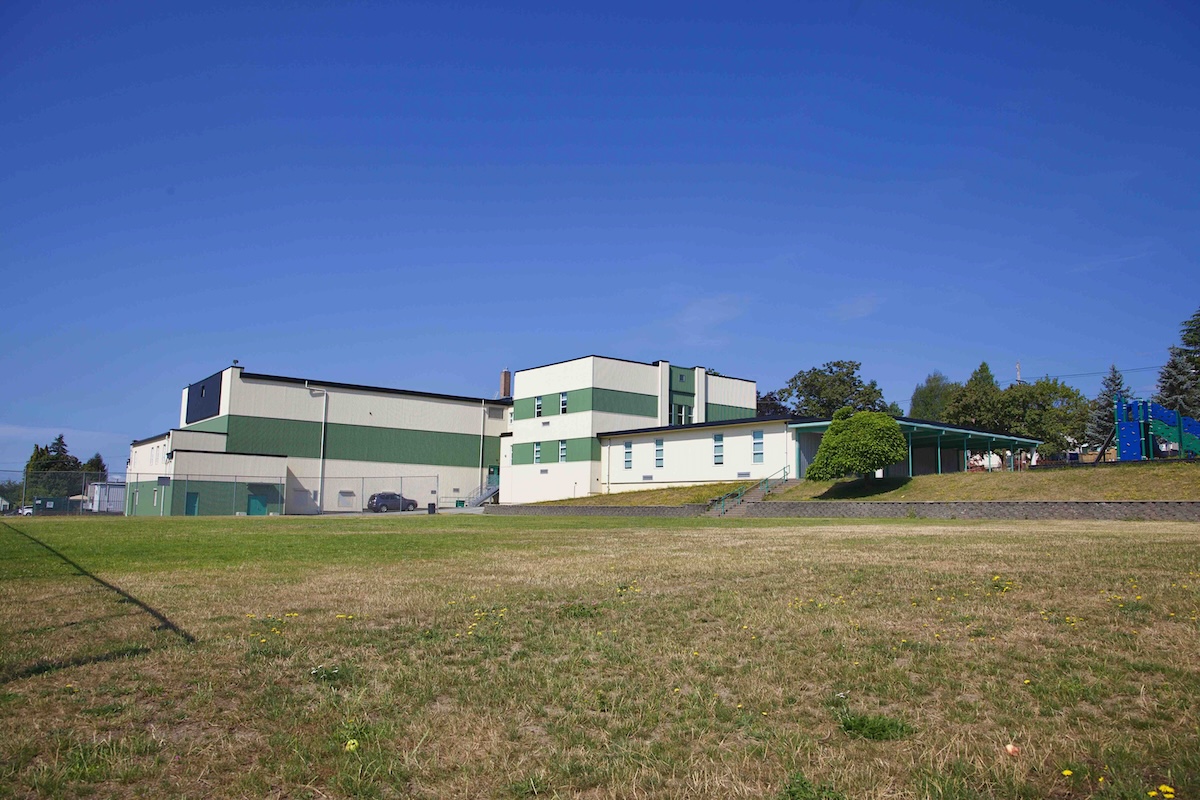
The 89-year-old elementary school sits on the largest parcel of land the district owns. So the public school board is submitting a business proposal to the province to tear down Tweedsmuir and replace it with a brand new junior and senior secondary school “super-campus” for up to 2,300 students in grades 6 to 12.
The proposal would also see the district’s three middle schools convert to elementary schools to make up for the seats lost when Tweedsmuir is gone, and then some.
The problem for parents of École Lord Tweedsmuir students is where the district proposes to temporarily move their children in September 2027.
A move towards seismic risk
If the province approves of the business proposal, École Lord Tweedsmuir staff and students will move into Stride Avenue Community School.
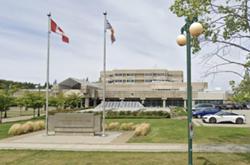
Part of the nearby Burnaby school district, Stride Avenue Community School is just 1.5 kilometres away from École Lord Tweedsmuir.
But unlike Tweedsmuir, portions of Stride Avenue Community School were previously assessed as being at the highest risk of structural failure in the event of an earthquake.
The reason the two-storey Burnaby school will be vacant is that this coming September the Stride student body is moving to a newly built, seismically safe school next door.
“From what we’ve been reading, there is more seismic activity in our area. It is a real concern if there were to be an earthquake and our kids were in that building,” said parent Jamie Owen.
“And we feel like the building hasn’t been maintained, because they weren’t planning to keep kids in that building.”
‘This is not a viable option’
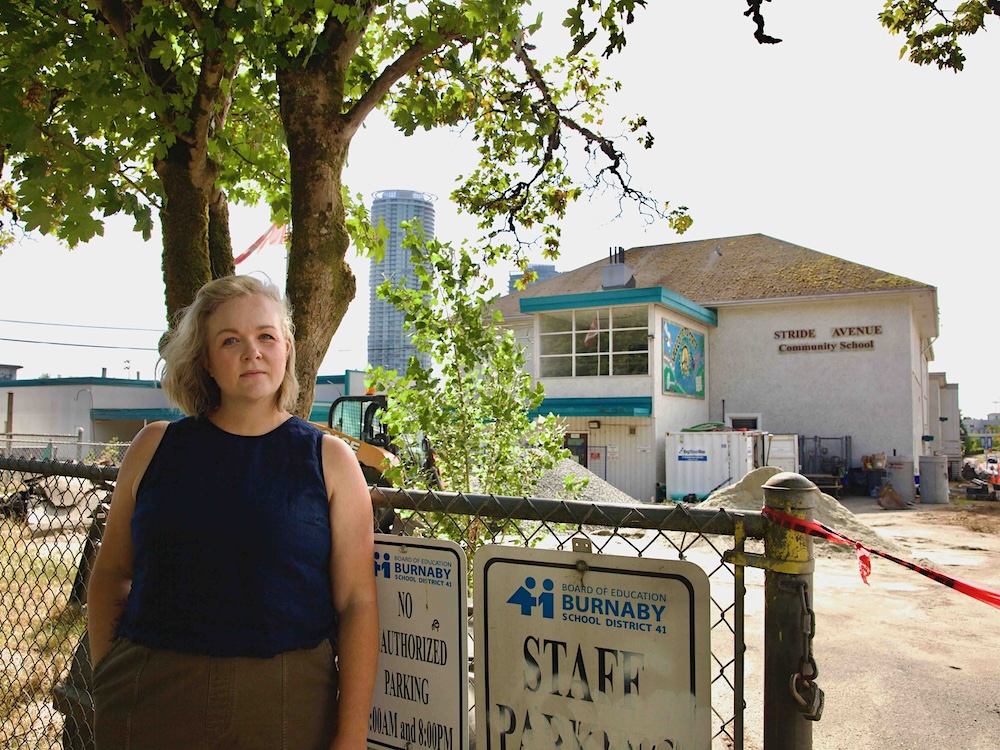
When Owen initially heard her children could be moving to Stride Avenue Community School in a little over a year, she and her family took a walk around the school property.
“My husband and I just looked around and realized this is not a viable option,” said Owen, whose two children are going into grades 1 and 3 at École Lord Tweedsmuir this fall.
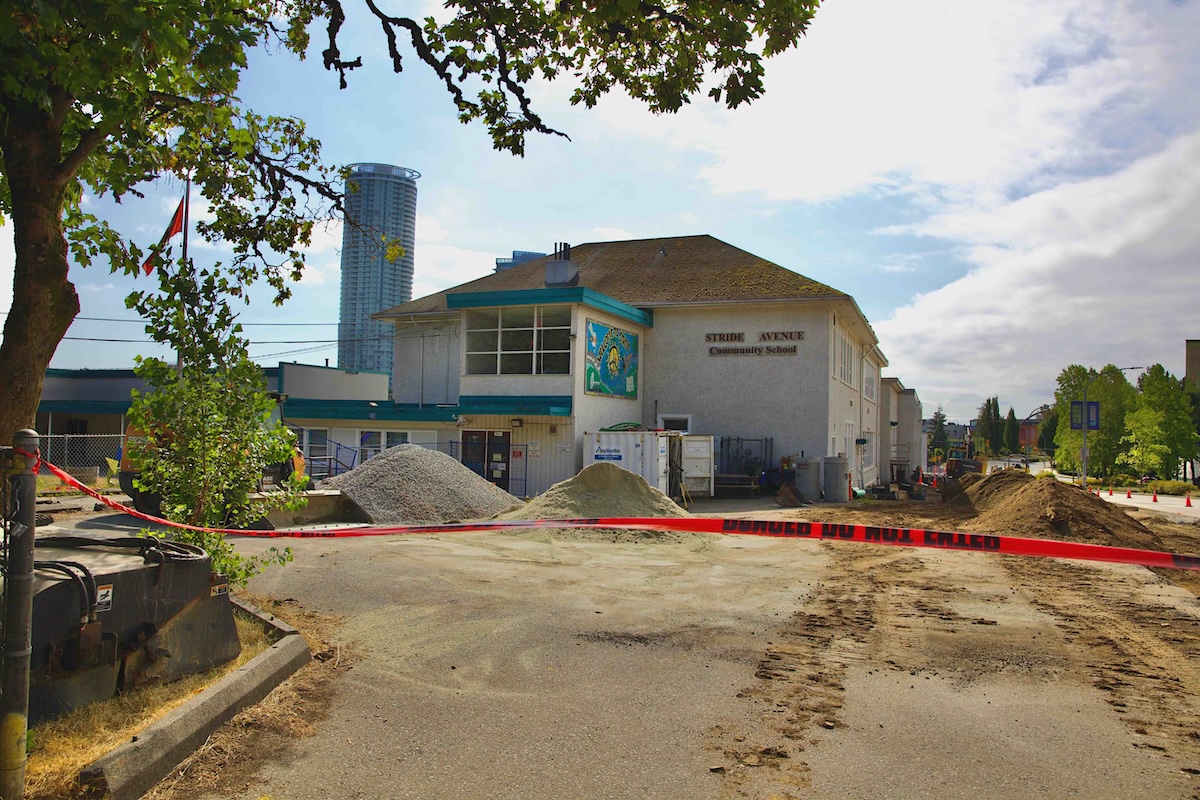
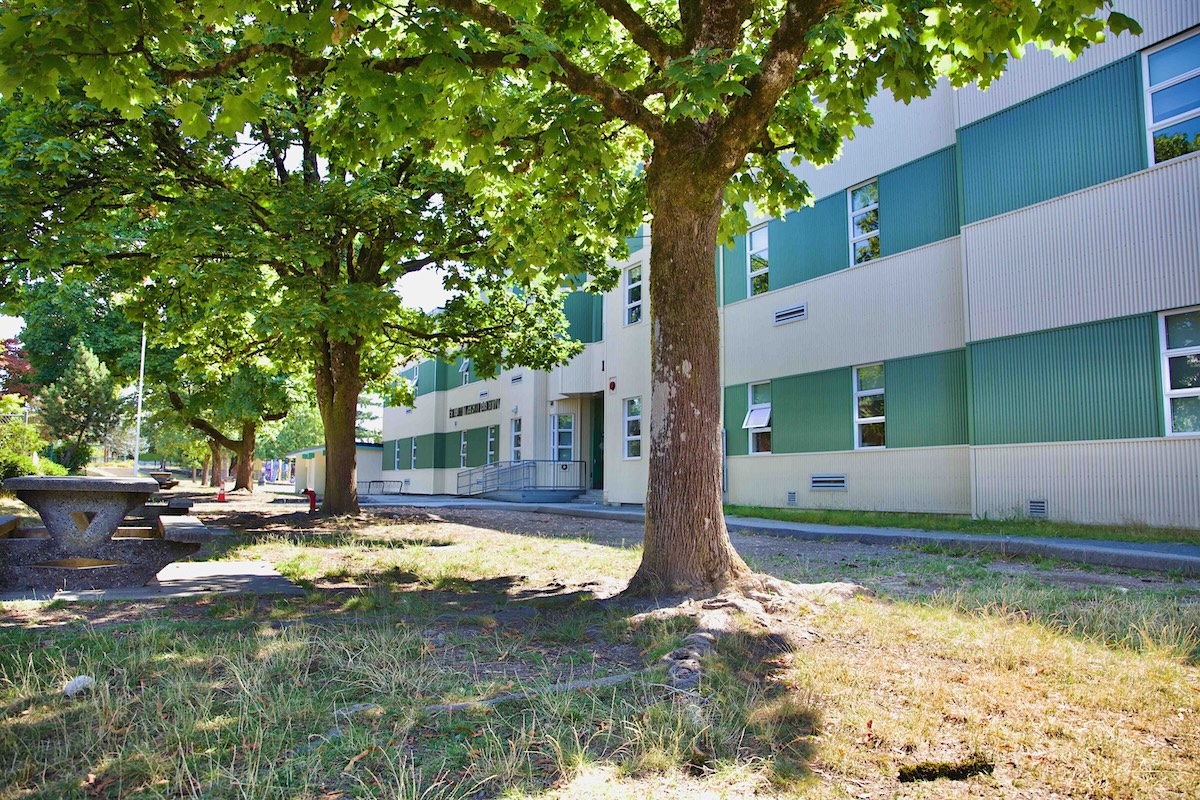
Stride Avenue Community School, which opened as a two-classroom school in 1929 before multiple additions occurred between 1949 and 1973, appeared to be in poor physical condition, she said. This included broken windows, rotting wood stair posts, and an overgrown green space littered with debris.
“Our kids looked devastated. They actually looked at me and said, ‘Can we be home-schooled instead?’” Owen said, adding that her husband initially thought Stride Avenue Community School appeared, from the outside, to be abandoned.
“I was shocked that there were kids in that building,” she said.
When The Tyee visited the school in mid-July, construction crews had cleaned up the garbage and were doing landscaping work around the new and older Stride Avenue Community School buildings. But the old wooden stairs and dated window frames remained.
The Tyee requested an interview with New Westminster school district superintendent Mark Davidson or school board chair Cheryl Sluis. Neither was made available.
Instead the district sent The Tyee a statement via email that countered Owen’s assessment of the Stride Avenue Community School building.
“We have been working closely with the province, which has confirmed that Stride Avenue Elementary is in operational order and has been actively serving students,” the statement reads.
“Furthermore, the province will make sure the school is inspected for safety ahead of the student transition from Tweedsmuir.”
The Tyee requested an interview with Education Minister Lisa Beare. But we were instead directed to the Ministry of Infrastructure, which provided an emailed statement to The Tyee confirming the safety precautions it would take before approving the move from Tweedsmuir to Stride.
“We understand there are concerns with this plan, and we want to be clear: any temporary accommodation option would only proceed if the facility meets all required safety and operational standards. No students will be learning in unsafe environments,” the statement read, adding that the ministry expects any new school construction project of this size to take from three to four years.
“We are doing this so that more students across our region have the space they need to learn and grow.”
The New Westminster school district has been sounding the alarm over overcrowded schools for years. In 2023 it was over its operating capacity by 600 students.
That same year the district predicted a steady enrolment growth to 8,807 students by 2037. It surpassed that number this past school year when over 9,600 students enrolled in the district.
Limited room to grow
In many ways, the New Westminster school district is a victim of its own success, said its former school board chair, Mark Gifford.
“As the school district goes, it’s the least amount of green space in the province,” said Gifford, who was a trustee in the district from 2014 to 2022. He was not involved in the current proposal to replace École Lord Tweedsmuir with a secondary school.
“You have the, relatively speaking, fastest student and family enrolment growth in the province and the most physical constraint from a land access standpoint,” Gifford said. “There aren’t any new areas to grow into.”
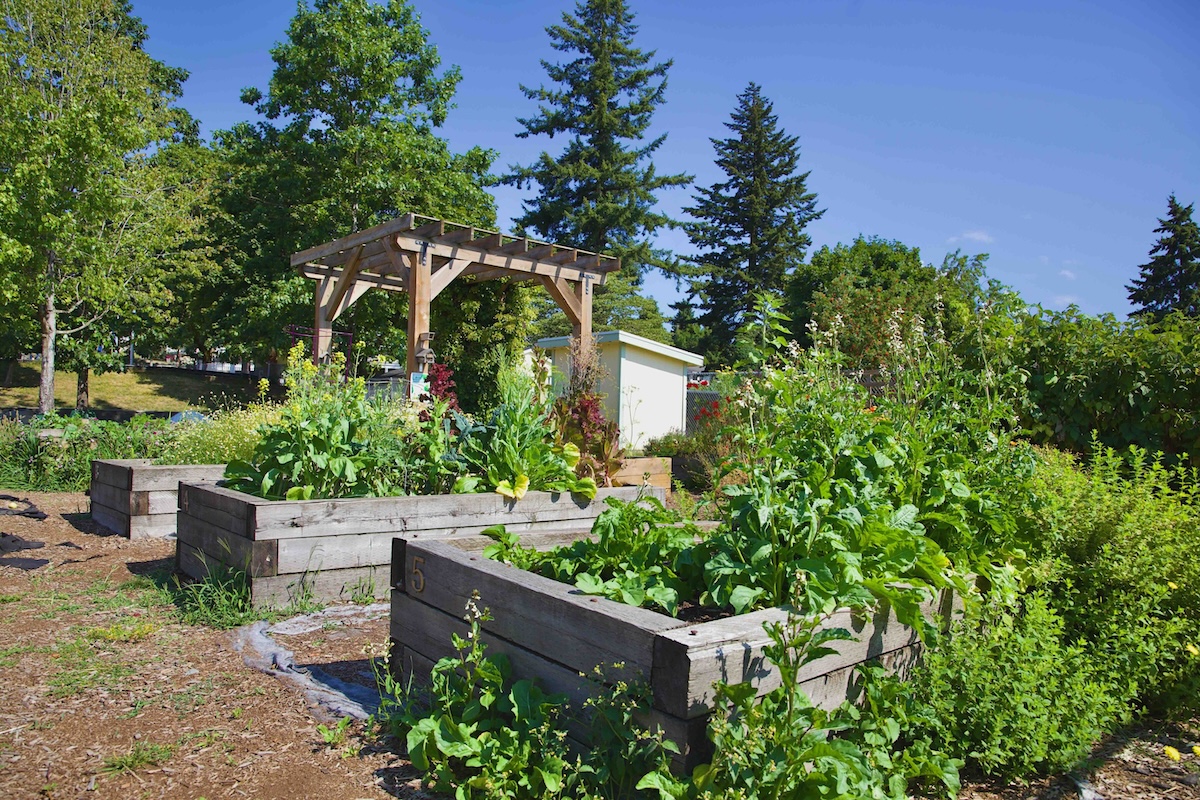
As the largest school site in the district, École Lord Tweedsmuir Elementary has plenty of green space for students, including a sports field, a sizable playground, a paved street hockey rink, an outdoor fitness circuit, a garden and several large trees offering plenty of shade. The school’s garden provides many outdoor learning opportunities for the elementary students, Owen said.
Yet the space is what makes it ideal as the site of a new Grade 6 to 12 “super-campus,” Gifford said.
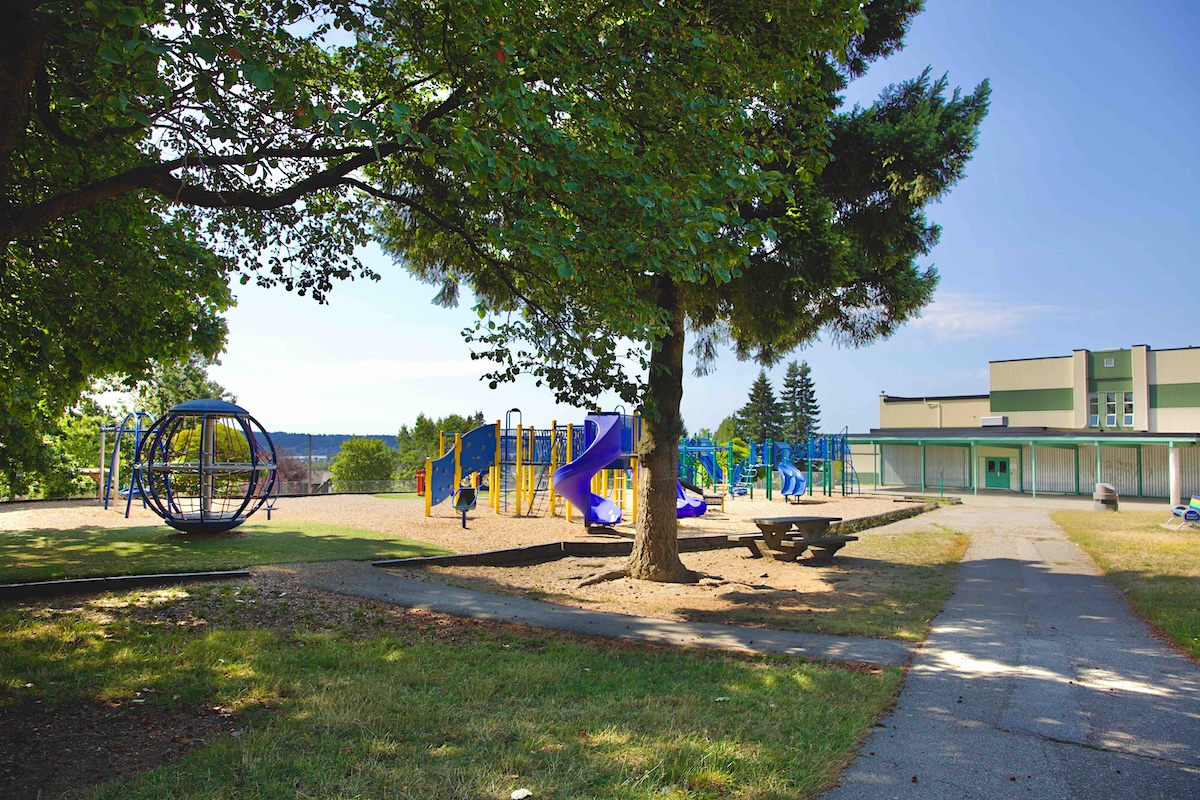
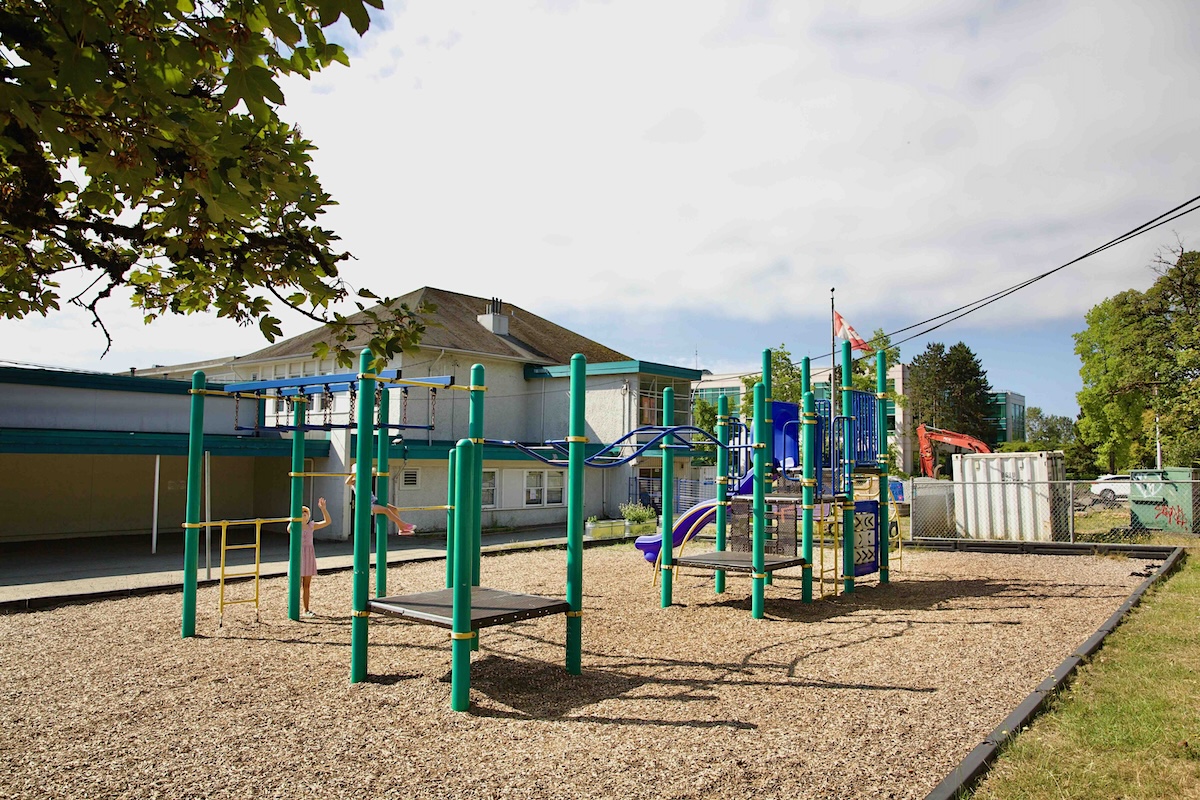
In comparison, Stride Avenue Community School lost a lot of its green space to the new school that was built on the same site. Other than a small playground, much of the school property is taken up by buildings and portable classrooms. An adjacent City of Burnaby soccer field is entirely gravel, and there are no trees offering shade.
When and if Tweedsmuir students are relocated to the site in September 2027, both elementary schools will have to share the small playground that seems to have been built with only kindergarten students in mind, Owen said.
“The playground is probably a quarter of the size of the Lord Tweedsmuir playground,” she said, adding that her understanding is the new Stride school won’t get a new playground until the old Stride building is eventually torn down.
“So for them, it doesn’t work for us to move there either. Because they won’t get a new playground as long as there are students in that building.”
The Tyee reached out to the Burnaby school district by email to confirm information we received about Stride Avenue Community School from Owen and the New Westminster school district. We did not receive a response.
A long process of seismic upgrading
Living close to a seismic fault line that is overdue for a massive earthquake, the B.C. government has been working towards ensuring all its schools are seismically safe since the early 2000s.
Out of 498 schools deemed unsafe in the event of a quake, only 233 seismic upgrade or replacement projects have been completed to date. Another 18 schools are currently in the process of being upgraded.
That leaves 247 schools in the province on the “future priorities” list. Which means the province and school districts have no current plans to ensure these seismically risky schools won’t collapse when the “big one” hits.
It is not unheard of in B.C. to keep a seismically unsafe school building open after it is replaced to house students from other schools undergoing seismic-related construction. In Vancouver, for example, the former Eric Hamber Secondary School has been kept to use as a “swing site” for this purpose.
But The Tyee is not aware of any other situation in B.C. where students were or are temporarily relocated from a seismically safe school to a seismically unsafe one. We have asked the Infrastructure Ministry to confirm this. We have not received a response to this specific question, but a ministry representative noted that they would not move students into an unsafe school.
They also noted that the plan is in its early stages and has not been approved by government, and if the plan is approved, the government will ensure the vacant school meets all required safety standards.
Unlike in Vancouver, which has 45 schools on the “future priorities” list for seismic upgrades, in New Westminster only Hume Park elementary school is still waiting for seismic upgrades.
Hume Park is the site for the district’s home learners program, which means students are only ever in the Hume building part-time at most.
The district’s current proposal for a “super-campus” includes plans to seismically upgrade Hume and convert it back into a full-time elementary school between 2036 and 2040.
A densifying city, and limited school capacity
Owen acknowledged the New Westminster school district asked the province for more space for schools before proposing to repurpose the Lord Tweedsmuir site but that the province has said no.
“I trust that the school district has been trying to meet the capacity needs. And it’s so frustrating that New West has been densifying, which is a provincial mandate,” she said. “But then we haven’t been getting the school capacity that we need in order to meet that.”
“In New Westminster, in particular, land scarcity is a major challenge. We need to work collaboratively and creatively to tackle these challenges and deliver the schools our communities need,” the Infrastructure Ministry’s email statement read.
“That’s why we’re supporting the development of a business case to explore building a two-school campus on the Lord Tweedsmuir Elementary site.”
Gifford acknowledged that spending $6 million to seismically upgrade Lord Tweedsmuir, only to propose tearing it down six years later, doesn’t look like a wise use of taxpayers’ dollars.
But compared with the $22.3 million the province provided to build the new school next to Stride Avenue Community School, Tweedsmuir’s 2020 upgrade was “relatively modest,” he said.
“They were able to do a lot of work in the summer, and it wasn’t as disruptive as a new build.”
And the new “super-campus,” which has yet to receive a public cost estimate, will be the biggest infrastructure investment the province will make to date in New Westminster, Gifford said.
“That will enable the district to meet the growth demands in the years to come.”
Nevertheless, despite the limited district space, Gifford said moving students to Stride or even tearing down École Lord Tweedsmuir may not be the direction the New Westminster school district ultimately takes.
“It’s a creative interim solution, but also they’re hoping to figure something else out. And that might relate to how a construction process works out, or some aspects of site location,” he said, adding he has been in contact with current district trustees about the issue.
During Gifford’s time on the school board, the district did something similar when it built a replacement for New Westminster Secondary next to the old one.
This allowed students to remain in their school during construction, instead of a temporary relocation to another school district.
“I’m pretty sure the district and the ministry are trying to figure out options,” he said. “Without losing the opportunity to actually meet the long-term needs of students and families in the district, where you have such space constraints.” ![[Tyee]](/design-article.thetyee.ca/ui/img/yellowblob.png)
Read more: Education, Urban Planning









Tyee Commenting Guidelines
Please note that email notifications for replies are not currently working due to a software issue which may be resolved in a future update.
Comments that violate guidelines risk being deleted, and violations may result in a temporary or permanent user ban. Maintain the spirit of good conversation to stay in the discussion and be patient with moderators. Comments are reviewed regularly but not in real time.
Do:
Do not: