



 SHARE:
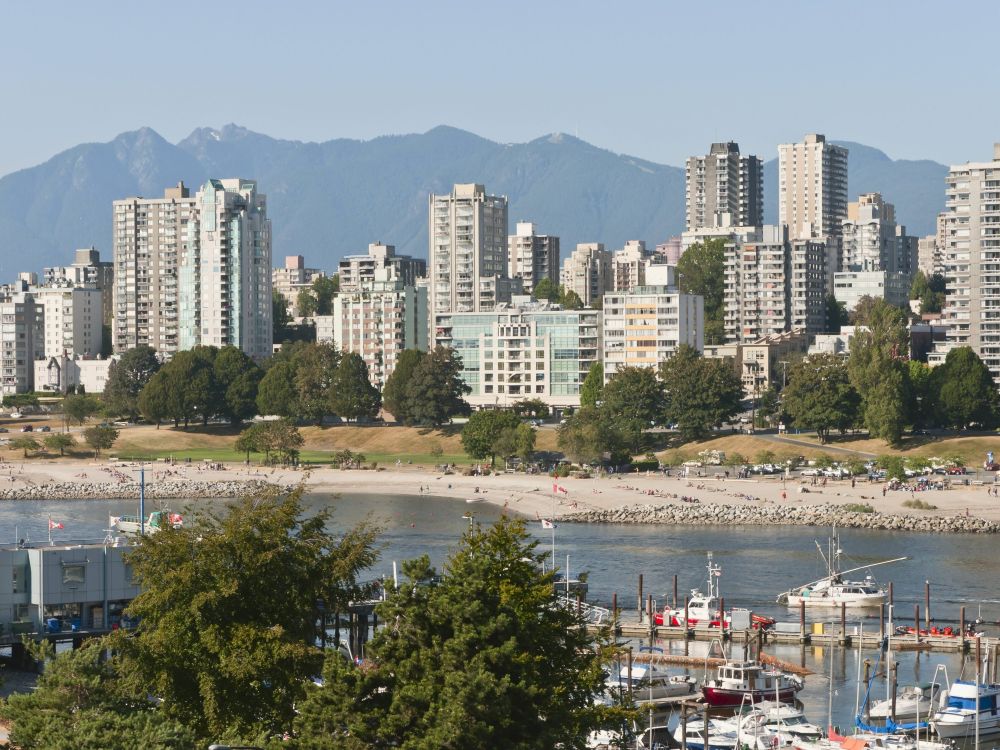
In 1957, Vancouver took a decisive turn in its urban development when city council lifted the eight-storey height limit in the West End neighbourhood on the downtown peninsula, opening the door to highrise living along English Bay.
Over the next two decades, more than 300 mid-to-highrise concrete apartment buildings went up, some rising beyond 30 storeys.
Today, these towers form the backbone of the West End, and a crucial share of downtown Vancouver’s housing supply, including much of what remains relatively affordable.
But there’s a catch. These buildings may be dangerously susceptible to damage from earthquakes. When many of these buildings were designed, seismic requirements in Canada’s national building code were rudimentary.
Since then, earthquake science and engineering have advanced significantly, and building codes have changed with them. Seen through today’s lens, many of Vancouver’s 1960s- and 1970s-era highrise apartment buildings, while code-compliant at the time of construction, are now considered seismically vulnerable.
Our recent study of typical older West End highrise concrete buildings estimated a significantly high risk of major damage if a strong earthquake were to strike the region.
Our findings confirm what many local engineers have long understood. The City of Vancouver and Natural Resources Canada have also previously highlighted that a small number of older mid- and highrise concrete buildings drives a large share of seismic risk, and are clustered downtown and in the West End neighbourhoods.
Older concrete is more vulnerable
Most vulnerable buildings in the West End were built with non-ductile reinforced concrete, a form of construction common before modern seismic detailing requirements. As a result, these buildings can experience sudden, brittle failure under strong shaking.
Modern engineering practices explicitly design concrete to be more ductile, with knowledge that has evolved over decades, to better withstand earthquakes. But older buildings predate such practices. That makes them especially vulnerable to earthquake damage.
After the 2023 earthquake in Turkey, where similar types of construction suffered severe damage, local experts in Vancouver urged mandatory seismic assessments of these older buildings.
Since then, there’s been no citywide program, but a handful of voluntary retrofits, mostly in commercial buildings where individual owners chose to act. The city, however, has been actively exploring policy options to address the complex problem of reducing seismic risk posed by these privately owned buildings.
The vulnerabilities extend beyond the buildings themselves. Most people living in the West End are renters, with many being lower-income and elderly residents. The people most reliant on these buildings often face the greatest barriers to preparing for, responding to and recovering from disasters.
These are sobering challenges faced by aging buildings and the communities that call them home. But there are ways governments can plan for a resilient future.
Lessons from elsewhere
Vancouver isn’t alone in facing this challenge. In Los Angeles, Seattle and across the Pacific in New Zealand, other cities are grappling with the risks posed by non-ductile concrete buildings.
Los Angeles has approximately 1,500 non-ductile concrete buildings. In 2015, the city adopted a mandatory program requiring owners of pre-1977 concrete buildings to assess, design and complete retrofits over a 25-year period.
Instead of broad grants or tax breaks, Los Angeles paired the mandate with a limited cost-recovery option for rent-stabilized buildings. Owners can pass up to 50 per cent of verified costs onto tenants, capped at a rent increase of $38 per month for 10 years.
Despite this program, maintaining an accurate inventory and tracking compliance has proven difficult, with outdated city records for non-ductile buildings. While the framework is clear, implementation remains a work in progress.
Financial support for retrofits
Retrofitting aging buildings is sensible but hard to sell to owners because there are no immediate benefits. It’s expensive, disruptive and tangled in split responsibilities and incentives. Owners often don’t occupy their property, and don’t feel the urgency to act.
From an owner’s perspective, a mandatory retrofit that costs millions can feel unfair. The building met the code of its day, so why should they shoulder major costs to meet moving goalposts as the building code updates? And although tenants benefit from retrofits, there is no reasonable justification for them to bear the massive cost of upgrading someone else’s property.
As building codes evolve to reflect new science, governments also have a role to play. Effective policies should be informed by the needs and concerns of all stakeholders, with financing and implementation tools that enable risk reduction.
A 2023 report from the U.S. National Institute of Building Sciences recommended risk-reduction investments, funded through incentives shared by all beneficiaries, including the government, insurers, the real estate industry, financial institutions, tenants and future owners.
The goal, ultimately, is public safety and resilient communities. Getting there means every stakeholder pulling in the same direction. Retrofits are a crucial lever, but not the only one. Clear risk communication to the people who bear them can unlock momentum, aligning market forces with transparent regulations, technical support and financing that make action feasible.
Seismic retrofit can and should accompany climate adaptation and energy retrofit. The same dollars can reduce seismic risk, enhance energy efficiency, and make them more habitable in the changing climate. Honest engagement about shared responsibility for risk in aging buildings, backed by practical, durable financing, should be at the heart of the agenda.
![[Tyee]](/design-article.thetyee.ca/ui/img/yellowblob.png)
Read more: Urban Planning











Tyee Commenting Guidelines
Please note that email notifications for replies are not currently working due to a software issue which may be resolved in a future update.
Comments that violate guidelines risk being deleted, and violations may result in a temporary or permanent user ban. Maintain the spirit of good conversation to stay in the discussion and be patient with moderators. Comments are reviewed regularly but not in real time.
Do:
Do not: