

 SHARE:

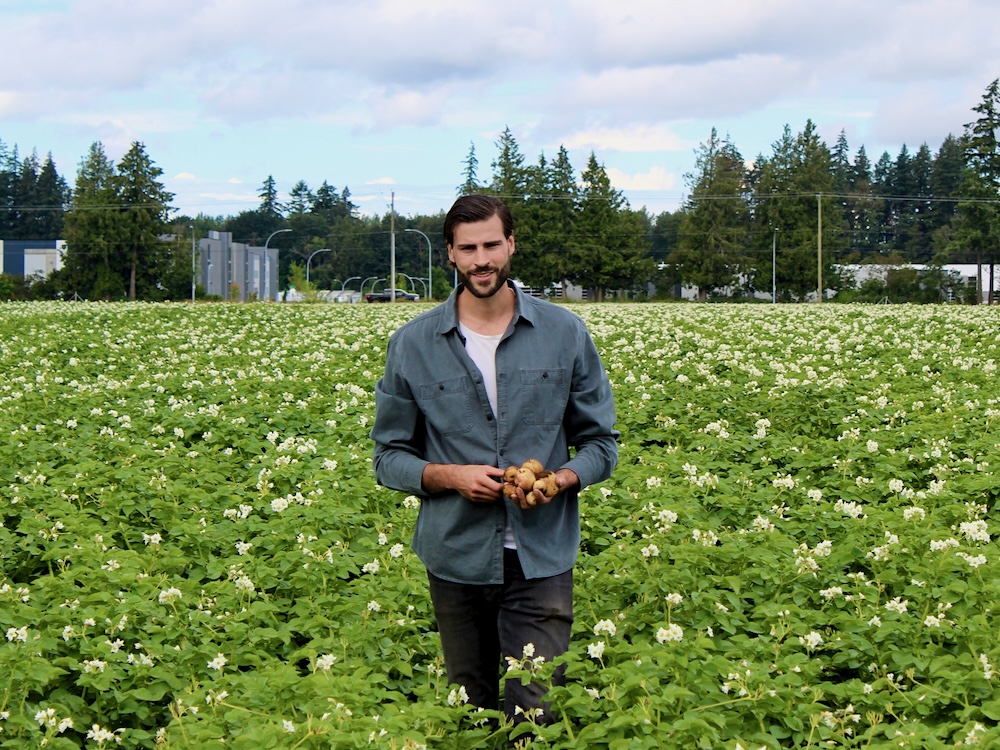
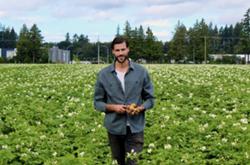
Tyler Heppell’s family farm in Surrey, B.C., is the first in Western Canada to harvest potatoes each year. The 200-acre property has sandy soil so tractors can move through wet fields that prevent other farmers from harvesting — supplying nearby grocery stores with local produce through May, June and July.
But, despite its role in the local food system, the farm is not protected under B.C.’s Agricultural Land Reserve, or ALR. Heppell, a fifth-generation farmer, and his family rent the property from the federal government.
The Heppells petitioned the Agricultural Land Commission to include the farm in the ALR — a provincial land designation that restricts non-farm uses — and it was approved.
“But the federal government said you don't have jurisdiction over our land, and you can't put the ALR on our land,” Heppell said.
For Heppell, the uncertainty around the land is part of a larger issue B.C. farmers face: agricultural land is competing with other economic interests.
“As a next-generation farmer, why would we continue to farm if all of our best land gets turned into warehouse buildings?” he said. “We need to protect the best farmland out there... because once it’s concrete, it doesn't come back.”
B.C. is in the midst of changing food-processing rules on the ALR — which accounts for 4.6 million hectares, or about five per cent, of land in the province. Food processing is allowed on the ALR if at least 50 per cent of the product is grown or raised on the farm or a member farm.
The proposed changes would decrease the 50 per cent rule to just five per cent. The remaining 95 per cent of food-processing products could come from anywhere in the world.
Heppell said speculation about food-processing changes on the ALR is already affecting local farmers.
“People are starting to buy up farmland that's close to cities, speculating that it could turn into factories,” Heppell said, adding that it increases land prices.
BC NDP Leader David Eby called the provincial election four days after the public consultation period closed on the proposed ALR changes.
At an event organized by the Greater Vancouver Board of Trade that featured the leaders of the BC NDP, the Conservative Party of BC and the BC Green Party, Eby committed to eliminating the 50 per cent food-processing rule.
“We have to have balance between the ALR’s values and making more land available for processing,” Eby said.
In their platform, the Conservatives promise to "make B.C. a world leader in food processing," including by modernizing the 50 per cent processing rule on the ALR. The party also pledged to remap the ALR using new soil and mapping technology.
If the ALR rules are changed, it will close up the market for B.C. farmers, said Kent Mullinix, director of the Institute for Sustainable Food Systems at Kwantlen Polytechnic University.
“If they wanted to encourage farming in B.C.... they would say 75 or 90 per cent of the raw product must be B.C. grown. That would create a market for B.C.,” said Mullinix, who farms in Sooke on Vancouver Island.
“Like all processors, food manufacturers will go for the low-cost producer, and that's not going to be a B.C. producer.”
In 2025, farmland cost $104,600 per acre on average in the Lower Mainland — a 7.4 per cent decrease from 2024, Farm Credit Canada reported. In the Okanagan, farmland costs an average of $40,500 per acre.
South of the border, in Washington state, farmland costs $3,800 per acre on average, according to the United States Department of Agriculture.
“Our land costs are way higher than other jurisdictions, and our labour and input costs are high. We're up further north, so the cost of production is just higher here,” Mullinix said.
The BC Agriculture Council, or BCAC, which represents more than 20,000 farm businesses, does not oppose food processing on the ALR but is concerned about the impact of the proposed changes on local farmers.
“The five per cent threshold is basically zero.... It does not meaningfully tie processing to B.C. agriculture or to the land,” said BCAC president Jennifer Woike.
Woike has farmed for more than 30 years in the Cowichan Valley, producing eggs, running a cow-calf beef operation and farming 400 acres of field crops. Her farm also includes a food-processing component because it grades eggs.
The proposed food-processing changes would tie processing to soil quality, which ranges from a high of Class 1 to a low of Class 7.
The food-processing changes would affect only the lower-classed land (classes 4 to 7). Processing would be allowed on Class 4 land if it has road access, electricity, municipal water and sewage. For Class 5 to 7 land, the five per cent rule would apply, but local products could not come from the farm with the processing facility.
“All seven classes of agricultural soils are good for farming — it’s just the kind of agriculture,” Mullinix said. “Some are better for a wider range of agricultural endeavours. Some are suited to a narrower range. It's really not accurate to say that these are not suited for agriculture.”
The BC Agriculture Council, in a submission to the province, wrote that soil classification systems are used to identify only the suitability of soils for a crop, and not the viability of other agricultural production.
“Environmental factors and deliberate actions can change the soil class of a property either up or down the scale, and so a reliance on soil class alone to determine the suitability of land for agricultural production creates substantial risk of abuse and is an inappropriate use of the system,” the BCAC wrote.
Heppell said some of his family’s best farmland used to be Class 4 and 5 soil and is now Class 2.
The BCAC wrote that it has shared that soil class is not tied to agricultural production with “great frustration” on many occasions, only for it to be “completely ignored.”
Non-farm use on the ALR
If farmers can’t meet the 50 per cent rule for food processing, they can submit a non-farm use application to the Agricultural Land Commission, or ALC.
The ALC approved 79 per cent of non-farm use applications, the commission’s 2025-26 annual report stated. Non-farm use applications made up 32 per cent of the 343 total applications the ALC received in 2025-26.
“We've been asking for a long time, what is [food] processing and do we need to define that before we even move forward?” Woike said.
“No one's really come up with that answer.”
The ALC says food processing is the storing, packing, preparing or processing of farm products.
Food processing includes packaging blueberries, processing strawberry jam or even making energy drinks, Woike said.
“[Companies] could obtain five per cent of sugar beets from somewhere in British Columbia that go in their energy drink, and then the rest of it could come from anywhere else in the world,” she said. “How is that supporting B.C. agriculture and food producers?”
A 2022 study by the Institute for Sustainable Food Systems tracked the results of approved non-farm use and subdivision applications to the ALC and assessed if the land still contributed to agriculture.
“The ALC can make a decision to allow non-farm uses on ALR land on a case-by-case basis, including food processing,” Mullinix said.
He said there was some sentiment that non-farm uses of ALR land were negatively affecting agriculture, while the purpose of the provision was to benefit it.
The study focused on Metro Vancouver and the Okanagan from 2006 to 2016 and investigated 910 parcels of land and reviewed 540 applications to the ALC. It found that only about half of the farms still contributed to agriculture.
“The conclusion was that even though these exceptions to the legislation are granted with the intent of contributing to agriculture and the food system, they don't,” Mullinix said.
The commission received 94 non-farm use and 44 subdivision applications in 2025-26.
“Once the farm business is lost, it's not easy to build more farm businesses.... If the land is lost, then there's no opportunity to build a farm business on that land,” Mullinix said.
A ‘slap in the face’ to local farmers?
Heppell is calling for more action to protect B.C. farmland, and he said the proposed food-processing rules are a step in the wrong direction.
“It's just discouraging because five per cent is such a slap in the face. It doesn't help local farmers at all, and they're trying to phrase it as if it would,” Heppell said.
The BC Greens’ platform includes restricting non-resident and investment firm ownership of farmland.
“Under the current [ALR] system, there is no restriction of foreign or corporate ownership, and no requirement to farm productive land — leading to the rapid accumulation of B.C.’s farmland by American billionaires,” BC Green Party Leader Emily Lowan said in a press release.
The party pledged to limit ownership of more than four hectares of ALR land to citizens and permanent residents, unless an owner intends to become a resident or establish themselves within four years.
Gagan Singh, a farmer in Abbotsford, said food processing can help farmers diversify their income because farming is unsustainable.
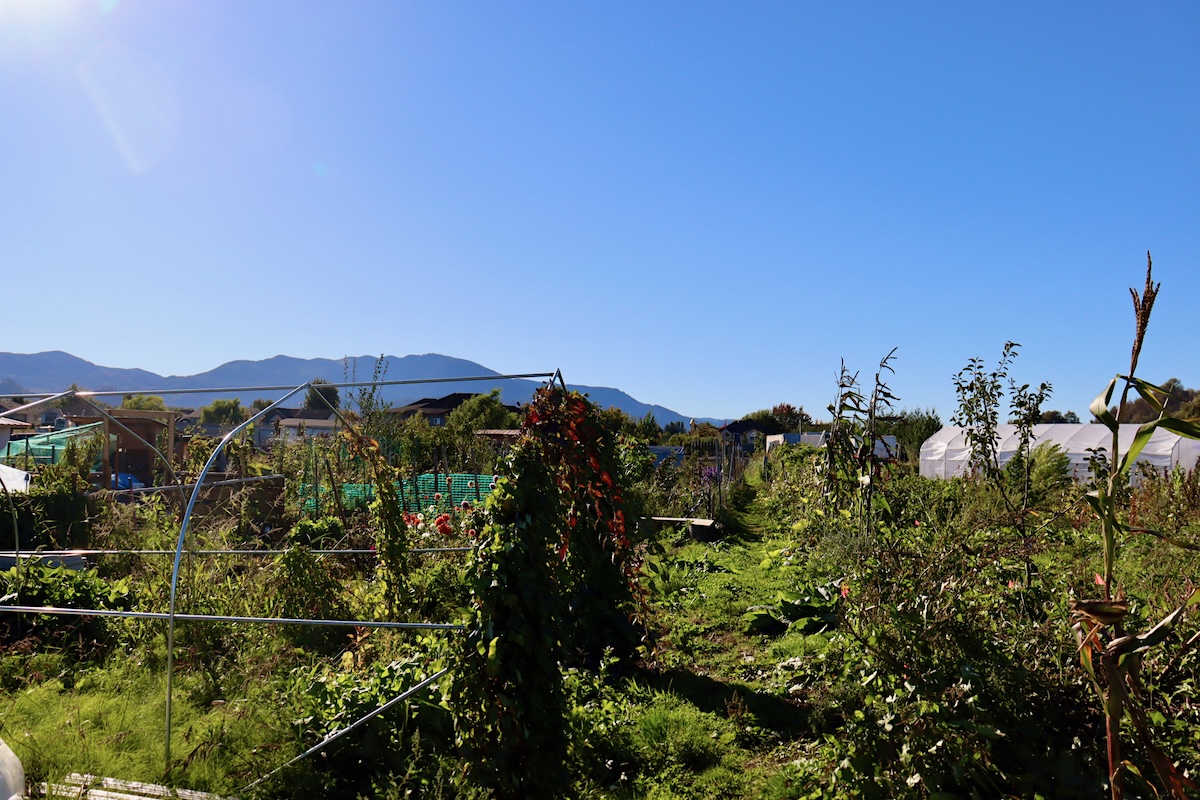
Singh’s family farm is eight acres and part of the ALR. His family purchased the land 20 years ago but it was mostly unused. The farm grows blueberries and has a warehouse on the property.
“Most of the core issues I'm seeing are that farmers are trying to innovate so they can pay their mortgage, so they don't have to rely solely on farming,” Singh said.
He said some farmers are constructing buildings, creating semi-truck parking lots and investing in agri-tourism.
But, Singh said, a lot of farmers are also concerned about processing because their product will be competing with international goods.
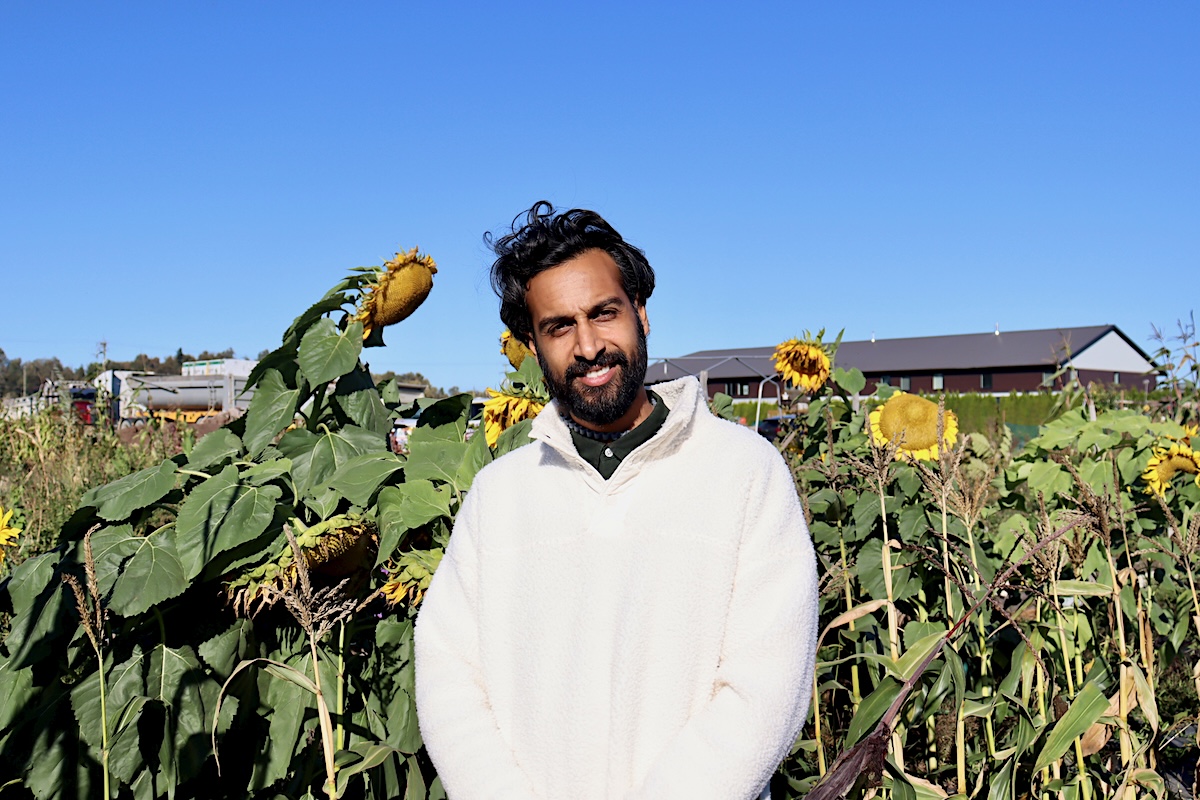
“From the processor's point of view, we have to make it sustainable. People can't necessarily afford local produce at the same time,” Singh said.
Mullinix said local food and agriculture systems allow people to connect across industries and care for the Earth.
“Localized food systems have the potential of being tremendous regional economic development drivers, and in ways that disperse the wealth creation throughout the community, instead of funnelling it into the pockets of a few transnational corporations,” Mullinix said. “Also, the provision and the consumption of very fresh, healthy fruits and vegetables and animal proteins — there's no substitute for that.”
On his farm, Heppell started Ugly Potato Day, a community initiative to provide free produce to the public, and the last event saw 37,000 people attend.
“We just beat a Guinness World Record where we gave out 600,000 pounds of food in a day, and most of that came from local farmers,” he said.
Singh launched a community group-buy program in September after holding farmers markets that were not making food cheaper for the public.
“Markets are not the way to go to get people sustainable, affordable food [because] a farmer doesn't know how many people are going to show up,” Singh said.
He held markets across the Lower Mainland, including a mobile market that travelled from Abbotsford to Surrey and Richmond in one day.
The group-buy program pools money to purchase large amounts of produce, at wholesale prices, directly from farmers.
The three-month pilot has 162 families who pitch in $100 per month, with 1,300 people on the wait-list. People then pick up the produce from Singh’s farm each week.
Singh keeps 10 per cent of money collected for operations and to keep it sustainable for him.
“Farmers are loving it. Some farmers are selling their carrots for $1 a bundle to the grocery store, but for us $1.50. What do we care? It's still $3 cheaper than the grocery store, so they're getting a better price,” Singh said.
He said the program is also creating a community with families collecting produce for the other group-buy members in their city.
“I'm trying to do the thing that makes us feel more human, and food is very universal. If we can get food to people, we will solve the community issue,” Singh said.
The future of BC farming
Farm operators decreased by nearly 10,000 in Canada, from 271,935 in 2016 to 262,455 in 2021, Statistics Canada reported.
The average farmer is 56 years old, and fewer than 25,000 farmers are under the age of 35, as of 2021.
“The next generation of farmers need a leg up,” Mullinix said. “It’s a tough row to hoe, economically, but that's no reason to diminish the ALR and allow this processing to be built that won't support B.C. farmers.”
Both Heppell and Singh tried other careers before farming.
Heppell grew up on his family’s farm and worked there from age five to 18, and left to go to university.
“I set out to never come back and went into sales for five years. Then, at 28, I decided to give farming one last chance, so I've been back for five years now,” Heppell said.
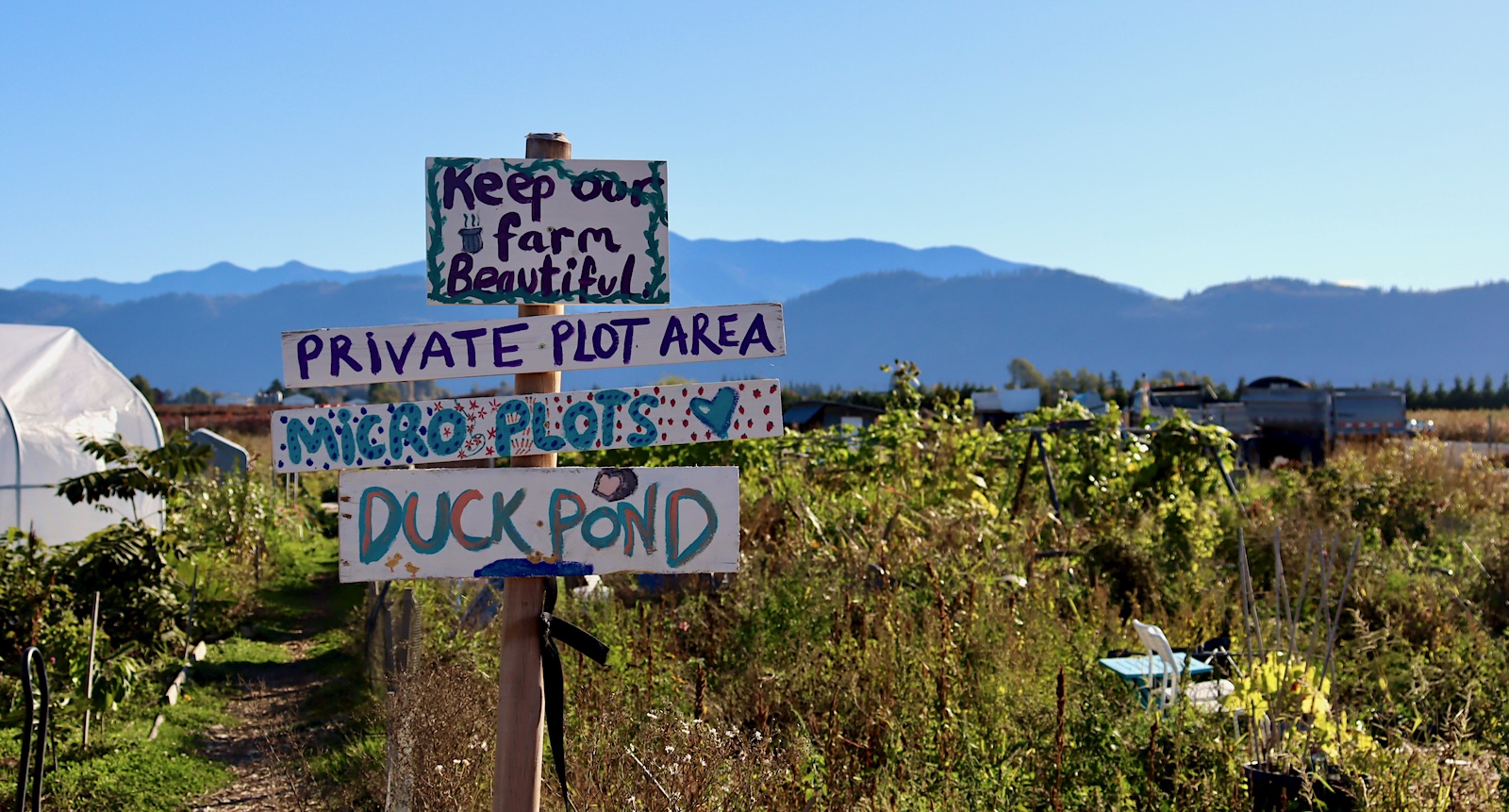
Singh is not a “traditional farmer” and has a background in marketing. Now, he has a large farming community, including about 25 microplot farmers.
People rent small plots of land, ranging from 600 square feet to a quarter of an acre, to grow produce, raise animals and learn to farm.
“I have a community of over 30 people on my farm, actively working together, and they're growing everything: cucumbers, potatoes, apples and spinach,” Singh said, adding that most grow produce but some raise livestock.
“Once one person gets a chicken, the other person gets a chicken, and they are really inspired by each other,” he said.
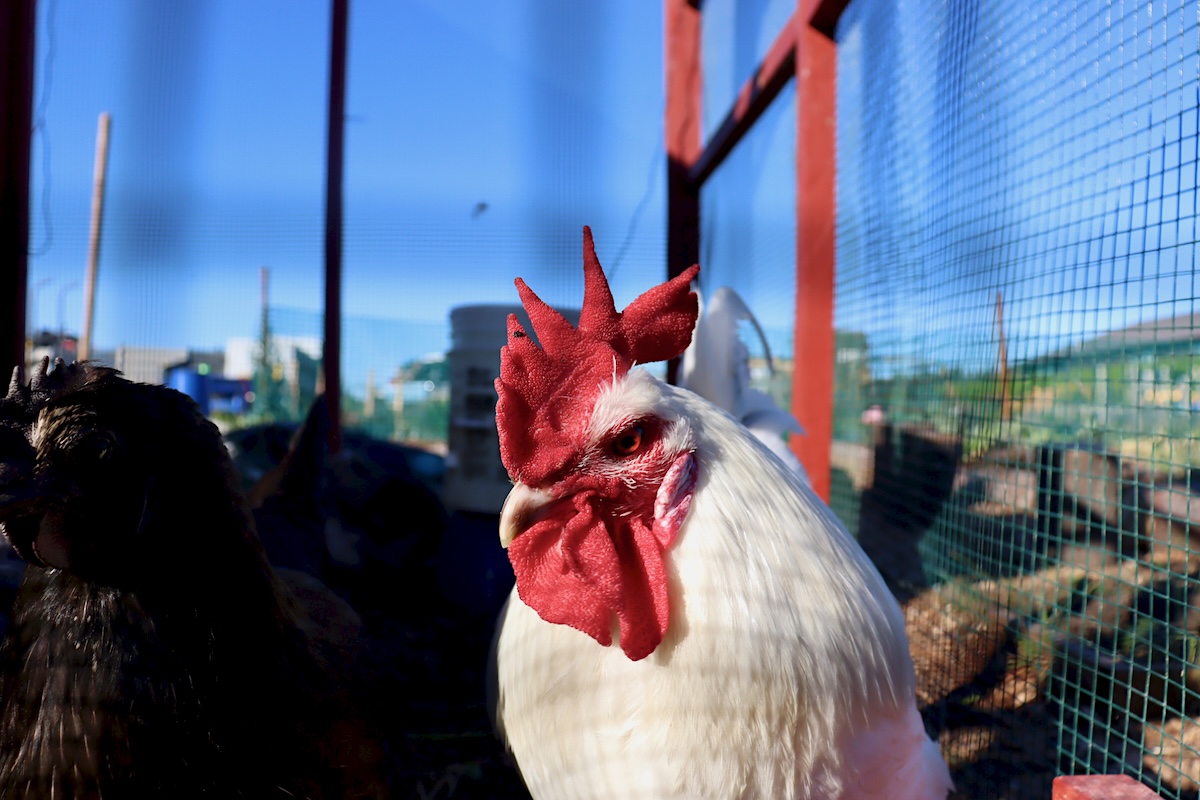
Some of those microplot farmers are also growing and starting their own farm operations, including a pig farmer who is moving to Kamloops and a Mexican corn, or maize, farmer who is working on selling to restaurants.
Silver Mendoza, along with his wife Rose and daughter Yannis, is one of the microplot farmers.
The family, who live in Abbotsford, have two rabbits on the farm — Ruffles and Bun Bun.
“In our townhouse, you don't get that much space, and some of the rules don't allow us to plant or put a rabbit cage,” Mendoza said. “We decided to get this microplot for [Yannis]. She started it, and we were like, ‘OK, we're on it.’”
The Mendozas also grow produce such as tomatoes, peas, garlic and carrots for themselves and are building a chicken coop.
“People come because they want to grow food and get a greater sense of control of their life, but what ends up happening is people are actually coming here for healing,” Singh said.
Protecting the family farm
Heppell started posting on social media to protect his family’s farm. He created a petition that has since garnered more than 90,000 signatures. He’s gained more than 1.5 million followers across his platforms.
While the family still wants their farm to be part of the ALR, they’re now pushing for a covenant so the land remains agricultural, and a five-year lease so they can invest in infrastructure.
“I'm hoping that Canada actually puts their money where their mouth is and it's not just fluff,” Heppell said.
Singh believes protecting farmland is important, while balancing permitting processes and cutting red tape — highlighting soil permits.
Some fill addition and soil removal is allowed on the ALR without applying to the Agricultural Land Commission, including berms for cranberry production, maintaining existing farm roads and constructing flood protection.
“Every farmer understands we need soil permits, but there’s too much red tape,” Singh said. “Farmers are just doing it in the hopes that they don't get caught because that's how you survive now as a farmer. Do first, ask for forgiveness later.”
Heppell wants to hear from candidates running for office in B.C. on their plans for agriculture.
“We need to actually hear what they’re going to do to protect farmland,” Heppell said.
“The government can talk about initiatives that they're going to do to cut food pricing at the grocery till, but if they don't focus on farming, it's a moot point.” 
Read more: Food, Labour + Industry, BC Election 2026, BC Politics


Tyee Commenting Guidelines
Please note that email notifications for replies are not currently working due to a software issue which may be resolved in a future update.
Comments that violate guidelines risk being deleted, and violations may result in a temporary or permanent user ban. Maintain the spirit of good conversation to stay in the discussion and be patient with moderators. Comments are reviewed regularly but not in real time.
Do:
Do not: