


 SHARE:
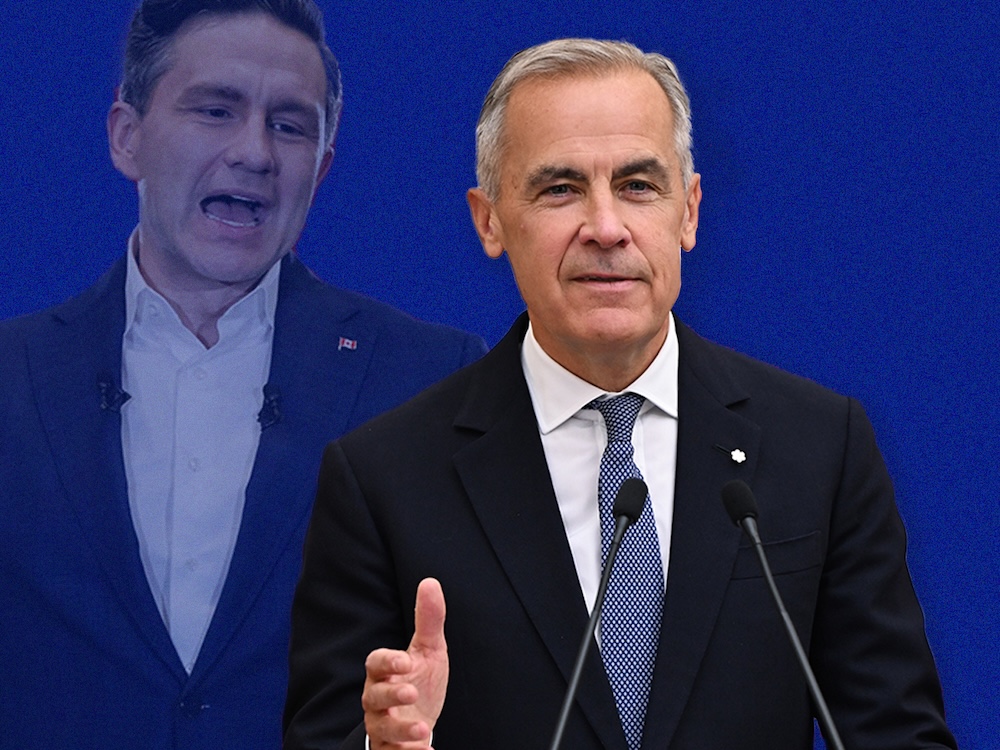
It’s an awkward time for many Canadian conservatives.
The country is led by a rich former banker who has increased military spending and expedited resource-oriented projects. He also happens to be a Liberal.
Meanwhile, the Conservative Party of Canada is struggling with defections and lagging in the polls. And last year’s election exposed a deep cultural divide between the small-government, buttoned-down conservatives of the recent past and an angrier, brasher right that views U.S. President Donald Trump’s bombastic rhetoric not as a threat but as an inspiration.
The implications for Canadians are obvious and can be traced by opinion polling, which suggests many voters who once favoured the Conservatives have now switched allegiances.
The shift has also been visible in the House of Commons, where several Conservative MPs have crossed the floor to join the Liberals.
Prime Minister Mark Carney’s policies, alongside the continued popularity of Trump with some Canadian right-wingers, have left many traditional, rule-following conservatives wrestling with questions that go to the core of their political identity and, sometimes, personal and professional relationships.
Some believe the divisions are a sideshow that can be overcome through the pursuit of shared policy goals. But others have found themselves re-evaluating longtime allegiances, casting an inquisitive eye at the new prime minister and asking themselves, “Is it OK to vote for a Liberal if I think he’s a conservative?”
To understand more, The Tyee spoke to Matt Gurney, a longtime journalist and editor with deep contacts in the conservative movement, and three politically active conservatives: a young political scientist and federal Conservative party member; a retiree who is a longtime member of both the provincial and federal Conservative parties; and a member of the B.C. legislature who left the Conservative Party of BC last year.
An evolution or a rupture?
Gurney, who runs the online commentary website The Line and was previously an editor at the National Post, said he has seen a global shift over the last two or three generations in conservative movements.
In the recent past, conservatives more or less agreed on the need for free market economics, socially conservative values, law and order, and a broadly aligned approach to geopolitics, free trade and defence, Gurney said. But those core tenets of conservatism are now frequently being tossed aside.
“What we would have thought as being conservative for the last two or three generations is currently changing, and sometimes it’s an evolution and sometimes it’s a rupture,” Gurney told The Tyee.
He pointed to U.S. Republicans’ splits over Ukraine and free trade, as well as their shifting approach towards government itself.
“It hasn’t manifested as much in Canada yet, but we’re also seeing an interest in not so much minimizing the role of government, but in capturing the role of government — where institutions are not to be eliminated or shrunk; they’re to be controlled for cultural reasons.”
Gurney said that Conservative Leader Pierre Poilievre has not represented a significant break from the approach of Stephen Harper, Erin O’Toole or Andrew Scheer. Indeed, Gurney said, both polling and the behaviour of the Liberal party suggest the public has drifted towards conservative positions on issues such as immigration, law and order and cost-of-living challenges.
But the conservative tone has also shifted, for better or worse, as social media incentivizes aggression and as a new generation of conservatives have begun to dominate discourse.
“Conservatives communicate differently today,” Gurney said. “They are more blunt, they’re aggressive, they’re in your face, they’re mocking.”
Gurney told The Tyee he isn’t sure if Trump caused the right to assume a more aggressive tone, or if his rise was a symptom of broader cultural dynamics and the influence of the internet and social media.
“I don’t know if Trump is a chicken or an egg,” he said.
But the fact that Poilievre’s rhetoric is seen to echo Trump has left him with a significant challenge in a country where the swing voters that comprise about 10 per cent of all those casting ballots don’t like what they hear from south of the border.
Gurney said the Conservatives still haven’t figured out an answer to the Donald Trump challenge. And until they do so, or until Trump stops being president, the Liberals will continue to win the votes that turn elections in Canada.
Not everyone is ready to accept the premise that Canadian conservatism is in a fundamentally new state of division, or that its populism side is particularly novel.
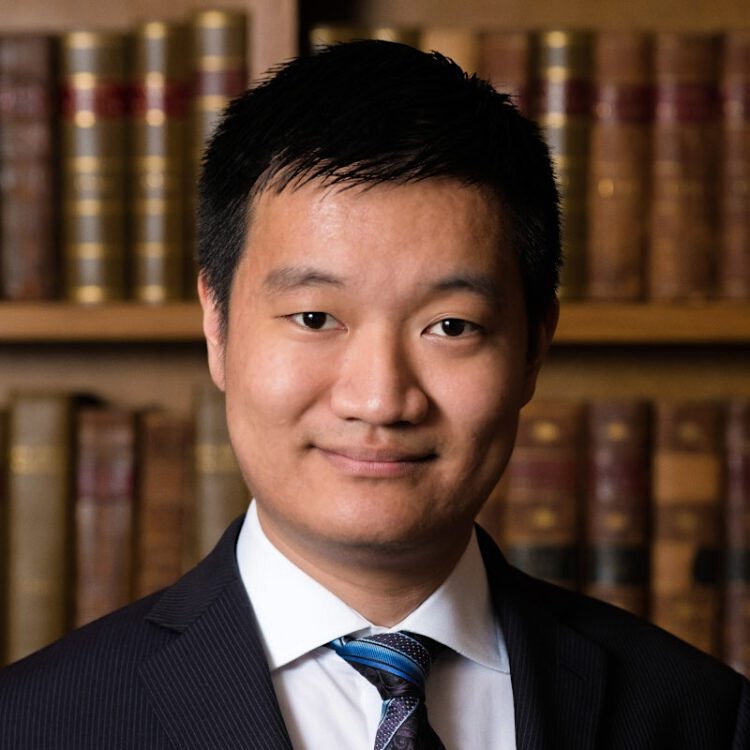
Divides within conservatism are hardly new in Canada and predate Trump by decades, says Yuan Yi Zhu, a political scientist and card-carrying member of the Conservative Party of Canada. Zhu works as a research associate at the University of British Columbia and as an international relations professor at Leiden University.
“The Canadian state, like the Canadian people, is very diverse,” Zhu said. “Conservatism in Quebec doesn’t necessarily mean the same thing in Toronto or in Alberta. Some diversity is always to be expected here, so it’s not anything new.”
Zhu noted that it’s also not new for conservatism — particularly in Western Canada — to take on a populist flavour.
That diversity of conservatism can be seen through the fracturing of parties at the federal and provincial levels, Zhu said.
Those fractures, however, have come at a heavy political cost. The Liberal party retained power for more than a decade after the Reform Party of Canada and the Bloc Québécois broke off from the Progressive Conservatives in the late 1980s and early 1990s.
The splits also took place amid massive constitutional debates about federalism, Quebec’s place in Canada and western participation in how the country was governed. Today’s conservative divisions, meanwhile, are arguably rooted less in specific policy disagreements and more in differences about how leaders should wield power in pursuit of their desired policies.
Zhu told The Tyee that while he dislikes the current coarseness of political discourse, it’s more a reflection of the age we’re living in than any particular fault of conservatives alone. The Liberal party and the broader left are hardly innocent when it comes to breaking behavioural norms, he added.
After Trump rose to power in 2016, the Conservative party sidestepped his polarizing effect by deliberately avoiding talking about him. The approach worked until, very abruptly, it didn’t.
Now conservatives like Zhu find themselves with another Liberal prime minister.
While some of Zhu’s conservative colleagues label Mark Carney a conservative, he disagrees.
“If you look at what he does, if you look at what his ministers do, if you look at who he has appointed, I don’t think much has changed,” Zhu said.
Zhu said Carney is less “destructive than Trudeau,” and he said he appreciates Carney’s gravitas and seriousness, his support of the monarchy and that he hasn’t talked about “post-national stuff,” referencing Justin Trudeau’s controversial declaration to the New York Times that Canada has no core identity.
But that’s not good enough for Zhu. He sees conservatism as an ideology that can, where necessary, bring significant change rather than simply advocate for the preservation of the status quo.
“My view of conservatism doesn’t rule out fairly big changes, where they are required,” Zhu said. Where conservatives see Canadian institutions having been captured and turned towards the pursuit of progressive policies, he said it is fair to expect significant reforms. He doesn’t see Carney doing that any time soon.
“I don’t think the average conservative really buys that Carney is somehow conservative,” he said. “I think it’s mostly a vibes thing.”
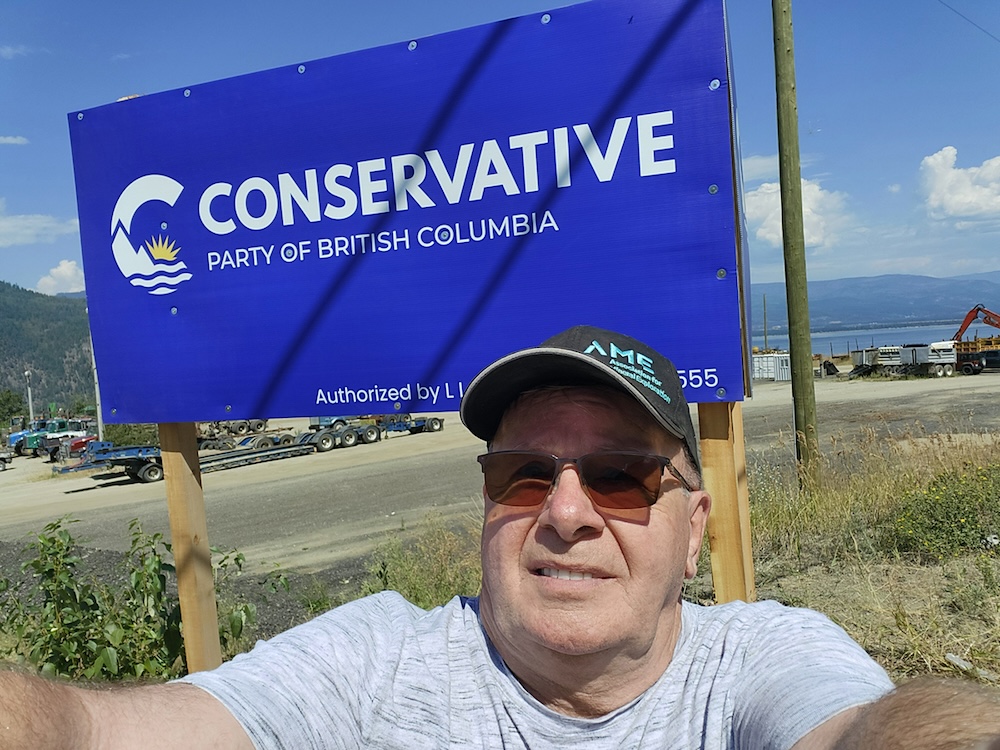
Alan Forseth is not entirely a Carney convert. But the self-described “old progressive conservative” also isn’t enamoured with his own party’s leader these days.
Forseth, a longtime federal and provincial Conservative party member, has run a politics website and Facebook page for more than a decade. A Kamloops resident who sits at a desk bracketed by stacks of vinyl records and books, Forseth pines for a more respectful era of political argumentation.
“I just absolutely hate — and I can't say that strong enough — I hate politics where somebody has to bash someone else or another party to try and get their viewpoint across,” Forseth said.
For Forseth, Trump and his style of politics evoke beleaguerment and dismay.
“He’s been a scourge on humanity and I think the positions that he takes are extremely mean-spirited,” Forseth said. “They’re extremely egotistical. He’s an authoritarian. I don’t understand how anyone who lives in Canada or British Columbia can actually think that he has had any positive impact at all on humanity.”
But he did have some idea why things seem to have shifted. Forseth said he thought COVID, the anti-Trudeau trucker convoy and emerging differences in the information people consume online accelerated political polarization.
“I think a lot of people who consume their information off the internet are getting very distorted ideas and viewpoints of what society is now [and] it takes out of the equation humanity looking out and after each other,” Forseth said.
He said that he’s generally still “more than comfortable” within the Conservative party — but the party cannot take his vote for granted.
Last election, he was “horrified” at the rhetoric coming from all parties and decided to vote for the best local candidate, whom he determined to be the Conservative.
Today, he finds himself in a politically awkward spot.
“Carney is probably closer to being a progressive conservative than he is a traditional Liberal,” Forseth said. “I don’t understand how he fits within a Liberal party when he pretty much hijacked a lot of what was Conservative policy, and it became Liberal policy.”
Progressive conservative or not, Carney’s standing as Liberal leader is a deal-breaker for Forseth. Asked if he would vote for Carney in the future, Forseth is clear: “Hell no, because who knows what their position is going to be tomorrow?”
At the same time, his enthusiasm for his own party’s leader is underwhelming.
Asked if he had considered the leadership of Pierre Poilievre, Forseth hesitated. Then hesitated some more.
“The party has had leaders that I’ve felt more strongly in line with, and leaders that’s not necessarily so,” he said eventually. “I’ll say that.”

Then there are the conservatives Carney has won over.
Amelia Boultbee says she has always considered herself a conservative, even if she didn’t join a political party until 2021, when she took out a BC Liberal membership to support Gavin Dew’s leadership campaign.
“I’ve always been very political, but I wasn’t very partisan,” Boultbee said.
An Okanagan-raised lawyer, Boultbee won a seat on Penticton’s municipal council in 2022. Two years later, she was recruited to run for the Conservative Party of BC.
Suddenly she found herself in a party that was wrestling with its own identity and its definition of what it means to be a conservative.
As the B.C. Conservatives seized the anti-NDP initiative from BC United and leader John Rustad scrambled to fill the party’s candidate list before the upcoming election, the party welcomed an awkward mix of candidates. Some were anti-NDP moderates, including former BC Liberals like Dew and locally focused first-time candidates like Boultbee. Others were strident culture warriors immersed in right-wing online spaces and driven by antagonism towards Justin Trudeau and “woke” causes.
In the lead-up to the election, the party had a common goal in ousting the NDP. But after it came just short of forming government, tensions started to tear the party apart. Many of the tensions revolved around the question of whether a party that was purportedly set up in opposition to “cancel culture” should discipline MLAs, staffers and executives who said racist things or promoted residential school denialism.
Boultbee won her seat in the legislature. But last fall, she quit the party to sit as an Independent, citing Rustad’s leadership.
Boultbee said she still remains aligned with the party on many issues. But “anything anti-LGBTQ is a no go,” she said, adding that she was uncomfortable with the “culture war” rhetoric in Conservative spaces.
“There’s a lot of rage-baiting, very little actual policy discussions taking place — or at least not enough,” she said.
Boultbee also said conservatives need to confront the inescapable presence of Trump and Trump-like rhetoric.
“I would deny that Trump is a conservative,” she said. “I think he’s his own crazy thing, but the public perception is that he’s a conservative. I don’t see conservative leadership taking a lot of really hard looks in the mirror and asking, ‘Why are we like this?’”
Boultbee said conservative parties need to re-embrace nuance and tone back aggression that stokes emotions online. It’s not effective at winning over swing voters in Canada, she said.
“Good political messaging has to be simple, it has to be true, it has to resonate,” she said. “When it goes wildly in the other direction, where it doesn’t even matter if [something] is true or not, you’re inciting all kinds of insanity.”
Boultbee said she voted for Poilievre last spring but has been won over by the new prime minister, pointing to Carney’s foreign policy statements and speech at Davos.
“The more I see of Mark Carney, the more I like him personally,” she said. “My fellow federal Conservatives are going to disown me and cancel my membership for saying that.”
But for Boultbee, Carney was the leader Poilievre and Rustad failed to be.
“Doesn’t he just seem like he’s pretty much a conservative?” she asked. ![[Tyee]](/design-article.thetyee.ca/ui/img/yellowblob.png)
Read more: Politics







Tyee Commenting Guidelines
Please note that email notifications for replies are not currently working due to a software issue which may be resolved in a future update.
Comments that violate guidelines risk being deleted, and violations may result in a temporary or permanent user ban. Maintain the spirit of good conversation to stay in the discussion and be patient with moderators. Comments are reviewed regularly but not in real time.
Do:
Do not: