


 SHARE:
B.C. has halted work on a strategy aimed at ensuring taxpayers don’t bear the massive cleanup costs arising from abandoned industrial sites and disasters like the Mount Polley mine breach.
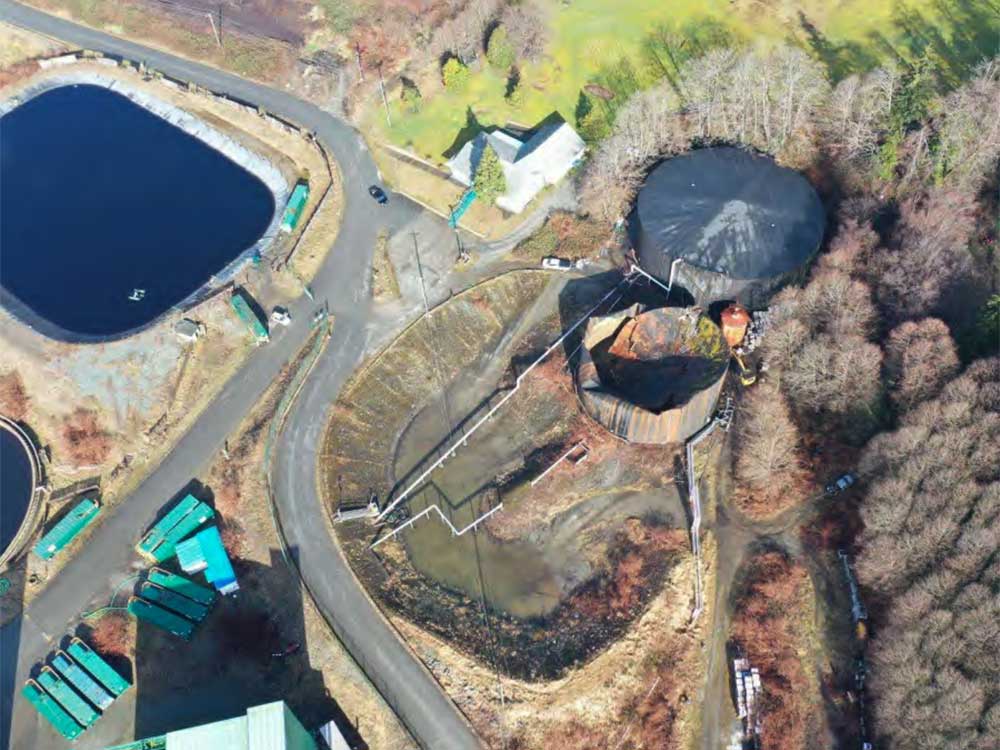
The province initiated its Public Interest Bonding Strategy amid an unfolding environmental catastrophe at the Port Alice pulp mill on northern Vancouver Island. The mill’s owners abandoned the site with toxic waste flowing directly into a sensitive estuarine inlet. After $170 million in public spending, the site remains dangerous and unstable.
Port Alice is a “symptom of a wider problem,” provincial officials admitted internally in a 2021 briefing note. The province has no powers to compel companies to close and clean up their industrial sites or to collect funds to compensate taxpayers if they go bankrupt.
The Public Interest Bonding Strategy was designed to fix that, then-environment minister George Heyman said in 2023.
“We’re long overdue to reduce unnecessary environmental cleanup liability to the government, also known as the taxpayers of British Columbia,” Heyman told the legislature as he introduced the strategy’s first legal amendments in the legislature. The amendments would allow the government to require cleanup and collect bonding insurance from industrial sites for the first time.
The new laws required regulations to take effect, but those regulations never arrived.
Last week, the province told official interveners that it had indefinitely paused the strategy. The government has not announced the pause publicly, but in an email to The Tyee, a spokesperson for the Ministry of Environment and Parks confirmed that work had been halted.
“We are not in a position to move this work forward,” the spokesperson wrote. “The decision reflects the need to balance multiple priorities and ensure the best use of public resources at this time.”
With work on the strategy halted, the problems it set out to address remain.
When companies can’t pay, taxpayers do
British Columbia’s laws for industrial cleanup can be broken into three main categories: mines, oil and gas wells, and all other industrial sites.
B.C. already has laws that compel companies to clean up mines and oil and gas wells, but there are major legal gaps when it comes to a broader segment of industrial sites that include pulp mills, gas stations and new industries like LNG facilities.
Currently, the province has no legal power to compel the owners of industrial sites like pulp mills to clean up their sites. Even after they cease operations, companies can let sites sit dormant for years. That can lead to spills and contamination, Sabrina Spencer, a business lawyer with Aird & Berlis, told The Tyee last year.
When companies go bankrupt, taxpayers end up footing the bill for any efforts to decommission pollution sources that remain on site. Even if provincial officials suspect a polluting industrial site is about to go bankrupt, they can’t require owners to close and clean up the site while they still can.
The results can be devastating: a recent report from B.C.’s auditor general found cleanup at the Port Alice mill accounted for 97 per cent of all taxpayer-funded spill response between 2016 and 2020. Six years ago, Port Alice’s spill response costs were tallied at $13.5 million. As of last year, costs have risen to $170 million.
If the province had had tools to require closure plans and recover funds from Port Alice’s owners “at the front end,” Heyman told the legislature in 2023, “the province would have had a legal basis to have recovered our costs.”
“But we don’t.”
That spring, B.C. tabled and passed its first legal amendments in the Public Interest Bonding Strategy with bipartisan support.
“I’m actually quite glad the government has seen the light and decided to put this bill back in the house for debate and possible approval,” then-BC Liberal MLA Ellis Ross said.
The bill enabled the province to require companies to create closure plans that detail issues on site and provide a plan to address them. It also would have allowed the province to compel companies to clean up their sites following a risk assessment, and enabled the government to collect funds from companies to remediate sites if they were later abandoned.
But the bill was just the first step. For it to have teeth, the province needed to craft regulations to articulate its powers. Without those regulations, B.C. still has no such powers.
It’s a particularly perilous time to leave those legal gaps open, Spencer told The Tyee last week, noting the sharp downturn in forestry operations underway, including pulp and sawmill closures across the province.
“I think we are living through an example of situations where you can have a significant number of quite old industrial facilities closing in a limited time,” she said. “Right now there is a lot of risk.”
In 2024, B.C.’s auditor general identified Port Alice as an indicator of some of the biggest shortcomings of the province’s spill response regime. An update on the government’s progress to date is expected this year.
When asked how the province intends to address problems raised by Heyman and others without the strategy’s new legal tools, the province said it has the ability to compel cleanup in the case of known contamination, such as a spill, and to collect security for specific pollutants. However, these powers don’t enable government to require the closure and decommissioning of entire industrial sites.
No funding for mining disasters
The Public Interest Bonding Strategy had committed the province to addressing other gaps too.
Its nascent second phase could have targeted unforeseen disasters at a variety of industries, including tailings pond breaches at mines.
“We were certainly told that the disaster fund will be the next thing we get to,” said Jamie Kneen, national program co-lead with MiningWatch Canada.
B.C. has already improved some liability laws governing its mining sector. In 2022, it instituted a new interim security policy that can enforce more comprehensive insurance requirements to fund eventual cleanup costs.
“The government has partly closed the liability gap,” said Kneen.
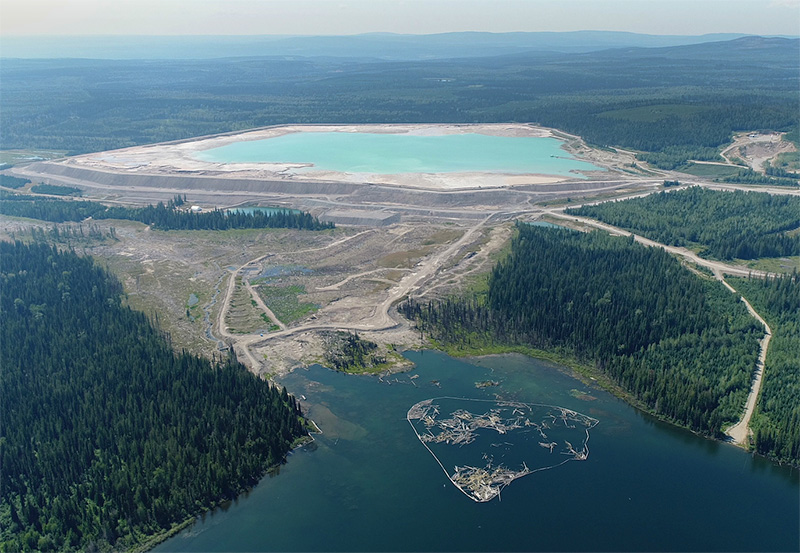
But the province still has no fund to compensate taxpayers for cleanup costs in the event of a mine disaster, like when a tailings pond at the Mount Polley mine breached its dam and spilled an estimated 25 billion litres of contaminated material into Quesnel Lake.
The province had indicated that the Public Interest Bonding Strategy’s second phase might create an industry-paid pooled fund to address disaster-related cleanup costs.
And because the strategy’s planned changes were intended to carry over into sectors like mining, Kneen hoped it would also address other gaps in the existing policies.
Kneen had hoped the strategy would require companies to more accurately account for future cleanup costs, which tend to be underestimated. He also hoped the province would reduce the time mines can spend in a limbo state known as “care and maintenance,” which allows companies to leave them sitting idle, without closure and reclamation for years and even decades under the auspices that the sites may be reopened someday.
‘Baby out with the bathwater’
The government’s decision to indefinitely pause work on the strategy comes amid a wide-ranging tonal shift on the province’s climate and environmental initiatives, many of which began in the NDP’s first years in power. Facing rising deficits and shaky geopolitics, B.C. has cut funding to its environmental programs, axed the carbon tax and let initiatives like its nascent biodiversity framework languish.
In an email to The Tyee, the Business Council of British Columbia declined to comment on B.C.’s choice to put the strategy on ice, but as an intervener to the process it had raised concerns about the prospect of new cleanup rules, warning “there could be unintended consequences that make some existing projects/activities unviable.”
Spencer said those concerns could have been accommodated by carefully crafting the regulations to target the riskiest operations while avoiding unnecessary closures.
“It seems like a ‘baby out with the bathwater’ situation,” she said.
The process included six years of work and two separate rounds of stakeholder engagements including 11 sessions with First Nations, two public comment periods, six papers and reports and legislative drafting. A Ministry of Environment spokesperson could not say how much it had spent on the Public Interest Bonding Strategy to date.
Given the strategy’s broad initial support and clear environmental benefits, Spencer was surprised to see it go.
“If I were looking at my list of initiatives to get sacrificed by the economic development altar, this was pretty much the bottom of my list,” she said. “It does make me concerned for what else is coming.”
Nikki Skuce, co-chair of the BC Mining Law Reform network and director at the conservation organization Northern Confluence, warns the province’s decision may backfire.
“British Columbians overwhelmingly support the need for the polluter to pay,” Skuce said. “By not making sure the polluter pays, you're actually creating a lack of social licence for future projects.” ![[Tyee]](/design-article.thetyee.ca/ui/img/yellowblob.png)
Read more: BC Politics, Environment









Notice about commenting changes
The Tyee’s commenting system will be moving to a new platform on Nov. 12. If you’re already a Tyee commenter you must register with the new system on or after Nov. 12 with your preferred username.More information can be found here.