


 SHARE:
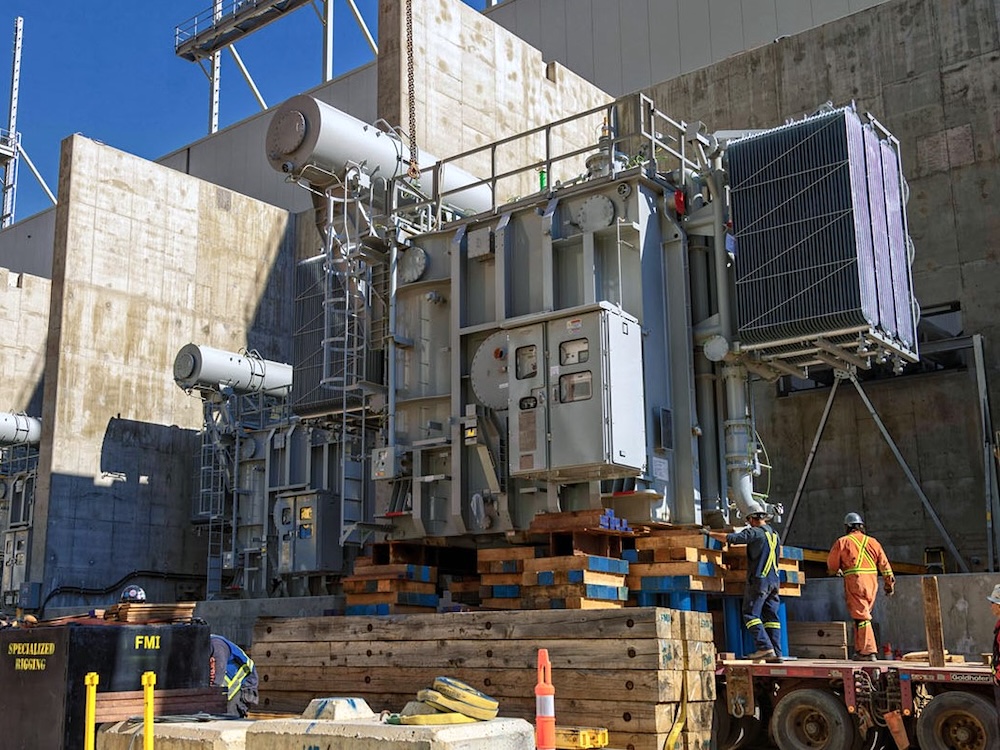
WorkSafeBC investigated the companies building two major pipelines, the LNG Canada facility and the Site C dam because inspectors suspected they were systematically and illegally preventing injured workers from getting compensation.
However, earlier this year each file was closed by an official who decided there was a lack of evidence that the companies had contravened the Workers Compensation Act.
Any time a person working for an employer gets medical treatment from a doctor or other qualified practitioner for a work-related injury or disease, the employer is legally required to report it to WorkSafeBC as soon as possible.
Failing to report it, even if the employer arranges for medical care outside the province’s public system, is against the law.
The investigations started at least two years ago and are mentioned in internal records released to The Tyee in response to a freedom of information or FOI request to the Workers’ Compensation Board, which does business as WorkSafeBC.
A summary of the agency’s active investigations into claim suppression from 2023 says it “includes project investigations related to Site C, Trans Mountain [and] Coastal GasLink.”
Site C is a dam belonging to provincial Crown corporation BC Hydro on the Peace River, the Trans Mountain heavy oil pipeline from Edmonton to Burnaby is now owned by the federal government, and TC Energy’s Coastal GasLink carries natural gas from Dawson Creek to the LNG Canada facility at Kitimat.
Details of the investigations and their outcomes were redacted from the summary document under sections of the FOI law allowing public bodies to protect advice they’ve received and information that could harm the effectiveness of investigative techniques and procedures used in law enforcement.
WorkSafeBC also withheld 20 pages of records entirely because they included legal advice.
The released sections of the records did, however, include that there were plans for additional investigation and that “all three projects share the same medical services provider, International SOS Canada Inc.” They flagged why that could be a problem: “Information obtained thus far indicates that a second-tier compensation system is in operation, circumventing WSBC [WorkSafeBC].”
Several emails between WorkSafeBC officials also mention the investigations into Site C and the two pipelines, as well as one involving LNG Canada, another project that used medical services from International SOS Canada Inc.
Headquartered in the United Kingdom, International SOS provides health and safety services to companies around the world. According to its website, clients include the majority of Fortune 500 companies.
They include “energy, mining, and infrastructure companies and government organizations that operate in remote areas or developing countries and need access to international standards of primary health care and emergency medical services.”
Asked via email about WorkSafeBC field investigators’ suspicions that International SOS Canada Inc. was involved in circumventing the province’s workers’ compensation system on major projects, a New Jersey-based spokesperson for the company’s operation in the Americas declined to comment: “International SOS is unable to provide commentary on this matter.”
A spokesperson for BC Hydro, Greg Alexis, said that WorkSafeBC did conduct an investigation related to Site C in 2023, but in May told the company there was no evidence to support any allegations of claim suppression.
“We can also confirm that WorkSafeBC accepted the on-site medical services clinic early in the project as a place of medical treatment similar to a doctor's office or walk-in medical clinic,” he said.
All contractors are expected to comply with all B.C. laws and regulations, added Alexis. “This is reinforced in every contract BC Hydro has signed with those contractors.”
He also said the rate of injuries reported on the Site C project has been low.
As of early September more than 65.5 million hours of work had been completed on the dam, and since 2015 there had been only 52 injuries that resulted in a loss of work time, he said. “For perspective, the project's lost time injury frequency in 2024 was 0.08, which is below WorkSafeBC's injury frequency rate of 1.58 for heavy construction projects in B.C.,” he said.
Put another way, just one such injury was reported at Site C that year for every 20 reported on average on similar projects.
Media contacts for the Coastal GasLink and Trans Mountain pipeline projects did not respond to messages by publication time.
A spokesperson for LNG Canada said safety is the top priority and any injuries during construction of the facility were handled properly.
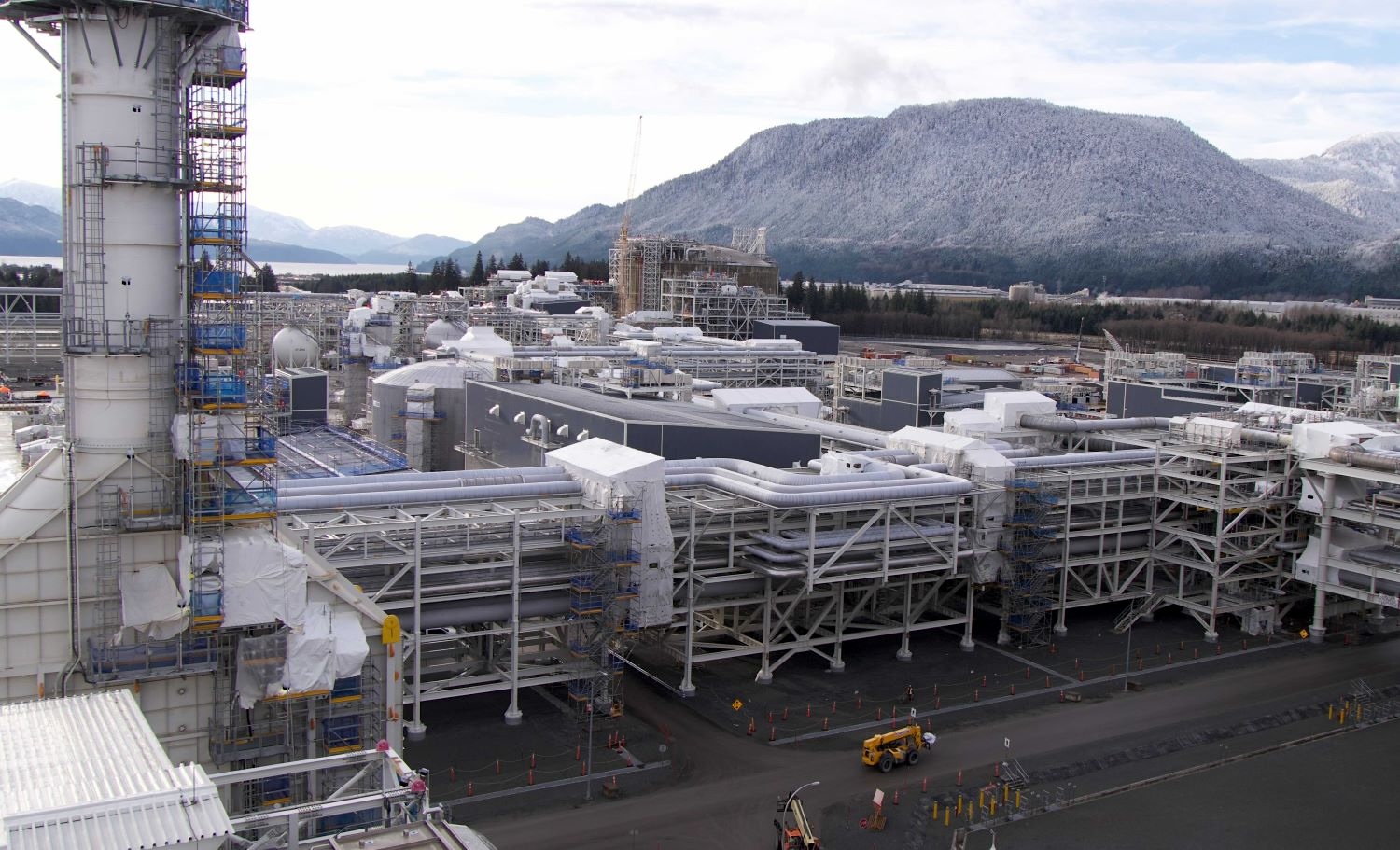
“Workers who sustain injury are provided timely access to appropriate care, and any worker compensation claims are managed in full compliance with WorkSafeBC regulations and standards,” he said. “We take these responsibilities seriously and expect the same of our contractors and subcontractors.”
Nobody from WorkSafeBC was available for an interview, but a spokesperson responded to questions by email. “WorkSafeBC takes the issue of claim suppression very seriously,” they said.
They provided copies of inspection reports from earlier this year related to the two pipelines, LNG Canada and Site C.
In all four cases the concerns raised by field investigators were reviewed by Robert de Zeeuw with WorkSafeBC’s Worker Rights and System Integrity team in Abbotsford. He considered whether they had breached the section of the Workers Compensation Act, or WCA, that prohibits claim suppression.
“I have reviewed available Field Investigations information, and my review has not found evidence to support allegations that BC Hydro or its representatives have contravened WCA 73,” he found in regard to Site C.
For each of the other three cases he used identical wording: “I have reviewed available evidence and researched the employer’s claims history. My investigation has not found evidence to support allegations the employer has contravened WCA 73.”
None of the inspection reports include any detail of the evidence de Zeeuw reviewed or the analysis to support his conclusion.
In each case, the inspection was initiated, conducted and reported on in a single day. Both the Coastal GasLink (Ledcor Pipeline Ltd.) and the Trans Mountain (Kiewit TMEP Corp. and Bonatti Canada Construction Inc.) ones were completed the same day, May 26 this year. Each included a review of first-aid records.
The one for BC Hydro’s Site C was initiated and completed on May 5 and the LNG Canada (Fluor Canada Ltd.) one was done June 10.
In all four reports the amount of time for inspection and travel have been redacted under the section of B.C.’s FOI law requiring public bodies to withhold information when releasing it would be an unreasonable invasion of a third party’s privacy. In none of the cases, the reports say, were workers on site during the inspections.
With regard to International SOS Canada Inc.’s role, WorkSafeBC’s spokesperson said that large infrastructure projects often use external medical providers to provide services on site to avoid overloading the local medical system. They deal with both work-related and non-work-related injuries.
“On the projects, WorkSafeBC reviewed how their on-site medical services aligned with reporting obligations under the Workers Compensation Act,” they said. “Following a claim suppression investigation, WorkSafeBC found no evidence of claim suppression under Section 73 of the Workers Compensation Act. WorkSafeBC focused on educating employers about their obligations to report all work-related injuries.”
Paul Petrie, a former vice-chair of the Workers’ Compensation Appeal Tribunal who has advocated for more attention to claim suppression, said he understood why investigators would want to take a close look at the services provided by International SOS.
“Where the board finds evidence of pre-screening of workplace injuries to determine which ones should be reported to the board, it raises a serious question of potential claim suppression,” he said.
It’s positive that WorkSafeBC is investigating claim suppression allegations, but it needs to report its findings in more detail so that it’s clear the investigations were thorough, said Petrie. “It would be good for the Workers’ Compensation Board to show the scope of the investigation and the reasons for their conclusion.”
Petrie said a low injury rate could indicate one of two things — either the employer has an effective prevention program, or there could be underreporting of work injuries and illegal claim suppression activities.
If the employer has achieved a low injury rate through best practices, WorkSafeBC should document those practices and share them with other employers in the industry sector, Petrie said. If there is evidence of underreporting and claim suppression, then the board must take effective enforcement measures to protect injured workers and ensure fairness for other employers who comply with reporting requirements.
Petrie has estimated that at least 45,000 workplace injuries went unreported in B.C. in 2019.
The system covers 2.7 million British Columbians working for some 281,000 employers, and last year it received reports of more than 142,000 injuries.
WorkSafeBC is funded by premiums paid by employers and investment income. Sometimes referred to as the “historic compromise,” both employees and employers give up the right to sue in exchange for a predictable no-fault method of determining how much support an injured worker is entitled to.
Under the experience rating system WorkSafeBC has used since the 1980s, employers’ premiums are reduced when their workplaces have few claims, which Petrie has argued creates a strong financial incentive to suppress claims.
Another incentive for contractors to keep the number of claims down is that it looks good when they are bidding to work on a project.
When claims are suppressed, the cost of supporting injured workers ends up getting shifted to the workers themselves, their families and the general public through the taxpayer-funded Medical Services Plan and other income support programs outside WorkSafeBC’s accident fund, Petrie said.
If there are complications from the injury in the future, or the worker ends up with a permanent disability because of it, they are unlikely to get support from WorkSafeBC if there was no record made of the injury when it happened, he added.
Claim suppression also leaves the WorkSafeBC system with incomplete records of workplace injuries in the province, he said, and gives employers who fail to follow the law a competitive advantage over ones that file properly.
More needs to be done to address the problem, Petrie said. “So far I’m not aware of any substantial steps the board has taken to rein in the extensive underreporting and claim suppression in B.C.,” he said.
“Based on my research, underreporting of workplace injuries is extensive and illegal claim suppression is also very common, particularly in some industries.”
In some jurisdictions, the workers’ compensation systems have begun using data analytics to flag anomalies such as unusually low rates of injury and to identify workplaces for investigation.
In B.C., a spokesperson said, WorkSafeBC has developed a tool to help identify potential claim suppression and it is now in the final stages of approval.
A pilot is planned “to test both the accuracy of the tool and the effectiveness of inspection approaches,” they said. If it goes well the agency will begin using the tool proactively in 2026 “to better identify and address areas where claim suppression may be occurring.”
The WorkSafeBC records obtained through FOI show there were 24 active investigations into claim suppression in 2023 and another 19 waiting for assignment. The contents of a section titled “Resource Challenges” was redacted, but another said WorkSafeBC had the equivalent of 4.5 full-time field investigators working on the files with support from an operations analyst and a co-op student.
WorkSafeBC has since created a new Worker Rights and System Integrity team, established in 2024, which now has six officers dedicated to investigating claim suppression. Previously field inspectors handled claim suppression investigations.
The new team “was mandated to review and enhance the existing end-to-end claim suppression investigation process,” WorkSafeBC’s spokesperson said, adding they work in alignment with 350 prevention officers working across the province.
In 2024 the Worker Rights and System Integrity team conducted 60 claim suppression investigations, 14 of which found there had been violations. “A total of 10 warning letters were sent to employers in 2024, and four administrative penalties were imposed, totalling approximately $27,000,” they said. ![[Tyee]](/design-article.thetyee.ca/ui/img/yellowblob.png)
Read more: Rights + Justice, Labour + Industry








Tyee Commenting Guidelines
Please note that email notifications for replies are not currently working due to a software issue which may be resolved in a future update.
Comments that violate guidelines risk being deleted, and violations may result in a temporary or permanent user ban. Maintain the spirit of good conversation to stay in the discussion and be patient with moderators. Comments are reviewed regularly but not in real time.
Do:
Do not: