

 SHARE:
In November 2021, record-breaking precipitation fell across British Columbia over two days, unleashing floods and landslides on a scale the province wasn’t prepared for. Thousands were forced from their homes. Five people died when a slide swept across Highway 99.
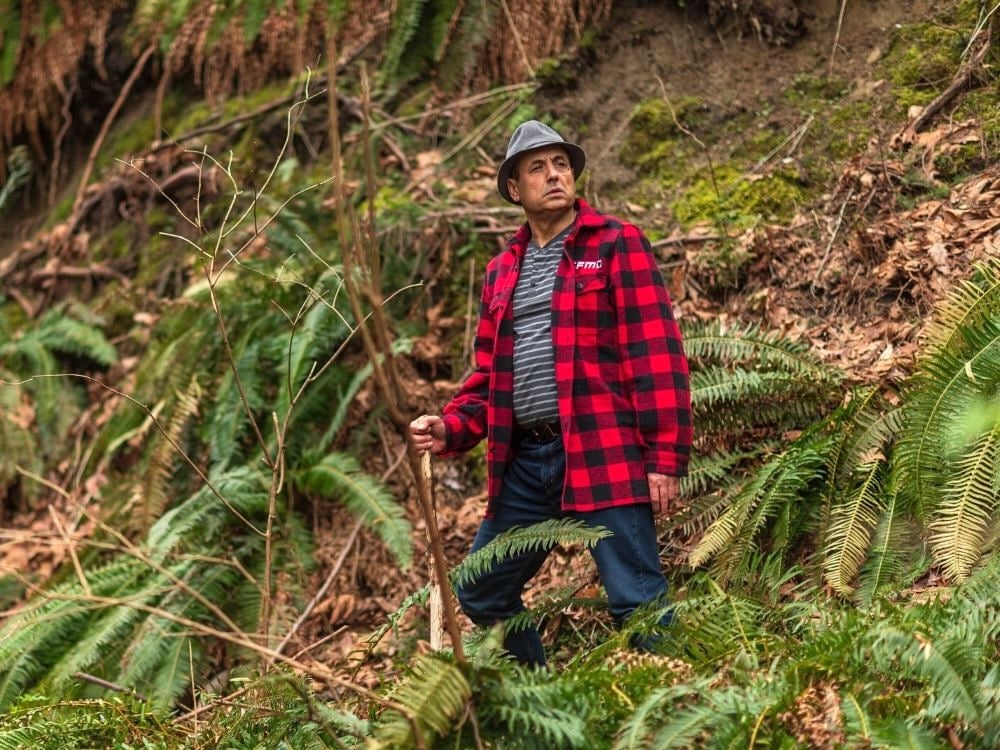
For Younes Alila, a University of British Columbia professor of forest hydrology — the science of how forest disturbances affect water flows — the disaster came as no surprise.
For more than a decade, his research had shown how B.C.’s land management choices, especially the approval of large-scale forest clearcuts, can amplify floods and landslides. He published in peer-reviewed journals, warned officials and spoke to anyone willing to listen. Few did.
But one group tapping his knowledge includes residents of Grand Forks, B.C., who in 2020 launched a class-action lawsuit accusing the province and logging companies of faulty practices causing massive flooding in their community in 2018. Alila serves as an expert in the court case.
If British Columbians want to dent the trend towards ever more devastating flooding, Alila argues, the province needs to change the way it grows and harvests trees.
‘What drives me is the science’
Offering an easy smile, Alila meets me in UBC’s wood-framed forestry building, his office lined with diplomas and stacked with papers and charts. “What drives me is the science,” he says. “I never had feelings for the environment. I didn’t grow up with mountain views. Some people like to paint me as an environmental activist, but I’m not.”
He grew up in urban Tunisia, dreaming of becoming a civil engineer. At 19, he arrived in Ottawa on a student visa to pursue that goal. During his bachelor’s degree, he became captivated by the depth of knowledge of his hydrology professors and decided to specialize in the field. “I did my master’s and PhD thesis on water resources and particularly the signs of extremes in the form of floods, droughts, precipitation and storms, because these professors were models to me,” he recalls.
The rest, he says, was destiny. After a few years working as a civil engineer in hydrology for Metro Vancouver, he felt the pull back to his true passions: scientific research and teaching. At the time, a position had opened in UBC’s forestry faculty.
Alila laughs. “I recall vividly my interview for the position at UBC. I was asked, ‘Have you ever walked in the forest? Have you ever been out there?’ I said, ‘No, but I do walk in big trunk sewers underground, carrying a huge amount of street runoff and sewage.’ So I said, ‘If I walk in the sewers, a walk on a forest road will be a breeze.’ And I got hired.”
Alila’s career unfolded against a backdrop of policy change in the late 1990s. Under pressure from environmental groups, several provinces updated their land management laws, particularly in forestry. In B.C., the Forest Practices Code introduced a new regulatory framework.
Alila describes it as a golden era for forestry research. “At the time, the NDP government had set up a robust research funding program called Forest Renewal, which reinvested a portion of the funds collected from the forestry industry into research and development aimed at better regenerating the forest for the future.”
After reviewing hundreds of years of forestry literature and testing existing methods in the field, Alila noticed the results didn’t match what he was seeing. Drawing on his civil engineering background, he developed a new methodology to study the cumulative impact of logging on flood frequency.
In 2009 he published a landmark paper, co-written with graduate students Piotr K. Kuraś and Markus Schnorbus and B.C. government hydrologist Robert Hudson, that challenged peers to shift course by paying close attention to the cumulative stresses that build up in watersheds and shape water flows over time.
Conventional flood models, Alila argues, are built on assumptions too narrow to capture the full picture. For instance, they might predict that cutting a certain percentage of trees, along with a given amount of snowfall and rain, will produce a flood of a specific size within a set time frame.
“What this method doesn’t show,” Alila says, “is whether the flood severity was worsened by the wildfire that burned the summer before, or by decades of clearcut logging. Nor can it tell you if it was a one-in-100-year event, or a one-in-10-year event.”
Yet this conventional approach has long shaped forestry practices. “This misguided science is convenient,” Alila explains, because it allows forests to be clear cut for profit rather than managed sustainably. “Clearcutting is the cheapest way for the industry to log and boost profit, but it comes at a great cost to the public.”
In contrast, Alila calls for a research model that examines the drivers of extreme events and estimates their probability — an approach already standard in climate science for understanding how human activity drives global warming, and how a warming climate intensifies extreme weather.
His method seeks to account for overlapping factors. Using this framework, he spent years with his graduate students investigating how watersheds respond over time to various disturbances, calculating the likelihood that these disturbances will trigger floods, droughts and landslides.
His expertise has been called upon in court cases in B.C., examining the effects of logging on watersheds, and his findings are published in renowned peer-reviewed journals.
Forests as water storage
In his classroom, Alila tells students that a watershed acts to temporarily hold runoff from rain or snowmelt before releasing it slowly into rivers and streams. “The forest owes its hydrological power to its landscape features,” he emphasizes.
“It’s all about storage, and we could use it to our advantage to prevent floods. The more landscape features that promote storage, the more mitigated and well behaved the hydrology is. If we disturb the land through urbanization, logging, mining or building dikes, we suppress these storages. Logging, in particular, removes a major storage of water.”
Trees play a crucial role in this process. To grow, trees pump water from the ground through their roots, relieving the soil of excess moisture — a process called evapotranspiration. They also shade the snow, slowing its melt and increasing infiltration into the soil, which reduces runoff. “Coniferous trees can intercept 30 to 35 per cent of snowfall. Cut the trees, and snow melts faster and in greater volume.”
Alila highlights the role of terrain. Snow melts more evenly on flat land than in mountainous regions, where sun exposure varies. That means removing forests on flatter areas can increase the risk of floods.
“We could use the landscape features to our advantage in the way we manage the forest,” he adds, “but is anybody listening? No. As a result, we’re at bigger risk of massive flash floods, like what happened in Texas.”
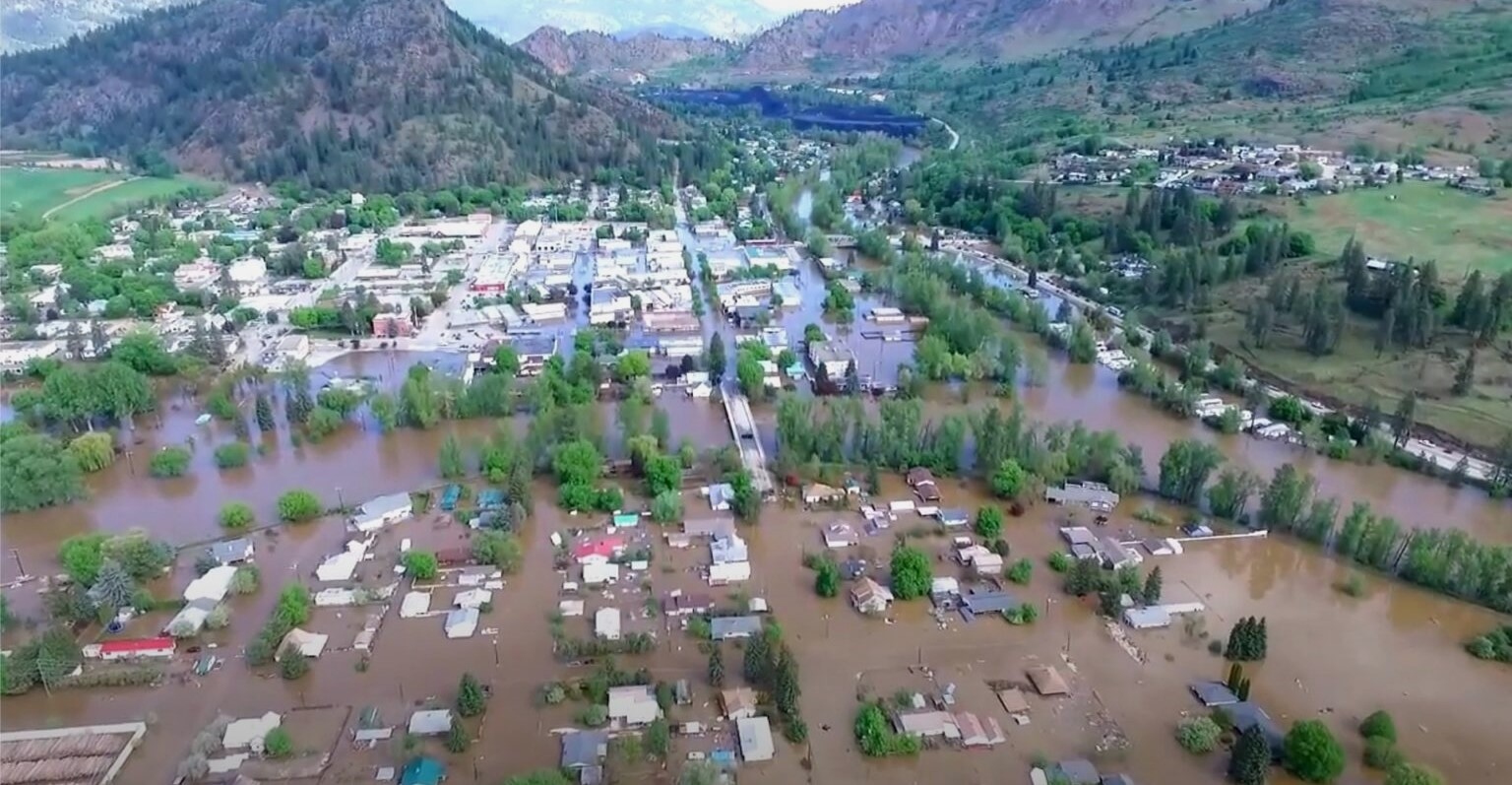
Alila and his colleagues have shown that clear cutting forests amplifies floods. In some cases, both the size and frequency of floods can jump by as much as 18 times, with watersheds left vulnerable for decades.
A study north of Kamloops drives the point home. Clearcut logging 21 per cent of the trees pushed average flood sizes up 38 per cent in a larger watershed and 84 per cent in a smaller one. Events that used to happen once every few decades are now coming around far more often.
The picture, Alila observes, is complicated. Flood risk isn’t just about how much forest is removed. It also depends on where the logging happens, the shape and size of the watershed, the slope and sun exposure, and the presence of natural storage areas like lakes.
‘Talk and log’
Asked what the solution is, Alila doesn’t hesitate.
“I'm not asking to stop forestry. I'm asking for the management of the forest to be guided by the peer-reviewed science, in order to minimize the effects on the environment and on downstream communities. Continuing to do business as usual, especially in a changing climate, is causing havoc. The government needs to stop listening only to the industry and start catering to the public.”
Alila suggests solutions such as thinning instead of clearcutting and carefully selecting which trees to harvest.
When it comes to working with government, he has learned that research often hits a wall. “We welcome the new research, we appreciate it and we’re taking it into consideration,” he says wryly, repeating the government’s familiar line. “Here, we call it ‘talk and log.’ They continue to do business the same way they always have, even today.”
An example, he adds, is the Old Growth Technical Advisory Panel. The panel recommended deferring logging in old-growth forests until better management practices were in place — yet five years later, forest protection NGOs are still reporting old-growth logging.
“We are losing our most powerful protection against increased flood risk, droughts and landslides as a result of clearcut logging. And although the government requires the industry to replant trees after logging, coniferous trees grow extremely slowly.
“It's going to take 60 to 80 years for the new forest to regain its hydrologic functionality — that is, its ability to store water – which means communities in British Columbia are going to be living with a heightened risk of floods and landslides for decades to come.”
Employing the probabilistic model he developed with his graduate students, Alila says it’s now possible to identify which parts of B.C. are most exposed to extreme floods — a tool that could help communities and policymakers anticipate disaster rather than just react to it.
The question is whether politicians and policymakers will respond to the opportunity to learn and shift how forestry is done in B.C.
In 2024, Alila appeared in the documentary Trouble in the Headwaters, which examines the disastrous events in Grand Forks. His role as an expert in the resulting court case has caused him to believe that motivating better government decision-making may now come only through such class-action lawsuits.
“As an engineer, I am mandated by my profession’s code of ethics to protect the public and the environment in my decision-making, and this is exactly what I’m doing. I’m speaking out, and I think all professionals should speak out,” he says.
“But I find myself in shattered territories. It often feels lonely. I hope a few out there will see light through what I’m saying, and that things will change.” ![[Tyee]](/design-article.thetyee.ca/ui/img/yellowblob.png)
Read more: Science + Tech, Environment





Tyee Commenting Guidelines
Please note that email notifications for replies are not currently working due to a software issue which may be resolved in a future update.
Comments that violate guidelines risk being deleted, and violations may result in a temporary or permanent user ban. Maintain the spirit of good conversation to stay in the discussion and be patient with moderators. Comments are reviewed regularly but not in real time.
Do:
Do not: