

 SHARE:
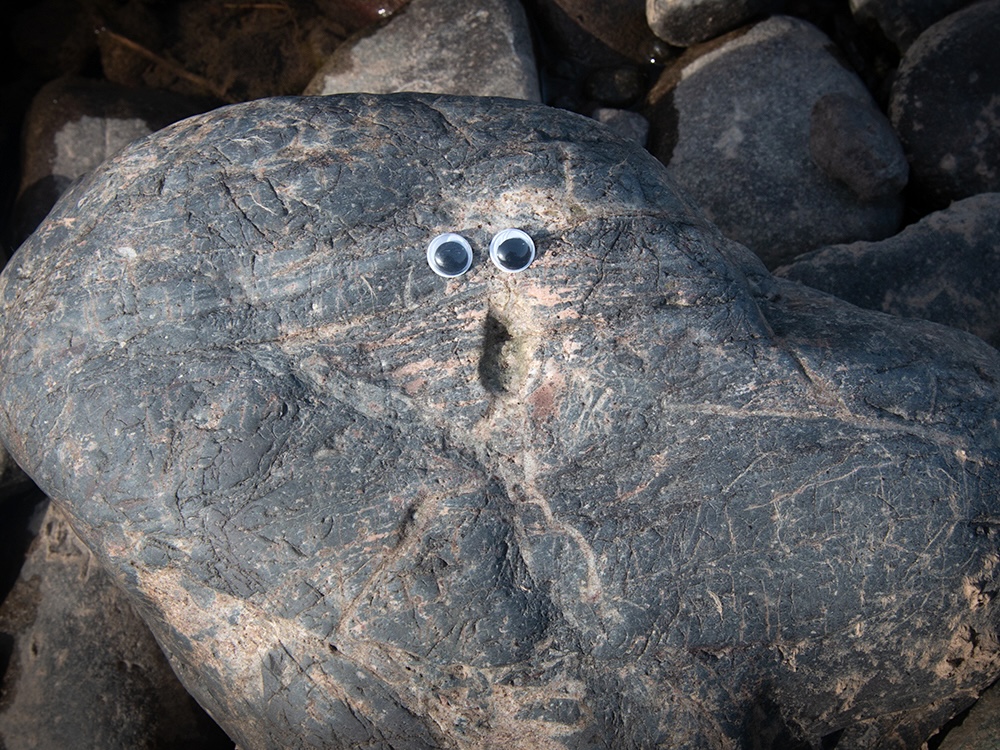
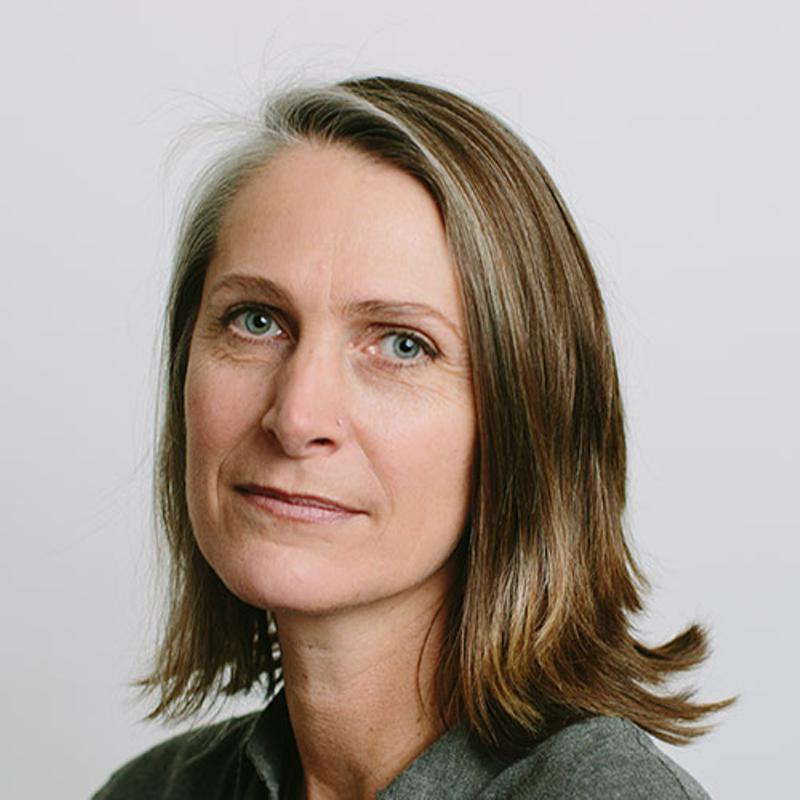
Bruce Downing is a geology buff.
The Langley-based geoscientist writes, teaches and consults about geology. His favourite conversation opener is to ask, “What have you done today that did not involve a mineral?” He even has geology-themed dad jokes up his sleeve, ready to engage curious public school students on the topic.
“What’s that rock? It’s called leaverite. Leaverite? Yup, leave ’er right there!” he chuckles over a call with The Tyee.
But when it comes to a column that Downing recently penned for the Canadian Mining Journal, which argues that minerals should be considered for legal personhood, he’s very serious.
“It’s not a joke,” Downing says. “It’s to bring up a point that, really, who has the rights for mineral deposits?”
The question is one that the courts have grappled with for years.
In 2021, the Gitxaała Nation sued the province over unauthorized mining on its traditional territory. It argued that B.C.’s Mineral Tenure Act, which allowed online mineral claim staking with the click of a button, breached the nation’s Charter rights and was inconsistent with the Declaration on the Rights of Indigenous Peoples Act.
In its 2023 decision, the B.C. Supreme Court found that the mineral claim staking system breached the Crown’s duty to consult First Nations. Earlier this year, the province announced changes meant to bring the system into alignment with the court ruling and Indigenous rights.
But Downing’s July 24 column, which he co-authored with University of Saskatchewan associate professor Donna Beneteau, argues that it’s the resource industry that should have first dibs on minerals — for the purpose of mining them.
“Minerals form the foundation of all sustainable life and are essential to human existence,” the authors write. “Given their foundational role, we propose that mineral deposits be granted legal recognition and the special status of personhood. Mineral deposits should be recognized for their right to be mined and processed to provide sustenance to mankind.”
The Tyee invited experts, including Downing and Beneteau, to weigh in. They agreed on one thing: the column raises an interesting discussion about legal personhood and its application to the natural world.
“It’s a fun piece of rhetoric,” says Alan Young, whose consulting business, Materials Efficiency Research Group, advises NGOs, governments and Indigenous groups on sustainable resource development.
“It’s just a completely wrong-headed use of the term.”
Young describes the argument as “a direct inversion of the concept” of legal personhood. Rather than recognize the inherent value of nature, it puts minerals in the service of humans.
He says the argument is akin to saying that rivers — which have successfully won legal personhood in places like Quebec and New Zealand — have the right to be dammed rather than the right to exist for their own inherent and holistic values.
“This is very plainly and boldly premised on the question of human utility, not inherent value,” he says. “Does a vein of copper dream about being a Tesla battery? I don’t think so.”
The story of legal personhood
Britannica defines legal personhood as an aspect of western law that allows “a person, corporation or other entity to engage in the legal system.” The concept, which includes corporate personhood, something recognized in Canadian law, dates back to ancient Rome.
The rights of non-human entities have also imbued Indigenous law for millennia, says Kelsey Leonard, an assistant professor at the University of Waterloo and the Canada Research Chair in Indigenous waters, climate and sustainability.
Often referred to as “kin,” Indigenous laws recognize natural elements — anything from whales to plants to mountains — as having rights, she says.
In her 2019 TEDWomen talk, Leonard asks: If corporations can be considered persons, why not nature?
“As an Indigenous legal scholar and scientist, I believe that many of these water injustices are the result of the western legal system’s failure to recognize the legal personhood of water,” Leonard, who is from the Shinnecock Nation, says about the fight to protect the Great Lakes.
“We must ask ourselves, Who is justice for? Humanity alone?”
The movement to give legal standing to natural elements, known as the rights of nature, “reverses the accepted hierarchy of humanity's domination over nature,” Leonard says.
“As human beings on this planet, we are not superior to other beings,” she says. Instead, “we can appoint guardians for the water that ensure the water’s rights are always protected [and] work to dismantle exclusive property ownership over water.”
The rights granted through legal personhood “stem from the jurisdiction that it's being applied to,” Leonard explains in an interview with The Tyee. They are grounded in local laws and traditions.
In 2021, the Magpie River — or Muteshekau-shipu in the Innu language — was granted legal personhood by the Innu Council of Ekuanitshit and the Quebec municipality of Minganie. The river is represented by guardians appointed by the First Nation and the municipality.
A case has also been made for granting legal personhood to the Fraser River estuary here in B.C.
But Leonard says Downing’s argument lacks legal basis and misses the underlying premise of legal personhood.
“If you look at any legal personhood law, whether it be for substantiating a natural being or corporation, it’s never written to be in service of someone else,” she says.
Who speaks for the trees?
The concept of custodianship raises obvious questions about who has the right to represent natural elements, like rivers and glaciers.
It’s something that Laura Spitz has thought about a lot.
The professor and dean in the University of Calgary’s faculty of law co-authored a paper, “Nature’s Personhood and Property’s Virtues,” which examined the concept of legal personhood in the case of Colorado River Ecosystem v. State of Colorado.
She says that, in common law, everything essentially falls into two categories: person or property. That division can put opposing interests in competition with each other, “as opposed to a holistic understanding of ourselves as part of the world,” she says.
“The argument that the rights-of-nature folks make is that we’ve failed to protect the environment while nature has been in the property category,” she says. “So, if we move it from the property category to the person category, we have a better chance at preserving the natural world, broadly conceived.”
Spitz doesn’t agree.
“But not because I don’t support their goals,” she adds. “And not because I don’t understand nature as something we’re a part of, rather than something we ‘own.’”
Instead, she believes that “really robust” laws already exist to protect nature. But humans, despite awareness of our destructive habits, still fail when it comes to protecting the natural environment — we already have the legal tools, but we don’t use them.
“I don’t even think it has served human beings especially well,” she says about legal personhood.
Even though Spitz doesn’t think legal personhood is the right approach overall, she says there have been examples where the legal argument has resulted in “an elegant solution.”
Spitz points to New Zealand, where an agreement between the government and a Māori tribe settled the country’s longest-running litigation.
The Te Awa Tupua (Whanganui River Claims Settlement) Act granted legal personhood to the Whanganui River, or Te Awa Tupua to the local Whanganui Iwi, and legislated a co-management guardianship model where the New Zealand government and the Māori tribe would work together for the river’s best interest.
Spitz says the agreement worked because “it resolved a land claim dispute by granting the disputed territory its own personhood and establishing a co-management framework.”
“It was an elegant settlement, because nobody won,” Spitz says.
In a sense, the river won.
The need to collaborate for nature’s best interests provides checks and balances, Spitz says. “The more experts in the room, the better.” But those co-management concepts already exist here in Canada, she adds.
One example is the duty to consult First Nations.
‘Putting the fox in charge of the chicken coop’
Downing is an inventor (he once appeared on Dragons’ Den), and it’s in this spirit that he’s presenting a new concept for managing minerals.
He recognizes that his ideas, which he passed by a lawyer before sending them off to the Canadian Mining Journal, are somewhat half-baked. But he hopes they will spark discussion.
“We are the first ones to have ever brought this up,” he says. “People were trying to give legal personhood to a river or glacier. I looked at it as, well, why can’t we do it to mineral deposits?”
The designation would apply only to certain mineral deposits, ones with a “defined value” for humans, he says. In the Canadian Mining Journal, Downing and Beneteau suggest that it should be representatives from the mining industry that determine the fate of a mineral deposit.
Mineral title holders, through their staked claims, are the “guardians” of the deposits, which would be managed by committees made up of industry representatives and “traditional custodians” like mining associations.
Young describes this as “putting the fox in charge of the chicken coop.”
The Tyee reached out to the Mining Association of Canada and the Association for Mineral Exploration British Columbia for comment but did not receive a response prior to deadline.
Asked if trees and other natural elements displaced by mining would have a say over a mineral’s right to be mined, Downing demurred.
“No,” he says. “How can you consult a tree that can’t speak back to you?”
He points to Windy Craggy, one of North America’s largest cobalt deposits, as a “prime candidate” for legal personhood.
The ill-fated mine, where Downing worked as chief geologist, was determined to be too great an environmental risk to develop. Instead, it was turned into a provincial park in 1993.
But Downing believes those protections could be reversed. Giving the deposit legal personhood could be enough to interest the mining industry to revisit the project, he says.
“Some people say, ‘Hey, Bruce, I think you’re a little off your rocker,’ but it comes down to ‘What have you done today that did not involve a mineral?’” he says.
“It’s gained some conversation, for sure.” ![[Tyee]](/design-article.thetyee.ca/ui/img/yellowblob.png)
Read more: Indigenous, Rights + Justice, Environment







Tyee Commenting Guidelines
Please note that email notifications for replies are not currently working due to a software issue which may be resolved in a future update.
Comments that violate guidelines risk being deleted, and violations may result in a temporary or permanent user ban. Maintain the spirit of good conversation to stay in the discussion and be patient with moderators. Comments are reviewed regularly but not in real time.
Do:
Do not: