

 SHARE:
This summer, Canada experienced wildfires, extreme heat, drought and flooding. Other regions of the world faced similar events.
It’s hard not to wonder if we’re prepared for what comes next with climate change. This includes our housing, which has a critical role to play in a sustainable, liveable and resilient future.
Sustainable housing provides significantly improved environmental performance compared to most current housing, achieving zero, or near zero, carbon outcomes. However, it involves more than just improving energy and water performance.
Sustainable housing considers impact across the whole of its design, construction, use and end-of-life phases. In doing so, it reduces material waste and operating costs, improves thermal comfort and occupant health and well-being, and is climate resilient.
The good news is we can deliver this type of housing right now. There are many examples of innovative new sustainable housing, and retrofits of existing housing. We explore these in our new book and outline some examples below.
Fossil-free housing
Several jurisdictions have banned fossil fuel-based heating in homes. Bans are taking place at the national level across the European Union, at the provincial level in Quebec, and at the local level in Dublin, New York City and Vancouver.
These bans are in response to the Paris Agreement’s 2050 targets and the United Nation’s Sustainable Development Goals, which include moving away from polluting fuels for health reasons and the need to decarbonize our energy networks.
Other jurisdictions are banning the use of gas completely and requiring a shift to all-electric housing. Electrification is about reducing environmental impact and delivering a more affordable healthier home.
In Australia, bottom-up support for the all-electric home has grown significantly (as exemplified by the My Electric Home Facebook group which has over 100,000 members) and is putting pressure on governments.
For example, the Victorian State Government recently banned the use of gas for all new housing and renovations that require a planning permit from 2024 onwards. However, this approach needs to also be accompanied by a rapid expansion in grid capacities and decarbonization of the wider energy network.
Location, density and size
Sustainable housing is also about the location and scale of dwellings. Some jurisdictions are increasing the density of lots to accommodate more housing in existing neighbourhoods and where existing infrastructure and amenities already exists. An example of upzoning is the Oregon’s House Bill 2001, which essentially eliminated single-family zoning in most cities.
Oregon is also famous for its urban growth boundaries, which is a statewide effort to accommodate population and employment growth within urban boundaries to protect agriculture, forests and open space.
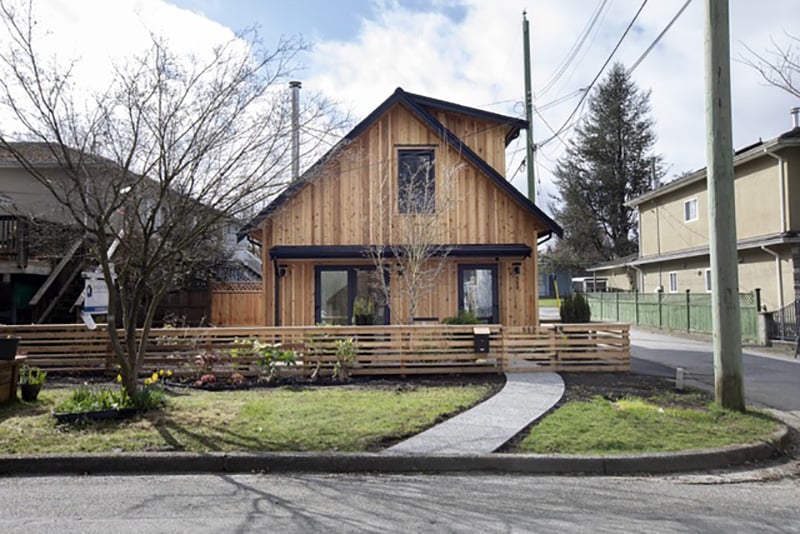
House size is also important. Larger houses consume more land, materials and resources, and require more energy for heating and cooling. Cities like Vancouver and Toronto have changed zoning legislation to support accessory dwelling units, such as laneway houses, and legalize secondary suites.
There are also social movements devoted to living small. From tiny houses to apartments and self-contained units, these dwellings range in size from approximately 300 to 1,000 square feet. Popular social media accounts include Living Big in a Tiny House, 600sqfeet and Never Too Small which offer instruction and resources — and a community — for those wanting to live with a lighter footprint.
Co-living
There has been an increase in people living in shared or communal accommodations in response to decreasing housing affordability and climate change, as well as loneliness.
Such housing can reduce environmental impacts through smaller dwellings and buildings, shared spaces and facilities, and opportunities for grey water filtration systems or community-scale energy projects. Co-housing is a model of intentional community living, which includes self-contained units with shared facilities and amenities that deliver a range of wider social benefits.
In Germany, Baugruppen, German for “building group,” refers to a practice of self-initiated, community-oriented living where residents share the responsibility of the building. Baugruppen is an approach, not a rule book, where financing, individuals and their needs inform the development.
In Australia, Nightingale Housing is a non-profit organization working to provide sustainable and higher density housing. While the developments go significantly beyond minimum construction code performance requirements, it is the provision of shared and community spaces that is challenging business-as-usual designs. These include communal laundries, productive gardens and outdoor cooking areas designed to encourage interaction with neighbours.
There is no doubt that our housing will play a critical role in delivering a sustainable, affordable and resilient future for households and communities. There are examples all around the world showing us the types of housing we should — and can — be delivering right now. We don’t need to reinvent the wheel.
Given the climate emergency and other critical issues with our housing, we need policymakers, the construction industry and households to demand more of our housing. 
![[Tyee]](/design-article.thetyee.ca/ui/img/yellowblob.png)
Read more: Rights + Justice, Housing












Tyee Commenting Guidelines
Comments that violate guidelines risk being deleted, and violations may result in a temporary or permanent user ban. Maintain the spirit of good conversation to stay in the discussion and be patient with moderators. Comments are reviewed regularly but not in real time.
Do:
Do not: