


 SHARE:
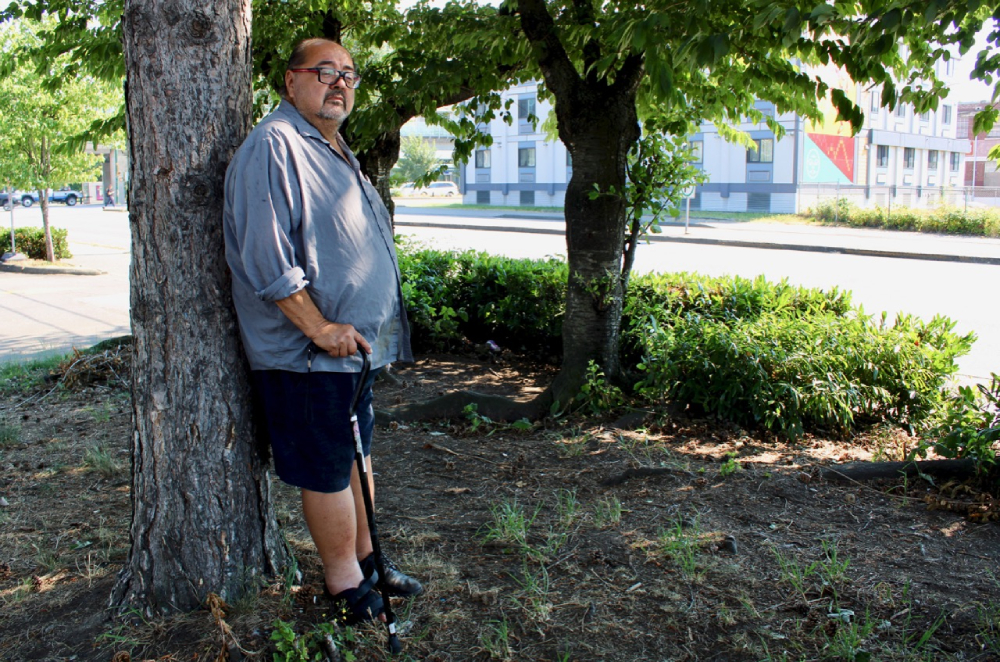
Colin Desjarlais is focused on caring for the diabetic ulcer on his leg and preventing a possible amputation.
But it’s been difficult to keep on top of his wound care regimen, he says, because he was abruptly told in mid-June he’d have to leave the Chinatown hostel he’d lived in for six months.
The owner of the Main Hostel at 927 Main St. says her building is set up as a backpackers’ hostel, not a long-term residence.
Lorraine Shorrock told The Tyee the building was no longer suitable for Desjarlais to live in because he was having a hard time walking and there is no elevator. She didn’t think her staff should have to clean up the bloody sheets in his room, and Shorrock said his room was small and had very little air circulation.
“He had some very severe problems with his feet, they’re bleeding most of the time,” Shorrock said. “I said to [the building manager], good grief, it’s not your job to be changing bloody sheets every single night. This is hospital work, and this is a hostel. When travellers travel they’re healthy — this is not healthy.
“It was suggested that he needed a place that suited him better.”
Desjarlais never signed a tenancy agreement, but he moved into the hostel in January and lived there continuously, paying $261 a week. He said the arrangement worked well for him because he was moving back to B.C. from Ontario and was receiving the Canada Emergency Response Benefit as he dealt with medical issues that prevented him from working.
A diabetic ulcer is an open sore that can affect people with diabetes, and it can lead to a serious infection or amputation. Desjarlais said he also has a heart problem and had to get treatment and surgery for burst eye vessels three months ago.
But he said as his health problems worsened, building staff started making it uncomfortable for him to live there. He said the building manager took away the fridge that was in his room, which he used to store his insulin.
While Shorrock said Desjarlais was given an alternate space to store his medication in a fridge in the building manager’s apartment, Desjarlais said that was not the case. He tried his best to keep the insulin cool in his room, but he ended up losing two boxes of the medication that has cost him $150.
At one point, the manager told him he had a week to get out of his room, he said.
“I refused,” said Desjarlais. “I was biting the bullet and dragging it on, because you can’t do this to somebody with a disability. It’s against the law.”
Desjarlais, who is Cree Métis and grew up in Manitoba, said he’s experienced racism and discrimination many times in his life. He believes he was discriminated against in this case because he has a disability.
Fearing he would become homeless, Desjarlais said he went to the Carnegie Community Centre and connected with a housing outreach team who helped him get a room at the Ivanhoe Hotel, a single-room occupancy hotel across the street from the Main Hostel. But Desjarlais says the strain of having to move and being pressured to leave took a toll on his health.
Shorrock said she was the one who helped Desjarlais get a room at the Ivanhoe, not the Carnegie outreach team. But Desjarlais said that isn’t what happened.
Last year, The Tyee reported on another eviction attempt at the Main Hostel which was stopped after tenant advocates stepped in. Qui Ling Chen had signed a tenancy agreement with the previous owner, but Shorrock claimed the agreement wasn’t valid.
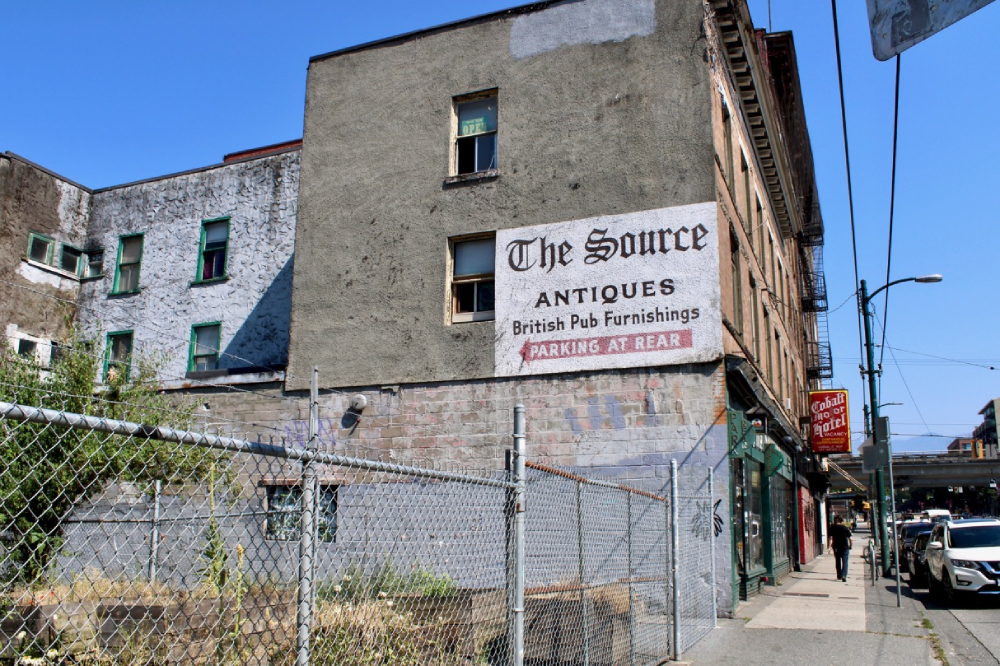
After The Tyee reported on the attempted eviction, the Residential Tenancy Branch’s enforcement unit got in touch with both Chen and Shorrock to confirm Chen had not been evicted. The enforcement unit shared information about B.C.’s Residential Tenancy Act with Shorrock and closed its file, according to the Residential Tenancy Branch.
Shorrock said her business is to provide short-term accommodation for tourists, and Chen and Desjarlais don’t fit with that business model.
While Desjarlais said most of the other residents of Main Hostel are also long-term residents, Shorrock denied that, saying the only people who have been staying for several months have been international students caught up in COVID-19 restrictions that have prevented them from travelling.
The Main Hostel building is valued at $5.9 million by BC Assessment. Shorrock also owns the St. Clair Hostel on Richards Street, valued at $5.7 million.
While the building has typical single-room occupancy rooms with shared bathrooms, Shorrock said it’s not classified as an SRO building and doesn’t have to comply with the City of Vancouver’s Single Room Accommodation bylaw. City of Vancouver staff have confirmed the building is classified as a hotel.
However, provincial residential tenancy laws may have applied to Desjarlais’ tenancy.
According to the Residential Tenancy Branch, the act doesn’t apply to vacation or travel accommodation, but it may apply if the resident has exclusive possession of a hotel room and if the room is the person’s primary and permanent home. The Residential Tenancy Branch also takes the length of stay into account.
While there is a requirement for landlords to prepare a written agreement for every tenancy, even if a landlord doesn’t prepare one the tenant and landlord still have the same rights and responsibilities under the Residential Tenancy Act. To fight the attempted eviction, Desjarlais would have to file a complaint to the Residential Tenancy Branch.
Robert Patterson of the Tenant Resource and Advisory Centre, a Vancouver-based organization supporting tenants, said the lack of clarity around legal status under the act can harm tenants in different kinds of housing.
“There is a large area — and some housing providers want to make that greyer,” he said. “It allows them to kick someone out with much less notice.”
Government-funded transitional housing is also exempted from Residential Tenancy Act provisions. But Patterson noted some people can end up staying in the same housing for long periods, effectively making it their home.
Desjarlais said he was relieved to be able to move into a room at the Ivanhoe, but he’s still upset and angry about how he was treated at the Main.
“For the most part, it was a safe, clean space,” he said of his hostel room. ![[Tyee]](/design-article.thetyee.ca/ui/img/yellowblob.png)
Read more: Rights + Justice, Housing












Tyee Commenting Guidelines
Comments that violate guidelines risk being deleted, and violations may result in a temporary or permanent user ban. Maintain the spirit of good conversation to stay in the discussion.
*Please note The Tyee is not a forum for spreading misinformation about COVID-19, denying its existence or minimizing its risk to public health.
Do:
Do not: