


 SHARE:
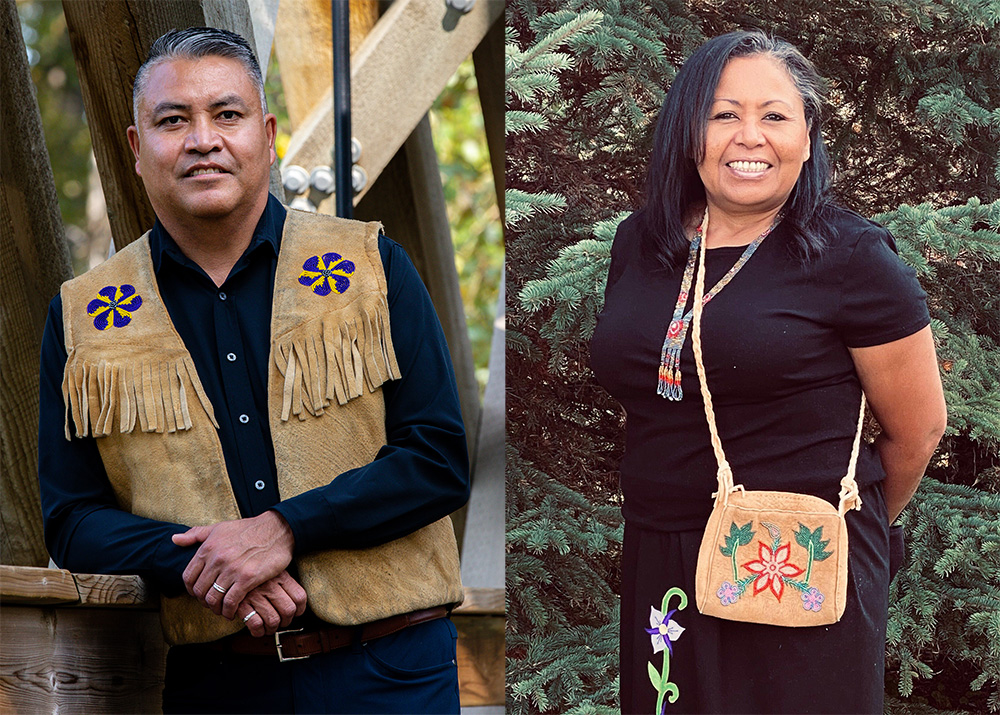
For First Nations in British Columbia, election season is not over. On Nov. 17 they will choose the next Regional Chief for the B.C. branch of the Assembly of First Nations.
The two candidates vying for the positions are incumbent Regional Chief Terry Teegee of the Takla Nation and Chief Cheryl Casimer of the Ktunaxa Nation. Their campaigns reflect pressing issues for Indigenous communities, including violence against their members, dealing with the pandemic, and building new legal frameworks under the Declaration on the Rights of Indigenous Peoples Act, the B.C. law that requires the province to follow the tenets of the United Nations Declaration on the Rights of Indigenous Peoples.
The Regional Chief is the link to the National Chief, and so is a conduit to Ottawa, providing Indigenous people in the province “influence on what happens with the federal government,” explains Chief Harvey McLeod of the Upper Nicola Band.
The Regional Chief is voted in by the Chiefs of each community in a province or territory, and those Chiefs have been elected by their own community members.
In B.C., there are 203 First Nations whose Chiefs will vote.
In return, says McLeod, the Regional Chief takes direction from the other Chiefs on what the main priorities should be as they move forward in the work.
Teegee and Casimer, who each have strong backgrounds, emphasized approaches and priorities somewhat differing in interviews with The Tyee. But both candidates say COVID-19 drives many of the problems they seek to address.
Teegee noted government money for businesses slammed by the pandemic measures hasn’t been matched in First Nations, who are “not properly represented in terms of what we need.”
“It’s been hard times for everybody, including our First Nations,” said Teegee. As discussions “have been happening nationally and regionally in terms of economic development,” he said, “we’ve been left out of the conversation, and I think that’s a real big issue.”
Casimer agrees. She pointed out that “COVID has brought community together. I saw, of course through social media, a lot of people going back to the land and harvesting and preparing for winter, and doing all kinds of things that typically we don’t have the time to do.”
“But on the flip side to that,” she said, “in First Nations communities, what it has shown is the major gaps that communities face not being able to exercise jurisdiction in being able to make decisions about closing off [their] communities, and have it be respected by local municipal governments.”
Casimer listed three key areas in her platform. She plans to continue lobbying and advocating for Aboriginal Rights and Title; to support and help develop strong governance and strong economies for First Nations communities in B.C.; and to push harder to have B.C. act on its commitment to implement DRIPA.
Implementing DRIPA faces hurdles because of overlapping land claims between Indigenous communities, she said. But she has a fix in mind — and it doesn’t involve colonial governments, which she feels shouldn’t have a place in the discussion.
“I would like to reach out to the University of Victoria, because they have a brand-new department, an Indigenous law department. And I’d like for them to work with us in identifying some tools that would help us with conflict resolution, dispute resolution and an Indigenous commission,” she said.
“But doing it through an Indigenous lens... because that’s where it needs to happen, and that’s the only way I think that we’ll able to resolve it. We were able to do it hundreds of years ago, otherwise if we weren’t able to get along with each other, there’d be only one nation left standing today, right?” she added.
Teegee said he intends to do more work around DRIPA, too. And he pledged a strong push for more resources to support Indigenous students, and more Indigenous curriculum in public schools.
He believes that education can help address racism. “Far too often our First Nations children aren’t getting the proper resources... to make sure they’re successful in their learning years. And also, too, I think the compulsory history of Indigenous people in Canada, regardless of what territory, really needs to be put into the curriculum,” Teegee said.
“I think it’s getting a better understanding of our First Nations people. There really is not enough understanding out there, and I think it’s needed now more than ever.” The teaching should begin “at the grassroots level” because “an understanding of Indigenous people would help fight racism,” he added.
Teegee said he would continue the work he’s done over the past three years as Regional Chief. One action item is working with First Nations as they take over jurisdiction of child welfare in B.C. under Bill C-92, which received royal assent in June 2019.
“I think it’s a really important matter that work continues to go on, in terms of accessing the proper resourcing and legislation,” he said.
Teegee’s platform says a key element to Indigenous jurisdiction of child welfare will be having grandparents and ancestors weigh in on the process with traditional teachings. When asked about this, he said it’s crucial for the heath of Indigenous kids that they maintain a connection to culture and identity.
Casimer doesn’t address child welfare specifically in her platform, but she has strong experience with the issue, given that she served as the president for the Ktunaxa Kinbasket Child and Family Services Society early in her career.
Casimer and Teegee were part of the First Nations Leadership Council that helped usher in the new bill. The council is a coalition between the First Nations Summit, the Union of BC Indian Chiefs, and the B.C. Assembly of First Nations.
Both candidates had words to share about problems with police that Indigenous people commonly face, as well as the Mi’kmaq fishery dispute.
Teegee was active on his Facebook page on Oct. 17, denouncing the RCMP and the government who stood by while non-Indigenous fishermen committed acts of violence against Mi’kmaq citizens outside a lobster fishery.
“Part of my platform is to continue to be the co-chair of the National Fisheries Committee and to advocate for Indigenous people’s rights in regards to fishing. And whether it’s East Coast or West Coast here, I think we have very similar battles with the Department of Fisheries and Oceans, and perhaps other interest groups, in regards to the resources that we have stated time and time again that we should have priority access to,” said Teegee.
Casimer pointed to the Mi’kmaq, as well as to an incident in Williams Lake where the arrest of an Indigenous man was caught on video, as evidence that police reform is needed.
The video shows the man surrendering, and an officer appears to “stomp and kick him” anyway. The RCMP insist there is more to the story than what was caught on camera.
Casimer says reforming the Police Act is one among many needed steps put on hold prior to the provincial election. “And we’d like to see that happen, for sure... given that there’s systemic racism in the police force, and we’re just continuing to see excessive force used against Indigenous people.”
Both candidates also support resolutions for Missing and Murdered Indigenous Women and Girls, issues of land access and resources, and building strong Indigenous economies. Casimer’s platform focuses on incorporating Indigenous legal traditions, as well as the uniqueness of each community’s governance structures.
Teegee’s platform emphasizes climate change, Indigenous languages and justice.
McLeod is hopeful that after the election is over, no matter who wins, everyone will be able to work together.
“At the end of the day, it is the person with the most votes that wins, and it’s usually not a very productive way of enshrining co-operation, partnership and relationship. But we anticipate — I anticipate — that we will, because we have to,” he says. “We’ve got no time to waste in dialoguing and moving the issues forward.” ![[Tyee]](/design-article.thetyee.ca/ui/img/yellowblob.png)
Read more: Indigenous, Rights + Justice, BC Politics







Tyee Commenting Guidelines
Comments that violate guidelines risk being deleted, and violations may result in a temporary or permanent user ban. Maintain the spirit of good conversation to stay in the discussion.
*Please note The Tyee is not a forum for spreading misinformation about COVID-19, denying its existence or minimizing its risk to public health.
Do:
Do not: