


 SHARE:
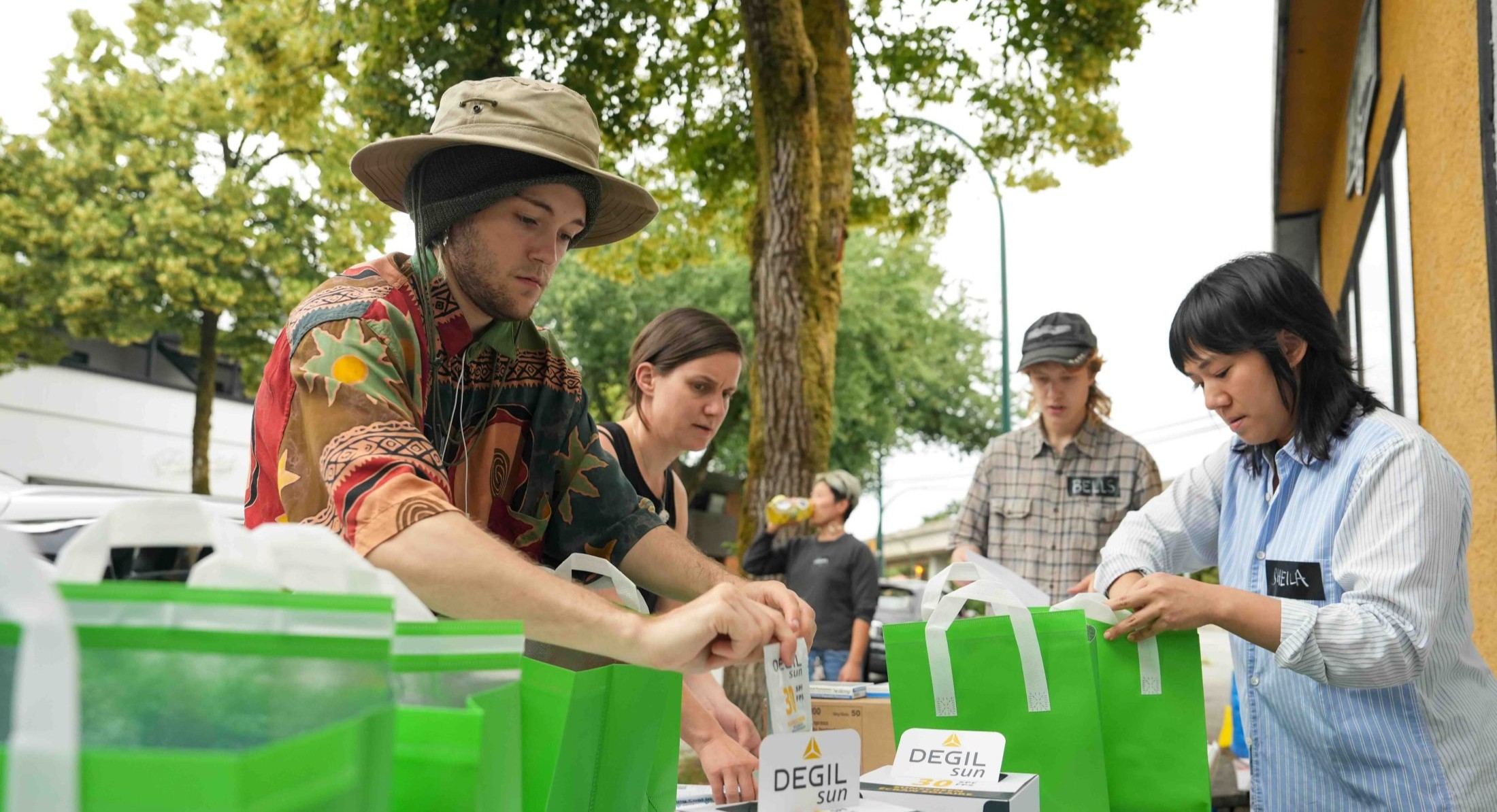
On a Monday evening in late June, a group of around 20 people gathered on the street outside the Vancouver Tool Library, a small community tool-lending co-operative on East Vancouver’s Commercial Street.
A row of collapsible tables lined the sidewalk. A Tool Library organizer gathered the group in a circle for a brief rundown of how the evening would play out, then the volunteers got to work.
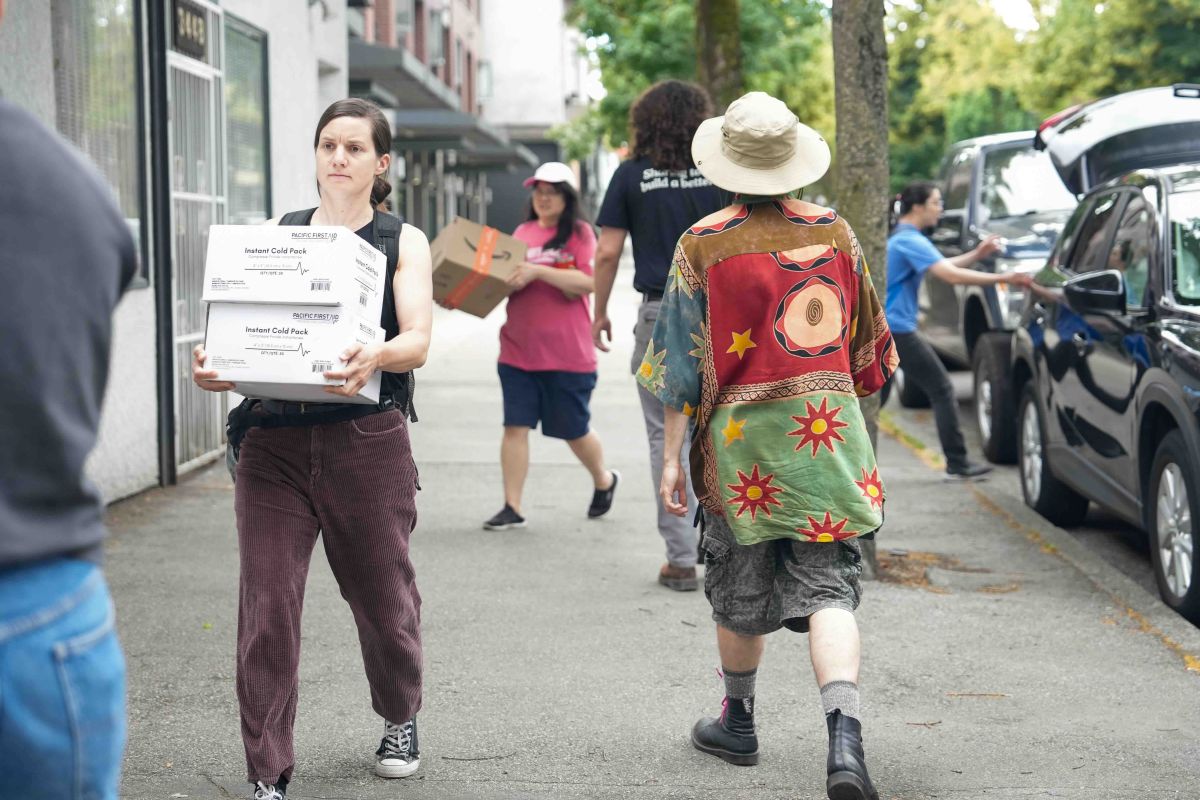
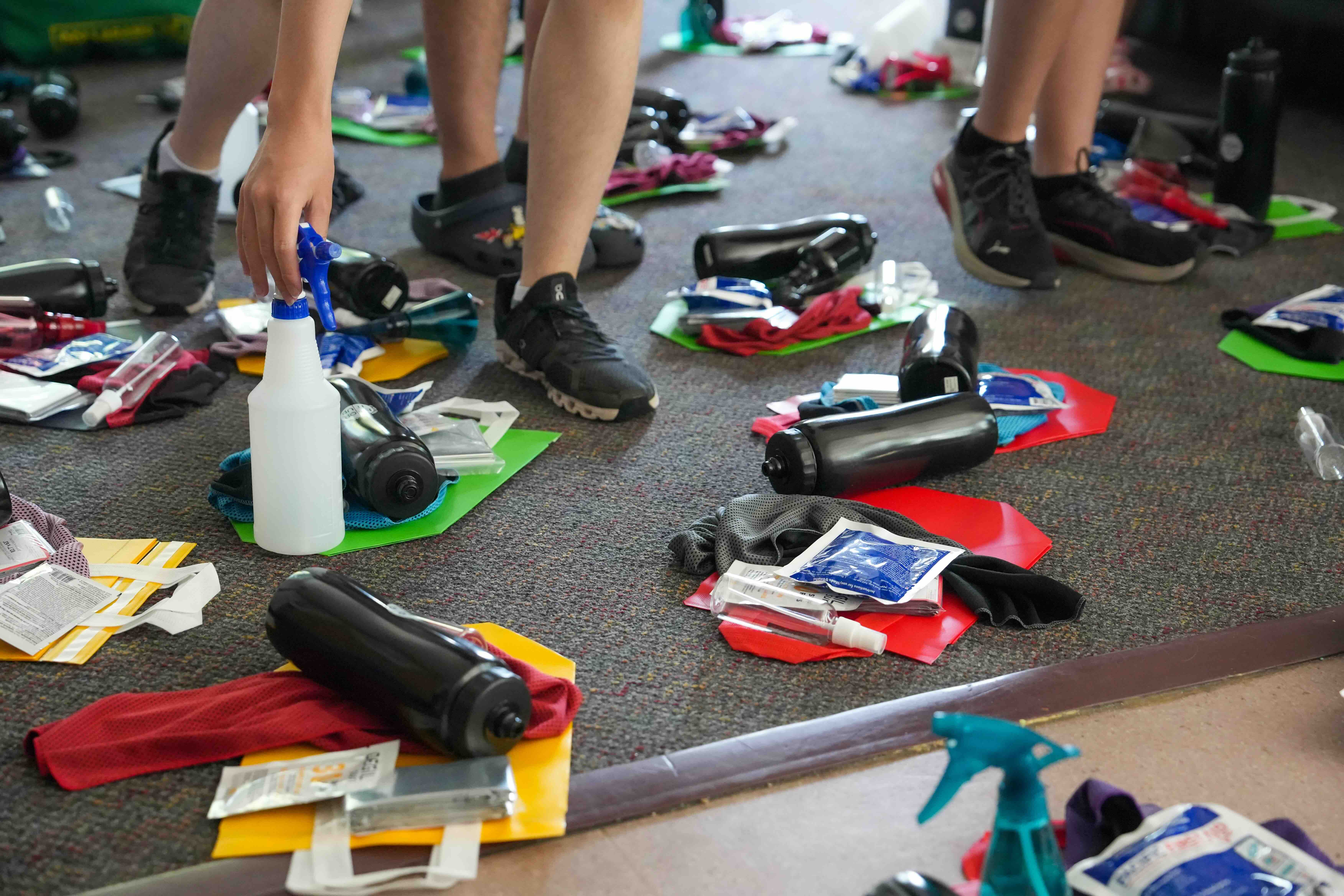
An assembly line formed to haul boxes of supplies from three nearby vehicles. Roles were assigned or chosen. Strangers introduced themselves and chatted casually as they packed sealable tote bags with reusable water bottles, sunscreen, spray bottles, cooling towels and other items from a list designed to help people stay cool in the heat.
The evening was just one step in what had already been a weeks-long process to assemble over 400 cooling kits for some of Vancouver’s most vulnerable residents. The province is facing a summer that Environment and Climate Change Canada projects to be one of the hottest on record.
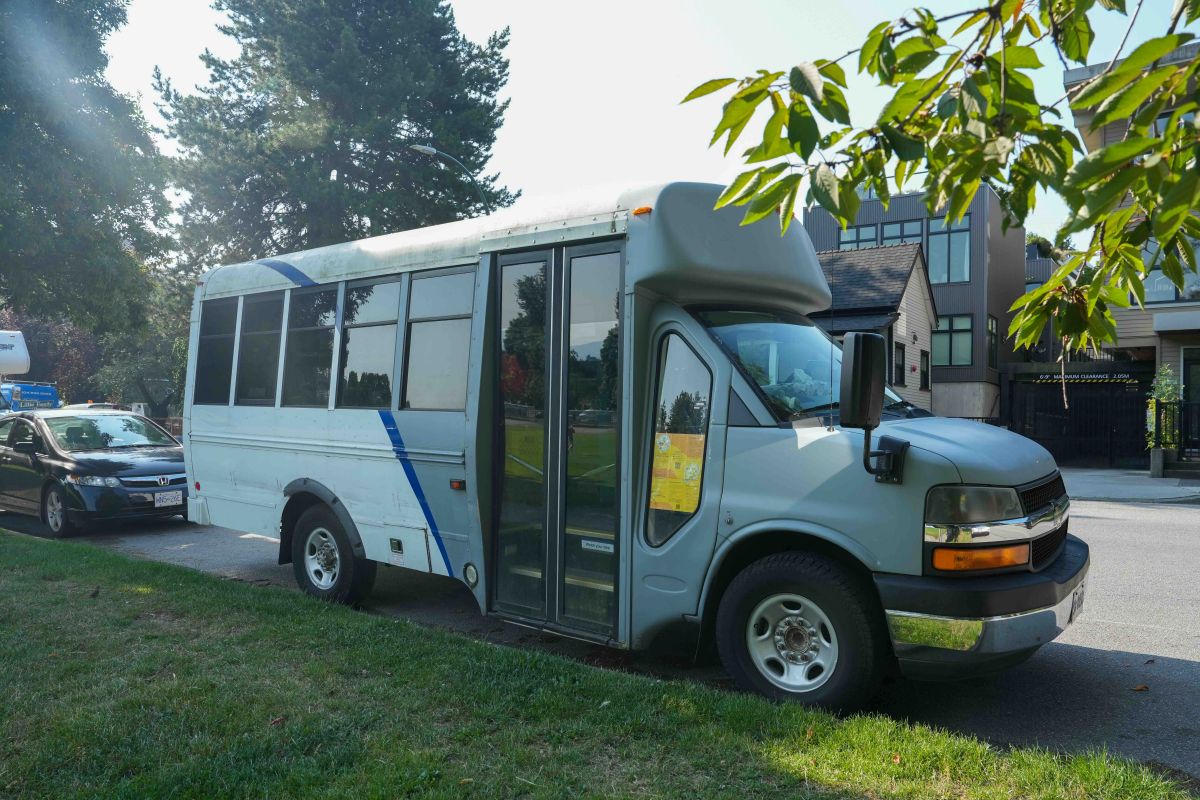
The initiative was organized by Distro Disco, a network of volunteers who have been collecting and distributing life-saving supplies out of a minibus to at-risk Vancouver residents, since 2021.
Distro Disco is a grassroots network that operates on the principles of mutual aid, a collaborative system in which community members voluntarily organize themselves to pool resources and care for one another. They often organize in service of filling social infrastructure gaps that governments have left behind.
The group, operated by some 20 to 40 regular volunteers at any given time, hands out basic necessities — toiletries, medical supplies, electrical items and more — three times a month. They distribute goods at pre-set locations that they share with the community, and they tend to gather in parks in or near the Downtown Eastside.
A new form of connection
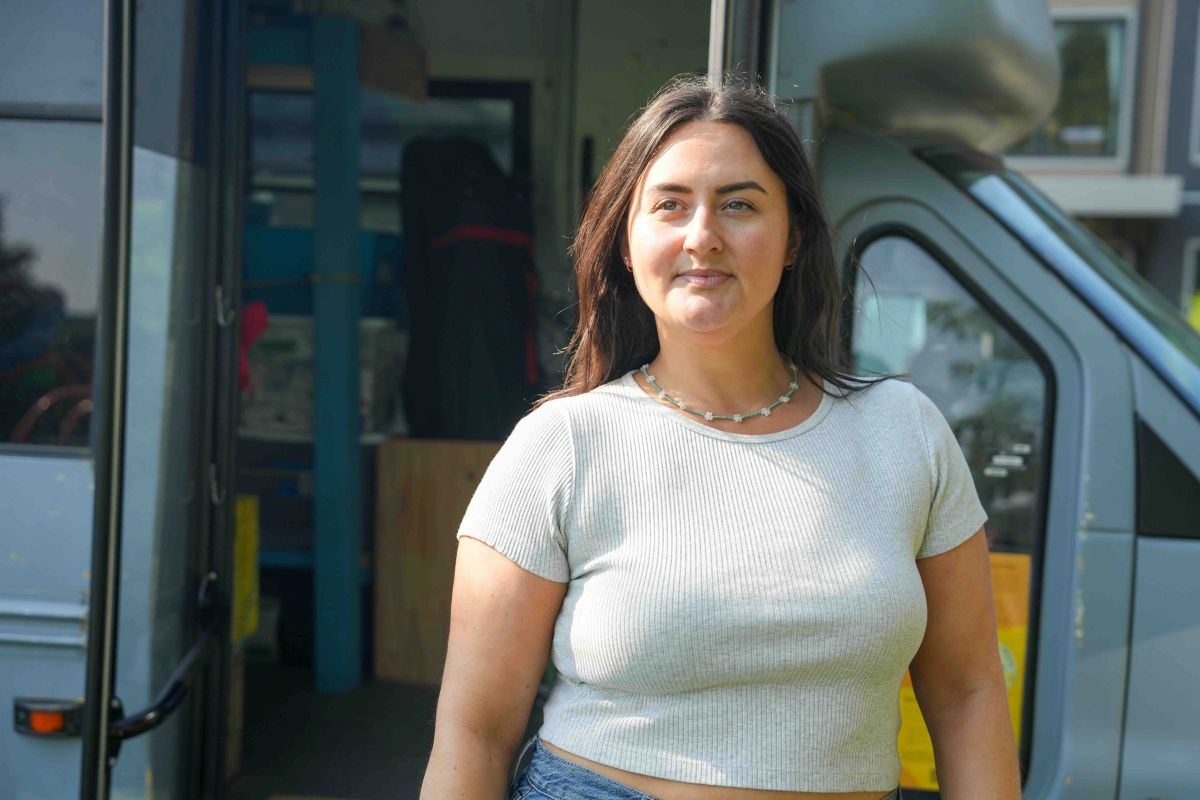
Zoe Diomis, one of the volunteers who has been working on the cooling kits program over the past several weeks, said she became involved with Distro in 2021 when she was coming out of pandemic isolation and felt compelled to participate more meaningfully in her community.
“I feel like I’ve seen the physical and social landscape of the city change over the last 30 years, and in many ways it has not been a super positive change,” Diomis said. “It really hurts to see the way that the city treats unhoused people.”
Diomos saw a call-out for volunteers on Distro’s social media, and has been carving out time to help in various roles ever since. She shops for supplies, drives the bus to a distribution day once a month, or assists with other tasks on an as-needed basis.
In early June, Distro Disco’s social media team announced on Instagram that they were fundraising and collecting supplies to create cooling kits.
A post from June 1 read, “The city has discontinued the cooling kits program, so we are taking this on…and doing it better.”
Follow-up posts over the next week said the organization was trying to raise $2,000 by the end of the month to make 400 kits.
“We know that cooling kits save lives, and there’s absolutely a need for them,” Diomos said.
City limits
The City of Vancouver’s cooling kits program was initiated in 2022 in response to 2021’s heat dome, which saw 619 B.C. residents die from heat-related issues.
The kits, handed out to at-risk residents through service providers, included items such as spray bottles, cooling towels, reusable water bottles and hats.
In April 2026, the city quietly cut the program, citing funding constraints under Mayor Ken Sim’s “zero means zero” budget. In its place, the city has a page on its website directing residents to cooling centres at libraries and community centres, as well as other places to keep cool, such as wading pools and misting stations.
The mayor’s office said non-profit organizations seeking to offer cooling services and supplies are able to submit grant applications through the city’s social grants programs.
OneCity Coun. Lucy Maloney has been critical of the ABC-led decision to cut the program.
“Government does have a role,” Maloney said. “I don't think it’s fair and equitable to rely on volunteers and charitable organizations to provide services that are essential to the life and health of residents.”
In May, Maloney tabled a motion entitled “Proactively Protecting Residents from Dangerous Heat,” which included reinstating the cooling kits, extending hours for municipally run cooling centres and exploring the possibility of free transit passes on air conditioned buses, among other measures.
The motion was amended so thoroughly by ABC Coun. Lenny Zhou that Maloney said it lost its usefulness entirely. She ended up voting against it.
Coun. Zhou did not respond to a request for comment.
The mayor’s office didn’t agree to The Tyee’s request for an interview, but in an emailed statement, said “the City prioritizes the safety of all residents and has assessed the most effective use of resources for heat mitigation during summer months. By ensuring access to a variety of civic facilities over the summer, developing robust information campaigns and sharing proactive tips and measures to stay cool at home, the city is able to maximize impact across the city.”
Maloney said sharing tips to stay cool at home is inadequate for the many Vancouver residents who rent in older buildings without air conditioning, and who lack the financial resources or political power to make changes in their buildings.
“During the heat dome, 98 per cent of deaths occurred indoors, and most were in homes without adequate cooling systems,” Maloney said, adding that most older Vancouver buildings were not designed to stay cool.
Maloney also mentioned an amendment to the city budget, brought forward by Coun. Zhou in December 2025, to cut the non-market housing climate resilient retrofit program, which helped social housing operators install electric heat pumps, upgraded windows and better insulation.
“So not only has ABC cut funding for cooling kits…but they've also cut all long-term preventative retrofitting organizations and grants,” Maloney said.
“I'm extremely worried about what that means for the life and health of residents,” she said. “Especially disabled seniors and chronically ill people, people who are in the poorer areas of the city, and therefore a lot more likely to be in these older buildings.”
Maloney said the money for cooling kits and more proactive heat response measures could have easily been made available within the budget if there was political will for it.
“They really could have spent such a small amount of money to save volunteers and charitable organizations from having to divert their scarce resources into this, when they are scrabbling around to provide so many other essential services that the most vulnerable residents of our city need,” Maloney said.
In the same year of the “zero means zero” budget, Maloney pointed out that the ABC-led council voted to spend $2 million of reserve funding for one night of fireworks.
“Probably half an hour, three quarters of an hour of fireworks,” she said. “Imagine what we could do for heat survival in our city with $2 million.”
A service that shouldn’t need to exist
Ky, who asked to be identified by a pseudonym for fear of retribution from their employer, is an organizer who has been working on Distro’s cooling kits program.
Ky said the work Distro does is highly collaborative with other, mostly volunteer-run organizations around the city.
Those include the Devils Club Street Medics and the BC Poverty Reduction Coalition. The assembly night at the Vancouver Tool Library was organized by the Tool Library themselves.
A second assembly night for the kits was initiated by the Youth Action Committee at the Collingwood Neighbourhood House, who had reached out to Distro a few months earlier to see how they could help.
“There are so many people who have contributed to this,” Ky said.
Distro is not a charity nor a legally structured organization, which means they’re not eligible for most grants. They rely almost entirely on the generosity of community members’ donations to fund their work.
Despite that limitation, they maintain a highly organized, non-hierarchical operation where volunteers play to their strengths. They are encouraged to engage as much as they have capacity for, or pull back as needed.
Communication is mostly done through Discord channels, and volunteers often use their own vehicles and apartments to store or move supplies.
They also regularly maintain a publicly accessible spreadsheet of their financial information, including all donations and expenses, at a link on their Instagram page to ensure financial transparency.
Ky said mutual aid is something anybody can do, at any time, and could be as simple as checking in on an elderly neighbour.
“Mutual aid doesn't have to happen when you have an organization as big as Distro,” Ky said. “Mutual aid is something that you can do in your own neighborhood.”
However, they also emphasized that networks such as Distro generally spring up to fill a void of care left by policymakers.
“I think it's really embarrassing that unpaid mutual aid volunteers are the ones to pick up the slack,” Ky said.
“This municipality, that has hundreds of millions of dollars to put into policing, cannot even provide these basic safety necessities that residents need.” ![[Tyee]](/design-article.thetyee.ca/ui/img/yellowblob.png)
Read more: Health, Rights + Justice, Municipal Politics










Tyee Commenting Guidelines
Please note that email notifications for replies are not currently working due to a software issue which may be resolved in a future update.
Comments that violate guidelines risk being deleted, and violations may result in a temporary or permanent user ban. Maintain the spirit of good conversation to stay in the discussion and be patient with moderators. Comments are reviewed regularly but not in real time.
Do:
Do not: