

 SHARE:
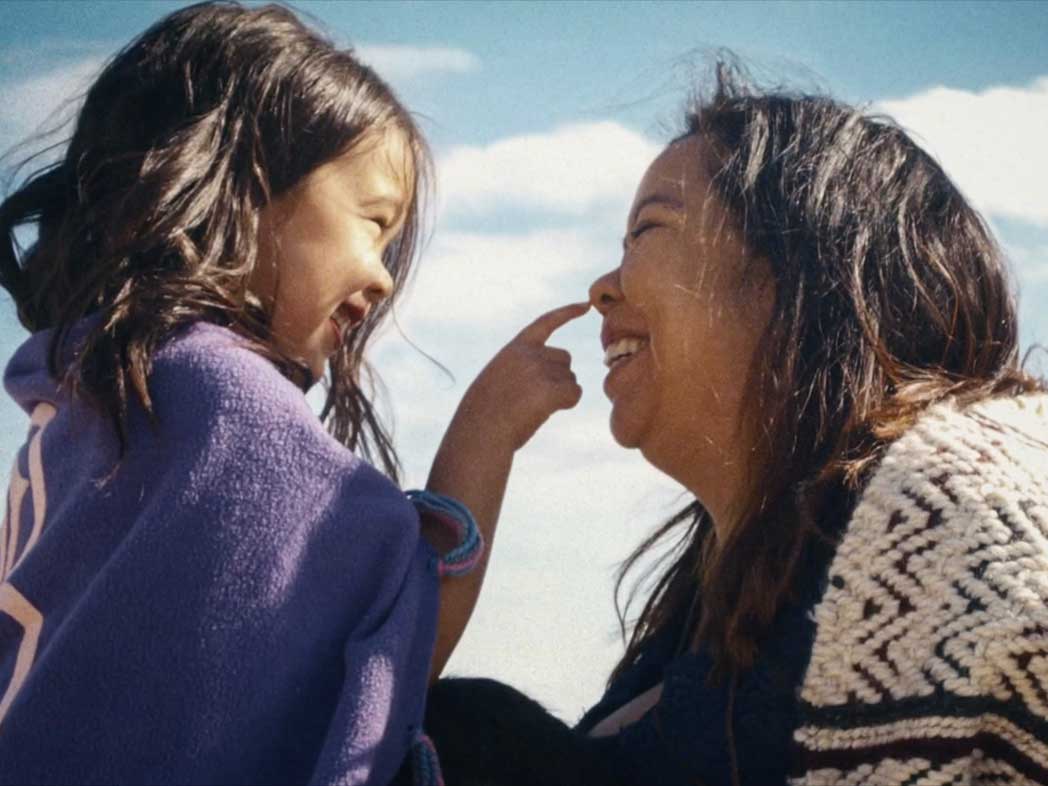
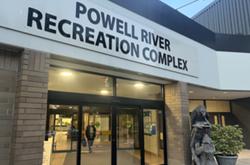
On a rainy March night in what’s currently known as Powell River, B.C., members of the Tla’amin Nation and some special invitees gathered at the Patricia Theatre for a community preview of the film təm kʷaθ nan (Namesake). The next night, it previewed to the broader community. Both nights, the theatre was packed to the rafters.
The film, narrated in part by ʔayʔajuθəm Immersion Program teacher Koosen Pielle, opens with shots of land and water in Tla’amin territory.
“This is t’išoshəm,” Pielle says. “t’išoshəm means milky waters from the herring spawn. qʷɛqʷɛyqʷɛy. Little sandy beach, or Gibsons Beach. kʷʊθaysqɛn. A rock at the mouth, or Myrtle Rock.”
“Language is so intertwined with the landscape here. The sounds came from the landscapes,” Pielle says. “It all comes from the land.” This opening sets the tone. While Namesake will investigate the legacy of Israel Wood Powell, it will do so through the lens of the culture, history and worldview of the Tla’amin people.
Powell was B.C.’s first superintendent of Indian Affairs. He was an early architect of residential schools and instrumental to enacting the province’s potlatch ban; Powell River, B.C., was named after him.
In 2021, Tla’amin Hegus John Hackett requested that the City of Powell River consider changing its name because of Powell’s harmful legacy.
With strength and generosity, Namesake tracks the conversations and clashes that emerged following Hegus Hackett’s request, inviting non-Indigenous viewers to rethink the history of the ground beneath their feet.
“We’re all one land, but we were worlds apart,” co-director, doctor, actor and Tla’amin Nation member Evan Adams says, a little later, standing on a pier near the ferry downtown.
“A lot of people who live here now don’t know us. And they forget that all of this used to be ours, and that this city is still in our territory.”
Local artist and settler Meghan Hildebrand, who appears in Namesake, said seeing its opening for the first time gave her “chills.”
Later in the documentary, another point is made about place names. “Naming was a powerful way colonizers used to transfer their power. To legitimize, or justify, their power,” says Sean Carleton, a historian and Indigenous studies scholar at the University of Manitoba.
Changing Indigenous place names to colonial names, Carleton says, allowed colonizers “to see themselves in a landscape that was not theirs.”
An invitation, or a demand?
When Hegus Hackett made the name change request in 2021, it could’ve been reasonable to believe residents of Powell River would meet it with openness.
The nation and the city signed one of the province’s first Community Accords in 2003, promising to co-operate, communicate, protect cultural heritage and “meet regularly to promote and encourage open and constructive dialogue.”
Moreover, Powell River Regional District changed its name to qathet Regional District in 2018. qathet, which means “people working together,” was a name gifted to the regional district from Tla’amin Nation Elders.
For settlers in Powell River — of which I am one — there are, broadly speaking, two potential ways to view Hegus Hackett’s request.
The first is as an invitation: to right a past wrong; address the colonial erasure of ʔayʔajuθəm place names; acknowledge a shared, and sometimes painful history; and move forward together as a more united set of communities with shared goals.
The second sees Hegus Hackett’s request as more of a demand. One that, as social media posts in the documentary reference, creates “division.”
“In my opinion, it has never been about truth and reconciliation,” reads one resident’s social media post about the prospect of changing Powell River’s name. “Agree, it’s about power and control and payback,” reads another.
Soon after it was made, Hegus Hackett’s request hit a speed bump as a small but vocal group of residents formed an opposition. Calling themselves the Concerned Citizens of Powell River, the semi-anonymous group has described themselves as a “diverse group of resident volunteers who advocate for the name of Powell River to remain, unchanged.”
In March of last year, the Concerned Citizens of Powell River invited Frances Widdowson to town to discuss the name change and Widdowson’s views on residential schools.
Widdowson was fired from her job as a tenured university professor for “espousing the educational benefits of residential schools.”
The Union of BC Indian Chiefs have characterized Widdowson’s views as demonstrating “a pattern of hate, duplicitous rhetoric and anti-Indigenous racism.” (The UBCIC also sent Powell River a letter asking the city take measures to combat and reject residential school denialism.)
The week the documentary screened at the Patricia, some residents were busy renewing requests that a handful of city councillors recuse themselves from name-change discussions due to “non-pecuniary conflict of interest” and “bias.”
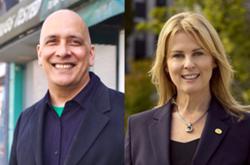
For Coun. Rob Southcott, the allegation seemed to stem from a pro-name-change blog post.
For Coun. Cindy Elliott, it was her Indigenous heritage, and the fact she has Tla’amin family members employed by the nation.
Elliott, who was elected on a platform supporting the recommendations of the Joint Working Group on the Possible Name Change, read a voluntary disclosure to council outlining how her family relationships do not result in any conflicts of interest on broad policy decisions such as the discussion about changing the city’s name. She told The Tyee that she did not publicly address the allegation relating to her Indigeneity because a reasonable person would understand that there is no way to tie ethnicity to conflict of interest. It’s the definition of discrimination, she added.
According to Facebook posts from residents issuing the recusal requests, their work has been supported by lawyer Glenn Blackett from the Justice Centre for Constitutional Freedoms. Blackett also stepped in when the local library attempted to decline a summer 2024 event booking for Widdowson; the event proceeded as planned that July.
No concerted allegations of conflict have been levelled at city councillors of European descent for any potential bias arising from their heritage, anti-name-change opinions or family or employment ties in the municipality of Powell River.
On the surface, the volume of the backlash might suggest that the citizens of Powell River do not support changing the city’s name — or, perhaps more broadly, truth and reconciliation. But Namesake also documents moments when other city residents seriously challenge that idea.
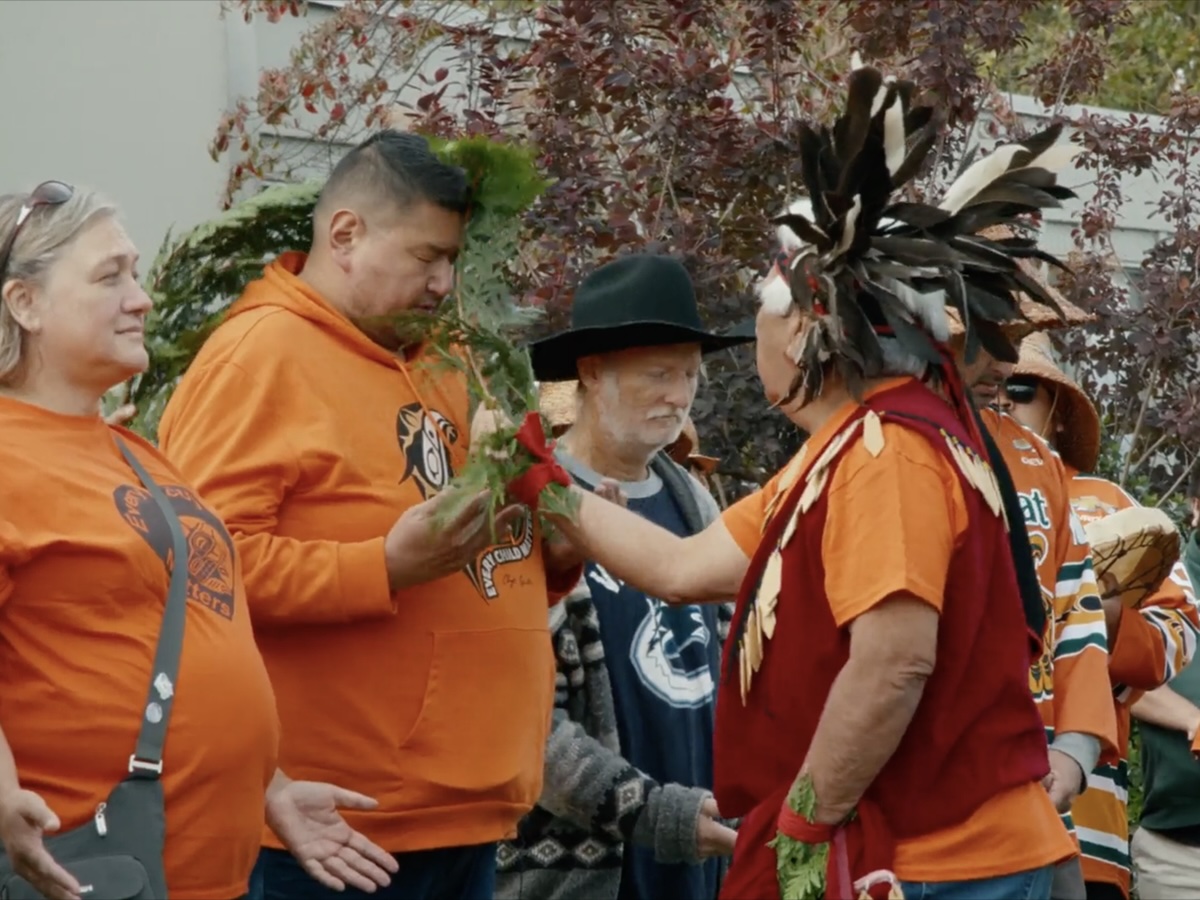
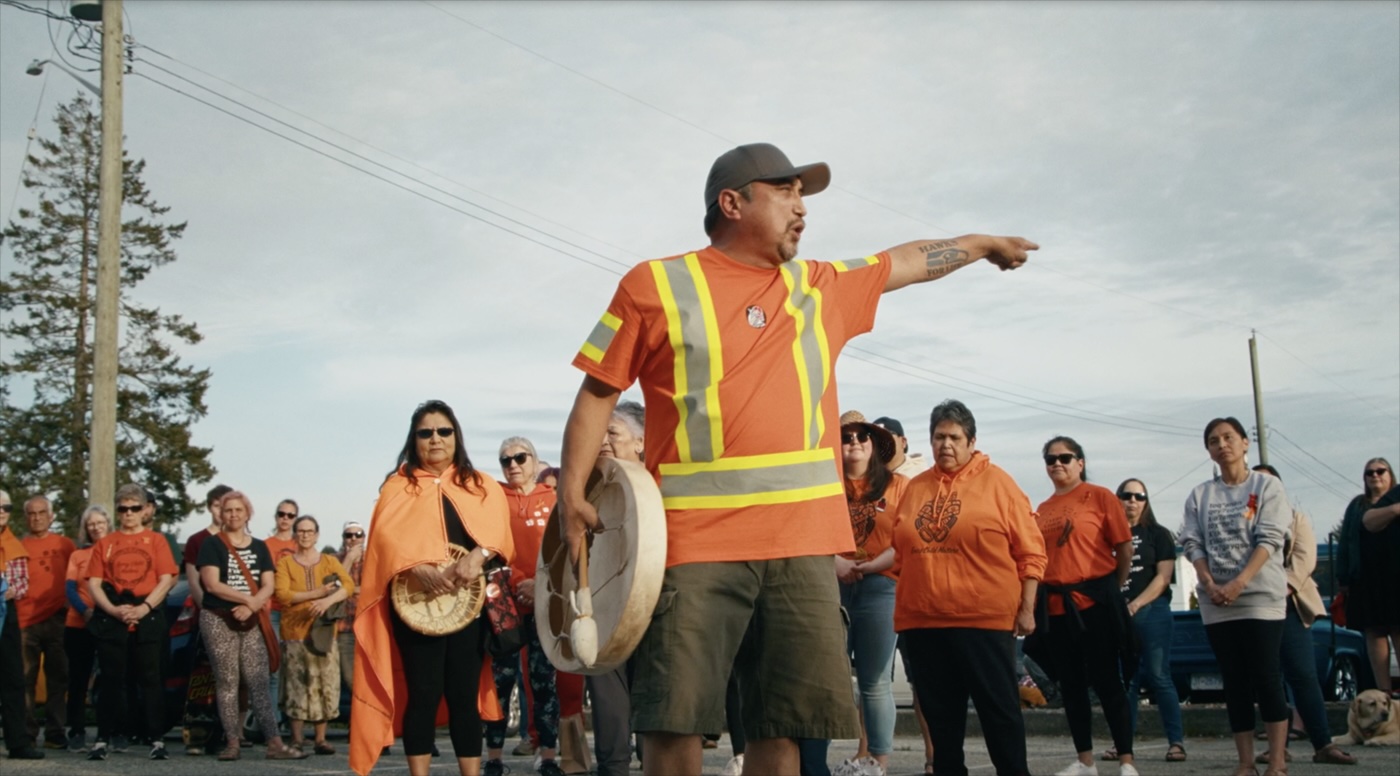
The film features footage of a 2022 city council meeting where name change opponents are vastly outnumbered by Tla’amin Nation members and settler supporters holding a raucous rally in the parking lot. In another scene, on the National Day for Truth and Reconciliation, the main street of the city is flooded by people wearing orange shirts.
Watching the film, the emotion of these moments is palpable and stirring. “We are one,” says Chileneh Scott Galligos, Tla’amin Nation culture and heritage technician, at the council rally, holding a drum. “And together, we can heal.”
Back at the Patricia Theatre in March, the community preview screenings offered another window into residents’ perspectives. Namesake received a standing ovation and enthusiastic reception.
The preview audiences also comprised a bit of a who’s who: Tla’amin legislators; former federal Member of Parliament Rachel Blaney; former Powell River mayor Stewart Alsgard; B.C.’s Attorney General and Deputy Premier Niki Sharma.
Both the Tla’amin community preview and broader community screening that I attended included a panel discussion, and space for the audience to share their thoughts, after the film had finished.
At the screening that she attended, Sharma, who earlier met with members of the nation to hear about an uptick in racism they’ve been facing in town, stood up and said that the documentary is a reminder of the “unfinished work we all have to do.”
Alsgard, the mayor who signed Powell River’s 2003 Community Accord with the Tla’amin Nation, began his post-screening thoughts in ʔayʔajuθəm. Referring to the name change, he said enthusiastically, “this will happen.”
Councillor Rob Southcott, who confirmed to The Tyee that he is preparing to run for mayor this fall, shared remarks after a third preview screening of Namesake at the Patricia.
“I spoke to the grief I felt that council and city had so failed over the past three years to move any community conversation forward,” he told The Tyee later, via email.
“I suggested to the audience we need to elect people this October who will support us returning to conversation and connection within the city.”
MP Aaron Gunn, who has come under fire for statements about residential schools and land acknowledgements, was asked by The Tyee at a recent local town hall whether he was planning to watch Namesake.
“I actually haven’t heard of the film,” he said, adding later, after a second similar question, that he planned to Google it.
Gunn’s town hall provided yet another microcosm of the city’s divisions; one contingent showed up wearing orange shirts and asked Gunn repeatedly about truth and reconciliation and how he planned to build and repair relations with the Tla’amin Nation.
Another portion of the crowd grew audibly restless with this line of questioning.
And yes, someone did ask Gunn, “Why don’t you just chillax, bro?”
A victory for tiskwat
Meanwhile, the people of the Tla’amin Nation have been moving forward, with or without the support of the wider local community — something the documentary captures effectively in its structure and approach, and in scenes about cultural events, naming ceremonies, general assemblies and the revitalization of the ʔayʔaǰuθəm language.
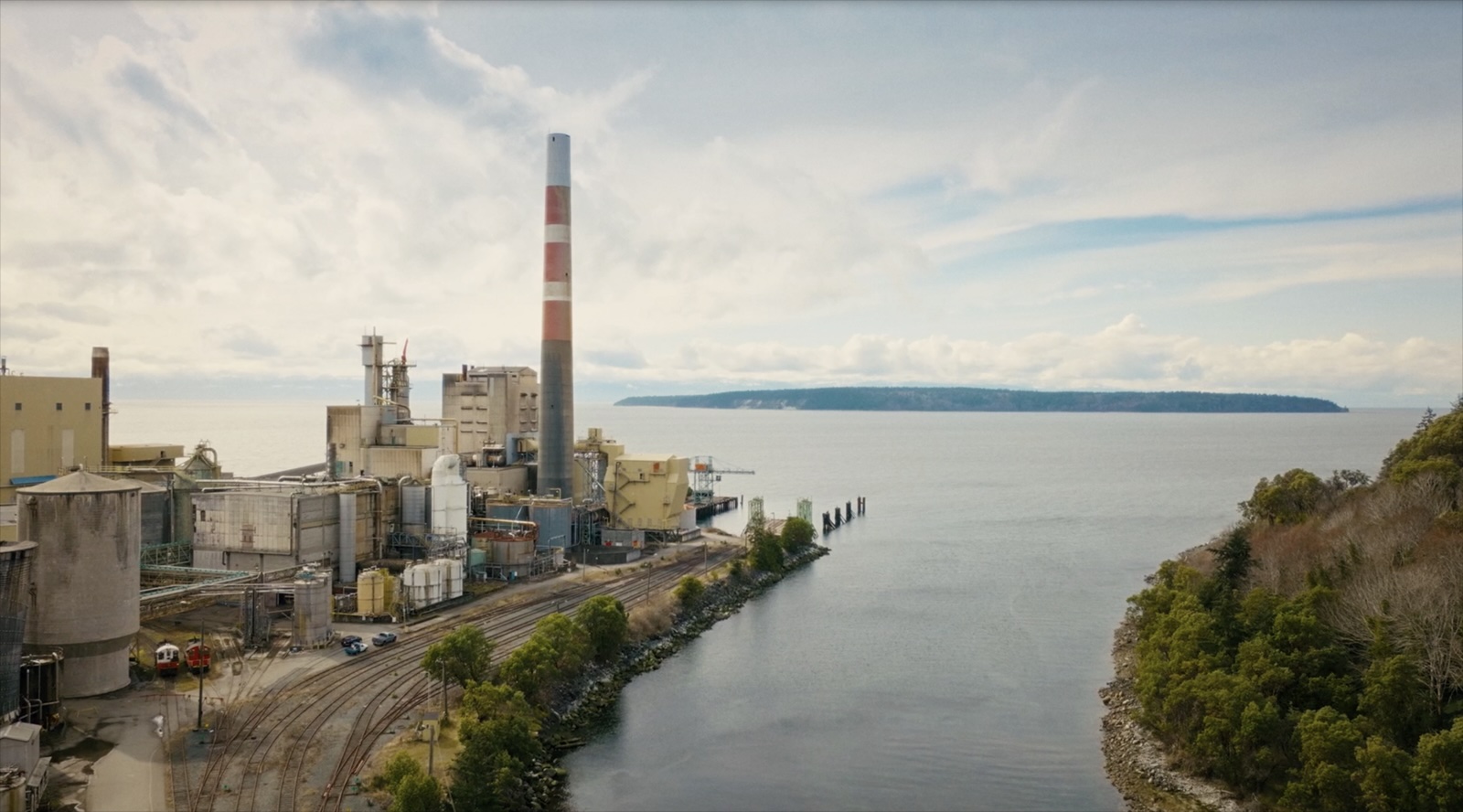
Another central point of the film is the loss — and re-acquisition of 120 acres of the former tiskwat village site, which was subject to a “lawless land grab” that led to the damming of tiskwat and the construction of a now-shuttered paper mill.
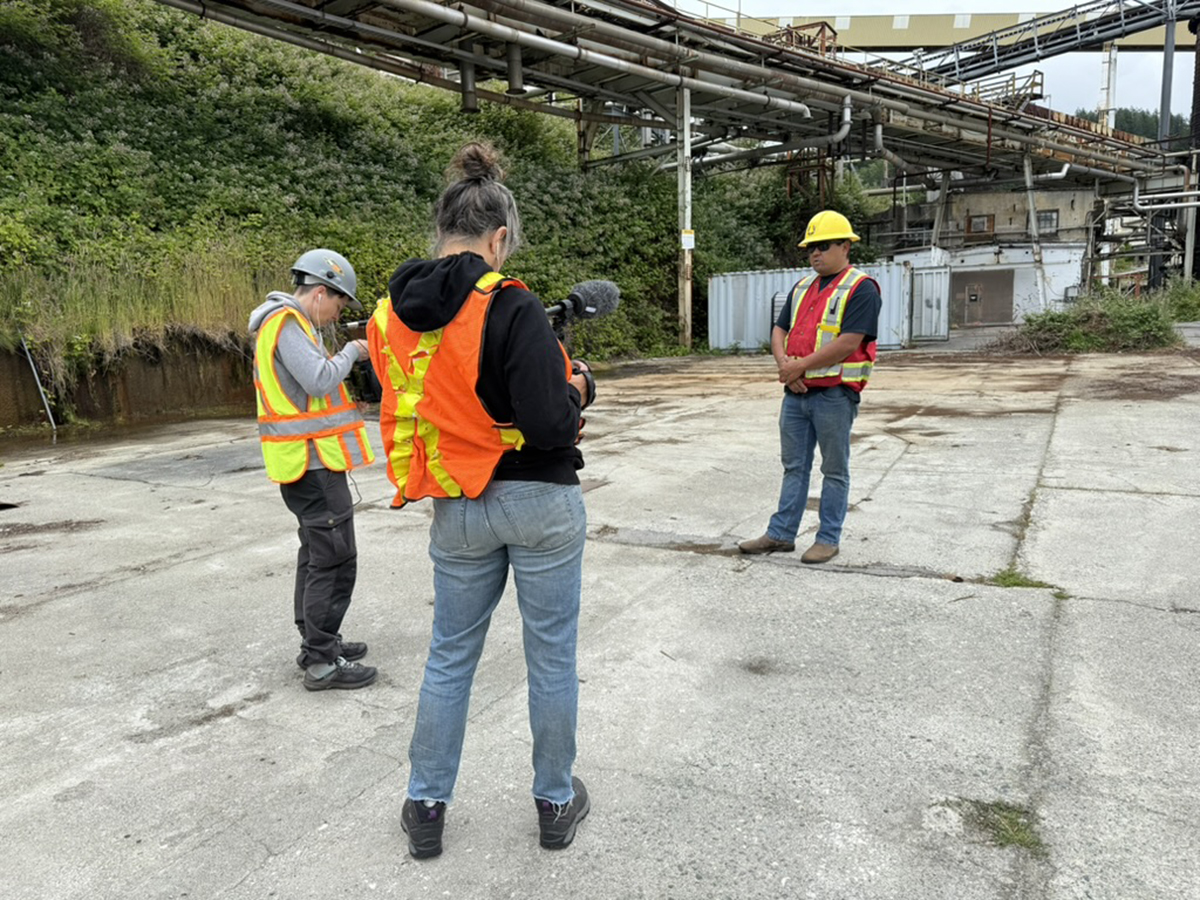
In the film, Tla’amin Legislator Tiy’ap thote – Erik Blaney stands at the site holding out a handful of shells from a midden that survived a century of industrial life. There’s butter clam, littleneck clam, cockle.
“Ninety per cent of the shell midden that we’ve excavated in the territory has had burial remains,” he says. “The town is literally built on the bones of our ancestors.”
“I always tell my kids, when we see shell midden, that that’s your deed to the land.”
The venue that hosted the Namesake screening for Tla’amin Nation members, just up the road from the tiskwat mill site, holds a different kind of significance.
That became very clear when Elsie Paul, an Elder and knowledge keeper of the Tla’amin Nation and the author of Written As I Remember It: Teachings from the Life of a Sliammon Elder, stood up and pointed at the balcony of the Patricia Theatre after the film ended.
The theatre segregated Tla’amin audience members from settlers until about 1970.
“When I was a child, we were only allowed up there,” Paul said. “Look at us. We’re all sitting down here.”
“Things are going really good with our people. It’s hard work, but we have very stubborn people who stick it out.”
‘təm kʷaθ nan (Namesake)’ will screen as an official selection of Hot Docs in Toronto at the TIFF Lightbox on April 29 and April 30. ‘Namesake’ will also screen as an official selection of the DOXA Documentary Film Festival in Vancouver on May 2 at 2:45 p.m. and May 3 at 8:50 p.m. Info and tickets at doxafestival.ca. ![[Tyee]](/design-article.thetyee.ca/ui/img/yellowblob.png)
Read more: Indigenous, Rights + Justice, Municipal Politics, Film







Tyee Commenting Guidelines
Please note that email notifications for replies are not currently working due to a software issue which may be resolved in a future update.
Comments that violate guidelines risk being deleted, and violations may result in a temporary or permanent user ban. Maintain the spirit of good conversation to stay in the discussion and be patient with moderators. Comments are reviewed regularly but not in real time.
Do:
Do not: