


 SHARE:
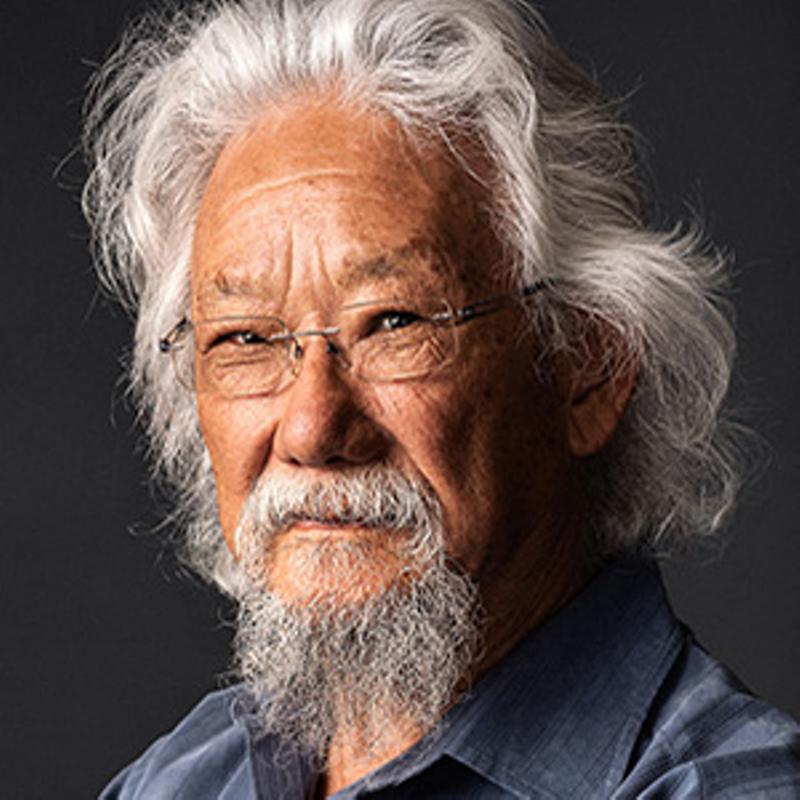
[Editor’s note: David Suzuki turns 90 on March 24, 2026. And as Tyee contributor Christopher Guly reported last fall, he’s gearing up for a busy year: he will act in a touring theatrical production, and he will be the subject of a biopic and documentary film.
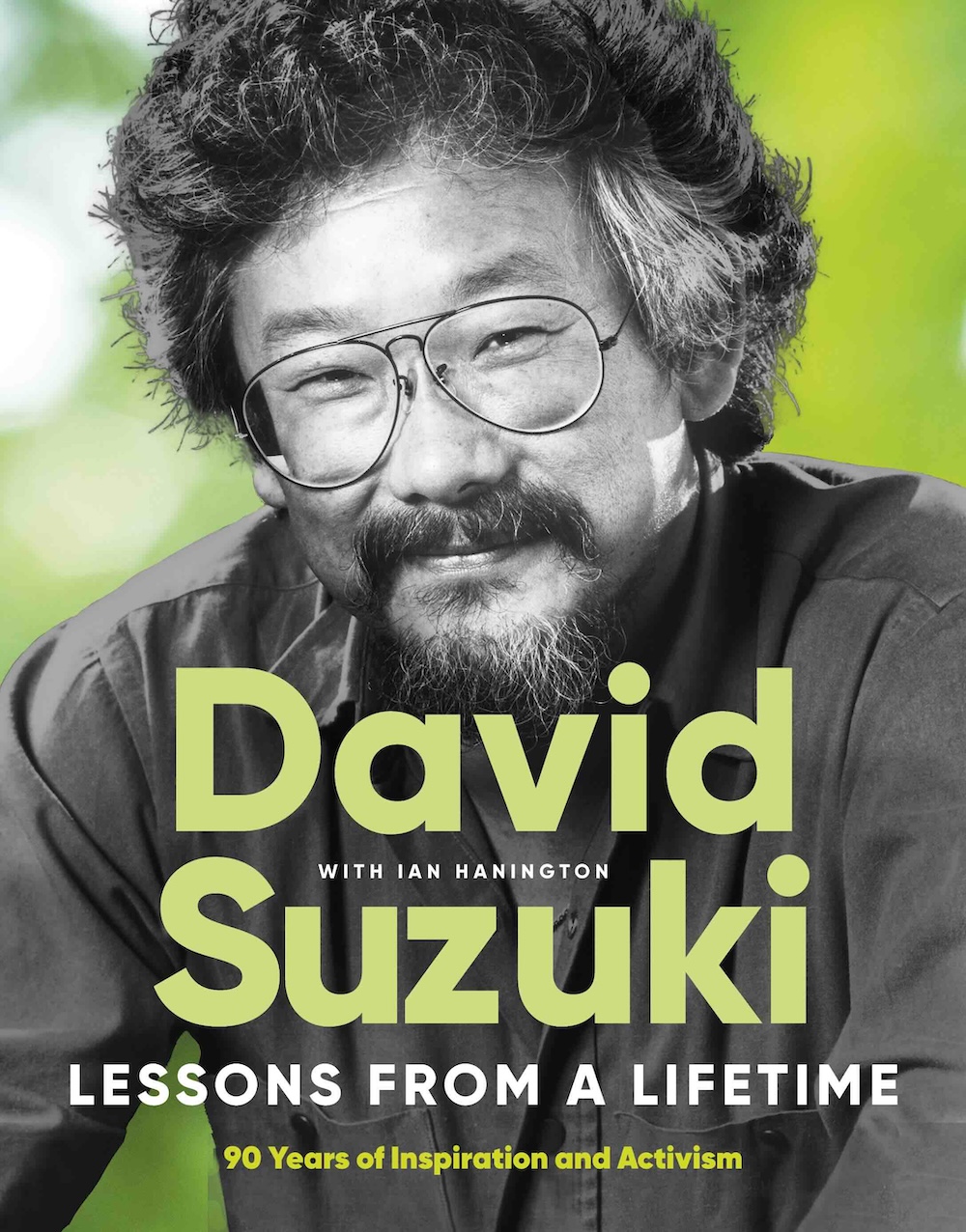
The celebrated scientist and broadcaster is also publishing his latest book, ‘Lessons from a Lifetime: 90 Years of Inspiration and Activism,’ out through Greystone Books on March 17.
We’re pleased to feature an excerpt from ‘Lessons from a Lifetime’ that takes us back to Suzuki’s childhood and teenage years.]
My grandparents abandoned Japan between 1902 and 1904, driven out by poverty to seek opportunity in Canada. After my birth, my father’s parents never went back to Japan.
My mother’s parents were disillusioned by their treatment in Canada and returned after the Second World War to a shattered nation. They were dropped off in Hiroshima, where both were dead in less than a year.
My father and mother were born in Vancouver in 1909 and 1911, respectively, and survived the trauma of the Great Depression thanks to hard work and a strong extended family. Education was a priority for their parents, and Mom and Dad both completed high school, which was considered a good education in the 1920s.
After they married, my parents received financial help from Dad’s parents to start a small laundry and dry cleaning shop in Marpole, a Vancouver neighbourhood. We lived in the back of the shop.
Mom had a miscarriage early in their marriage, and Marcia and I arrived in the world on March 24, 1936. Aiko arrived a year and a half later.
During the war, when we were living in internment camps in the British Columbia Interior, Dad had been separated from the family for a year while living in a road camp building the Trans-Canada Highway.
He managed to make his way to Slocan City, where we were imprisoned, for a couple of days before going back to the road camp. Nine months later, our youngest sibling, Dawn, was born.
After the war, we were expelled from B.C. and eventually moved to London, Ontario. Marcia and Aiko took off for Toronto as soon as they finished high school to become independent.
I was with Aiko when she died on Dec. 31, 2005.
My wombmate, my twin sister Marcia, was not expected to survive infancy but did and lived a long and good life and died in April 2025 at age 89.
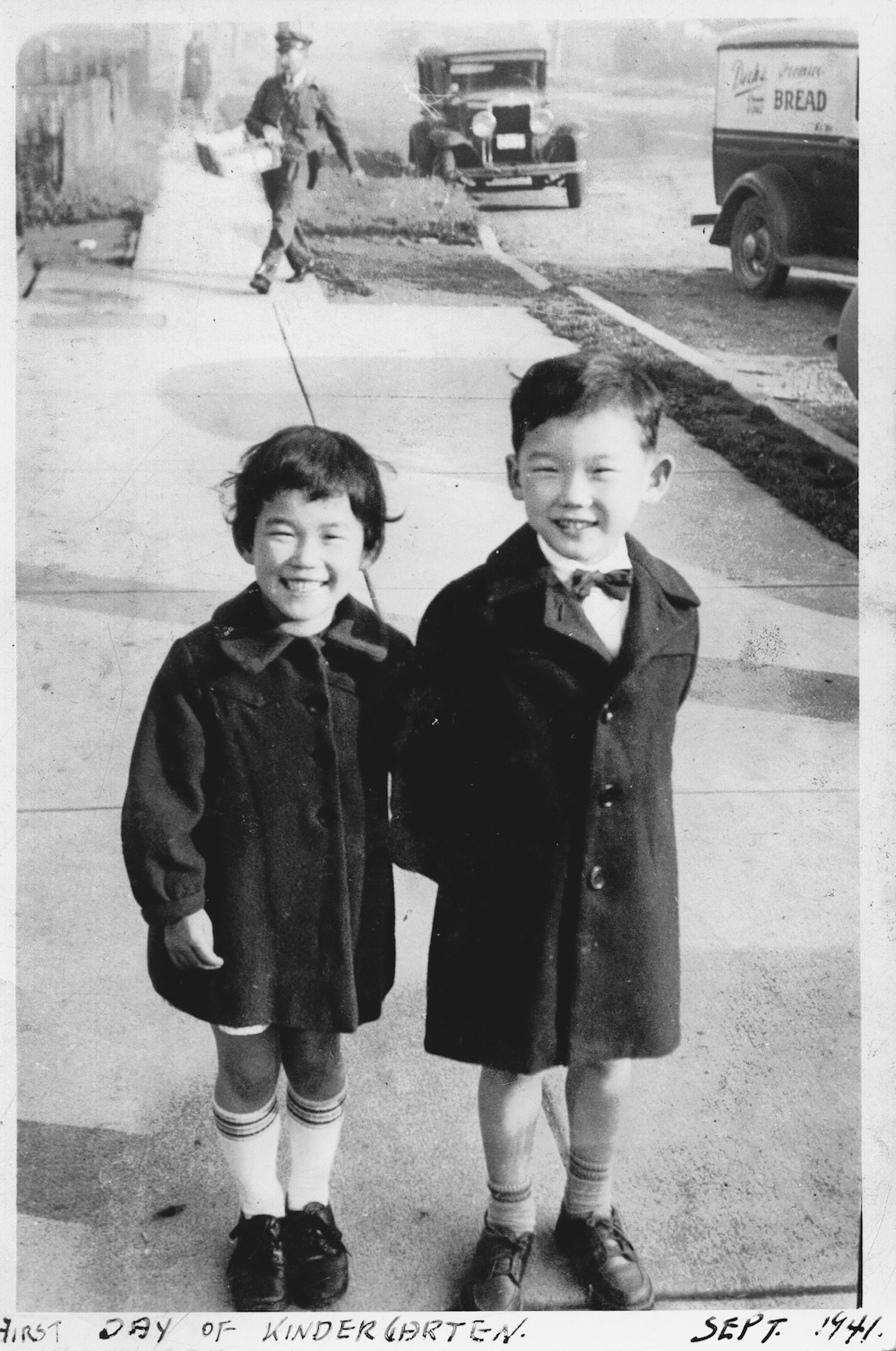
Dawn, my youngest sister, had the benefit of two sisters who had disobeyed my father’s expectation that girls finish high school, find a job, and get married. Dawn graduated from university and danced with the Martha Graham Dance Company in New York for several years before getting involved with a cult.
Suddenly with the war, everything changed
I didn’t know Japan had attacked Pearl Harbor in Hawaii on Dec. 7, 1941. The treachery implicit in Japan’s “sneak attack” against the United States Navy and the terrible war that followed threw my family and some 20,000 other Japanese Canadians and Japanese nationals into a turbulent sequence of events, beginning with Canada’s invocation of the iniquitous War Measures Act, which deprived us of all rights of citizenship.
One day in early 1942, my father was gone. Left with three young children, my mother had to sort through our possessions before we made the long train ride to our destination in the Selkirk Mountains. I didn’t wonder why everyone on the train was Japanese. Our destination was Slocan City, where we were surrounded by hundreds of other Japanese Canadians housed in rotting buildings with glassless windows.
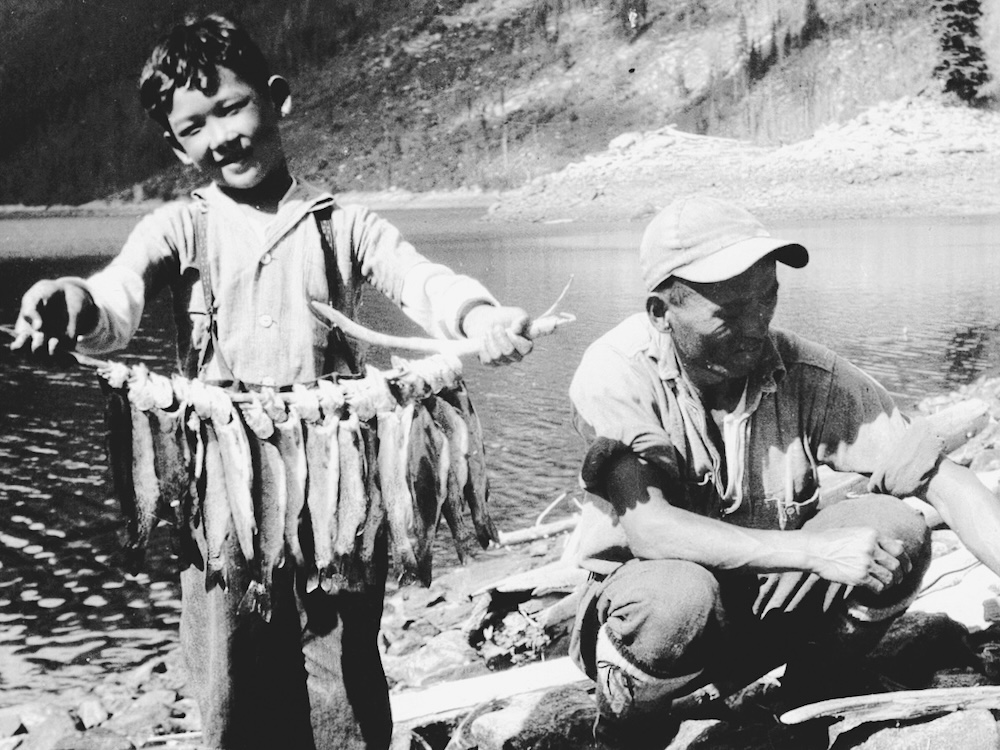
There was no school for the first year, and for a six-year-old kid suddenly plunked down in a valley where the rivers and lakes were filled with fish and the forests with wolves, bears, and deer, this was paradise. When school was finally opened, I began in Grade 1 but was quickly skipped to Grade 2, then 3, and passed to Grade 4 at the end of the school year.
I was one of the few kids whose parents were born in Canada. I never learned to speak Japanese, so I was bullied by some children. It took a long time to overcome my mistrust and resentment of Japanese Canadians because of the way I was treated in those camp days.
We were later moved from Slocan to Kaslo, a small town on Kootenay Lake less than 160 kilometres from our Slocan Valley camp. For the first time, I attended a school with lots of white kids. I shied away from them, content to explore this new area of lakes and mountains by myself.
We finally left Kaslo on a long train ride across the prairies to a Toronto suburb where Japanese Canadians were kept in a hotel until we found places to go.
The first racialized family in town
Dad eventually found work for himself and Mom on a 100-acre peach farm in Essex County. We were supplied with a house, and my sisters and I attended a one-room schoolhouse in Olinda. We were the only non-white kids in the area, but the teacher had prepared the school for our arrival and the kids welcomed us. I loved that year in Olinda.
The next year, we moved to the town of Leamington when Dad found a job in a dry cleaning plant.
Leamingtonians boasted that “no coloured person stays in Leamington beyond sunset,” a warning to Black people who would come from nearby Detroit to fish on the dock in Lake Erie. We were the first people of colour to move into Leamington.
Ignorance and the relentless propaganda during the war, portraying buck-toothed, slant-eyed “Japs” in the cockpit of a plane on a kamikaze mission, must have caused mystery and fear just as today’s image of a Muslim extremist strapped with explosives.
Every time I looked in a mirror, I saw that stereotype.
I still don’t like the way I look on television and don’t like watching myself on my own TV programs.
‘There are a lot more Outies than Innies, and together that means power’
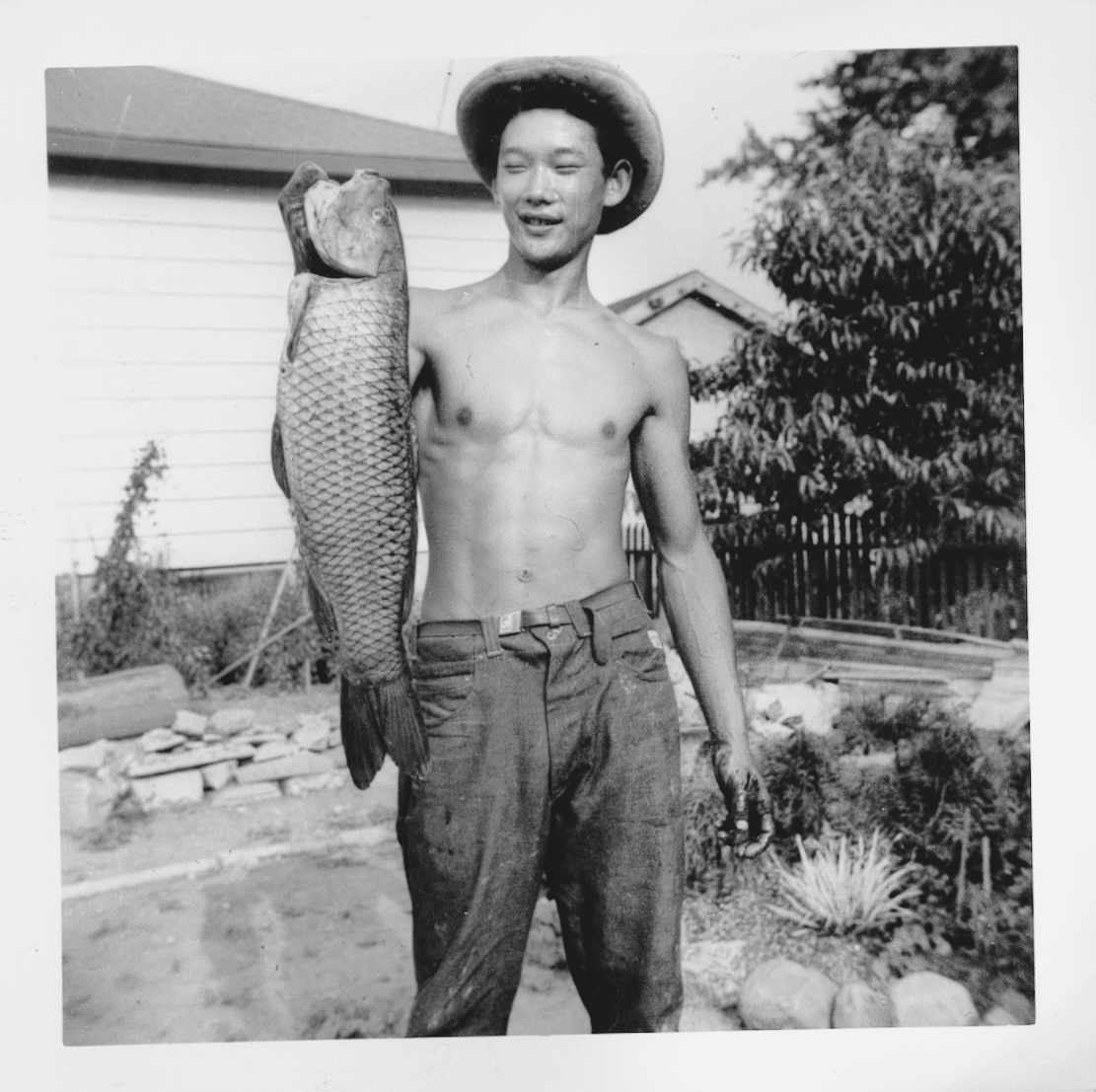
I graduated from Mill Street Public School to enter Grade 9 in the only high school in Leamington. I loved the school and begged my parents to allow me to finish my first year there after they decided to move to London, about 100 miles away. They arranged for me to stay at a farm run by friends, the Shikaze family, whose two boys were my age.
We would be up at 6 a.m. to do chores; then after a hearty breakfast, we caught the school bus. After school we had more chores. It was hard work, but I never found it oppressive as we developed games. The parents spoke little English, so I learned a smattering of Japanese.
By the time I arrived in London, my parents had purchased a lot, and Dad’s two brothers had pitched in and helped to build a small house. I had begun working as a framer for Suzuki Brothers Construction and loved it, working on weekends, holidays, and during the summers.
By the time I arrived for Grade 10 at London Central Collegiate, social circles were well established and I was a stranger, a hick from a farm, an outsider. To exacerbate my isolation, I was a good student, which in that era was like having leprosy.
My loneliness during high school was intense. My one solace was a large swamp that was a 10-minute bike ride from our house. But I spent most of my waking hours daydreaming, creating a fantasy world in which I was endowed with superhuman athletic and intellectual powers that would enable me to bring peace to the world and win mobs of gorgeous women begging to be my girl.
In his bestseller Is There Life After High School? (1976), Ralph Keyes divides high school populations into the “Innies” (sports players, cheerleaders) who set the social standards while the “Outies” (glee club, debate society, band, etc.) mostly wish they were Innies.
In my last year of high school, one of my fellow nerds suggested I run for school president. I said no.
When I told my father, he was disappointed and asked why. “Because I’d lose,” I explained.
Dad was outraged. “How will you know if you don’t even try? There is no shame in trying and losing. The shame is not even trying,” he said.
So I went back to my friend and said I’d give it a try. My public speaking experience in oratorical contests served me well during the campaign at Central, and I appealed to the Outies.
To my amazement, I won with more votes than all the other candidates combined. It was another powerful lesson: There are a lot more Outies than Innies, and together that means power.
For me, the alienation that began with our evacuation from the British Columbian coast and continued through high school has remained a fundamental part of who I am, despite the acquired veneer of adult maturity.
‘Chapter One: My Happy Childhood in Racist British Columbia’ from ‘Lessons from a Lifetime: 90 Years of Inspiration and Activism,’ David Suzuki and Ian Hanington, 2026, Greystone Books. Reprinted with permission from the publisher. ![[Tyee]](/design-article.thetyee.ca/ui/img/yellowblob.png)
Read more: Books, Environment









Tyee Commenting Guidelines
Please note that email notifications for replies are not currently working due to a software issue which may be resolved in a future update.
Comments that violate guidelines risk being deleted, and violations may result in a temporary or permanent user ban. Maintain the spirit of good conversation to stay in the discussion and be patient with moderators. Comments are reviewed regularly but not in real time.
Do:
Do not: