


 SHARE:
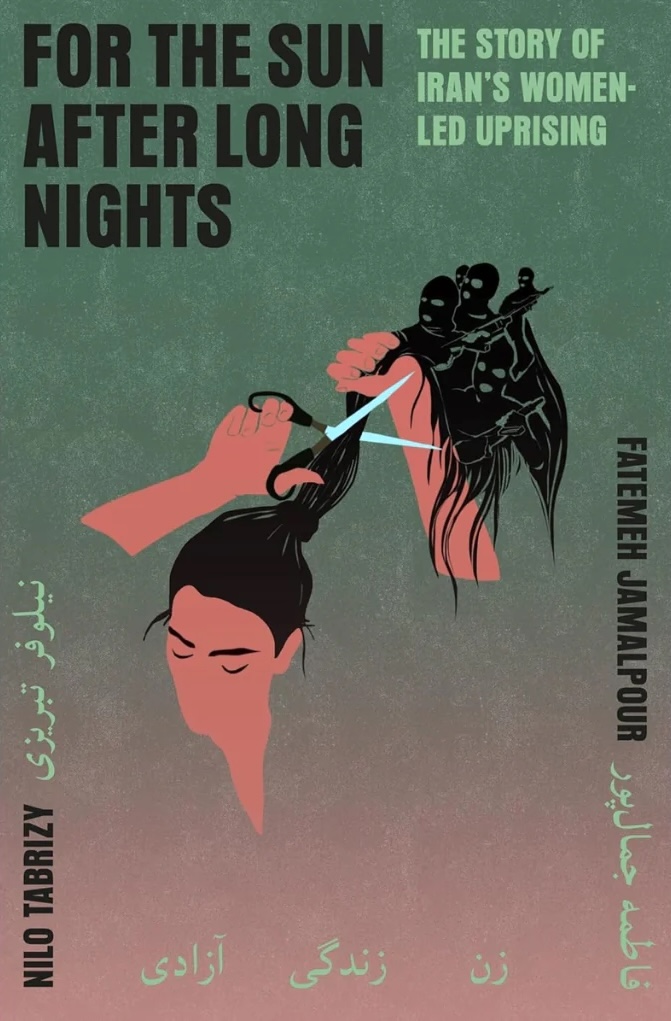
- For the Sun After Long Nights: The Story of Iran’s Women-Led Uprising
- Pantheon Books (2025)
“I felt the blood of a hundred thousand hearts surging together into one enormous artery, fresh and clean... the sublime enormity of a single heart, pulsing blood through that vessel and into my own. I dared to feel a part of it.” — Human Acts, Han Kang.
Tensions between Iran and the United States continue to escalate as both countries edge towards more talks — or a new regional war.
U.S. President Donald Trump initially threatened a response to Iran’s bloody crackdown on widespread protests in the country last month, and the United States has since positioned military forces near Iran. Human rights abuses did not seem to be a primary focus of a first round of talks on Feb. 6.
Trump’s hard line on Iran is well established, with his administration’s “accomplishments” including a withdrawal from the 2015 accord that would have seen a drawdown and limiting of Iran’s nuclear program in exchange for sanctions relief, and last year’s bombing campaign in support of Israel’s 12-day war. At home, he’s grappling with a domestic crisis including growing protests from immigration crackdowns, human rights abuses and the killing of two people in Minneapolis by immigration enforcement officers.
The United States’ rich history of bumbling foreign policy and intervention likely does not fill many Iranians with hope for a breakthrough.
In these moments of cascading crises, what’s often first forgotten are the people and lives at the centre of it all. Those who live through crushing repression, who risk their lives to make their dissent heard, those who make unimaginable personal sacrifices for a dream they may never see. Those who remind us of that aching heart that beats through us all.
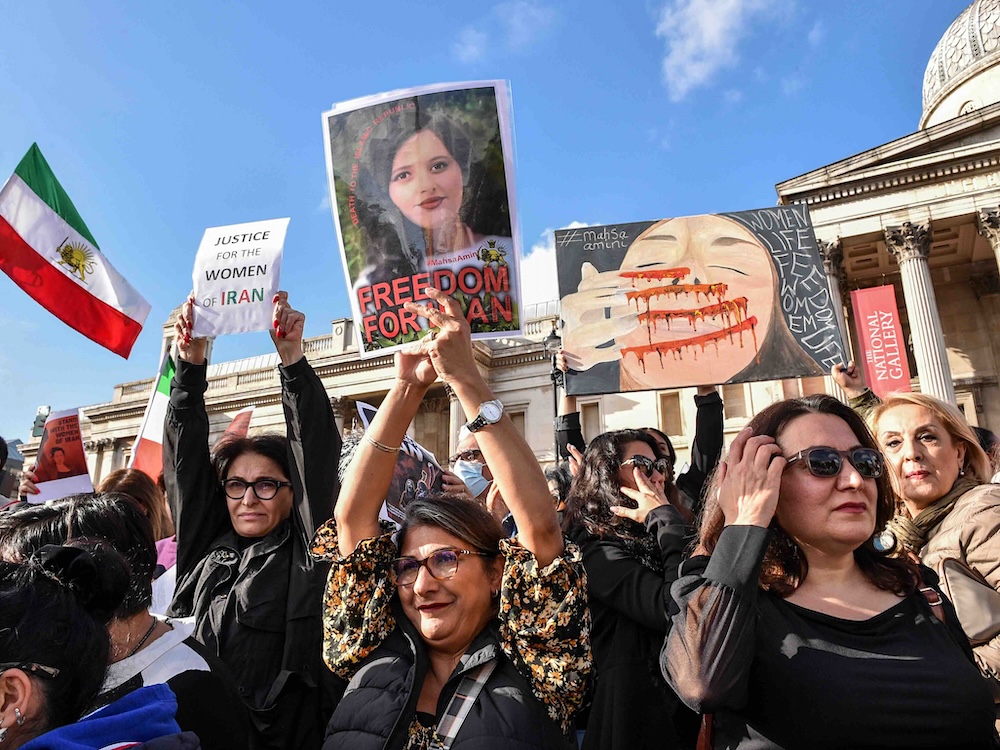
To that end, For the Sun After Long Nights: The Story of Iran’s Women-Led Uprising is an essential read. With clear perspective “from afar and up close” — author and journalist Fatemeh Jamalpour reports from inside Iran, while Nilo Tabrizy is an investigative journalist based in the United States — the two authors weave together a moving account of how the 2022 Woman, Life, Freedom movement, sparked in large part by the killing of Mahsa Jina Amini by Tehran’s morality police, challenged the Islamic republic’s grip on power.
The book, longlisted for the National Book Award for non-fiction, provides a thorough examination of the regime and its “post-totalitarian” organs of control. It shows readers how it’s possible to threaten entrenched power every time we remember and tell the stories of those who have lived differently.
Their work continues today, even if it is constantly undervalued.
After an incredible spree of recent reporting on Iran, Tabrizy lost her job this month in Washington Post layoffs that are reported to affect about one-third of its staff.
‘Pushed and pulled. Unveiled and veiled’
For the Sun After Long Nights deftly covers the protests, the chants, the driving factors of the movement and what came after. But Jamalpour and Tabrizy also take us through other important events in Iran’s history. They show how women played a pivotal role in the passage of power and the march of progress, offering vignettes of personal life at home and in the diaspora. They also furnish the book with poetry, which produces a breadth and context that is useful for understanding Iran and its place in the world.
This book underscores how each new popular movement builds upon the history of the ones that come before it and the grinding, decades-long work that it sometimes takes to shift a needle. It’s a clear-eyed telling of the plight of Iran’s multi-faceted, complicated women who are constantly caught between a rock and a hard place.
“Pushed and pulled. Unveiled and veiled. Their words and movements extracted for political gain,” Tabrizy writes. “Only empowered for brief power grabs. Our place in society left up to the whims of the men who seized control.”
It’s never surprising, but always shocking, what governments will do to hold on to power. How bloody crackdowns can be, like the September 2022 government crackdown that killed at least 95 people in Zahedan.
One thing that’s striking about this book is the close attention to detail to these events afforded to the reader through good journalism.
It makes sense that in 2022, the regime moved to drastically constrain the press through detention, interrogation and expulsion.
And in 2025, it blocked internet and cut phone lines.
A reminder of humanity, and inherent dignity
Like light piercing through darkness, truth shines through somehow. The journalists make use of openly available source material, investigating, verifying and fact checking news moments with eyewitness accounts, footage and satellite imagery, which, in addition to reporting by other journalists, produces a complete, textured picture of Iran’s crisis.
Many memorable scenes emerge alongside this necessary detailing of human rights abuses. We find Tabrizy’s summer crush playing on the streets of Tehran. She watches family friends run through Resident Evil on PlayStation.
Jamalpour’s babaei, or father, cuts her and her siblings’ hair in a DIY barbershop. She watches The Sword in the Stone at her grandparents’ on the weekend. She shares her memories of Island, an amusement park that had a “huge” chain swing.
In another vignette, Tabrizy’s mamani, or grandmother, starts a comedy club in her Tehran apartment with other Iranian seniors. She takes computer classes so she can watch her granddaughter’s Washington Post video reports shortly before she dies. There are sensitive observations of men in a patriarchal society, featuring various acts of sacrifice and care.
These are, in some ways, a celebration of the human spirit. And a clue about what makes people decide to join a movement even in the face of a government that has shown no restraint in killing and repression.
Through the book, Jamalpour is constantly looking over her shoulder and having to let loved ones know she is all right. By reporting on Iran, Tabrizy can never return to Iran, not even to say goodbye, not while the Islamic republic abides.
But these two, and the people covered in the stories told, are an inspiration, and a reminder (tragic that it might be necessary) of the inherent humanity and right to dignity and respect of the people of Iran. And that they are more like you than you might think.
In the words of Sepideh Rashnu, quoted in the book’s introduction:
“A person who fights knows that revolutions will take a long time, but she does not fail. Standing for freedom is more beautiful than freedom itself. The person who fights is yesterday’s child. She knows that if she doesn’t taste freedom, today’s children will. A person who fights knows that revolution will last, but she will not fail.” ![[Tyee]](/design-article.thetyee.ca/ui/img/yellowblob.png)
Read more: Books, Rights + Justice, Politics






Tyee Commenting Guidelines
Please note that email notifications for replies are not currently working due to a software issue which may be resolved in a future update.
Comments that violate guidelines risk being deleted, and violations may result in a temporary or permanent user ban. Maintain the spirit of good conversation to stay in the discussion and be patient with moderators. Comments are reviewed regularly but not in real time.
Do:
Do not: